
PrismML Puts a 1-Bit AI Model on Smart Glasses
PrismML and Qualcomm demoed a 2-billion-parameter vision-language model running in 1-bit precision on Snapdragon AR1 Gen 1 smart glasses hardware at Snapdragon Summit.
 5 min read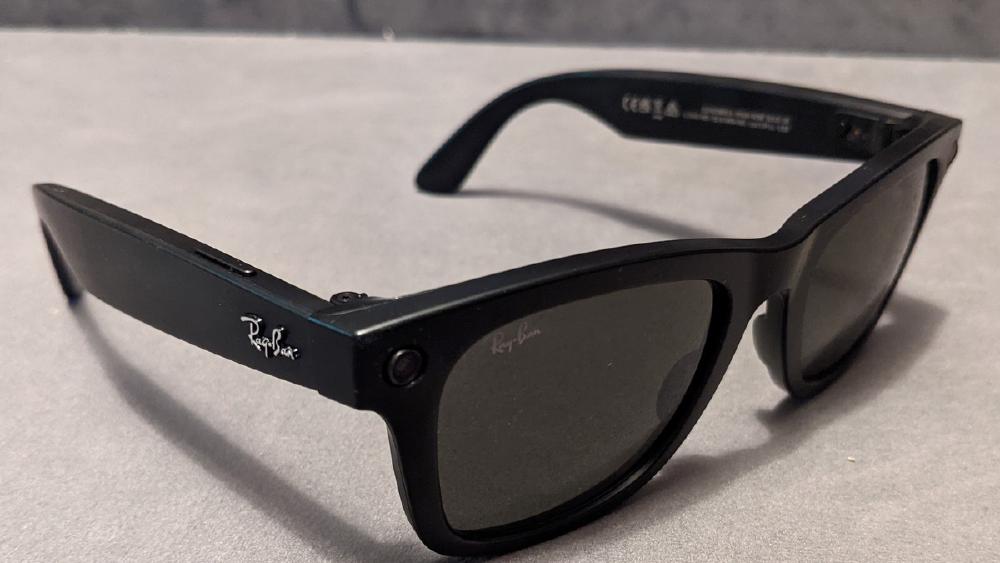
PrismML and Qualcomm just shipped a small technical first that matters more than the demo suggests: true binary weights, values that are either +1 or -1 and nothing else, running on a commercial NPU for the first time. It happened inside a pair of smart glasses.
Key Specs
| Spec | Value |
|---|---|
| Model | 1-bit Bonsai (2B vision-language) |
| Language backbone | Bonsai 1.7B |
| Memory footprint | 0.43GB (vs. 1.66GB at 4-bit) |
| Generation speed | 15.36 tok/s (vs. 7.44 tok/s at 4-bit) |
| Context window | 1,024 tokens on this deployment |
| Chip | Snapdragon AR1 Gen 1, Qualcomm Hexagon NPU |
| Announced | Sept 23, 2026, Snapdragon Summit, Maui |
A New Way to Squeeze AI Onto a Face
At the Snapdragon Summit in Maui, Qualcomm's Ziad Asghar and PrismML CEO Babak Hassibi showed off a 2-billion-parameter vision-language model, built on PrismML's existing Bonsai 1.7B language backbone plus a 0.3B vision encoder, running completely on-device on the Snapdragon AR1 Gen 1 platform. No cloud round-trip, no phone tether required for the inference itself. The wearer looks at something, asks about it, and the glasses answer using a model that fits in under half a gigabyte of memory.
"The future of Personal AI depends on bringing powerful intelligence directly to the devices people use every day," Asghar said in the companies' joint announcement. Hassibi framed it as a hardware problem as much as a modeling one: "For AI to become ubiquitous, capable intelligence has to fit into the devices people already carry and wear."
That's not a new sentiment in this industry. What's new is the specific trick PrismML used to get there, and the fact that Qualcomm's silicon could actually run it.
The Architecture Nobody Else Has Shipped
Standard quantization schemes compress a model to 4-bit or 8-bit integers and call it a day. PrismML's Bonsai family goes further: every weight in the language backbone is stored as a single sign bit, +1 or -1, with one shared FP16 scale factor covering each group of 128 weights. That's a genuinely different math object than "4-bit quantization," not just a smaller version of it. The vision encoder stays at 4-bit, since PrismML has found visual quality degrades faster than language quality under extreme compression, a pattern the company already documented when it released Bonsai 27B in July.
The payoff shows up directly in the numbers Qualcomm and PrismML published for the AR1 Gen 1 platform, running on a 4GB RAM reference device:
| Metric | 4-bit baseline | 1-bit Bonsai | Change |
|---|---|---|---|
| Weight memory | 1.66 GB | 0.43 GB | -74% |
| Token generation | 7.44 tok/s | 15.36 tok/s | +106% |
| Parameters at same memory budget | 1x | ~4x | 4x more headroom |
PrismML says the 1-bit model holds benchmark parity with its 4-bit counterpart across BFCL v3, HumanEval+, MMLU Redux, IFEval, IFBench, MuSR, GSM8K, and GPQA Diamond, though it hasn't published the individual scores, and no independent lab has reproduced the comparison yet.
Why NPUs Choke on True Binary Math
Running 1-bit weights isn't just a storage trick. Most NPU hardware, including earlier Hexagon generations, is built around 4-bit and 8-bit integer math paths, because that's what mainstream quantization has needed. A layer where every weight is literally +1 or -1 needs a different kernel: multiplication collapses into addition and sign-flipping, which is cheap in theory but requires the compiler and the silicon to actually expose that path. PrismML built a custom kernel through Qualcomm's QNN SDK specifically to hit the Hexagon NPU's 1-bit support rather than falling back to the CPU, which is the detail that makes this a hardware-model co-design story and not just a smaller checkpoint.
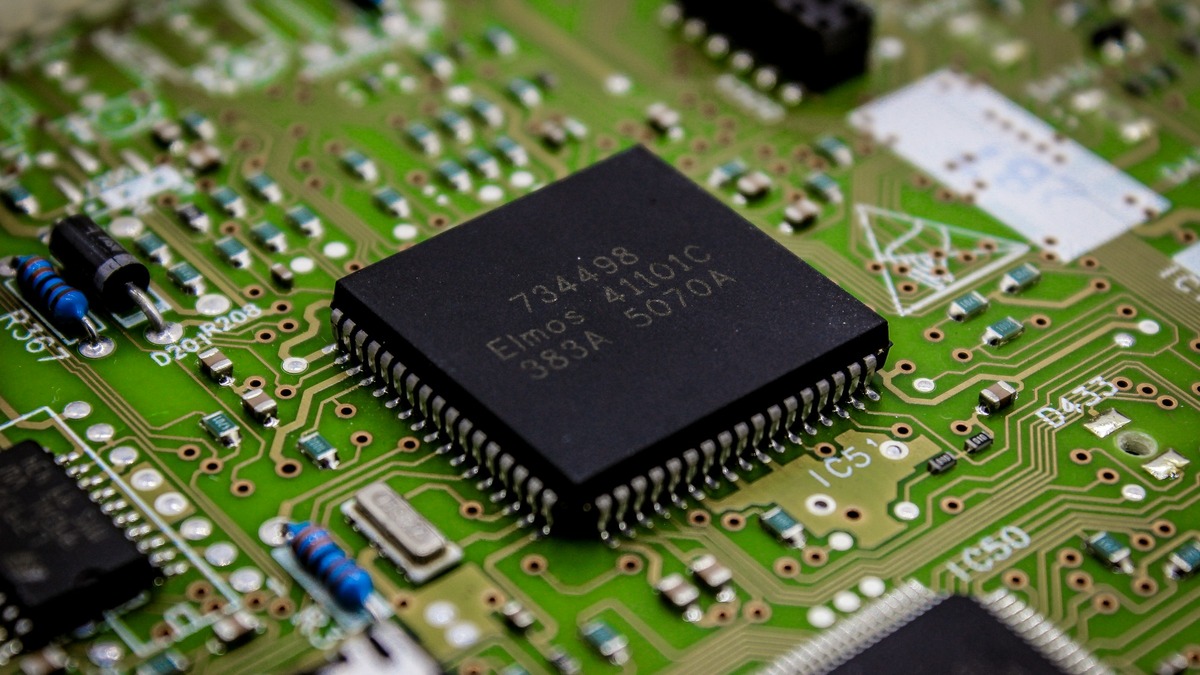 Running 1-bit weights requires a chip whose accelerator has a dedicated binary math path, not just a smaller model file.
Source: unsplash.com
Running 1-bit weights requires a chip whose accelerator has a dedicated binary math path, not just a smaller model file.
Source: unsplash.com
How This Fits the Rest of the Bonsai Lineup
PrismML has now applied the same 1-bit approach at two very different scales: Bonsai 27B, a compressed version of Qwen3.6-27B aimed at phones and laptops, and this 2B vision-language build aimed at a device with a fraction of a phone's power and thermal budget. The strategy is consistent across both: keep the base architecture untouched, push the weights to the smallest representation the hardware can compute directly, and accept that some capability erodes at the extreme end. Our LLM quantization impact leaderboard tracks how that trade plays out across formats, and the edge and mobile LLM leaderboard has the throughput numbers for comparable on-device models if you want a broader baseline than PrismML's own claims.
 PrismML grew out of Caltech, where CEO Babak Hassibi's research on low-bit neural network compression underpins the whole Bonsai lineup.
Source: commons.wikimedia.org
PrismML grew out of Caltech, where CEO Babak Hassibi's research on low-bit neural network compression underpins the whole Bonsai lineup.
Source: commons.wikimedia.org
Qualcomm isn't betting on PrismML alone. Google has said its coming Android XR smart glasses from Gentle Monster and Warby Parker will also run on Snapdragon AR1 hardware, which puts Qualcomm's chip underneath at least two competing software stacks in the same wearable category Apple is reportedly chasing with its own AI glasses push.
What To Watch
A few caveats keep this from being the breakthrough the press release wants it to be. The context window on this specific deployment is capped at 1,024 tokens, tiny next to the 262K-token window Bonsai 27B carries on a phone, and it rules out anything beyond short, single-turn visual questions. Every benchmark and speed number here comes from PrismML and Qualcomm's own materials; nobody outside the two companies has run these numbers independently yet. And there's no actual consumer product. This is a reference-platform demo, not a glasses model you can buy, and PrismML's own write-up calls it a step toward the vision rather than the vision itself.
The bigger signal is that a chipmaker now has a commercial reason to expose true binary math paths in its NPU roadmap, which means the next compression trick this extreme doesn't have to wait for hardware that doesn't exist. PrismML and Qualcomm say they plan to keep improving larger Bonsai checkpoints for future Snapdragon platforms, which is the part worth checking back on once a real product ships.
Sources:
- PrismML brings its tiny LLMs to Qualcomm-powered smart glasses - TechCrunch
- PrismML Brings 1-Bit Bonsai Models to AI Smart Glasses Powered by Snapdragon - press release via Macau Business
- PrismML Runs Bonsai 1.7B on Smart Glasses at 2x the Speed - AlphaSignal
- Bonsai on Smart Glasses: A 2B 1-Bit VLM on Snapdragon - OrcaRouter
- Snapdragon Summit 2026: Qualcomm puts AI agents on smart glasses - The Gadgeteer

