
Pope Leo XIV's AI Encyclical Targets Autonomous Weapons
The Vatican's first AI doctrine condemns autonomous weapons and calls for human oversight - with Anthropic's co-founder on stage as a key speaker.
 8 min read
At 11:30 this morning in Rome, something unprecedented happened inside the Vatican's Synod Hall. Pope Leo XIV stood up - not to delegate, but to personally present his first encyclical - with Christopher Olah, co-founder of Anthropic and one of the people most responsible for the idea that AI systems should be transparent enough to understand from the inside.
The document he released, Magnifica Humanitas - Magnificent Humanity - is the first papal encyclical in the Catholic Church's two-thousand-year history to address artificial intelligence directly. It condemns autonomous weapons, warns against the concentration of AI capability among a handful of companies and governments, and explicitly names Ukraine, Gaza, Lebanon, and Iran as evidence of what it calls an "inhuman evolution" when technology meets warfare without enough human judgment.
The fact that Olah was in that room isn't a coincidence. And the fact that his company is currently locked in a federal lawsuit against the Trump administration isn't unrelated.
TL;DR
- Pope Leo XIV released Magnifica Humanitas today - the first Catholic encyclical dedicated to artificial intelligence
- The document condemns AI-powered autonomous weapons and warns against handing human judgment to machines in conflict zones
- Anthropic co-founder Christopher Olah spoke on the panel with three cardinals and two theologians
- The encyclical's moral position aligns closely with Anthropic's own red lines - the same lines that led the Pentagon to designate the company a supply chain risk in March 2026
- Anthropic's lawsuit against the DoD is ongoing; one federal court blocked the designation, an appeals court then allowed it to proceed
What the Church Actually Said
The encyclical's full title is Magnifica Humanitas: On the Protection of Human Dignity in the Age of Artificial Intelligence. Leo XIV signed it on May 15 - not by accident, but on the 135th anniversary of Rerum Novarum, the landmark 1891 encyclical by Pope Leo XIII that addressed the exploitation of industrial workers.
The parallel is deliberate and methodical.
The Industrial Revolution Argument
Pope Leo XIII wrote Rerum Novarum at the moment when industrial capitalism was restructuring every relation between human beings and their labor. The Church's social teaching emerged from that rupture. Leo XIV is making the same argument about AI: the technology is changing the structure of work, warfare, and human self-understanding, and the Church has a standing obligation to address it before the damage becomes irreversible.
"The Church offers to everyone the treasury of her social teaching in response to another industrial revolution," the Pope said at the presentation, "and to developments in the field of artificial intelligence that pose new challenges for the defense of human dignity, justice and labor."
Warfare and the Spiral of Annihilation
The encyclical's sharpest language is reserved for military applications. The Pope described AI's role in modern warfare as leading toward a "spiral of annihilation" - language that, in a church document, carries significant rhetorical weight. He called specifically for keeping human oversight in targeting and firing decisions and stated directly: "We must also keep a watchful eye on the development and application of artificial intelligence in both military and civilian contexts."
The document doesn't name the United States government or any specific military program. It doesn't need to.
Who Controls the Technology
Beyond warfare, Magnifica Humanitas addresses the concentration of AI capability. The encyclical warns against a world in which a small number of corporations and governments hold exclusive command over systems that increasingly mediate human experience - economic participation, information, legal outcomes, healthcare. This is not a technical argument. It's a moral one about power.
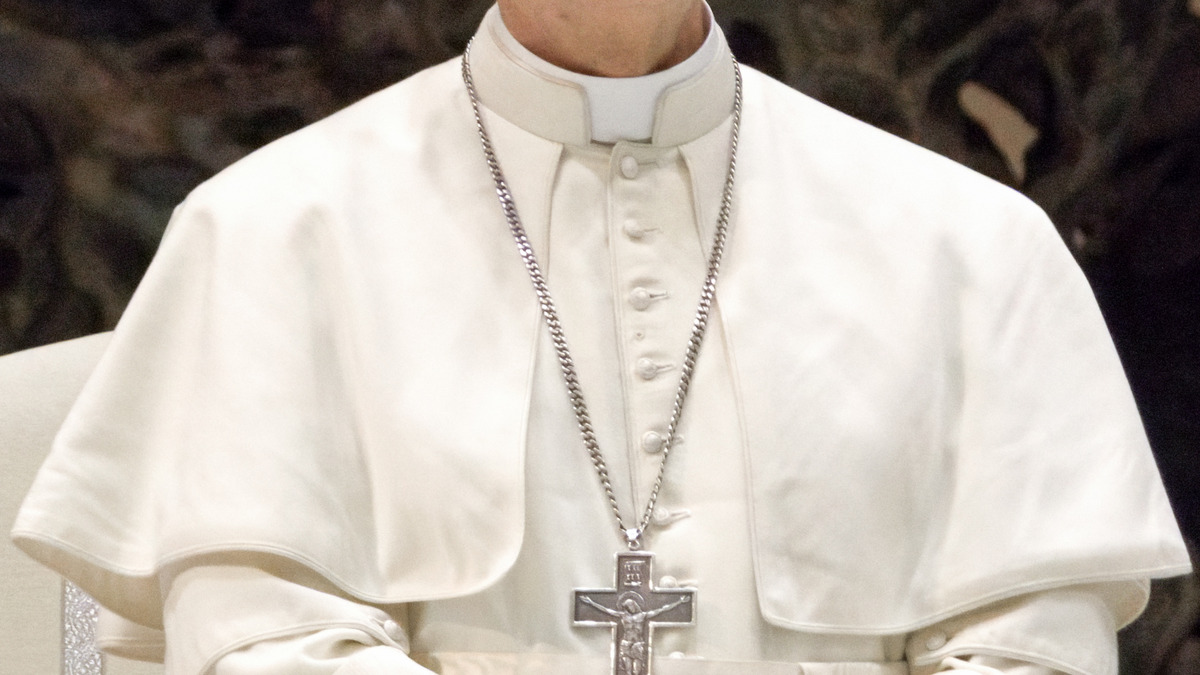 Pope Leo XIV, photographed in 2025. The pontiff broke with tradition by personally attending and speaking at the encyclical's formal presentation.
Source: upload.wikimedia.org
Pope Leo XIV, photographed in 2025. The pontiff broke with tradition by personally attending and speaking at the encyclical's formal presentation.
Source: upload.wikimedia.org
Why an AI Safety Researcher Stood Next to Three Cardinals
Christopher Olah isn't a theologian. He is a machine learning researcher whose career has been defined by a single question: can we actually understand what neural networks are doing inside?
Mechanistic Interpretability as Moral Work
Olah pioneered what's now called mechanistic interpretability - the effort to reverse-engineer the internal mechanisms of large neural networks, to identify not just what a model outputs but why. At Google Brain, at OpenAI, and now at Anthropic, his work has attempted to make AI systems legible to the people responsible for launching them.
His presence at the Vatican signals something about how the encyclical frames the problem. If AI systems are to be trusted in consequential decisions - including military ones - they must first be understandable. Interpretability is not just a technical discipline in this reading; it's a precondition for the kind of human oversight that Magnifica Humanitas demands.
For readers wanting background on what this work involves, our guide on AI safety and alignment covers the core concepts including interpretability research and its limits.
The Vatican-Anthropic Alignment
Anthropic has been explicit about its own red lines since its founding in 2021. The company will not allow Claude to be used to power fully autonomous lethal weapons systems in which no human operator remains involved in targeting and firing decisions. It'll not allow its models to support large-scale domestic surveillance of American citizens.
These aren't slogans. They are contractual restrictions embedded in how the company licenses its technology.
The encyclical's moral arguments map onto those technical restrictions almost exactly. That is why Olah was invited to speak, and that's why his presence is being read as significant beyond the ceremony itself.
The Pentagon Conflict That Gives This Moment Its Edge
The Vatican presentation did not happen in a vacuum. Anthropic has been fighting for its survival in the US government market since February 2026.
Two Red Lines That Cost Anthropic Its Government Contracts
On February 27, the Trump administration ordered federal agencies and military contractors to halt business with Anthropic after negotiations collapsed. Defense Secretary Pete Hegseth had sought unrestricted access to Claude for autonomous weapons applications and mass surveillance programs. Anthropic refused.
On March 4 and 5, Hegseth formally invoked federal law to designate Anthropic a supply chain risk - the first time that designation had ever been applied to an American company for refusing to comply with government demands rather than for actual security failures. President Trump ordered a six-month transition period for agencies to replace Anthropic's technology.
The effect was immediate. Defense contractors began removing Claude from their systems. Anthropic lost contracts it had built substantial infrastructure to support. Coverage of the early contractor fallout is in our earlier piece on how defense contractors purged Claude after the blacklist.
Where the Lawsuit Stands
Anthropic filed two federal lawsuits in March alleging illegal retaliation. The cases moved quickly.
US District Judge Rita Lin in California issued an injunction blocking the supply chain designation, finding it crossed constitutional limits. Her ruling included language that has since become widely quoted:
"Nothing in the governing statute supports the Orwellian notion that an American company may be branded a potential adversary and saboteur of the U.S. for expressing disagreement with the government."
However, a federal appeals court in Washington later denied Anthropic's request to extend that block while the case continues. The designation is currently in force. The underlying lawsuit is still active.
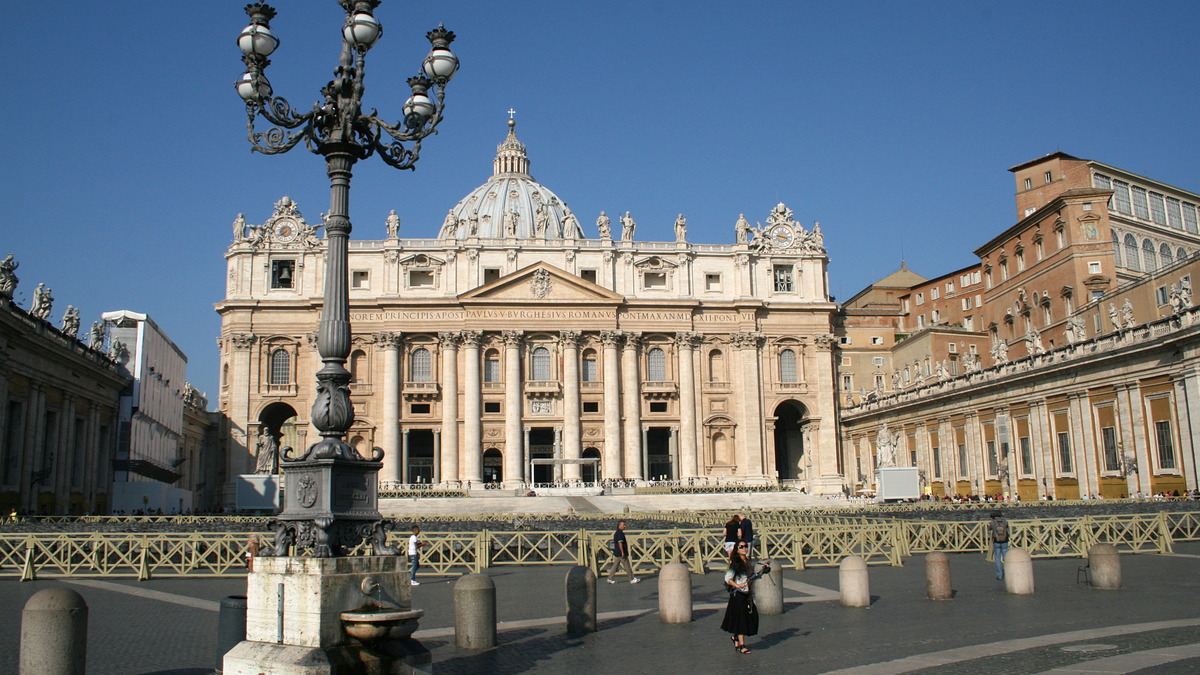 The Vatican's encyclical presentation took place in the Synod Hall, steps from St. Peter's Basilica. The Church framed today's release as its equivalent of Rerum Novarum - a foundational response to a new industrial disruption.
Source: upload.wikimedia.org
The Vatican's encyclical presentation took place in the Synod Hall, steps from St. Peter's Basilica. The Church framed today's release as its equivalent of Rerum Novarum - a foundational response to a new industrial disruption.
Source: upload.wikimedia.org
What the Church Gets Right - and What It Leaves Out
Magnifica Humanitas is a 1891-model document applied to a 2026 problem, which means it addresses the structural questions clearly and the technical details almost not at all. The encyclical's moral framework - human dignity, labor rights, accountability, the dangers of unchecked power - holds up well. Its specific prescriptions are deliberately vague.
The document does not propose a governance mechanism, a treaty framework, or a certification standard. It doesn't address what happens when the companies willing to accept safety constraints are outcompeted by those that refuse them, or when authoritarian governments deploy autonomous weapons anyway. It doesn't engage seriously with the argument that restricting military AI by safety-first developers simply cedes the field to developers with fewer qualms.
These are serious gaps. The encyclical is a moral statement, not a policy document, and the Vatican does not have the tools to fill them. But the statement matters exactly because of who was listening in that hall - and who wasn't.
The AI safety community has spent years struggling to translate technical arguments about model internals into language that makes sense to policymakers and the public. Today, the Catholic Church - which speaks to roughly 1.4 billion people - basically confirmed those arguments from its most formal institutional platform, with the researcher who has spent his career trying to make AI systems understandable enough to be trusted.
Whether that changes anything in the current US political environment is a separate question. Whether it changes how this moment is remembered in five years isn't.
For earlier coverage of the Pentagon-Anthropic standoff and the broader AI safety researcher exodus from major labs, see our previous reporting.
Sources:
- Pope Leo XIV to launch AI encyclical Magnifica Humanitas on 25 May with Anthropic co-founder Christopher Olah - The Next Web
- Pope Leo will publish first encyclical on AI - America Magazine
- Vatican to publish Pope Leo XIV's first encyclical May 25 - EWTN Vatican
- Anthropic sues the Trump administration over supply chain risk label - NPR
- Judge blocks Pentagon's effort to punish Anthropic - CNN Business
- Anthropic loses appeals court bid to block Pentagon blacklisting - CNBC
- Pentagon labels Anthropic a supply chain risk - NPR
- Chris Olah on interpretability research - 80,000 Hours

