
PJM's New Rule: No Power Guarantee for AI Data Centers
PJM's board approved a plan to curtail power to data centers of 50 megawatts or larger during grid emergencies starting June 2027, unless they bring their own generation.
 6 min read
PJM Interconnection, the grid operator that keeps the lights on for 67 million people across 13 states and Washington, DC, told its members on July 27 that new AI data centers of 50 megawatts or larger won't get an unconditional promise of power anymore. Starting June 1, 2027, any facility that size without its own generation or a contracted supply faces curtailment the moment the grid runs short, ahead of the demand-response programs PJM already leans on during heat waves and cold snaps.
Key Specs
| Spec | Value |
|---|---|
| Large Load threshold | 50 MW+ at a single site, one-mile radius |
| Curtailment start | June 1, 2027 |
| Advance notice | 30 minutes to several days |
| Backstop auction price cap | $555/MW-day (up from $325) |
| Capacity cost tied to data centers | $29.4B over four auctions |
The 50-Megawatt Line
Who Counts as a Large Load
The rule targets facilities with a cumulative peak load of at least 50 MW measured at a single site within a one-mile radius, according to the board's proposal, which PJM expects to file with the Federal Energy Regulatory Commission by the end of July. PJM will track every one of them in a new Large Load Registry, built from data its member utilities already collect on service location and expected draw. The registry itself is mundane. Electric Distribution Companies report addresses and load requirements they already have on file. What's new is that PJM currently has no comprehensive count of how much gigawatt-scale demand is queued up inside its own footprint, and this closes that gap.
What Curtailment Actually Means
Facilities that miss the June 2027 deadline for independent power don't lose service outright. During a declared capacity shortage, PJM cuts them before it touches Pre-Emergency Load Management, the existing demand-response tier that includes hospitals, manufacturers, and other large users under long-standing contracts. Notice ranges from 30 minutes to several days depending on how far out the shortage is forecast. Cut facilities are eligible for compensation, though the actual payment rates still need sign-off from FERC and, sometimes, state regulators.
Why the Board Moved Now
PJM's own math is the trigger. New large-load demand, mostly data centers, is projected to grow by roughly 70 gigawatts by 2038, arriving on a grid that has lost about 15 gigawatts of generation since 2022. That mismatch showed up starkly this year: PJM's most recent base capacity auction came up 6,831 megawatts short of what the system needed for the 2028/2029 delivery year, the kind of shortfall the market wasn't designed to absorb.
The present trajectory of rapid load growth, tightening supply and rising capacity costs isn't sustainable.
That's Paula Conboy, PJM's board chair, in the July 27 announcement. She followed with the line that matters most to anyone paying a PJM-area electricity bill: "Existing consumers should not bear higher capacity costs caused by new Large Loads." Joseph Bowring, PJM's independent Market Monitor, has already put a number on that exposure. He attributes $29.4 billion in capacity cost increases across the last four auctions to data center load, a figure PJM's own board now cites as justification for the curtailment plan.
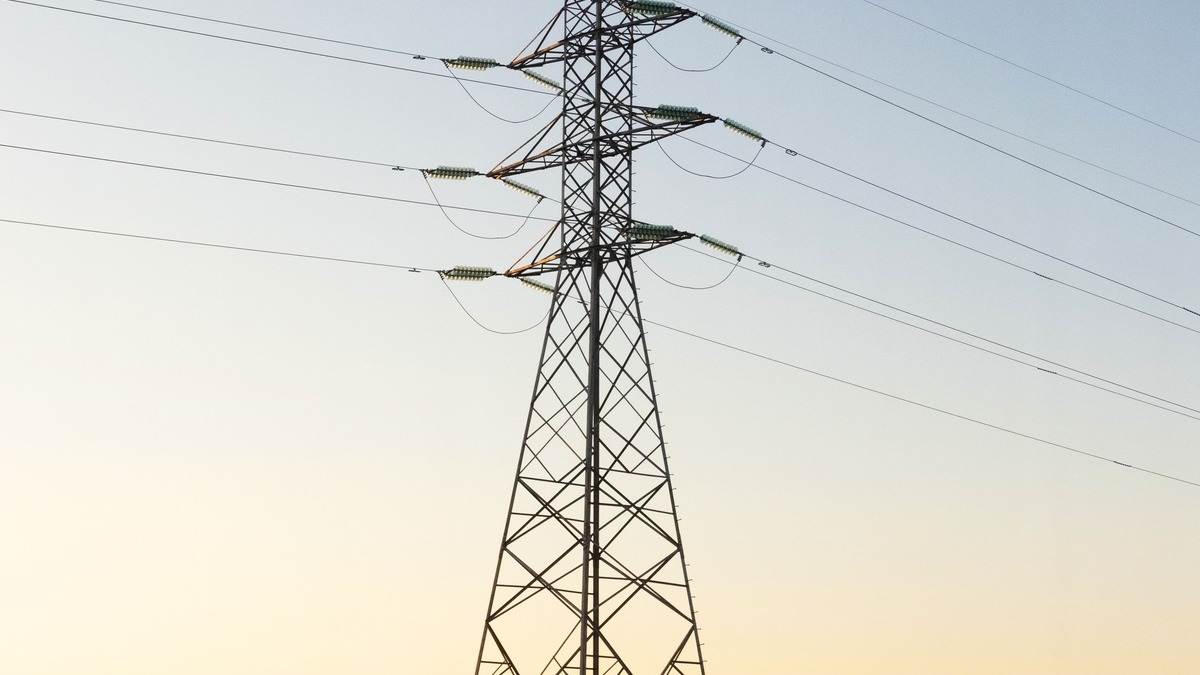 PJM's capacity shortfall, not a single incident, is driving the curtailment rule: the grid needs 6,831 more megawatts than its latest auction procured.
Source: pexels.com
PJM's capacity shortfall, not a single incident, is driving the curtailment rule: the grid needs 6,831 more megawatts than its latest auction procured.
Source: pexels.com
The Backstop Auction Behind the Curtailment Plan
To close the immediate gap, PJM is running a separate backstop capacity auction from September 30 to October 21, 2026, with results due in early December. Suppliers can bid in at up to $555 per megawatt-day, well above the $325 cap in the regular auction, for commitments running as long as 15 years and new generation that has to be online by June 1, 2032.
| PJM capacity mechanism | Price cap | Commitment | Purpose |
|---|---|---|---|
| Base capacity auction | $325/MW-day | 1 year | Standard annual procurement |
| Backstop auction (Sep-Oct 2026) | $555/MW-day | Up to 15 years | Close the 6,831 MW shortfall |
| Large Load curtailment (from June 2027) | Compensation, rate TBD | Ongoing | Protect existing supply during emergencies |
A second, quieter change reinforces the same logic. PJM's board will strip new large loads that lack their own power supply out of future capacity-auction demand forecasts, meant to stop speculative data center announcements from inflating the numbers utilities plan around and, over time, cool the price spikes those inflated forecasts helped cause.
Who Gets Squeezed
The rule doesn't land evenly. Amazon, Google, and Microsoft, the hyperscalers with the balance sheets to sign long-term power purchase agreements or fund on-site generation, are largely insulated from it. Smaller and newer operators clustered in Northern Virginia, Ohio, Pennsylvania, and Maryland, the same region that saw a synchronized 3-gigawatt disconnect this month, carry more of the exposure, according to Network World's review of the filing. On-site generation is already becoming the industry's default hedge against exactly this kind of rule: PJM-area data centers running their own backup power are projected to climb from 13% of capacity in 2024 to 38% by 2030.
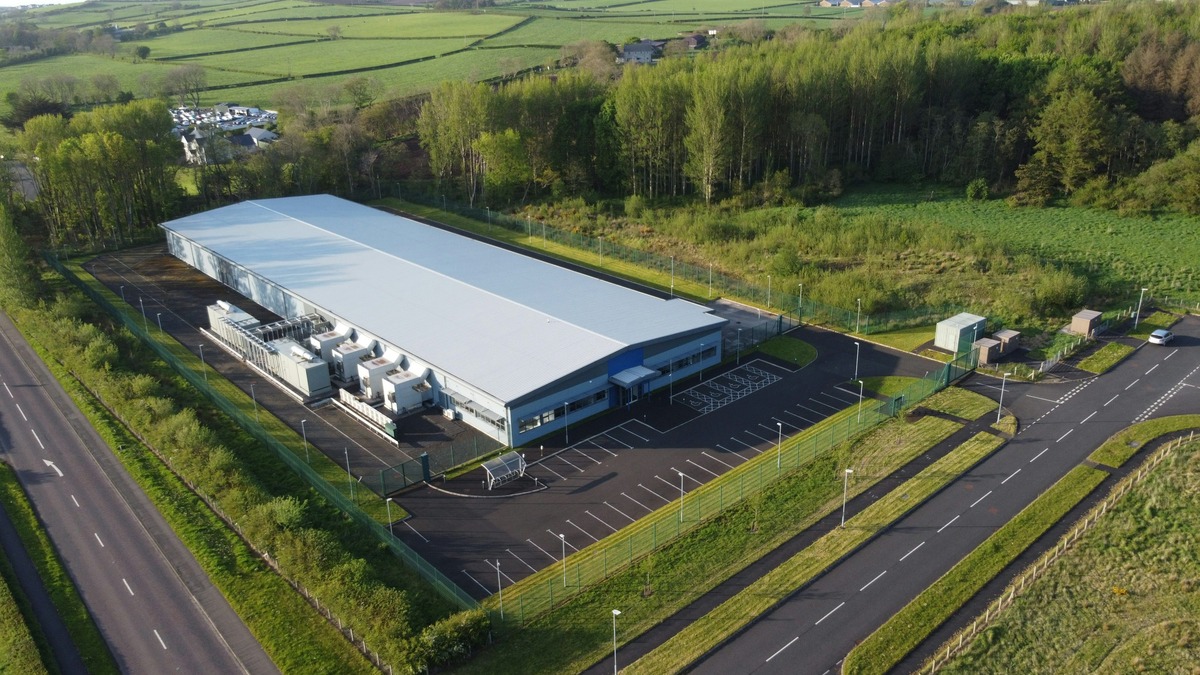 Facilities without a fenced-off power supply of their own, rather than large campuses in general, are the ones the June 2027 deadline is aimed at.
Source: unsplash.com
Facilities without a fenced-off power supply of their own, rather than large campuses in general, are the ones the June 2027 deadline is aimed at.
Source: unsplash.com
Not everyone thinks the fix matches the size of the problem. Jefferies analysts called the backstop auction "nowhere near close enough to what's needed if all this large load shows up," and predicted PJM turns into "an increasingly bilateral market" propped up by repeated emergency procurements. Aurora Energy Research read the same plan more charitably, describing it as an effort to plug the gap and then push responsibility for new generation onto the large loads themselves. Bowring, PJM's own market watchdog, split from both readings. He argues the proposal "retain[s] two key features that will impose costs on PJM customers," and that the curtailment framework will raise wholesale energy costs while making the grid less reliable, not more.
Nvidia and Emerald AI have pitched a different long-term fix, turning data centers into grid assets that absorb disturbances instead of tripping offline or getting cut. PJM's rule doesn't reward that behavior yet. It only defines what happens to a facility that can't avoid getting cut in the first place.
What To Watch
FERC still has to approve the plan, and the commission's recent scrutiny of PJM's reliability filings hasn't been a rubber stamp. The cost pressure behind all of this is already visible on bills: TechCrunch reported wholesale power prices in PJM's territory have nearly doubled over the past year, and a Bisnow review of the board's materials put the residential impact at up to $70 a month by early 2028 if nothing changes.
Pareekh Jain, CEO of EIIRTrend, frames the shift plainly: "PJM's proposal marks a significant shift by making electricity access conditional for some large new data centers during grid emergencies." His read on the near-term options is just as blunt. Battery backups or accepted curtailment are realistic by 2027; new power plants generally are not, since nothing generation-scale can be permitted, built, and connected on that timeline. Network World's reporting puts 30% to 50% of 2026 data center capacity nationwide at risk of delay from power constraints alone, curtailment rules or not, which is the backdrop against which PJM's June 2027 deadline now sits.
Sources:
- PJM Inside Lines: PJM Board Directs Action on Resource Adequacy, Affordability and Large Loads
- Utility Dive: PJM board proposes backstop capacity auction, data center curtailment plans
- TechCrunch: Data centers may face temporary power cuts to prevent blackouts on largest US grid
- Bisnow: Largest U.S. Grid Operator Scrambles For Power, Warns Of Data Center Outages
- Network World: AI data centers in the US may face power cuts under PJM reliability proposal

