
Google CEO Could Earn $692M if Waymo and Wing Pay Off
Alphabet's new three-year compensation plan could pay Sundar Pichai up to $692 million - more than seven times Satya Nadella's pay - with a third of the upside tied to Waymo and Wing performance.
 6 min read
Alphabet filed a new executive compensation plan with the SEC on March 6 that could pay Sundar Pichai up to $692 million over the next three years. For context, that's more than seven times Microsoft CEO Satya Nadella's fiscal 2025 pay, and nearly ten times what Tim Cook made at Apple last year.
TL;DR
- Alphabet's SEC filing sets Pichai's three-year package at up to $692 million if all targets are hit
- $84M in restricted stock vests monthly; $126M in PSUs tied to Alphabet's performance vs. the S&P 100
- Up to $350M is directly linked to Waymo and Wing per-unit valuation growth - not Gemini
- First time Waymo has been included in Pichai's personal compensation structure
- His base salary stays at $2M per year, unchanged since 2020
The Filing and What It Shows
The SEC document, published Friday, lays out a package built from four components. Pichai receives $6 million in base salary across three years. On top of that, $84 million in restricted stock vests monthly over the same period regardless of performance. Then come the performance-linked pieces: $126 million in performance stock units benchmarked against Alphabet's total shareholder return versus the S&P 100, and a separate block tied to Waymo and Wing.
That last piece is the one worth paying attention to. Alphabet disclosed that Pichai could receive roughly $130 million from Waymo and $45 million from Wing. Both awards are capped at 200% of target value - meaning if Waymo performs strongly, that tranche alone could be worth $260 million. If both ventures underperform, Pichai gets nothing from those components.
The Waymo connection
Waymo is already operating commercially in San Francisco, Los Angeles, and Phoenix, completing over 450,000 weekly rides by the end of 2025. In February 2026, Waymo launched fully autonomous operations with its 6th-generation driver system, targeting one million weekly rides.
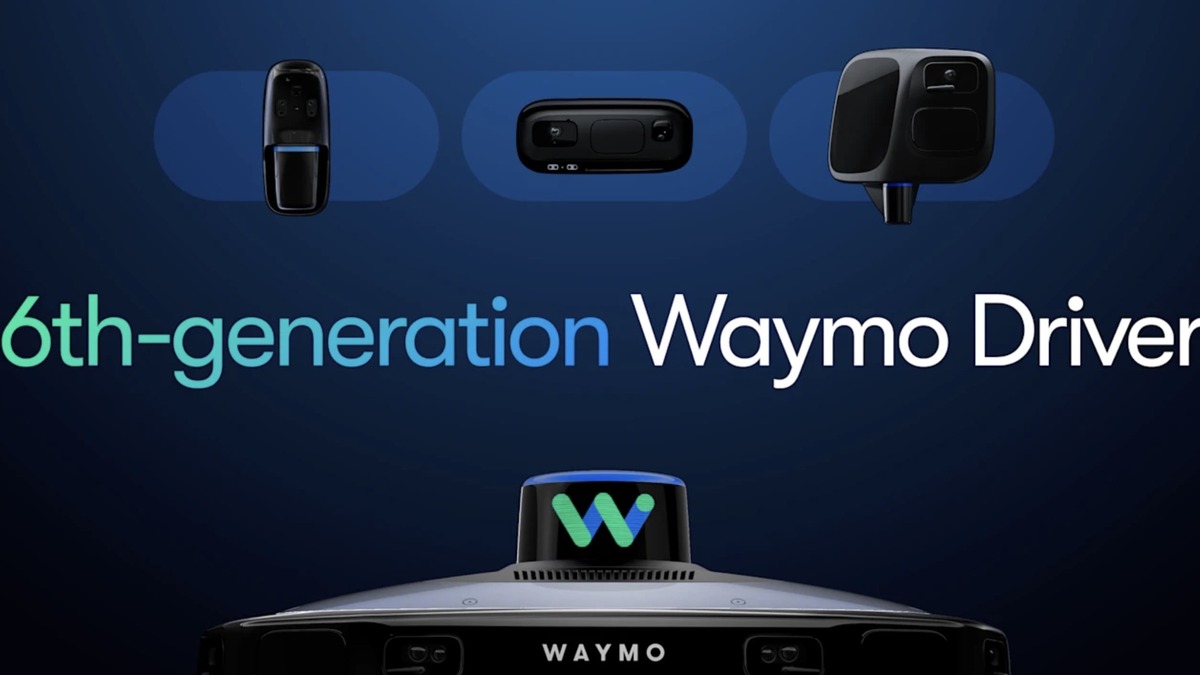 Waymo's 6th-generation Driver system, which launched in February 2026 with a target of one million weekly rides.
Source: electrek.co
Waymo's 6th-generation Driver system, which launched in February 2026 with a target of one million weekly rides.
Source: electrek.co
For all of that progress, Waymo has never appeared in Pichai's pay structure before. Alphabet's board stated the incentives "reflect confidence in Pichai's leadership" of ventures it described as "tackling enormous challenges in autonomous driving and delivery." The phrasing is corporate boilerplate, but the structure underneath it isn't: Pichai now has a direct personal stake in whether a self-driving car company crosses whatever valuation threshold the board has privately set. The filing doesn't disclose specific operational milestones - neither ride counts, revenue figures, nor market share targets are mentioned.
The Wing connection
Wing has been quieter in the press than Waymo. The drone delivery service operates in parts of the US, Australia, and Finland, handling medical supply deliveries and consumer packages. Alphabet's SEC disclosure puts Wing's potential payout at $45 million at target, rising to $90 million at 200% performance. Its inclusion alongside Waymo signals that Alphabet's board considers both ventures plausible sources of significant shareholder value within a three-year horizon, not science projects requiring indefinite patience.
What This Signals About Google's Strategy
Alphabet's compensation structure is one of the clearest statements a board can make about where it believes value will build up. And this filing makes a specific claim: the most upside in Alphabet's portfolio sits in physical AI applications - not in Gemini, not in Google Cloud, not in the Search business that currently prints most of the company's money.
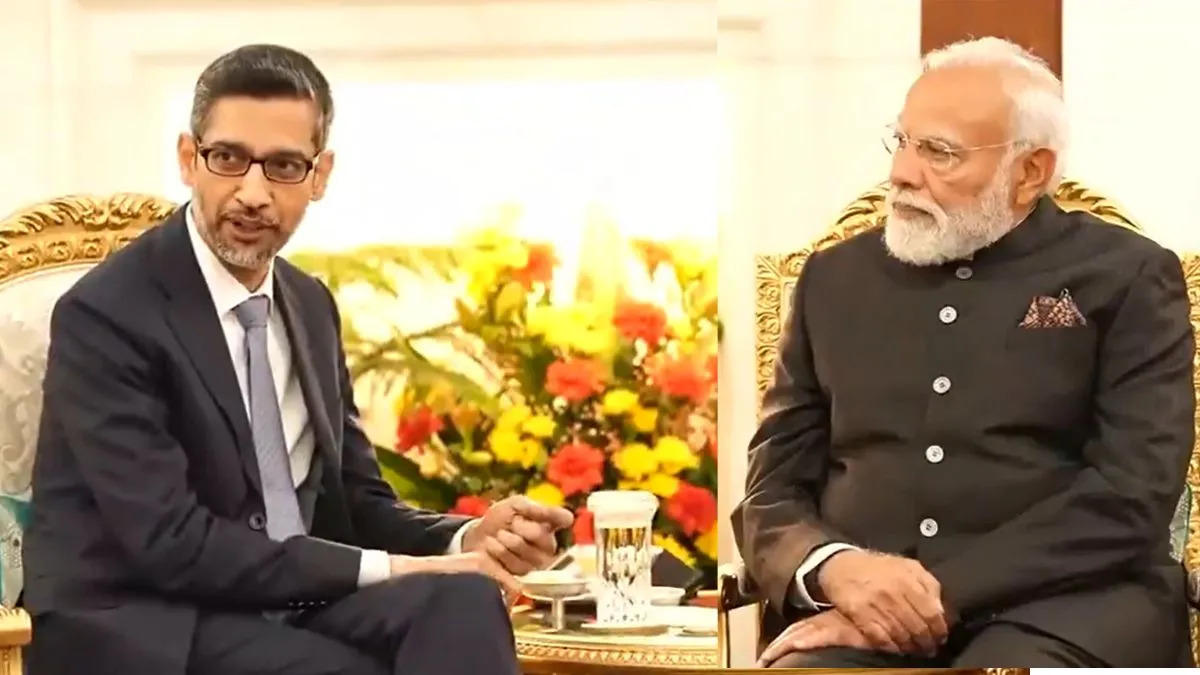 Sundar Pichai at the India AI Impact Summit in February 2026, where he announced Google I/O 2026 dates and discussed AI investments in the country.
Source: indiatvnews.com
Sundar Pichai at the India AI Impact Summit in February 2026, where he announced Google I/O 2026 dates and discussed AI investments in the country.
Source: indiatvnews.com
That's a remarkable bet, and not an obvious one. OpenAI and Anthropic are staking their futures on base model capabilities. Microsoft is embedding AI into enterprise software. Apple is paying Google $1 billion per year to use Gemini in Siri, as we covered when the Apple-Google cloud deal was announced. These are model-first strategies.
Alphabet, by contrast, is tying its CEO's largest pay incentives to businesses that depend on AI working in the physical world - at scale, reliably, in real traffic, with drones navigating actual airspace. As we noted when Google absorbed its robotics moonshot Intrinsic into the main company, Alphabet has been moving to consolidate its physical AI bets under the Google umbrella.
The Pichai compensation structure extends that logic to the incentive layer.
Against the Industry
| CEO | Company | Annual Pay (most recent) |
|---|---|---|
| Sundar Pichai | Alphabet | Up to $230M/year (3-yr max) |
| Satya Nadella | Microsoft | $96.5M (FY2025) |
| Tim Cook | Apple | $74.3M |
Pichai's package, at maximum, is not just the largest in Big Tech - it's in a different category. The comparison to Nadella and Cook is useful precisely because both of those executives run companies with comparable or larger revenues, and neither is structurally compensated at anything close to this level.
The counterargument is straightforward: Waymo could plausibly be worth hundreds of billions of dollars if autonomous ride-hailing scales. Wing could become a meaningful logistics business. If Pichai actually delivers that, $692 million is cheap relative to what Alphabet's shareholders would gain. Executive compensation tied to non-core business success is also unusual enough that Alphabet's board presumably had to make an active choice to structure it this way.
What the Filing Doesn't Say
Alphabet didn't disclose what specific milestones Pichai needs to hit to earn the Waymo or Wing components. There are no revenue targets, no trip-count floors, no profitability thresholds. The awards vest "based on the companies' per-unit value growth over three years" - which means Pichai is compensated based on how Waymo's internal share price moves, not on any operational metric that the public can track.
That matters. Waymo's "per-unit value" is an internal Alphabet figure, not something independently audited or publicly traded. Investors in Alphabet are trusting that the board has set targets that represent genuine value creation and not benchmarks designed to pay out regardless.
Pichai's pay also isn't explicitly linked to Gemini performance or to Google's AI product adoption metrics. Gemini 3.1 Pro has been one of the most competitive frontier models since its launch, but that competitive position doesn't appear to factor directly into the CEO's incentive structure.
The Alphabet board is making a long bet that physical AI - specifically autonomous vehicles and drone delivery - will be where Google creates its next trillion dollars. Whether that bet holds in three years is the question. Pichai now has $350 million of his own compensation riding on the answer.
Sources:
- Yahoo Finance - Google gives CEO new pay deal worth up to $692 million (AFP, March 7, 2026)
- Benzinga - Sundar Pichai's New $692 Million Equity Pay Package (March 8, 2026)
- Malay Mail - Pichai set to become one of world's highest-paid CEOs (March 7, 2026)
- American Bazaar - Alphabet's massive pay bet: Sundar Pichai could earn up to $692 million (March 7, 2026)
- Electrek - Waymo begins fully autonomous ops with 6th-gen Driver (February 12, 2026)
- WION News - Google CEO Sundar Pichai to get $692M package under new performance plan

