
Physical AI's Money Moment - $11B and Counting
Physical Intelligence is in talks to raise $1 billion at an $11 billion valuation, doubling in four months, as investors pour capital into AI software designed to run robots in the real world.
 6 min read
Physical Intelligence, the San Francisco startup building general-purpose AI models for robots, is in talks to raise roughly $1 billion at a valuation topping $11 billion - according to Bloomberg. Four months ago, the company was worth $5.6 billion. If the round closes at those terms, Physical Intelligence's valuation will have nearly doubled without shipping a commercial product.
That number alone isn't the whole story. It's a signal about where venture capital is going next.
TL;DR
- Physical Intelligence seeks ~$1B at $11B+ valuation - nearly 2x its November 2025 level
- Investors include Founders Fund, Lightspeed, and returning backers Thrive Capital and Lux Capital
- The company has raised over $1B total in under two years, with no commercial product yet
- Physical AI as a sector pulled in more than $6B in a single quarter; Figure AI sits at $39B
- Google DeepMind just partnered with Agile Robots to integrate Gemini models into factory hardware
The Funding Table
Physical Intelligence's arc tells you something about investor expectations right now. The company was founded in 2024 by Karol Hausman, Sergey Levine, and Chelsea Finn - former researchers from Google Brain, UC Berkeley, and Stanford respectively. They raised $400 million in a Series A in November 2024, led by Jeff Bezos, Thrive Capital, and Lux Capital, at a $2 billion valuation. A year later, CapitalG led a $600 million round that pushed the valuation to $5.6 billion. Now, four months after that, the company is reportedly closing in on $1 billion more.
| Round | Date | Amount | Valuation | Lead Investors |
|---|---|---|---|---|
| Series A | Nov 2024 | $400M | $2B | Jeff Bezos, Thrive Capital, Lux Capital |
| Series B | Nov 2025 | $600M | $5.6B | CapitalG (Alphabet) |
| Series C (talks) | Mar 2026 | ~$1B | $11B+ | Founders Fund, Lightspeed |
The jump from $5.6 billion to $11 billion in four months isn't driven by revenue. Physical Intelligence has no commercialization timeline. Co-founder Lachy Groom said as much to TechCrunch in January. The valuation is driven by technical progress and investor conviction that the software layer for physical AI will be worth a lot when it matures.
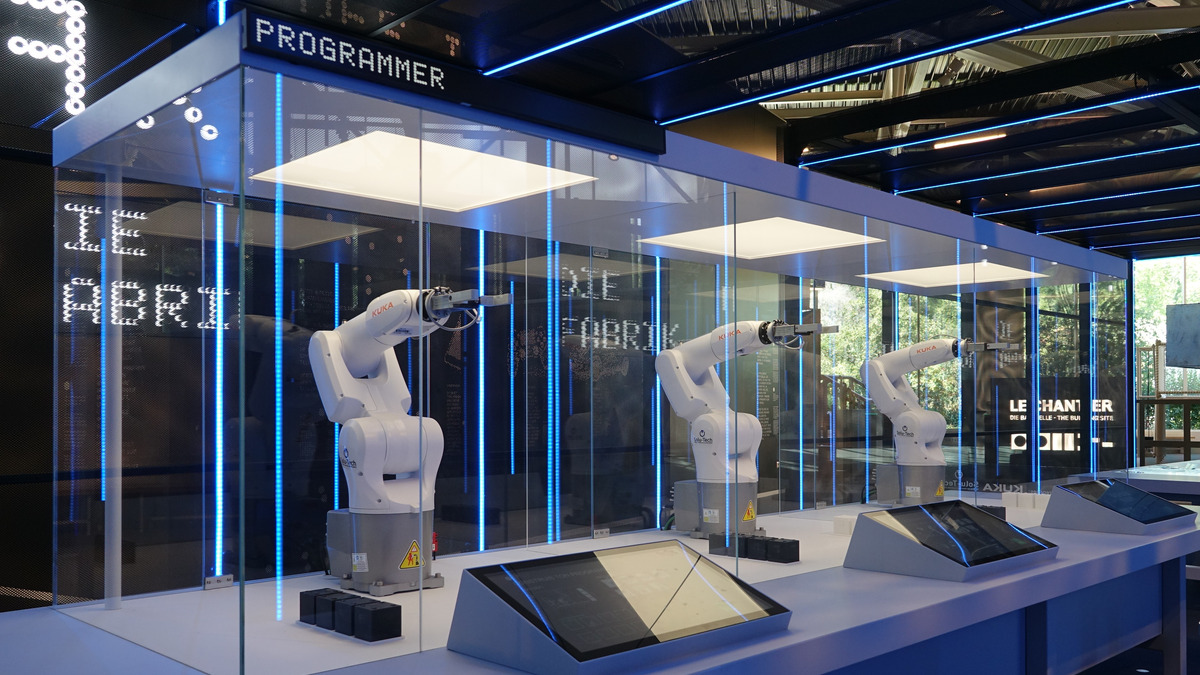 Physical AI startups are targeting industrial and domestic settings - anywhere that requires real-world manipulation.
Source: commons.wikimedia.org
Physical AI startups are targeting industrial and domestic settings - anywhere that requires real-world manipulation.
Source: commons.wikimedia.org
What the Company Has Actually Built
Physical Intelligence's flagship product is a series of Vision-Language-Action models - π0, π0.5, and π0.6 - that allow robots to interpret natural language instructions and perform physical tasks. The models run on hardware from multiple third-party robot manufacturers rather than on a proprietary platform, which is the core of the company's strategy.
By late February 2026, the π0.6 model was launched for third-party hardware partners, folding laundry and handling e-commerce packaging with reduced human intervention. In early March, the company published research on Multi-Scale Embodied Memory, an architecture that gives its models 15-minute contextual memory for multi-step tasks. The following week, it introduced RL Tokens, a reinforcement learning technique enabling sub-millimeter precision in 15 minutes of fine-tuning.
The progress rate is striking. Thrive Capital's Philip Clark noted the team moves at "two to three times faster" than his most optimistic initial projections.
"Two to three times faster than my most optimistic initial expectations." - Philip Clark, Thrive Capital, on Physical Intelligence's development pace.
The company's approach borrows from the same playbook that made large language models commercially useful: train a general model on broad data, then fine-tune for specific tasks. The robotics version of this is harder because physical tasks involve noisy sensor data, imprecise actuators, and an open world that doesn't stay still.
Who Benefits
Physical AI software builders are the clearest winners right now. Physical Intelligence, Figure AI, and Skild AI are all commanding outsized valuations for companies that have not yet sold products at scale. Figure AI - whose humanoid Figure 03 recently appeared at a White House summit with Melania Trump - has already raised $2.34 billion and sits at a $39 billion post-money valuation after its Series C closed in September 2025.
Hardware partners benefit from access to increasingly capable software without bearing the R&D cost. Agile Robots, the Munich-based industrial robotics firm, just announced a partnership with Google DeepMind to integrate Gemini Robotics foundation models into its factory systems. The company has rolled out more than 20,000 robotics solutions and now gets DeepMind's research pipeline on its hardware.
Platform players - Google, NVIDIA, and Amazon - are also moving. Google absorbed Intrinsic, its robotics software moonshot, into the core of its AI operations in February. NVIDIA's Alpamayo robotics model crossed 100,000 downloads. Amazon has hundreds of thousands of robots in its warehouses.
Who Pays
Investors are pricing in a very large market without clear evidence of near-term revenue. The gap between valuation and commercialization is substantial. Physical Intelligence's $11 billion is roughly comparable to where several enterprise SaaS companies trade after years of proven revenue growth. Here it comes at year two, pre-commercial.
Robot OEMs face a squeeze as software becomes the value-capture layer. If general-purpose foundation models commoditize the intelligence side of robotics, the companies selling the physical hardware may find margins compressed by the software layer sitting on top of them.
Operators - the factories, warehouses, and logistics companies expected to eventually buy these systems - haven't yet committed at scale. That bill will arrive later.
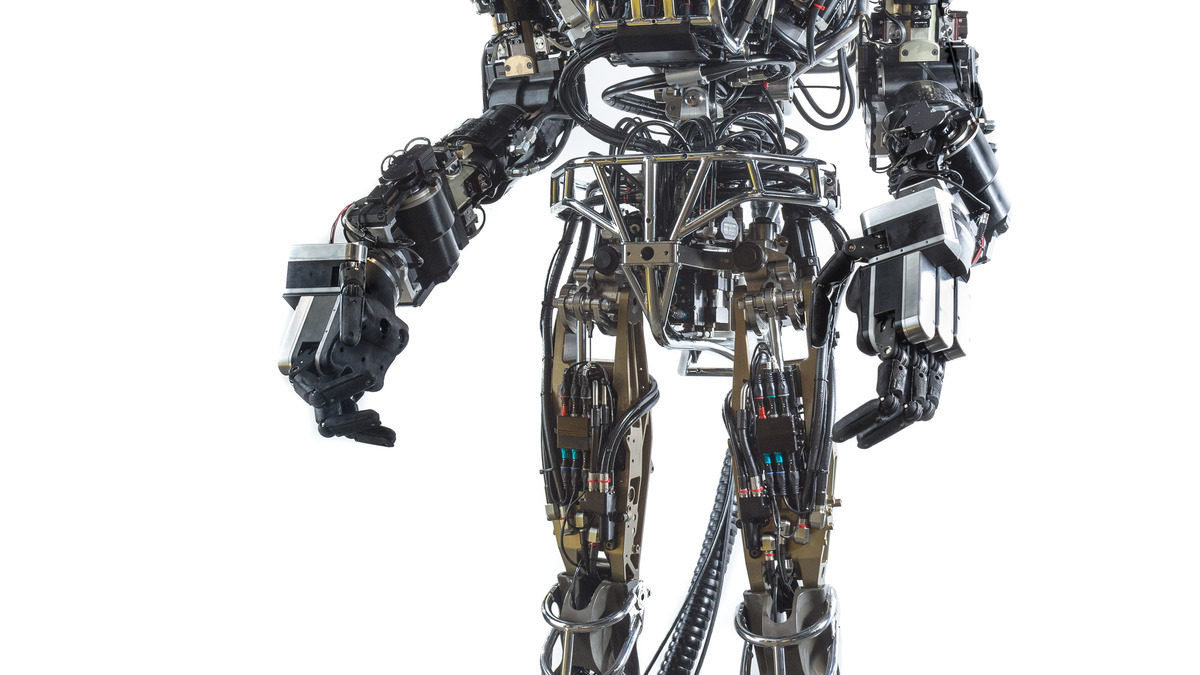 Humanoid robots like early Atlas research platforms laid the groundwork for the current wave of commercial physical AI development.
Source: commons.wikimedia.org
Humanoid robots like early Atlas research platforms laid the groundwork for the current wave of commercial physical AI development.
Source: commons.wikimedia.org
The Counter-Argument
Several reasonable objections apply to the current physical AI investment wave.
First, robotics has been "five years away" from mass commercial deployment for a long time. The technical challenges of reliably operating in unstructured environments - novel objects, cluttered spaces, unexpected obstacles - have proven far more persistent than language model progress suggested they'd be. Physical Intelligence's π0.6 works on laundry and espresso machines. A general-purpose deployment across arbitrary household or industrial environments is a different problem.
Second, the market structure is fragmented. Physical Intelligence's software-first approach requires hardware partners to cooperate and share data. Each additional robot platform adds integration complexity. Open-source alternatives like LeRobot from Hugging Face are advancing quickly and may undercut the case for proprietary foundation models.
Third, valuation multiples on pre-revenue AI companies compress fast when macro conditions shift or a key demo fails. The sector has seen this pattern in autonomous vehicles, where a decade of investor optimism eventually collided with the difficulty of edge cases.
What the Market Is Missing
The physical AI investment surge is real, and so is the underlying technical progress. But most of the capital flowing into the sector is betting on a model transition - from narrow, task-specific robots to general-purpose hardware controlled by foundation models - that hasn't happened yet at commercial scale.
What investors are actually buying is optionality: the right to own a position in what could become a very large software market if the transition happens on schedule. Physical Intelligence's rapid progress on its model series is genuine evidence. So is the involvement of CapitalG, Founders Fund, and Jeff Bezos, who are not typically early to a sector without significant due diligence.
The risk isn't that physical AI fails technically. The risk is that it takes longer than the current round of valuations implies. At $11 billion for a two-year-old pre-revenue company, the margin for schedule slippage is thin.
Sources:

