
Oracle's $553B AI Backlog Says Cloud Is Cashing In
Oracle's Q3 FY2026 results show $553B in contract backlog - up 325% year-over-year - as AI infrastructure demand continues to outpace supply.
 6 min read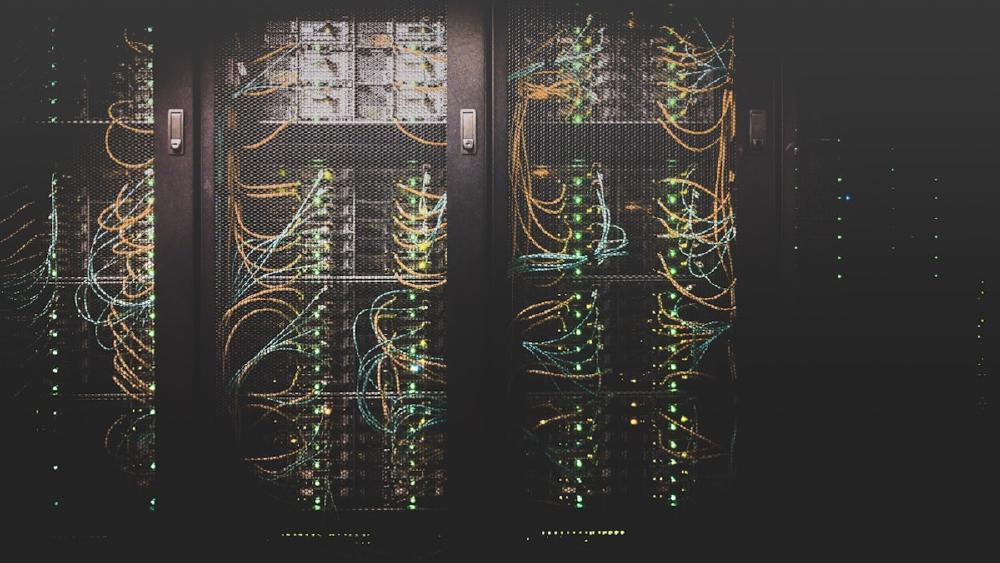
Oracle's remaining performance obligations - its measure of contracted but unrecognized revenue - hit $553 billion at the end of Q3 FY2026, up 325% year-over-year. That figure isn't revenue. But it's a signed commitment, and it tells you something about where enterprise spending on AI infrastructure is actually going.
TL;DR
- $553B in contract backlog, up 325% YoY - driven almost entirely by large-scale AI training deals
- 84% growth in Oracle Cloud Infrastructure (OCI) revenue to $4.9B this quarter
- AI infrastructure revenue up 243%; multicloud database revenue up 531%
- $90B FY2027 revenue guidance, raised $1B from prior forecast
- Oracle signed $29B in new contracts using bring-your-own-hardware and upfront payment structures
The headline from Oracle's Q3 FY2026 earnings - reported March 10 - is that cloud revenue hit $8.9 billion, up 44% year-over-year. Oracle Cloud Infrastructure, the division competing with AWS, Azure, and Google Cloud for AI training workloads, grew 84% to $4.9 billion. The company beat consensus revenue estimates of $16.92 billion, posting $17.2 billion total. Stock closed up roughly 13% on March 11.
These aren't modest numbers for a company that analysts spent much of the last decade writing off as an enterprise software relic clinging to database contracts.
By the Numbers
| Metric | Q3 FY2026 | Year-Over-Year |
|---|---|---|
| Total Revenue | $17.2B | +22% |
| Cloud Revenue (total) | $8.9B | +44% |
| OCI / Cloud Infrastructure | $4.9B | +84% |
| Cloud Applications (SaaS) | $4.0B | +13% |
| AI Infrastructure Revenue | undisclosed | +243% |
| Multicloud Database Revenue | undisclosed | +531% |
| Non-GAAP EPS | $1.79 | +21% |
| Remaining Performance Obligations | $553B | +325% |
| Operating Cash Flow (12-month) | $23.5B | +13% |
| FY2027 Revenue Guidance | $90B | raised $1B |
The AI infrastructure line - which Oracle doesn't break out separately as a revenue figure, only as a growth rate - grew 243% year-over-year. The multicloud database figure at 531% growth reflects Oracle's strategy of running its database products inside AWS, Azure, and Google Cloud, letting customers consolidate workloads without abandoning their existing cloud contracts.
Oracle's gross margin on AI capacity delivered in Q3 came in at 32%, above its own 30% guidance. The company has 10+ gigawatts of power capacity coming online over three years, with 90% funded through partners rather than Oracle's own balance sheet.
 Oracle CEO Safra Catz has overseen Oracle's transformation into a major AI infrastructure provider. Q3 FY2026 results beat analyst estimates across nearly every line.
Source: oracle.com
Oracle CEO Safra Catz has overseen Oracle's transformation into a major AI infrastructure provider. Q3 FY2026 results beat analyst estimates across nearly every line.
Source: oracle.com
What the Numbers Say
The Backlog Is the Story
The $553 billion RPO figure gets the most attention, and it should. Remaining performance obligations represent contracts signed but not yet recognized as revenue. A 325% increase means Oracle is signing far more AI infrastructure deals than it can deliver - which management framed as a supply constraint problem, not a demand problem.
"Demand for AI infrastructure, both GPU and CPU, continues to exceed supply," Oracle said in its earnings release. In Q3, Oracle delivered over 400 megawatts of compute capacity to customers, with 90% on or ahead of schedule. At that pace, converting $553 billion of backlog into recognized revenue will take years.
This matters beyond Oracle. The backlog figure directly counters a narrative that gained traction earlier this year after DeepSeek's efficiency claims prompted questions about whether hyperscalers had overbuilt. Oracle's results suggest enterprises are still signing multi-year, multi-billion-dollar commitments to AI infrastructure. The Amazon-OpenAI $50B stateful AI deal on AWS points to the same conclusion from a different angle.
Database Growth Signals a New Architecture
The 531% growth in multicloud database revenue isn't just a product line win - it reflects a change in how enterprises are building AI applications. Oracle's strategy is to run its Exadata database infrastructure inside rival clouds, which sounds counterintuitive but turns out to be what large enterprises want. They need their data to stay close to their AI compute without migrating away from Oracle's database tooling.
That's a structural shift in enterprise AI architecture, not a one-quarter spike. Companies like Memorial Hermann Health System and investment bank Investec signed onto Oracle Fusion this quarter partly because Oracle embeds AI agents directly into its applications rather than requiring customers to build integrations themselves.
The Guidance Raise
Raising FY2027 guidance to $90 billion - up $1 billion from prior forecasts - is a commitment, not a boast. Oracle now projects it'll roughly double its FY2025 revenue of around $57 billion within two years. Whether OCI can continue growing at 84% annually while maintaining 32% gross margins on AI capacity is the key execution question.
 Oracle secured more than 10 gigawatts of power capacity for AI data centers, with 90% funded through partner arrangements. The company delivered over 400 megawatts to customers in Q3 alone.
Source: unsplash.com
Oracle secured more than 10 gigawatts of power capacity for AI data centers, with 90% funded through partner arrangements. The company delivered over 400 megawatts to customers in Q3 alone.
Source: unsplash.com
What the Numbers Don't Say
"AI Revenue" Is an Elastic Category
Oracle's 243% growth in "AI infrastructure revenue" sounds clean but isn't defined in the filings. It likely captures OCI GPU instance revenue and perhaps related services, but Oracle doesn't publish a standalone AI segment with margin data. When a company reports a triple-digit growth rate on an undisclosed base, the absolute scale is impossible to assess.
The same caveat applies to the $29 billion in contracts signed using bring-your-own-hardware arrangements. In this model, customers supply their own GPU clusters and pay Oracle for software, management, and network access. That's a different risk profile for Oracle than fully owned infrastructure - lighter on capex but also potentially lower-margin over time.
The Backlog Can Be Cancelled
Remaining performance obligations aren't revenue. They're signed contracts, and enterprise contracts - particularly large AI infrastructure agreements - can be restructured, delayed, or cancelled. Oracle's own Stargate data center expansion with OpenAI hit problems earlier this year, which was a reminder that even headline-grabbing AI deals don't always proceed as announced. A $553B backlog is impressive; what matters is how much of it converts.
AWS, Azure, and Google Haven't Reported Yet
Oracle's Q3 result is one data point in a market where AWS, Azure, and Google Cloud are larger players. Oracle's OCI at $4.9 billion per quarter is still a fraction of AWS's revenue. The Oracle results don't tell you whether enterprise AI spending is growing faster at Oracle than at its bigger rivals or whether Oracle is winning a disproportionate share of new AI workloads. The hyperscaler Q1 2026 earnings will provide better context.
"Oracle Corporation will not be among them. We are the disruptor because we are actually embedding the AI right into our applications," Oracle CEO Safra Catz said during the Q3 earnings call, referring to SaaS competitors facing disruption from AI agents.
So What?
For anyone tracking AI infrastructure spending, Oracle's Q3 is evidence that enterprise demand hasn't cooled. The $553 billion backlog, the 84% OCI growth, and the $90 billion guidance raise all point to an AI infrastructure build-out that's still accelerating rather than plateauing.
The DeepSeek-driven efficiency narrative was never wrong on its own terms - you can do more with less compute per task. But cheaper inference per query doesn't automatically reduce total spend if enterprises are running more queries, more agents, and more training runs. Oracle's numbers suggest that's exactly what's happening. The chip investment frenzy tracked elsewhere in the market is showing up on the demand side of Oracle's books.
The one number to watch in Oracle's next quarterly report: whether the RPO backlog continues growing, or whether new contract signings slow as the easy wins get locked in and competition from AWS and Azure intensifies. At $553 billion, there's a lot of room for conversion - or a lot of room for disappointment.
Sources:

