
Oracle Buys Time on Stargate With a Force Majeure Notice
Oracle told the developer of its $165 billion Project Jupiter data center it may invoke force majeure, a move that could delay rent payments by up to three years.
 6 min read
Oracle sent a force majeure notice this week to the developer building Project Jupiter, the 2.45-gigawatt Stargate data center campus in southern New Mexico that anchors roughly $165 billion of planned spending. The company isn't walking away from the site. It's asking to delay when it starts paying for it.
The notice, sent to a Stack Infrastructure unit owned by Blue Owl Capital, cites permitting delays on the natural gas pipeline meant to power the campus. Oracle shares fell about 4% on Thursday, and the stock has now lost more than half its value over the past year.
TL;DR
- Oracle sent a force majeure notice on Project Jupiter, its 2.45GW, $165 billion New Mexico data center under the Stargate banner
- If Blue Owl agrees the delay was caused by forces beyond Oracle's control, Oracle could push rent payments back by up to three years
- The trigger is a stalled Energy Transfer gas pipeline, now delayed to February 2027, plus a pending state air-quality permit due November 23
- Oracle shares fell roughly 4% on the news; the stock is down more than 50% over the past year
- Neither side is walking away. Oracle calls itself "fully committed to New Mexico," and Blue Owl says the financial commitment stands
What the Notice Actually Does
Force majeure clauses exist in most large infrastructure leases to excuse a party from its obligations when something outside its control blocks performance. Oracle isn't invoking one to exit Project Jupiter as the anchor tenant. It wants the option to freeze the clock on rent.
If Oracle and Blue Owl agree that a qualifying event tied to the site's power buildout has occurred, Oracle could win a three-year delay before rent payments begin once the facility's 2028 target date is missed. That doesn't erase the bill. Oracle would still owe interim costs during construction, and the full lease term would still run once payments start. The notice buys scheduling room, not a discount.
"Project Jupiter remains on our planned schedule. We are fully committed to New Mexico."
That's Oracle's public line, issued with the notice. Blue Owl's response was similarly unbothered on paper: the company said the filing "does not change the financial commitments to this multi-year project" and described both sides as fully aligned. Neither statement addresses who absorbs the cost if the 2028 date actually slips.
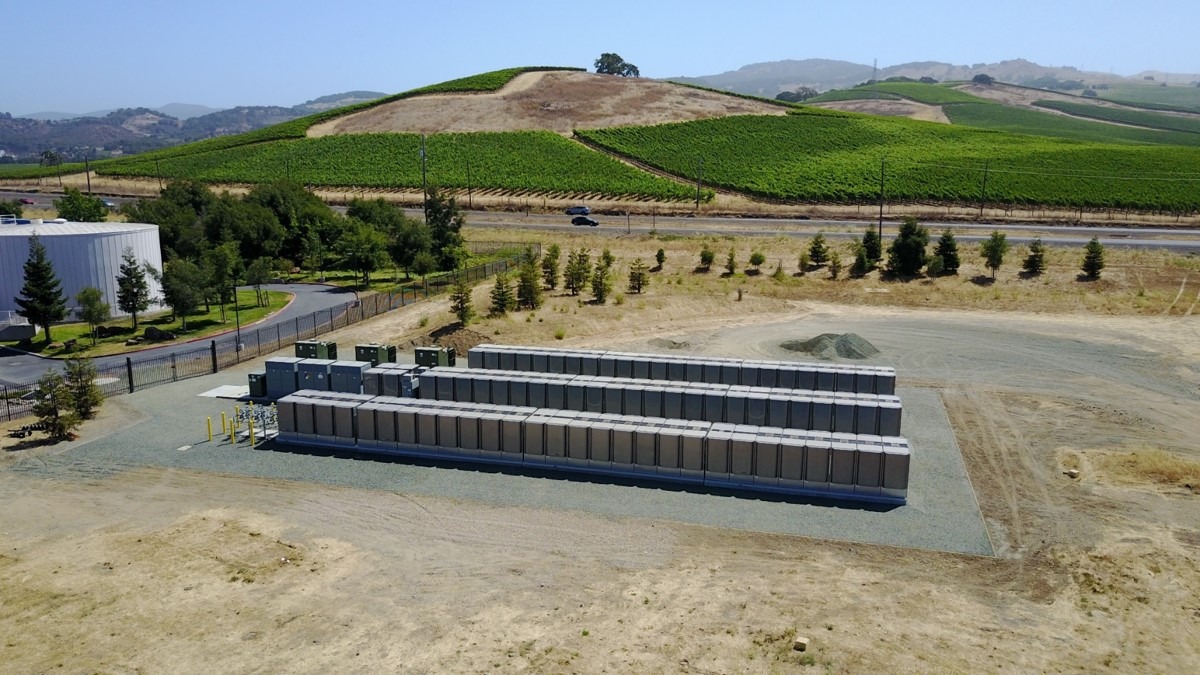 Bloom Energy's solid oxide fuel cells, the same technology slated to power Project Jupiter's 2.45-gigawatt campus, in an existing commercial deployment.
Source: bloomenergy.com
Bloom Energy's solid oxide fuel cells, the same technology slated to power Project Jupiter's 2.45-gigawatt campus, in an existing commercial deployment.
Source: bloomenergy.com
Why Now: A Pipeline and a Permit
Project Jupiter was never going to run on the regional grid. Its power plan depends on gas-fired fuel cells from Bloom Energy, which means a reliable gas supply is load-bearing for the entire timeline. That supply runs through an Energy Transfer pipeline that was supposed to be in service months ago. Regulators have repeatedly denied permits for the route, and the in-service date has slipped nearly six months, to February 1, 2027.
A second regulatory clock is running in parallel. New Mexico's environment department has until November 23 to rule on the air-quality permit the fuel cell system needs to operate, a decision that has already drawn a formal hearing and organized local opposition. The state's Supreme Court separately lifted stays that opponents had used to slow construction, a legal win for Oracle that hasn't resolved the underlying permitting fights.
None of this is Oracle's first stumble on Stargate infrastructure. The company and OpenAI scrapped a planned expansion of a Texas Stargate site earlier this year, and Oracle's own Q3 earnings still leaned on a $553 billion cloud backlog that assumes projects like Jupiter get built on schedule.
Market Reaction
| Signal | Detail |
|---|---|
| Oracle stock, Thursday | Down about 4% on the notice |
| Oracle stock, trailing 12 months | Down roughly 55% |
| Oracle stock, year to date | Down roughly 28% |
| Blue Owl financing debt | Trading below 90 cents on the dollar |
| Sympathy moves | Nvidia, AMD, and Micron also declined the same day |
KeyBanc analyst Jackson Ader flagged the structural issue behind the sell-off: Oracle's reliance on leased, third-party-financed data centers means its payment schedule and the project's actual construction timeline don't have to agree with each other.
"Oracle is in the most tenuous of cash positions of all the major hyperscalers. Payments might be due on a chronological timeline, but the revenue generation is up to the whims of the complex real-world logistics."
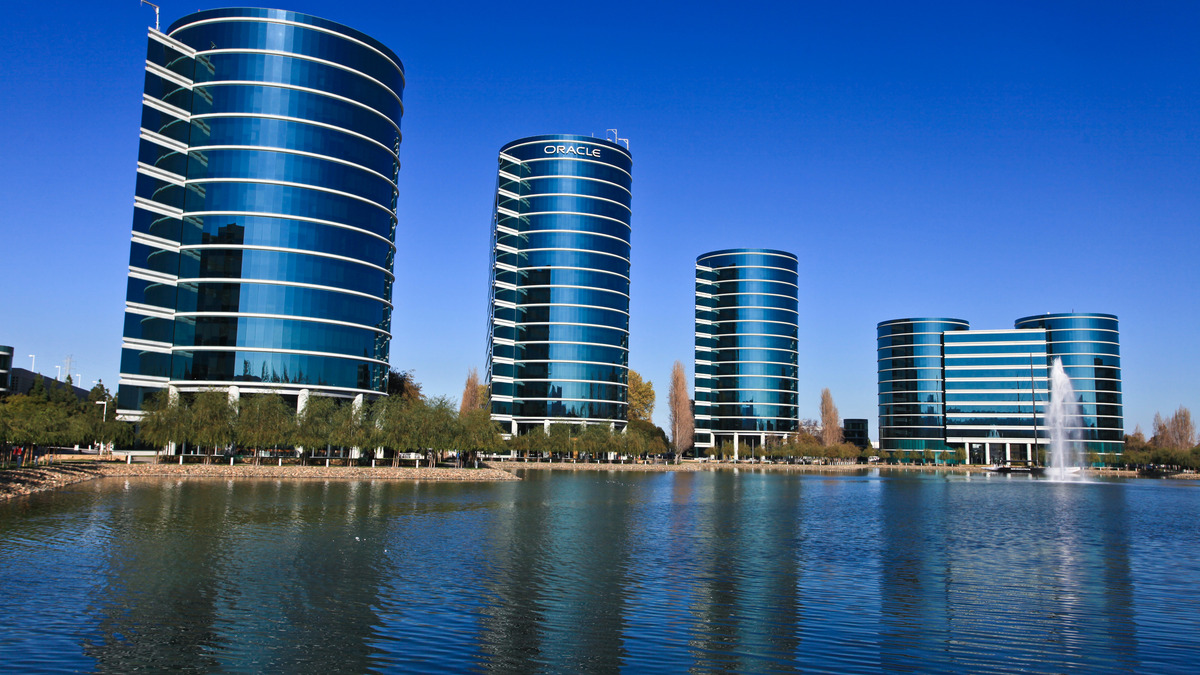 Oracle's Redwood Shores headquarters. The company's cash position, not its ambition, is what analysts are now watching.
Source: commons.wikimedia.org
Oracle's Redwood Shores headquarters. The company's cash position, not its ambition, is what analysts are now watching.
Source: commons.wikimedia.org
Who Benefits
Oracle is the clearest winner of its own maneuver. A three-year rent delay, if granted, buys the company breathing room on cash flow at exactly the moment analysts are questioning whether it can carry its AI infrastructure commitments without leaning harder on debt. It also lets Oracle keep telling investors the project is "on schedule" while quietly hedging against the possibility that it isn't.
Blue Owl and Stack Infrastructure lose little in the near term either way. They remain the developer of record on a $165 billion project with Oracle still committed as anchor tenant, and neither company is treating the notice as a sign the deal is at risk.
Who Pays
The bill lands on whoever is exposed to the gap between when construction debt comes due and when rent starts flowing. That's largely Blue Owl's financing structure, which is why its Project Jupiter-linked debt is already trading below 90 cents on the dollar even before any delay is confirmed. It's a pattern this site has covered before: AI infrastructure spending gets announced as a single number, and the losses, when they show up, land on whichever party in the chain has the least leverage to renegotiate.
New Mexico residents near the site carry a different kind of cost. The same air-quality permit that's holding up Oracle's timeline exists because regulators are weighing gas-fired power generation against local environmental limits, a fight that continues regardless of how Oracle and Blue Owl settle their contract dispute.
A force majeure notice that both sides insist changes nothing is, in practice, an admission that something already has.
Sources:
- Oracle sends force majeure notice on its New Mexico Stargate data center - TechCrunch
- Oracle Declares Force Majeure on $165 Billion Project Jupiter Data Center - Yahoo Finance
- Why Oracle's force majeure notice is freaking out AI bulls - Yahoo Finance
- Why Oracle Stock Just Dropped - The Motley Fool
- Oracle force majeure notice on Stargate site rattles AI investors - Cryptopolitan

