
OpenClaw Hits 250K GitHub Stars, Surpasses React
The open-source AI agent framework crossed 250,000 GitHub stars in roughly 60 days, surpassing React's decade-long total. NVIDIA CEO Jensen Huang called it the most important software release ever.
 6 min read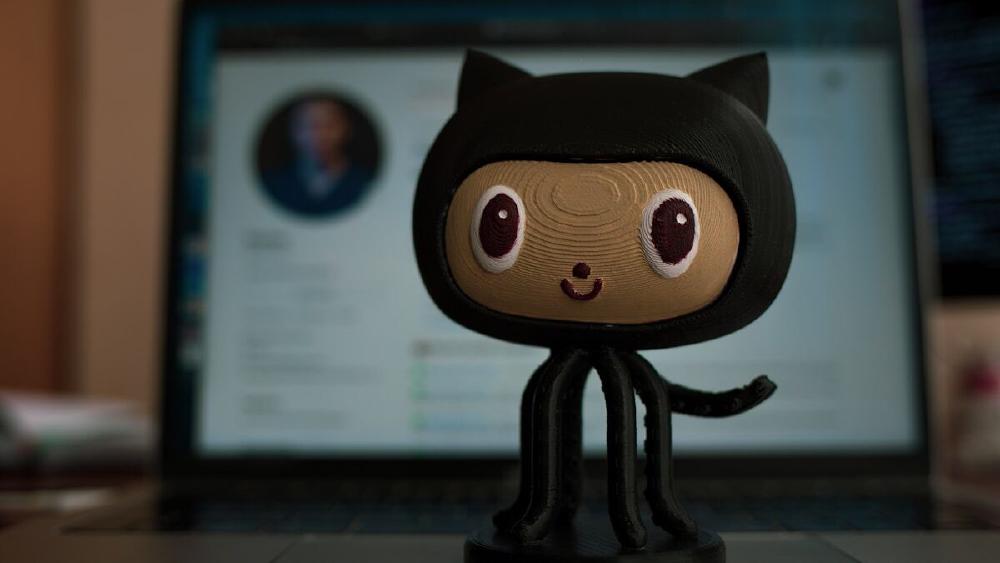
OpenClaw, the open-source AI agent framework formerly known as Clawdbot, has crossed 250,000 GitHub stars - surpassing React, the JavaScript library that powers most of the modern web. React took over a decade to reach that number. OpenClaw did it in roughly 60 days.
TL;DR
- OpenClaw crossed 250,000 GitHub stars as of March 3, surpassing React's all-time total
- Reached this milestone in ~60 days after launching in late January 2026
- NVIDIA CEO Jensen Huang called it "the single most important release of software, probably ever"
- Installation services market has emerged with fees reaching $6,000 in the Bay Area
- New developments include Claw X desktop app, scheduled tasks, multi-agent support, and community skill library
- Over 42,000 instances exposed on the public internet, raising security concerns
The Numbers
| Metric | Value |
|---|---|
| GitHub stars | 250,000+ |
| Time to reach milestone | ~60 days |
| Contributors | 1,000+ |
| Estimated users | 300,000-400,000 |
| Supported messaging platforms | 20+ |
| React's time to same milestone | 10+ years |
Peter Steinberger published the first version as Clawdbot in November 2025 - a weekend project that let you text an AI and have it actually do things on your machine. After Anthropic sent a trademark complaint, it became Moltbot, then OpenClaw. The name changes didn't slow it down.
The project caught fire in late January 2026. Within two weeks it had 190,000 stars. By March 3, it crossed a quarter million, with over 1,000 contributors and an estimated 300,000 to 400,000 users worldwide.
Jensen Huang's Endorsement
NVIDIA CEO Jensen Huang went further than anyone expected at the Morgan Stanley Technology, Media & Telecom Conference on March 4.
"OpenClaw is probably the single most important release of software, you know, probably ever."
That alone would have been headline-worthy. He kept going.
"Linux took, right, some 30 years to reach this level. OpenClaw in, what is it, 3 weeks, has now surpassed Linux. It is now the single most downloaded open source software in history, and it took 3 weeks."
 Jensen Huang praised OpenClaw at the Morgan Stanley TMT Conference, calling its adoption curve "vertical" even on a semi-log scale.
Source: Unsplash
Jensen Huang praised OpenClaw at the Morgan Stanley TMT Conference, calling its adoption curve "vertical" even on a semi-log scale.
Source: Unsplash
Huang framed the significance in compute terms. Standard AI queries consume a baseline amount of tokens. Agentic tasks - the kind OpenClaw runs - consume roughly 1,000 times more. OpenClaw agents, which chain multiple actions together, consume approximately 1 million times more tokens than a simple chatbot query.
For NVIDIA, that math is straightforward: more agent adoption means more GPU demand. Huang's enthusiasm isn't purely altruistic. But the endorsement carries weight regardless - the CEO of the world's most valuable company doesn't call something "the most important software release ever" casually.
NVIDIA has published an official guide for running OpenClaw on RTX GPUs and DGX Spark, and confirmed that multiple OpenClaw agents are running internally at the company.
What OpenClaw Actually Does
For readers unfamiliar with the project, OpenClaw is a self-hosted AI agent that runs on your own hardware - a laptop, a Mac Mini, a cloud VPS, or a home server. You interact with it through WhatsApp, Telegram, Slack, Discord, Signal, or any of 20+ messaging platforms. It reads emails, manages calendars, runs terminal commands, deploys code, automates browser tasks, and maintains persistent memory across sessions.
The agent is model-agnostic. It wraps around the Anthropic API by default but supports Claude, DeepSeek, OpenAI's GPT models, and local models. Users bring their own API keys. The core Gateway is MIT-licensed - fully readable, forkable, and auditable.
For a deeper look at the platform, our OpenClaw review covers the architecture, security considerations, and practical setup.
New Developments
Several updates have shipped alongside the 250K milestone:
Claw X Desktop App - A native desktop application that simplifies setup and management for users who don't want to work from the terminal.
Scheduled Tasks - OpenClaw can now run automated tasks on a schedule. Instead of prompting the agent every morning, you configure it once and it creates the cron job automatically.
Multi-Agent Support - A single OpenClaw instance can now run multiple agents with different roles, each bound to different messaging channels. Agent A handles scheduling on Telegram while Agent B manages technical support on Slack.
Awesome OpenClaw Skills - A community-curated library of pre-built skills and configurations that users can plug into their installations.
Security Fixes - Rapid patching cycle addressing vulnerabilities discovered as the user base exploded. This is particularly urgent given the 130+ vulnerabilities identified in earlier versions and the supply chain attacks that have targeted the ecosystem.
 OpenClaw runs on personal hardware - from Mac Minis to cloud VPS instances - but installation complexity has spawned a cottage industry of paid setup services.
Source: Pexels
OpenClaw runs on personal hardware - from Mac Minis to cloud VPS instances - but installation complexity has spawned a cottage industry of paid setup services.
Source: Pexels
The $6,000 Installation Problem
Growth has created a secondary market that OpenClaw's creators didn't plan for. Installation services have sprung up globally, with prices ranging from $30 for basic remote setup to $6,000 for on-site configuration in the San Francisco Bay Area.
SetupClaw, one of the more prominent services, charges $3,000 for managed installation, $5,000 for remote configuration with ongoing support, and $6,000 for in-person Bay Area setup. In China, similar services range from 30 to 5,000 CNY.
The installation market highlights a tension at the heart of the project. OpenClaw is free and open-source, but setting it up properly - with security hardening, SSL, proper sandboxing, and backup configuration - requires skills that most of its target audience doesn't have. The people most excited about a personal AI agent are often the least equipped to deploy one safely.
That gap has real consequences. Over 42,000 OpenClaw instances have been found exposed on the public internet without proper security, and on-site installation services carry the risk of backdoor insertion that users have no way to verify.
What It Means
 The compute implications of OpenClaw's adoption are significant - agentic tasks consume orders of magnitude more tokens than standard chatbot queries.
Source: Unsplash
The compute implications of OpenClaw's adoption are significant - agentic tasks consume orders of magnitude more tokens than standard chatbot queries.
Source: Unsplash
OpenClaw's growth is a data point about where the AI industry is heading. The shift from chatbots to agents - from "answer my question" to "do this task for me" - is the defining transition of 2026. Jensen Huang captured it precisely: "The last prompt was queries. This prompt are actions. They're tasks. Do something for me."
The speed of adoption is real. The security risks are real. The compute implications are real. Whether OpenClaw specifically will be the dominant agent framework in a year is less certain - the project's creator, Peter Steinberger, has already left to join OpenAI, and the open-source community is now steering the ship.
But 250,000 stars in 60 days, a personal endorsement from the CEO of the world's most valuable company, and a secondary market for installation services all point to the same conclusion: the demand for personal AI agents that actually do things isn't a bubble. It's a market.
Sources:
- NVIDIA CEO Jensen Huang Says OpenClaw Is the Single Most Important Software Release "Probably Ever" - OfficeChai
- NVIDIA CEO Says OpenClaw Did in 3 Weeks What Linux Took 30 Years - WCCFTech
- What Is OpenClaw? The Self-Hosted AI Agent Taking Over GitHub in 2026 - DextraLabs
- OpenClaw Installation Services Demand Surges - KuCoin News

