
Fidji Simo Steps Down - OpenAI Bets on Brockman
OpenAI's No. 2 executive Fidji Simo exits over chronic illness as Greg Brockman absorbs her role - the latest in two years of steady leadership turnover as Anthropic closes in.
 7 min read
OpenAI is telling investors and the public that it is winning the AI race - but its own organization chart tells a different story: as of this week, the company has no replacement for its most senior business executive and is concentrating critical operational power in a single co-founder.
TL;DR
- Fidji Simo says: She gave everything to the job and "failed to make this decision many times before"
- OpenAI says: Brockman, Friar, and Kwon absorb her role; no replacement will be hired
- The evidence shows: This is the 22nd significant leadership departure in two years, and it comes as Anthropic has overtaken OpenAI in annualized revenue
The departure of Fidji Simo - CEO of Applications since May 2025 - puts the public optimism of OpenAI's IPO build-up against a private organizational reality that's getting thinner at the top.
"i am really sad about this and very grateful for all fidji has done for openai, and even grateful for her friendship and who she is as a person. we all wish her the best for a speedy recovery."
- Sam Altman, posting on X, July 9, 2026
"I failed to make this decision many times before."
- Fidji Simo, in her internal staff note, July 9, 2026
These two statements appeared within hours of each other. Together, they describe an executive who was too committed to leave even when her health demanded it, and a CEO visibly shaken by her exit. Neither reads like the communication of a company with deep leadership bench strength.
Claim vs Claim
| What OpenAI Says | What the Record Shows |
|---|---|
| The company has "strong, capable leaders in place" | 22 significant executive departures in 2 years, including 9 of 11 co-founders |
| Greg Brockman is well-positioned to lead | Brockman now runs products, enterprise, go-to-market, AND compute on top of his presidential duties |
| No external hire is needed to replace Simo | Simo's role had COO, CFO, CPO, and CRO all reporting through her |
| OpenAI is leading the AI industry | Anthropic overtook OpenAI in annualized revenue in April 2026, reaching $47B ARR vs. OpenAI's $25-33B |
The Evidence
Who Fidji Simo Was
Simo joined OpenAI in May 2025 from Instacart, where she had guided the company through its IPO. At OpenAI she was given a newly created role - CEO of Applications - reporting directly to Sam Altman and designed to let him step back from day-to-day business to focus on research, safety, and compute strategy.
In practice, Simo held together OpenAI's commercial operations at a critical moment. COO Brad Lightcap, CFO Sarah Friar, and CPO Kevin Weil all reported through her. Her role wasn't administrative - it was the structural load-bearing wall between Altman's research ambitions and the actual business of selling AI.
She disclosed in April that a severe exacerbation of POTS - Postural Orthostatic Tachycardia Syndrome, a chronic neuroimmune condition she had managed since 2019 - had forced her onto medical leave. On July 9 she announced she'd not be returning full-time.
"For my entire time here, I've postponed medical tests and new therapies to stay completely focused on the job," she wrote.
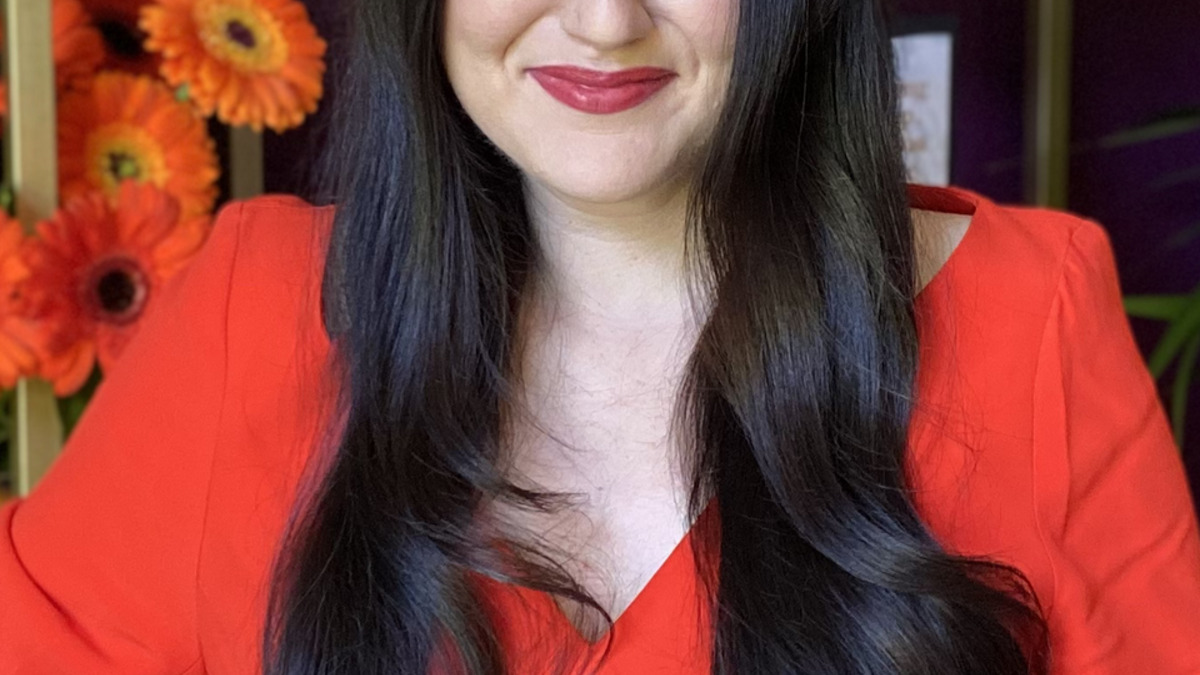 Fidji Simo joined OpenAI in May 2025 to consolidate its business and product operations under a single executive layer.
Source: wikimedia.org
Fidji Simo joined OpenAI in May 2025 to consolidate its business and product operations under a single executive layer.
Source: wikimedia.org
The Brockman Consolidation
Greg Brockman is one of two original co-founders still at OpenAI. Of the company's original 11 co-founders, nine have left over the past two years.
Brockman already held the title of president and had been covering Simo's product duties since her medical leave in April. Now he takes official ownership of ChatGPT's product business, enterprise teams, go-to-market operations, and compute initiatives - in addition to his existing responsibilities. Chief Revenue Officer Denise Dresser now reports into his chain. No new hire is planned for the role Simo vacated.
The result is a company where, below Sam Altman, most consequential decisions flow through a single person - a founder with deep technical roots but no prior experience running a commercial operation at scale before joining OpenAI.
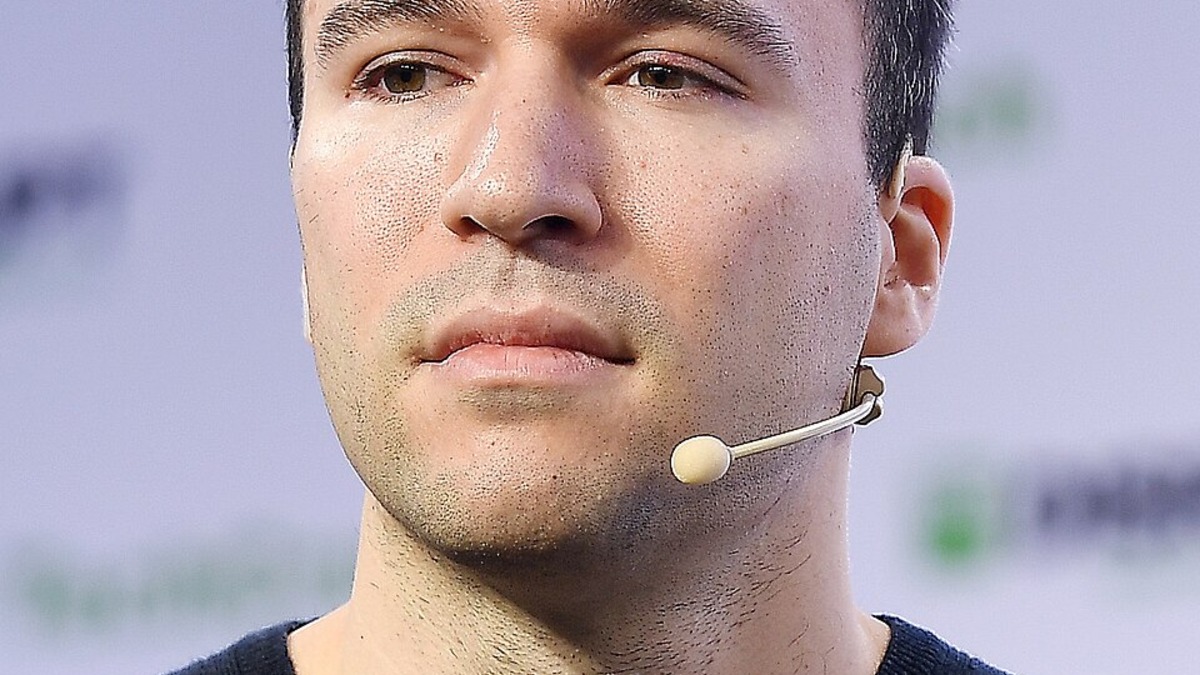 Greg Brockman absorbs Simo's full commercial portfolio, now the sole operational deputy to Sam Altman.
Source: wikimedia.org
Greg Brockman absorbs Simo's full commercial portfolio, now the sole operational deputy to Sam Altman.
Source: wikimedia.org
The Bench Problem
The pattern matters as much as the individual departure. Since early 2024, OpenAI has lost its chief scientist (Ilya Sutskever), its CTO (Mira Murati), its chief research officer, its vice president of research, multiple co-founders, its marketing chief, its chief communications officer, its chief people officer, and now its head of business. The pattern of departures from OpenAI's safety and research teams was documented here months ago.
April 2026 alone saw the exit of Bill Peebles (Sora lead), Kevin Weil (VP for Science), and a senior B2B applications executive - on a single day. Kate Rouch, OpenAI's marketing chief, also stepped down around the same time to focus on her cancer recovery.
Early 2024 - Ilya Sutskever, co-founder and chief scientist, departs following boardroom conflict. CTO Mira Murati and chief research officer Bob McGrew follow.
2024-2025 - John Schulman (co-founder, goes to Anthropic), Barret Zoph (VP research), Tim Brooks (Sora co-lead, goes to Google DeepMind then Meta), and multiple safety researchers exit, several citing AI safety concerns.
April 2026 - Medical leaves cascade: Simo (POTS), Kate Rouch (cancer recovery). Single-day triple exit: Kevin Weil, Bill Peebles, Srinivas Narayanan.
July 9, 2026 - Fidji Simo announces she won't return full-time. Brockman absorbs her portfolio. No replacement planned.
The net effect is an organization that has rebuilt itself almost entirely around business execution, with research and safety-oriented leaders largely gone. Twenty-two significant departures in two years would be striking for any company. For one seeking an IPO at a reported $852 billion valuation, it's a governance question that underwriters and institutional investors won't ignore.
Who Is Right
The evidence doesn't support the implicit claim that this transition is routine or that the bench is deep enough to absorb it cleanly. Brockman is a capable infrastructure builder who has been effective in his expanded responsibilities since April - but absorbing the full commercial portfolio of a role designed to take that burden off Altman adds significant concentration risk.
What OpenAI faces isn't an organizational crisis in the acute sense - it's still the most prominent AI company in the world, still launching products that attract hundreds of millions of users. But the gap between its public narrative and its internal structure has widened to a point that warrants honest scrutiny. Anthropic overtaking OpenAI in annualized revenue was one signal. Simo's departure is another. The two signals point in the same direction: the competitive landscape is shifting at exactly the moment when OpenAI needs operational depth most.
Who Gets Caught in the Middle
Enterprise customers who signed multi-year contracts with OpenAI face a supplier whose key relationships and institutional knowledge are increasingly concentrated in two people. Sales and partnership structures that Simo's team built may be deprioritized as Brockman realigns reporting lines.
Employees waiting for the IPO - some holding significant unvested equity after three or more years at the company - are watching their countdown tick as leadership stability questions add complexity to the path to public markets.
Investors who backed OpenAI's private rounds above $800 billion are pricing a company that'll list on public markets without the experienced commercial operator they were shown in the 2025 capital raise.
Brockman himself is being asked to carry a scope of responsibility that few individuals at any company would take on. He has demonstrated willingness and capability so far. Sustainability is the open question.
Simo's note included a line that landed harder than most corporate departures: "I failed to make this decision many times before." It reads as a warning as much as a goodbye - a reminder that the pressure to stay in a role at a company like OpenAI can outlast what a human body will sustain. The organization that benefits from that pressure is the same one now trying to convince the world it's ready to go public.
Sources:
- Fidji Simo steps down from OpenAI's No. 2 role - TechCrunch
- OpenAI power consolidates under co-founder Greg Brockman - MSN/CNBC
- Fidji Simo steps down from OpenAI's number two job - The Next Web
- OpenAI Executive Exodus 2026 - Kingy AI
- Inside the OpenAI Exodus: 21 Key Leaders Who Left and Why - Techloy
- Anthropic Overtakes OpenAI in Revenue - Trending Topics

