
OpenAI Files for IPO, Eyes $1 Trillion Valuation
OpenAI filed a confidential S-1 with the SEC on June 8, targeting a public debut above $1 trillion as early as September 2026, following Anthropic by one week.
 6 min read
OpenAI quietly submitted a confidential S-1 registration statement to the U.S. Securities and Exchange Commission on or around May 22 and confirmed the move publicly on June 8 - one week after rival Anthropic made the same step, and days before Elon Musk's SpaceX begins trading. The three filings together represent a reshaping of how America's most valuable private technology companies are approaching public markets in 2026.
TL;DR
- Confidential S-1 filed with the SEC; public confirmation came June 8, 2026
- Current private valuation is $852 billion; IPO target is above $1 trillion
- Annualized revenue hit $25 billion in February, up from $2 billion in 2023
- Cash burn runs at roughly $25 billion per year; profitability not expected before 2029
- Goldman Sachs, Morgan Stanley, and JPMorgan are leading the offering
- Targeting a public debut as early as September 2026
Sam Altman's reaction to the filing going public was blunt: "We recently submitted a confidential S-1. We expect it to leak so we're just announcing it." He also signaled that a listing isn't guaranteed this year - "there are things we want to do that are likely easier as a private company" - a comment that reads less like hesitation and more like negotiating room with underwriters.
 OpenAI joins a wave of AI company IPO filings in mid-2026.
Source: unsplash.com
OpenAI joins a wave of AI company IPO filings in mid-2026.
Source: unsplash.com
A Race to the Public Window
OpenAI's filing lands in an unusually crowded sprint. Anthropic filed its own confidential S-1 on June 1, targeting an October 2026 debut at a near-$1 trillion valuation. SpaceX, which Musk has repositioned as an AI-adjacent compute and connectivity business, is expected to start secondary-market trading in late June. If all three list at their target valuations, the combined market capitalization would be roughly $2.5 trillion - a concentration of new public AI equity with no historical comparison.
CFO Sarah Friar has been the financial face of the IPO preparation since at least April, when she confirmed on CNBC that retail investors would receive an allocation - a deliberate signal that this listing won't be a closed club for institutional money. If the IPO prices at a $1 trillion market cap, OpenAI would rank among the 15 largest S&P 500 constituents on day one.
The Financial Picture
The revenue growth is real and fast. OpenAI generated roughly $2 billion in annualized revenue in 2023. That grew to $20 billion by the end of 2025, and reached roughly $25 billion on an annualized basis in February 2026. The company now counts more than 900 million weekly active users and 50 million paying subscribers.
The burn rate is also real and fast. Gross margin compressed from 40 percent in 2025 to 33 percent in early 2026, as inference costs scaled faster than revenue. OpenAI's own internal projections put 2026 net losses at $14 billion on a non-GAAP basis - independent analyst firm FutureSearch pegs GAAP losses 80 percent higher, at around $25-26 billion. Cash-flow positive isn't on the calendar before 2030.
| Metric | OpenAI | Anthropic |
|---|---|---|
| Private valuation | $852B | $965B |
| IPO valuation target | $1T+ | ~$1T |
| Annualized revenue | ~$25B (Feb 2026) | ~$47B (May 2026) |
| Profitability | 2029-2030 | Q2 2026 first profit |
| IPO timeline | Sep 2026 (target) | Oct 2026 (target) |
| Lead underwriters | GS, MS, JPM | Not disclosed |
Two facts in that table deserve attention. Anthropic's annualized revenue already tops OpenAI's by roughly $22 billion, a reversal that happened in early 2026 when Anthropic's enterprise contracts started scaling. And Anthropic reported its first operating profit - $559 million at a 5 percent margin - in Q2 2026, while OpenAI is still projecting losses into the end of the decade.
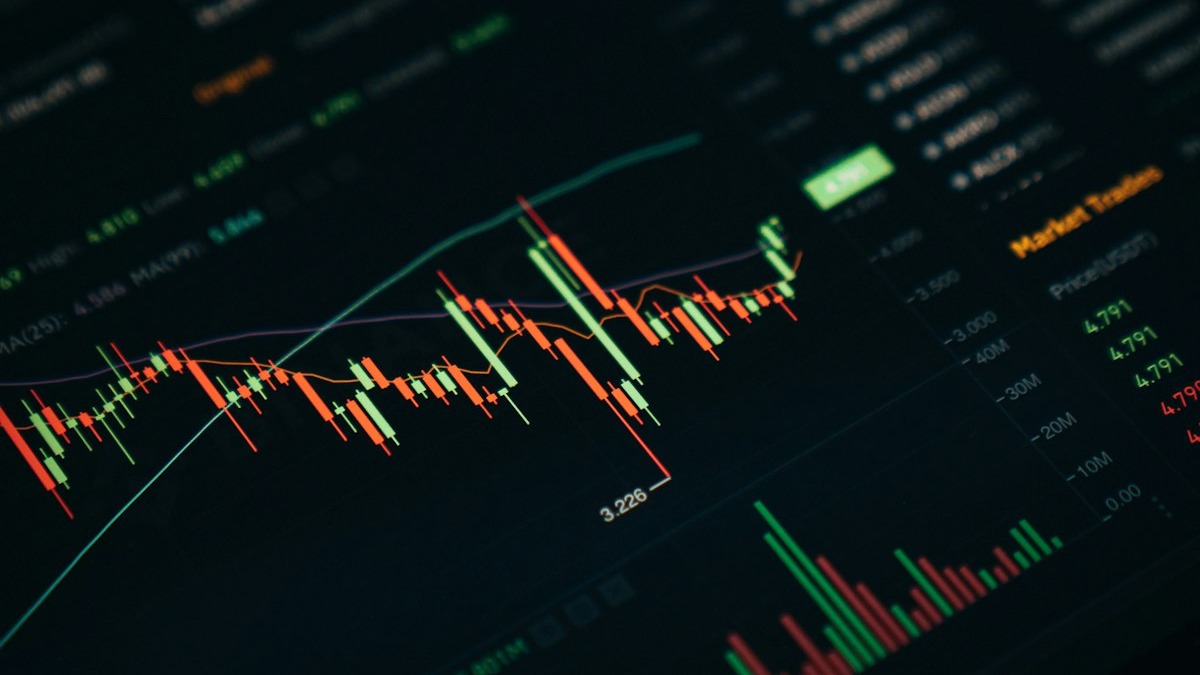 The OpenAI IPO would rank among the largest public listings in U.S. history.
Source: unsplash.com
The OpenAI IPO would rank among the largest public listings in U.S. history.
Source: unsplash.com
Who Benefits
Sam Altman and core employees hold the most obvious upside. Altman's stake - the exact percentage hasn't been disclosed - would be worth tens of billions at a $1 trillion valuation. The company also held a retail-oriented private placement in March 2026 that raised $3 billion from individual investors at $852 billion, three times the $1 billion target, signaling that retail demand is already priced in.
Strategic investors have the most to gain on paper. Microsoft holds roughly 27 percent. SoftBank has invested more than $60 billion across rounds. Amazon committed $50 billion in March 2026, with NVIDIA adding $30 billion with that round. All of them are sitting on paper gains that a public market would convert into tradeable equity.
The AI supply chain benefits indirectly. A successful OpenAI IPO at $1 trillion verifies the premium on compute, data, and tooling that the entire ecosystem is priced against. It also makes it easier for every downstream AI company to raise or list at aggressive multiples.
Who Pays
Public market investors are buying a company with a negative 122 percent non-GAAP operating margin in Q1 2026 - a statistic from financial analyst Ed Zitron's analysis of the company's leaked figures. The $1 trillion target implies a 35x to 40x forward revenue multiple. That number assumes a monopoly outcome that doesn't yet exist.
Existing private shareholders face dilution from the issuance of new shares. The exact share count hasn't been disclosed, but it's standard for S-1 filings of this size to include a primary offering component. Shareholders who bought in at $852 billion face pressure if the IPO prices below that mark.
Microsoft has the most complicated position. As a 27 percent holder and exclusive cloud partner, it benefits from the IPO - but a public OpenAI with its own balance sheet and access to equity markets has more negotiating power on the Azure compute contract renewal coming in 2027. The partnership terms that made sense when OpenAI was capital-constrained may not survive the company's first earnings call.
The Musk lawsuit that sought to block OpenAI's for-profit conversion was dismissed in May 2026 on statute of limitations grounds, clearing the last legal obstacle the IPO process faced. Copyright litigation from the New York Times and the Authors Guild remains active, with estimated settlement exposure of $500 million to $5 billion - material but not deal-blocking at a $1 trillion valuation.
OpenAI's S-1 will become public 15 days before a planned IPO roadshow under SEC rules; the working timeline puts that disclosure in August 2026, which means Wall Street will have the full financials - including the GAAP loss figure - before pricing day.
Sources:
- OpenAI confidentially files for IPO - CNBC
- OpenAI files confidential SEC paperwork - ABC News
- "We expect it to leak so we're just announcing it" - Fortune
- OpenAI IPO valuation, financials and risks - IndMoney
- OpenAI files for IPO at $852B valuation - AI Weekly
- OpenAI IPO: Goldman Sachs, Morgan Stanley on board - Prism News
- OpenAI's negative 122% operating margin Q1 2026 - Where's Your Ed At

