
OpenAI's 2028 Phone Would Replace Apps With AI Agents
Analyst Ming-Chi Kuo claims OpenAI is building a smartphone with Qualcomm and MediaTek where AI agents replace traditional apps, targeting 2028 mass production.
 6 min read
"Users are not trying to use a pile of apps. They are trying to get tasks done and fulfill needs through the phone. Only by fully controlling both the operating system and hardware can OpenAI deliver a comprehensive AI agent service."
That quote - from analyst Ming-Chi Kuo, published on X on April 27 - kicked off a wave of breathless coverage claiming OpenAI is quietly building a smartphone where AI agents replace every app you've ever installed. Chip partners: Qualcomm and MediaTek. Manufacturer: Luxshare. Mass production target: 2028.
OpenAI declined to comment. So we read the analyst note carefully instead.
TL;DR
- What they said: OpenAI is co-developing a custom phone with Qualcomm, MediaTek, and Luxshare; agents replace apps; mass production by 2028
- What we found: The supply-chain partners are plausible; the "no apps" vision requires an OS that OpenAI doesn't have; the 2028 timeline fits early-stage feasibility work, not a confirmed roadmap
- Kuo is reliable on Apple hardware; his non-Apple predictions have a weaker track record
The Claim
Kuo's note doesn't cite named sources inside OpenAI. It describes a device designed to "continuously understand users' context" through a hybrid of on-device and cloud AI models. Apps would vanish from the home screen; AI agents would handle tasks - ordering food, booking travel, generating documents - on demand.
The hardware stack, per Kuo: a custom chip developed jointly with MediaTek and Qualcomm, with Luxshare handling co-design and manufacturing. Component specs should be finalized by end of 2026 or Q1 2027. Mass production: 2028.
The logic behind why OpenAI would want its own phone is internally coherent. ChatGPT today runs on iOS and Android, which means Apple's and Google's rules govern what it can and can't touch - contacts, location, sensors, background processes. An OpenAI device bypasses those restrictions. It'd give the company's agents direct access to behavioral data that no app on a third-party phone could collect at the same depth.
The Evidence
The hardware partners are credible
Luxshare manufactures for Apple and a range of other major consumer electronics companies. Both MediaTek and Qualcomm ship mobile chips with on-device AI inference built in - Qualcomm's Snapdragon 8 Elite already handles large language models locally. The supply-chain relationships Kuo describes are not exotic. These companies talk to a lot of potential customers.
What's absent is any confirmation from Qualcomm, MediaTek, or Luxshare. No press releases, no executive comments, no leaked RFQs. Kuo didn't publish documentation. OpenAI's silence is consistent with two very different things: a real project that isn't ready to announce, and a set of preliminary conversations that never became a product commitment.
The 2028 timeline puts this in feasibility territory
If component specs aren't locked until late 2026 or Q1 2027, and mass production starts in 2028, this phone is at minimum two years from shelves. Consumer hardware projects routinely start this early - Apple begins chip architecture work four to five years before a device ships. So the timeline doesn't disprove the story.
What it does suggest is that Kuo is describing something in the concept or early feasibility phase - not a confirmed roadmap, and not a product anyone has committed to shipping.
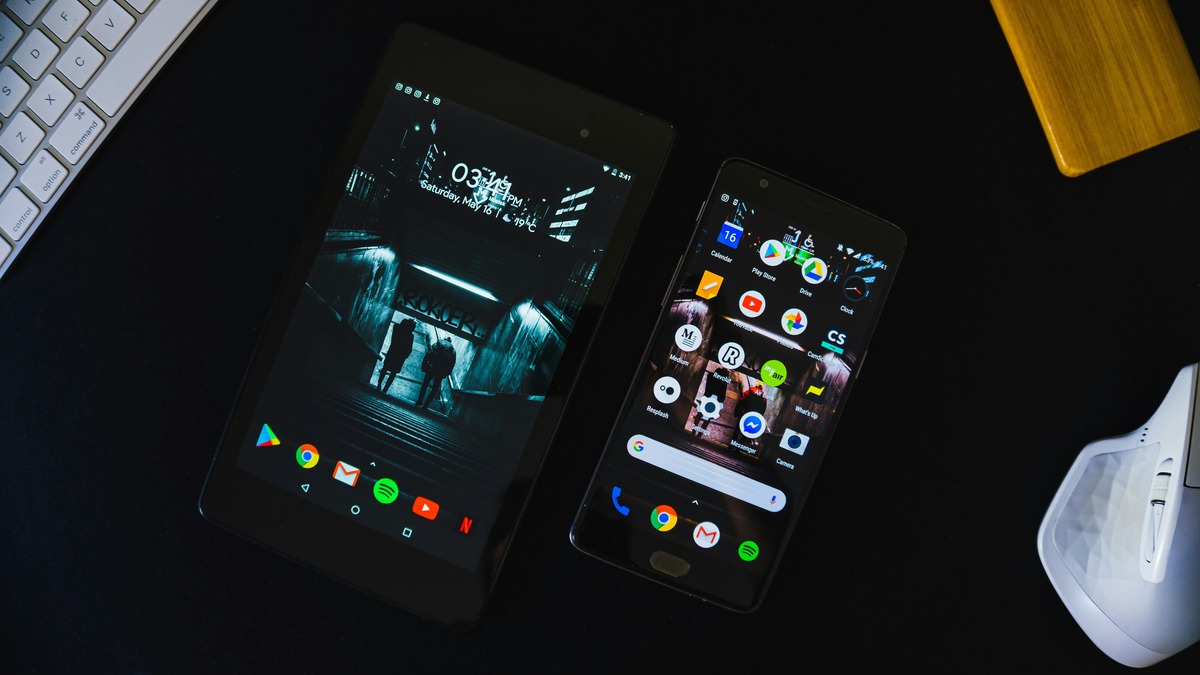 The app grid that AI agents are supposed to replace - the central bet in Kuo's note about OpenAI's phone strategy.
Source: unsplash.com
The app grid that AI agents are supposed to replace - the central bet in Kuo's note about OpenAI's phone strategy.
Source: unsplash.com
The "no apps" vision requires what OpenAI doesn't have
The core claim - AI agents replacing apps - runs into a wall that has stopped much larger companies. Building a competitive mobile OS isn't a 2028 problem. It's a decade-long infrastructure and developer ecosystem problem.
Google spent years and billions assembling Android. Microsoft tried mobile OS twice, with Windows Phone and Windows 10 Mobile, and both failed despite vast resources and existing developer relationships. Amazon launched the Fire Phone in 2014; it lasted fourteen months.
OpenAI could build a device on top of Android with a custom AI layer - which is what Samsung's Galaxy AI features already do. That keeps the apps; it adds an agent interface on top. Useful, but not the "no apps" vision Kuo is describing.
Without its own OS, OpenAI can't escape the App Store rules it's chafing against. With its own OS, it needs thousands of developers to write software for a platform that has zero existing users. Both paths carry enormous execution risk.
Claim vs Reality
| What Kuo Says | What We Can Verify | Confidence |
|---|---|---|
| Qualcomm and MediaTek as chip partners | Both capable; neither has confirmed | Plausible |
| Luxshare as manufacturer | Credible supply-chain role; unconfirmed | Plausible |
| AI agents replacing apps | Requires own OS; no precedent at OpenAI | Aspirational |
| Specs finalized by end-2026 or Q1 2027 | Consistent with 2028 production timeline | Consistent |
| Mass production 2028 | Standard lead time for new device category | Consistent |
What They Left Out
OpenAI's own announced hardware isn't a phone. Chief Global Affairs Officer Chris Lehane said earlier this year that OpenAI will announce its first hardware product in the second half of 2026. Multiple reports identify that device as earbuds, not a phone. If accurate, the smartphone would be OpenAI's second piece of hardware - while the company is still learning from the first one.
The data collection angle is a regulatory story. Kuo frames continuous context-understanding as a feature. A device that monitors which tasks you complete, where you go, who you contact, and how you communicate - feeding that stream to OpenAI's servers - is also a surveillance platform. GDPR, CCPA, and emerging state laws would require explicit disclosure and opt-out mechanisms. Apple's App Store rules, the ones OpenAI wants to escape, were partly written to prevent this kind of ambient data collection.
OpenAI already depends on the platforms it wants to bypass. ChatGPT is distributed through iOS and Android to hundreds of millions of users. It has also expanded into commerce integrations with retail and service partners who rely on Apple and Google's app infrastructure. Launching a competing phone turns its biggest distribution partners into competitors overnight.
The cost model adds layers onto an already expensive product. A phone running AI agents at scale would require cloud AI usage well beyond a standard data plan. Complex tasks - presentation generation, multi-step research, image synthesis - require cloud model calls that burn through compute budgets quickly. That means new AI usage tiers on top of whatever device costs, mobile data costs, and existing ChatGPT subscription fees users already pay.
OpenAI's on-device privacy filter work suggests the company is thinking about local inference. But lightweight PII masking and full agentic task completion are very different demands on a mobile chip.
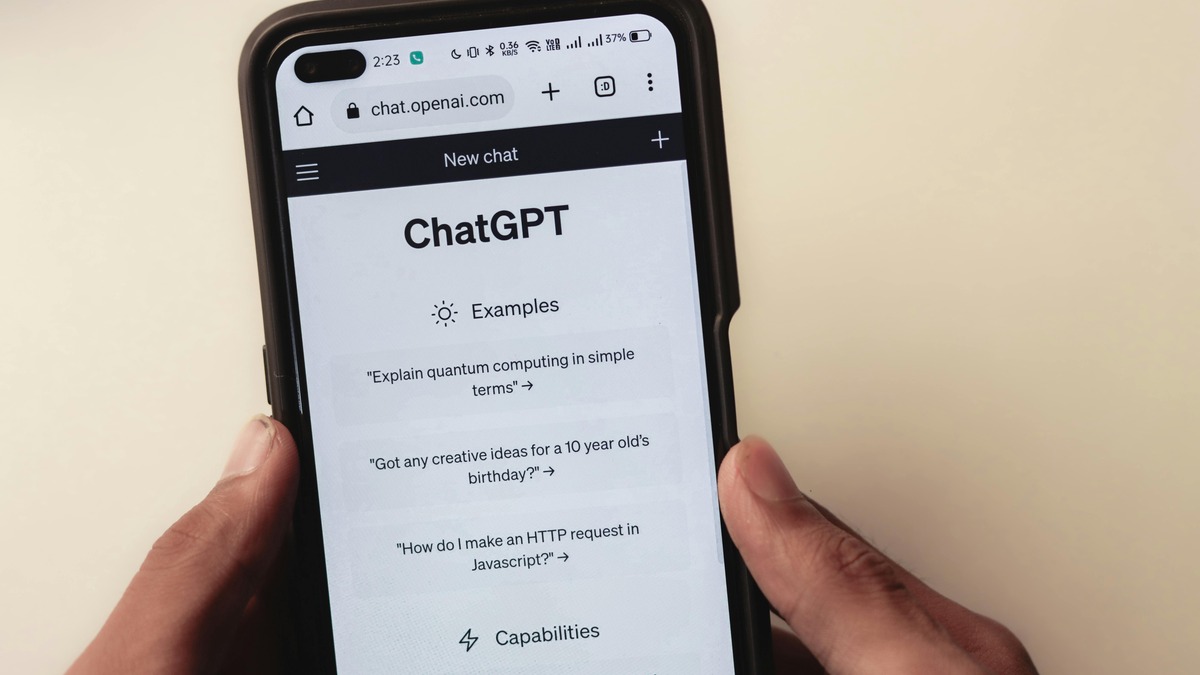 ChatGPT on mobile today depends completely on Apple's and Google's distribution infrastructure - the same platforms OpenAI reportedly wants to bypass with its own hardware.
Source: pexels.com
ChatGPT on mobile today depends completely on Apple's and Google's distribution infrastructure - the same platforms OpenAI reportedly wants to bypass with its own hardware.
Source: pexels.com
Kuo is right about Apple hardware more often than he's wrong. He's less reliable about non-Apple devices that haven't shipped. The supply-chain signals he describes - Qualcomm, MediaTek, Luxshare - are consistent with early-stage conversations, not necessarily a committed product. What the note can't tell us from supply-chain sourcing is whether OpenAI's leadership has committed the capital, the engineers, and the platform strategy needed to turn those conversations into a device anyone will actually buy.
Sources:
- TechCrunch: OpenAI could be making a phone with AI agents replacing apps
- Benzinga: OpenAI Eyes AI Agent Smartphone With Qualcomm And MediaTek
- MacRumors: OpenAI Reportedly Working on an AI Smartphone to Rival iPhone
- Computerworld: OpenAI plans its own iPhone killer
- NewsBytesApp: OpenAI plans AI smartphone with agentic capabilities

