
OpenAI Misses Revenue Targets - IPO in Doubt
WSJ reports OpenAI missed multiple monthly revenue targets and its 1B user goal in 2026, sending Oracle down 6% and chip stocks sliding as IPO doubts surface.
 5 min read
Oracle dropped more than 6% in premarket trading Tuesday. NVIDIA, AMD, CoreWeave, and Qualcomm fell between 2% and 5%. The trigger was a Wall Street Journal report published Monday that OpenAI has missed multiple internal revenue targets this year and failed to hit its user growth goals - raising questions about whether the infrastructure spending boom built around OpenAI's projected demand is sitting on firmer ground than the actual numbers suggest.
TL;DR
- WSJ report: OpenAI missed multiple monthly revenue targets in early 2026 and failed to hit its 1 billion weekly ChatGPT user goal
- $24B run-rate: OpenAI's current annualized revenue - now behind Anthropic's $30B ARR
- CFO Sarah Friar privately warned colleagues OpenAI may struggle to fund future compute contracts if revenue does not accelerate
- IPO timeline at risk: Friar also flagged that OpenAI is not yet ready to meet public company reporting standards
- Stocks tumble: Oracle -6%, NVIDIA -3 to -5%, AMD -2.7%, CoreWeave -3.5%, Qualcomm -3.5%
The timing cuts deep. OpenAI closed a $122 billion funding round in late March at an $852 billion valuation - the largest startup fundraise in history - and then, roughly four weeks later, the Wall Street Journal reports the company has been missing its own monthly sales targets. That gap between the story told to investors and the numbers landing on internal dashboards is what sent an entire sector lower in a single premarket session.
What the WSJ Found
The Journal, citing people familiar with OpenAI's internal planning, reported that the company missed its own monthly sales targets at multiple points in early 2026. It also fell short of a separate goal to reach one billion weekly active ChatGPT users by the end of 2024, with growth decelerating in the final months of that year.
| Metric | Target | Reported Outcome |
|---|---|---|
| Weekly ChatGPT users | 1B by end-2024 | Missed - growth slowed in late 2024 |
| Monthly revenue goals | Multiple 2026 targets | Missed at multiple consecutive points |
| Annualized revenue | Undisclosed internal target | ~$24B run-rate as of April 2026 |
| Revenue ranking | Market leader | Fell behind - Anthropic now at $30B ARR |
| IPO readiness | Late 2026 listing | CFO flags reporting standards gap |
Where OpenAI Lost Ground
The revenue shortfall tracks two competitive pressures that developed simultaneously. Google's Gemini gained consumer market share through the second half of 2024, eroding ChatGPT's position in general-purpose AI assistants. Anthropic moved ahead specifically in coding tools and enterprise API markets - the segment generating most of the industry's revenue growth.
OpenAI now holds 31% of the coding assistant API market. Anthropic holds 42%. Twelve months ago those rankings were reversed. Enterprise coding contracts are high-margin, multi-year agreements that compound over time, which is why the shift matters more than the point-in-time numbers suggest.
The Infrastructure Exposure
The revenue miss carries consequences that extend well beyond OpenAI's balance sheet.
Oracle holds a reported $300 billion, five-year partnership with OpenAI. CoreWeave guided for $30-35 billion in capital spending in 2026, a figure its management tied explicitly to anticipated OpenAI contract volume. SoftBank committed $30 billion to OpenAI's recent funding round, partly as a bet on accelerating revenue.
CFO Sarah Friar's internal concern was specific: if revenue growth does not recover, OpenAI could have difficulty honoring future compute agreements. She also raised questions about the company's readiness to meet the reporting standards required of a public company, which directly affects Altman's stated plan to take OpenAI public by late 2026.
 Infrastructure and chip stocks fell sharply on Tuesday after the Wall Street Journal reported OpenAI missed multiple revenue targets. Oracle lost more than 6% in premarket trading.
Source: pexels.com
Infrastructure and chip stocks fell sharply on Tuesday after the Wall Street Journal reported OpenAI missed multiple revenue targets. Oracle lost more than 6% in premarket trading.
Source: pexels.com
"This is ridiculous. We are totally aligned on buying as much compute as we can and working hard on it together every day."
- Sam Altman and Sarah Friar, joint statement to CNBC
The Counter-Argument
OpenAI is not in financial distress. Two billion dollars per month in revenue and $122 billion in reserves aren't metrics that signal collapse. The company continues to add enterprise customers and is expanding into workspace agents, hardware, and the GPT-5.5 model that launched this month.
The "ridiculous" label is also technically defensible. Private company targets are often set as stretch goals by design. Missing them isn't the same as missing consensus estimates for a public company, and the WSJ is working from sources inside an organization with a clear interest in shaping how internal tensions are reported.
The argument OpenAI would make: it raised $122 billion, crossed $2 billion per month in revenue, secured partnerships across Amazon, Microsoft, and Oracle, and is still the most-used AI platform on the planet. That is not a company in trouble.
What the Market Is Missing
The more interesting question is not whether OpenAI missed a few quarterly targets. It's whether the $660 billion in AI infrastructure spending that Google, Meta, Amazon, and Microsoft have committed to in 2026 was priced on assumptions that have started to look optimistic.
Every dollar Oracle and CoreWeave spend expanding capacity implies a counterparty - normally OpenAI - who'll consume that capacity at the rates projected. If OpenAI's actual consumption runs below plan, the cloud providers carrying those contracts face either renegotiated terms or underutilized assets. Both outcomes are bad for the chip stocks supplying the hardware those data centers run on.
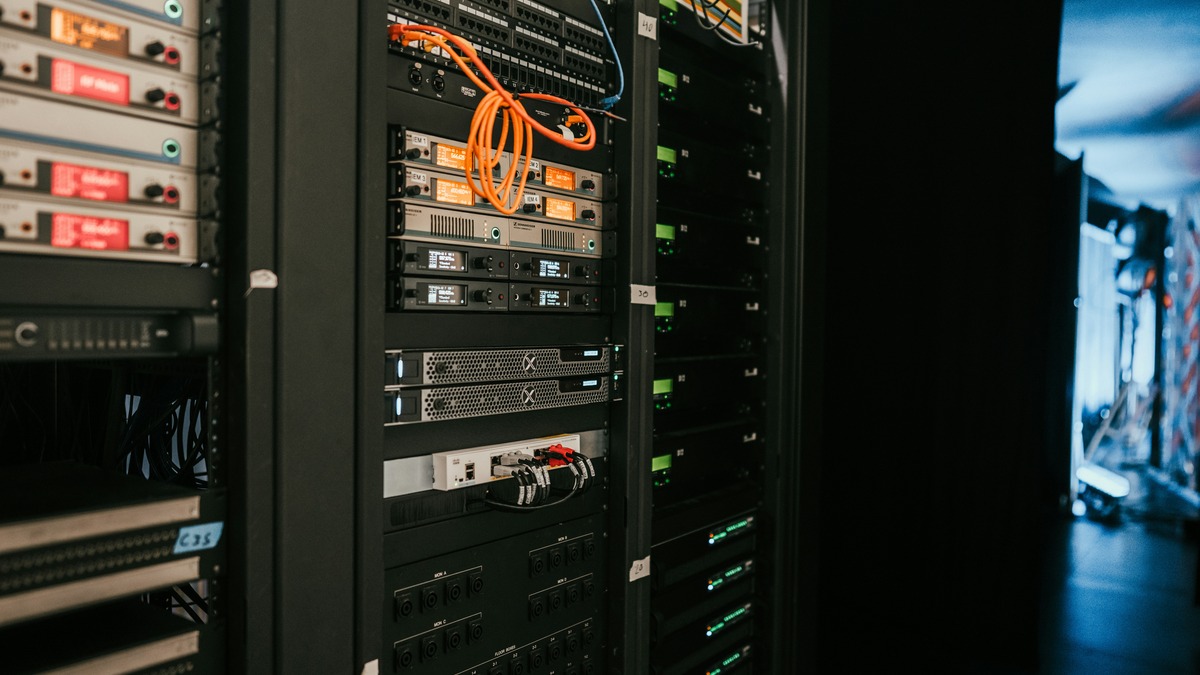 Oracle, CoreWeave, and SoftBank committed hundreds of billions in infrastructure partly on expected OpenAI demand growth - which the WSJ report now calls into question.
Source: unsplash.com
Oracle, CoreWeave, and SoftBank committed hundreds of billions in infrastructure partly on expected OpenAI demand growth - which the WSJ report now calls into question.
Source: unsplash.com
NVIDIA, Broadcom, and AMD trade in part on the assumption that hyperscaler AI capex keeps growing. A slowdown signal from OpenAI - the single most watched revenue proxy in the market - recalibrates that assumption faster than any earnings miss from the cloud providers themselves.
The AI investment thesis has always required that revenue eventually catches up to compute spending. Tuesday's premarket selloff is what it looks like when a data point arrives suggesting the gap might be widening rather than closing.
OpenAI called the report ridiculous. The CFO is not sure the company is ready to go public. And the $852 billion valuation is now doing more work than the underlying numbers can comfortably support.
Sources:

