
OpenAI Cracks at the Top as $852B IPO Looms
Three OpenAI executives shift roles simultaneously days after closing a $122 billion round, raising questions about leadership continuity before an expected 2026 IPO.
 7 min read
Three days after closing what's likely the largest private funding round in history, OpenAI announced that three of its most senior executives are changing roles - at the same time, with no public warning. The head of AGI products is on medical leave. The chief marketing officer is stepping down permanently. The chief operating officer is moving to a newly created "special projects" role with no clear operational mandate.
Greg Brockman, OpenAI's president and co-founder, is absorbing the product organization for now. Denise Dresser, the former Slack CEO who joined as chief revenue officer just months ago, picks up most of the COO's day-to-day responsibilities.
TL;DR
- Fidji Simo, CEO of AGI Deployment, takes several weeks of medical leave; Greg Brockman absorbs her product role
- Kate Rouch steps down as CMO permanently after breast cancer returns; Gary Briggs (former Meta CMO) steps in as interim
- Brad Lightcap exits the COO role and moves to "special projects", with Denise Dresser absorbing his operational duties
- All three changes land four days after OpenAI's $122B close at an $852B valuation
The Reshuffle at a Glance
| Executive | Previous Role | Change | Who Absorbs the Role |
|---|---|---|---|
| Fidji Simo | CEO, AGI Deployment | Medical leave (POTS relapse) | Greg Brockman (interim) |
| Kate Rouch | Chief Marketing Officer | Stepping down permanently | Gary Briggs (interim CMO) |
| Brad Lightcap | Chief Operating Officer | Moves to "special projects" | Denise Dresser (CRO) |
| Greg Brockman | President | Adds product oversight | - |
| Denise Dresser | Chief Revenue Officer | Adds COO responsibilities | - |
The company's spokesperson framed this as routine continuity: "We have a strong leadership team focused on our biggest priorities: advancing frontier research, growing our global user base of nearly 1 billion users, and powering enterprise use cases."
That statement covers three simultaneous departures from core operational roles in three sentences. Make of it what you will.
Fidji Simo: The One Most Investors Were Watching
Simo joined OpenAI in August 2025, arriving from Instacart where she had served as CEO. Before that she spent a decade at Facebook building its monetization engine - which is exactly why OpenAI hired her. Her mandate was the consumer product portfolio and the company's bet on a "super app" that would extend OpenAI beyond the ChatGPT web interface into something closer to a platform with daily utility.
She disclosed the leave in an internal staff email, writing that the past month had been "particularly rough health-wise."
"For my entire time here, I've postponed medical tests and new therapies to stay completely focused on the job and not miss a single day of work. It's now clear that I've pushed a little too far and I really need to try new interventions to stabilize my health."
- Fidji Simo, internal email to OpenAI staff, April 3
POTS - Postural Orthostatic Tachycardia Syndrome - is a condition affecting blood pressure regulation that Simo disclosed publicly in 2019 after consulting more than 40 specialists. The company says she is taking "several weeks" and intends to return.
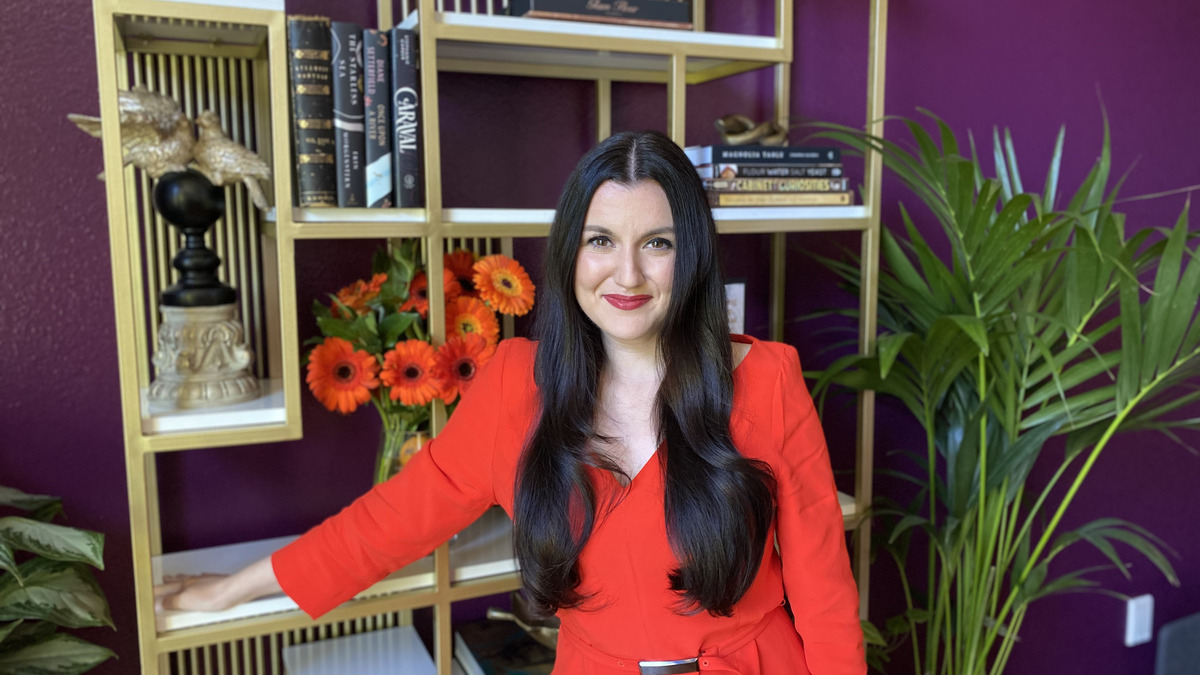 Fidji Simo joined OpenAI from Instacart in August 2025 to lead the company's consumer product and AGI deployment strategy.
Source: wikipedia.org
Fidji Simo joined OpenAI from Instacart in August 2025 to lead the company's consumer product and AGI deployment strategy.
Source: wikipedia.org
Greg Brockman absorbs her product remit during the leave. Brockman returned from his own sabbatical in November 2024 and has since focused on infrastructure - notably the Stargate data center buildout and a multiyear AMD partnership. Adding product oversight to that workload, in the run-up to an IPO, is a material addition to his plate.
What This Means for the Super App
OpenAI's consumer product roadmap - including the rumored super app positioning - was Simo's primary responsibility. A leave of "several weeks" during a period when the company is burning cash and still working toward profitability creates real execution risk. Brockman is a builder with strong infrastructure instincts, but consumer product strategy is a different discipline.
The company hasn't said what happens to Simo's direct reports or how product decisions get escalated during the interim. That ambiguity matters more than the absence itself.
Kate Rouch: A Second Blow for the Marketing Function
Rouch joined in December 2024, having previously served as CMO at Coinbase. Weeks into her tenure, she disclosed an invasive breast cancer diagnosis. She continued working through chemotherapy, announced she was cancer-free in November 2025, and returned to full-time work. The cancer has since returned.
She posted the news publicly on X:
"Courage isn't always pushing harder. Sometimes it's choosing your health, your family, and being around for the long run. I'm stepping down as OpenAI CMO to focus on cancer recovery. I hope to return in a different role when my health allows. OpenAI has been extraordinary."
- Kate Rouch, X (formerly Twitter), April 3
Gary Briggs, former CMO of Meta and Facebook, will serve as interim CMO and lead the search for a permanent replacement. Briggs has history with these situations - he joined Facebook in 2013 after stints at Google and McKinsey, and knows how to hold a marketing function together through transitions.
The deeper issue is timing. OpenAI is building toward an IPO that will demand coherent public narrative around product direction, enterprise traction, and regulatory positioning. Marketing leadership matters in that window in ways it doesn't matter in quieter moments.
Brad Lightcap: The Quietest Departure
Lightcap is the longest-serving executive affected by this reshuffle. He joined OpenAI before most current staff, held the COO title for several years, and built the company's operational infrastructure as it scaled from a research lab to a $13.1 billion annual revenue business.
His new role in "special projects" is defined around complex deals and investments, with a specific focus on a joint venture OpenAI is building with private equity firms to sell software to enterprise customers. He'll report directly to Sam Altman.
Moving a seasoned COO out of the day-to-day operations role and into deal-making doesn't read like a promotion. It reads like an acknowledgment that the company is entering a new phase where deal flow and strategic M&A matter more than operational scaling - which OpenAI would likely argue is true given its current growth path.
Denise Dresser absorbs his operational responsibilities while retaining her CRO title. She came from Slack, where she served as CEO. Her background is enterprise SaaS - which aligns with where OpenAI's enterprise revenue is heading, but adds significant scope to a role she has held for less than a year.
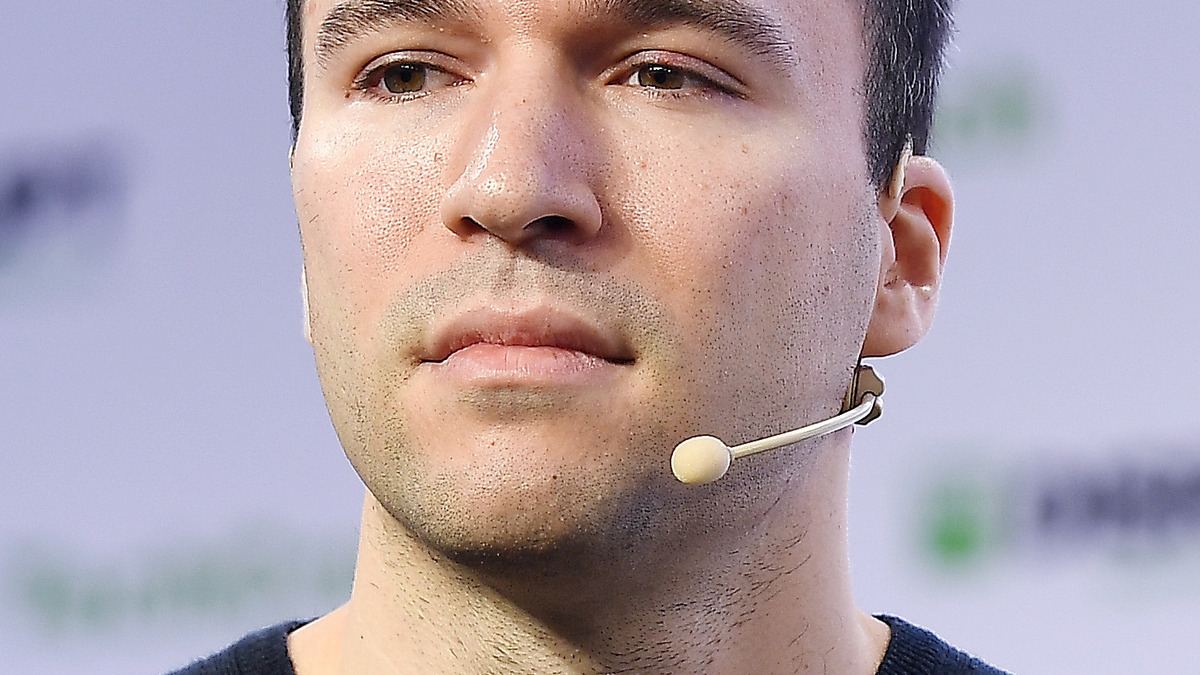 Greg Brockman, OpenAI's president and co-founder, will take on additional product oversight while Fidji Simo is on medical leave.
Source: commons.wikimedia.org
Greg Brockman, OpenAI's president and co-founder, will take on additional product oversight while Fidji Simo is on medical leave.
Source: commons.wikimedia.org
Counter-Argument: Bad Timing, Not Bad Strategy
The straightforward reading is that two of these changes are truly personal - Simo's POTS and Rouch's cancer are medical realities, not strategic moves. Companies don't coordinate illnesses. Lightcap's shift is the only one that looks like a deliberate restructuring.
OpenAI also has a deeper bench than it did eighteen months ago. Sarah Friar (CFO), Jason Kwon (CSO), Greg Brockman, and Denise Dresser are all credible executives with relevant track records. The company has operated through significant leadership turbulence before - including Sam Altman's brief ouster in November 2023 - and kept growing.
The $852B valuation also reflects a business that posted $13.1B in revenue in 2025 and is targeting significant growth in 2026. Investors pricing the stock at those levels aren't betting on any specific executive; they're betting on the model and the distribution. A few weeks of product leadership ambiguity doesn't change either.
There is also precedent for this kind of coincidence. Startups scaling quickly put enormous strain on executives, and health events cluster in high-pressure environments. The timing relative to the funding close may be coincidence rather than consequence.
What the Market Is Missing
The deeper risk isn't the three individuals - it's what their simultaneous absence reveals about organizational depth at the level just below the C-suite. OpenAI has grown from roughly 500 employees to several thousand in under two years. Whether it has the director and VP layer that can absorb this much instability without slowing down isn't a question the company's public statements answer.
Investors heading into an IPO process need to price that uncertainty. The $852B valuation baked in at the latest funding round leaves very little room for execution shortfalls - and three simultaneous senior departures, even if temporary, are the definition of execution risk. The company may perform through it cleanly. The point is that the margin for error has narrowed, and the people who were supposed to manage that margin just changed.
 OpenAI is preparing for what would be the largest tech IPO in history, with a valuation of $852 billion following its March 2026 funding close.
Source: commons.wikimedia.org
OpenAI is preparing for what would be the largest tech IPO in history, with a valuation of $852 billion following its March 2026 funding close.
Source: commons.wikimedia.org
Sources:
- TechCrunch - OpenAI executive shuffle: new roles for COO Brad Lightcap, Fidji Simo
- Ad Age - OpenAI CMO temporarily steps down
- CNBC, Axios, Bloomberg (paywalled; Simo and Lightcap details corroborated by TechCrunch)

