
OpenAI Delays IPO to 2027 as Altman Holds Out for $1T
Sam Altman has rejected any sub-trillion IPO valuation as a nonstarter, pushing the listing to 2027 while SoftBank takes a 13% hit and SpaceX's stumbling debut makes the wait look smarter.
 6 min read
OpenAI is leaning toward postponing its initial public offering until 2027, according to reporting by The New York Times, which cited people familiar with the company's internal deliberations. The hold-up isn't regulatory, technical, or competitive. Sam Altman won't go public for less than $1 trillion, and the market isn't there yet.
TL;DR
- Altman called any sub-$1T IPO valuation a "nonstarter" - OpenAI's last private price was $852B
- The company filed a confidential S-1 with the SEC in June, but is now leaning toward a 2027 debut
- SpaceX's SPCX fell 23% from its post-IPO peak, giving advisors a concrete case for waiting
- SoftBank - with ~$65B in OpenAI exposure - dropped 13% when the delay news broke
- OpenAI is generating $25B in annualized revenue against projected 2026 GAAP losses of $25-26B
The Trillion-Dollar Line in the Sand
What Advisors Said
OpenAI's financial advisors gave Altman two options: go public in 2026 at whatever valuation the market would accept, or wait for 2027 and aim for the trillion-dollar floor. According to sources cited by the Times, Altman rejected 2026 as a nonstarter. The advisors had already hired bankers and lawyers. The confidential S-1 had been filed on June 8.
Then the market offered its opinion on tech IPOs, and Altman found his case for patience had grown stronger.
The Gap Between Private and Public
OpenAI's most recent private valuation is $852 billion, established during the company's $122 billion funding round that closed in March. That price reflects what sophisticated investors agreed to pay with multi-year lockups and quarterly cash tranches. What public market investors will pay on day one, with full liquidity, is a different question.
To reach $1 trillion at IPO, investors need to apply roughly a 40x multiple to OpenAI's $25 billion in annualized revenue. That's defensible for a dominant hypergrowth company - until you add the other number. OpenAI is projecting $25 to $26 billion in GAAP losses for 2026. Revenue and losses are running nearly even. Public markets don't hand out premium multiples to that arithmetic, especially when ChatGPT's user base has stalled around 900 million instead of crossing the one billion mark the company had targeted.
The counterargument is that OpenAI's losses are investment spending - data centers, compute, and engineering talent - not evidence of a broken business model. If revenue reaches $35 to $40 billion in 2027 while losses narrow, the pitch changes. Altman is betting the numerator grows faster than investor patience shrinks.
SpaceX Made the Case for Waiting
The World's Biggest IPO Wobbled
The strongest argument for delay arrived from an unlikely source. On June 12, SpaceX completed its Nasdaq listing under ticker SPCX and raised $75 billion - the largest IPO in history - at $135 per share. The stock opened at $150, climbed above $200 in the days after listing, and pushed SpaceX's market cap past $2 trillion briefly.
Then it started falling.
By June 26, SPCX was trading at $153, roughly 23% below its peak. SpaceX is profitable, produces billions in launch contracts, and has Starlink as a recurring revenue base. If SpaceX can't hold a post-IPO premium after two weeks, a company running $25 billion in annual losses faces a considerably steeper climb.
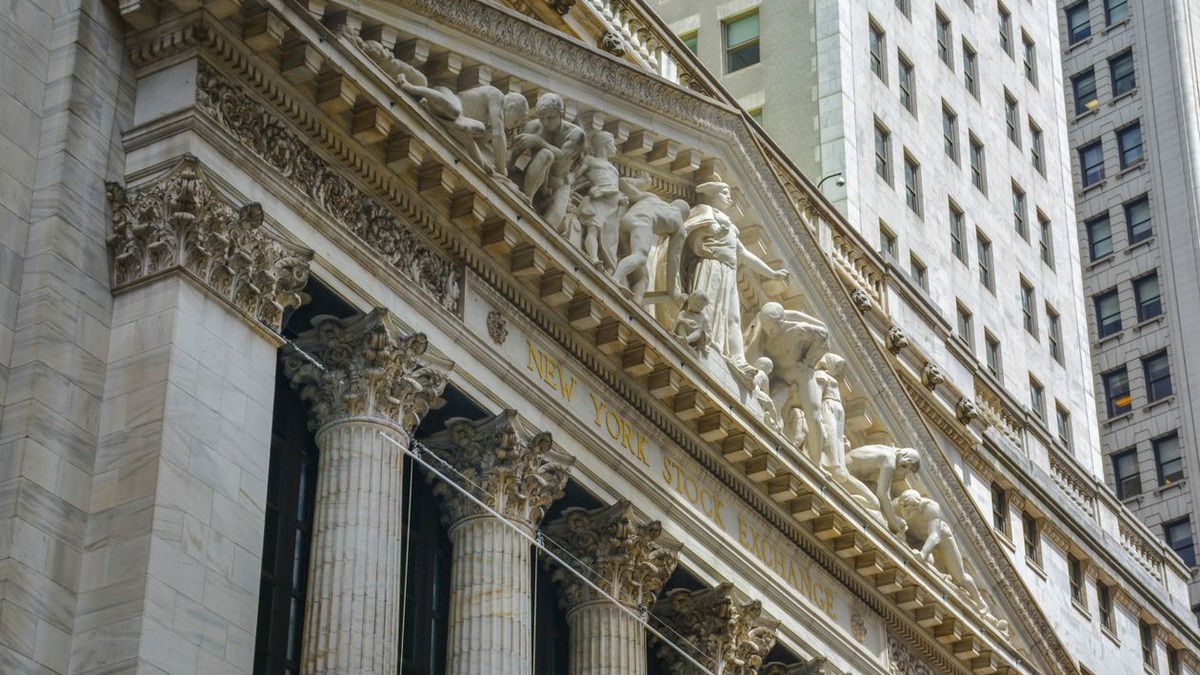 Public market investors reassessed AI-adjacent tech valuations as SpaceX's stock slid from over $200 to $153 per share in just two weeks.
Source: pexels.com
Public market investors reassessed AI-adjacent tech valuations as SpaceX's stock slid from over $200 to $153 per share in just two weeks.
Source: pexels.com
SoftBank is in the most exposed position. The firm had invested heavily in SpaceX alongside its OpenAI holdings. When the IPO delay news broke, SoftBank's stock dropped 13% in a single session - its steepest single-day move in over three months. Investors were recalibrating how long they'd have to wait for liquidity across SoftBank's entire AI portfolio.
The Investors Caught in the Middle
SoftBank's $65 Billion Wait
SoftBank holds roughly $65 billion in OpenAI exposure, built through the Stargate consortium and direct investment tranches. CEO Masayoshi Son has staked his late-career reputation on the AI bet, calling it the most important capital allocation decision of his life in investor presentations. A 2026 IPO would have given SoftBank a path to public market liquidity before Son's next annual general meeting.
A 2027 debut adds another year to a position SoftBank can't easily unwind. Secondary market sales at this scale would signal weakness and likely compress the private valuation it's trying to protect. The 13% single-day drop in SoftBank stock reflects how completely its investors had priced in a near-term exit.
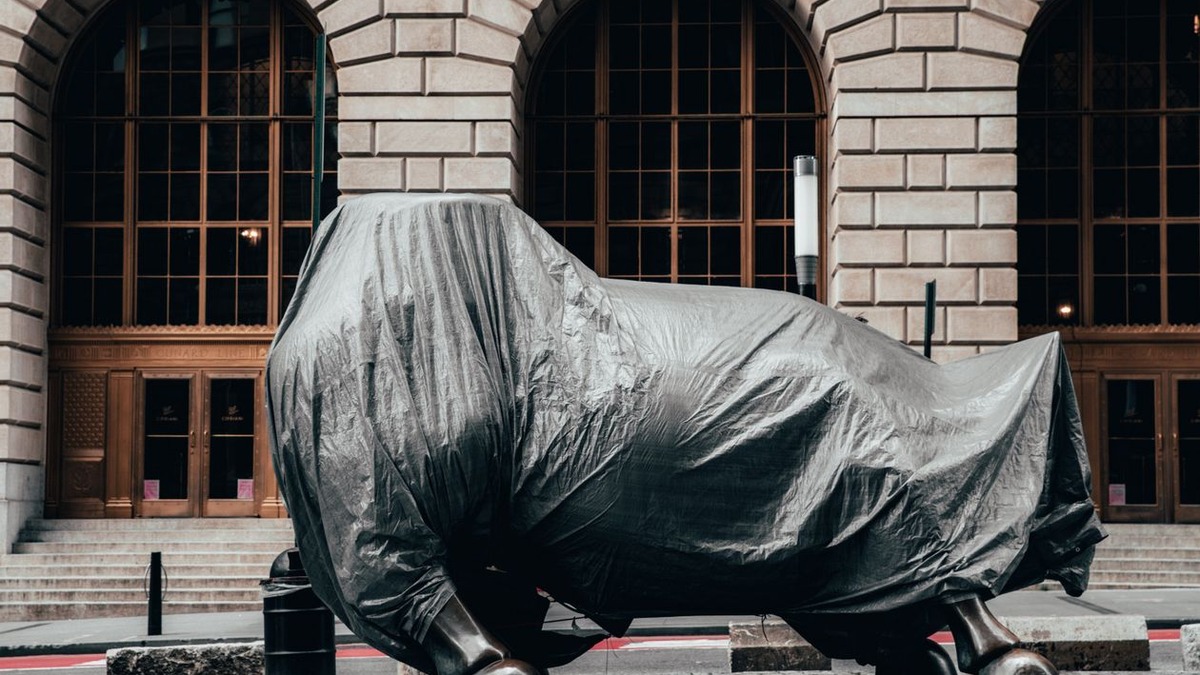 Bull market enthusiasm for AI-adjacent IPOs is being tested by the post-debut trajectories of both SpaceX and the delayed OpenAI listing.
Source: pexels.com
Bull market enthusiasm for AI-adjacent IPOs is being tested by the post-debut trajectories of both SpaceX and the delayed OpenAI listing.
Source: pexels.com
Employees and Early Backers
OpenAI employees holding equity grants had structured their financial plans around a 2026 timeline. CFO Sarah Friar had publicly confirmed retail participation in the IPO, and the company's $3 billion retail placement in March signaled a debut was close. For employees and early investors who bought in at private valuations above $700 billion and had been counting on public liquidity within the year, the 2027 reset extends an already long wait.
Secondary market transactions have offered limited relief. How secondary pricing holds now that the IPO clock has been reset will tell you something about how confident buyers are in the trillion-dollar floor actually taking shape.
What OpenAI in 2027 Might Look Like
The Revenue Trajectory
OpenAI produced roughly $13 billion in calendar 2025 and is pacing toward $25 billion in 2026. If growth continues - even at a slower rate - the revenue base supporting a $1 trillion valuation becomes more defensible. A company creating $35 to $40 billion with narrowing losses is a materially different IPO than one with matching revenue and losses.
The product pipeline supports the wait. GPT-5.6 is days away from launch based on prediction market odds now above 80%. The custom Jalapeño inference chip built with Broadcom targets production deployment in 2027 and aims to cut per-token inference costs versus current Nvidia hardware. If Jalapeño delivers, the unit economics that public market investors will scrutinize at listing improve before the final S-1 goes out.
What Waiting Costs
The assumption that 2027 is better than 2026 is plausible but not guaranteed. Anthropic is valued at $965 billion and could move toward its own public offering, competing with OpenAI for the same pool of AI-hungry institutional dollars. Google's Gemini 3.5 was delayed to July and its research team has been weakened by departures, but Alphabet has the cash reserves to rebuild. Waiting assumes OpenAI's market position stays as strong for another twelve months as it's today.
Public market windows close on their own schedules. The SPAC boom in 2021, the rate shock in 2022, the generative AI enthusiasm wave in 2023 - each created and collapsed a window fast enough to frustrate companies that held out for conditions to improve further.
A $1 trillion valuation would make OpenAI the first AI-native company alongside Nvidia, Microsoft, Apple, Meta, and Alphabet at the top of American corporate value. Whether that milestone is worth another year of waiting, another year of losses, and another year of managing investors who expected liquidity in 2026 depends entirely on what 2027's market says about a company that runs roughly even between revenue and losses. Altman has decided to find out. The trillion-dollar gap between his floor and his last private valuation is the bet.
Sources:
- Altman won't go public for less than $1 trillion - The Decoder
- OpenAI delays IPO until 2027, Altman holds out for $1T valuation - Tech Funding News
- OpenAI may delay IPO after SpaceX stock drop - FX Leaders
- SpaceX IPO 2026 guide - Zacks
- OpenAI IPO valuation and pre-IPO overview - TechMarket Briefs
- OpenAI Revenue and IPO Valuation Forecasts - FutureSearch

