
OpenAI Seeks 50 GW Fusion Deal - Altman Steps Aside
OpenAI is in advanced talks to buy up to 50 gigawatts of fusion energy from Helion, the startup where Sam Altman holds a personal stake worth an estimated $375 million.
 6 min read
OpenAI wants to buy fusion power at a scale that makes the entire history of fusion commerce look like a rounding error. And the startup it wants to buy from is one where its CEO has had a personal stake since 2015.
TL;DR
- OpenAI and Helion Energy are in early structural talks on a power purchase agreement for 5 GW by 2030, scaling to 50 GW by 2035
- Sam Altman, who holds an estimated $375 million personal stake in Helion, stepped off its board and recused himself from the negotiations
- Helion has not yet demonstrated net electricity generation - its 2024 target for that milestone was missed
- The Microsoft deal signed in 2023 was for 50 MW; OpenAI's proposed deal is 100 to 1,000 times larger
- No financial terms have been disclosed
The Deal
Axios first reported on March 23 that OpenAI and Helion Energy are negotiating a power purchase agreement that would initially give OpenAI 12.5% of Helion's total output. The framework under discussion sets two targets: 5 gigawatts by 2030 and 50 gigawatts by 2035. Those are framework numbers, not signed commitments - many conditions remain open, including site selection for Helion's commercial production facilities.
OpenAI declined to comment. No Helion executive quotes were included in any sourcing.
The scale is worth sitting with. Each Helion reactor is projected to produce around 50 megawatts. Hitting 5 GW by 2030 would require roughly 100 Helion reactors operating commercially - a scale the company has never approached. Hitting 50 GW by 2035 would require approximately 1,000. For context, Helion has built seven prototype devices total, and its current machine, Polaris, only started operating commercially-relevant fuel in early 2025.
| Milestone | Target Date | Reactor Count Required |
|---|---|---|
| 5 GW (OpenAI deal) | 2030 | ~100 |
| 50 GW (OpenAI deal) | 2035 | ~1,000 |
| 50 MW (Microsoft deal) | 2028 | ~1 |
| 10 GW (OpenAI Stargate total) | 2030 | - |
OpenAI's Stargate buildout - the company's plan to deploy tens of billions of dollars in data center infrastructure across the United States - is targeting 10 GW of total data center capacity. A Helion deal structured as described would supply half that from fusion energy alone, with existing agreements with utilities, small modular reactor developers, and SB Energy.
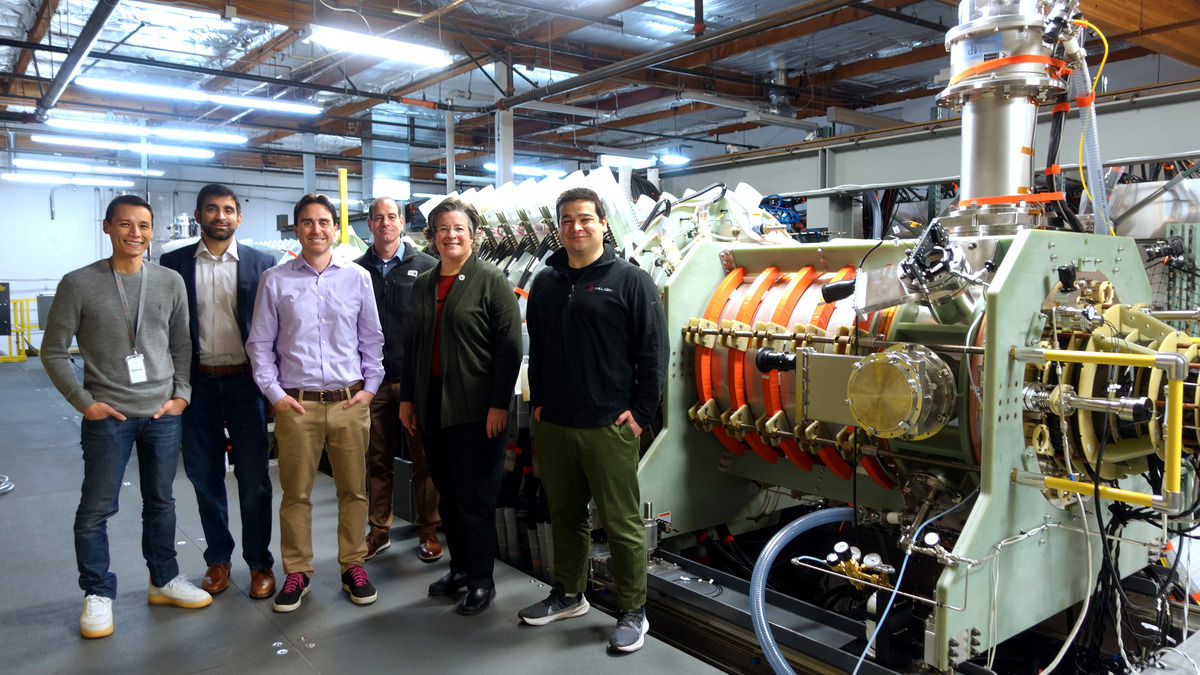 Helion's plasma accelerator at its Everett, Washington facility, photographed during a US Nuclear Regulatory Commission visit in February 2023. The company is now on its seventh prototype, Polaris.
Source: commons.wikimedia.org
Helion's plasma accelerator at its Everett, Washington facility, photographed during a US Nuclear Regulatory Commission visit in February 2023. The company is now on its seventh prototype, Polaris.
Source: commons.wikimedia.org
Who Benefits
Helion gets something it badly needs: a credible anchor customer at a scale that justifies the capital expenditure required to build a commercial reactor fleet. The $425 million Series F it raised in January 2025 valued the company at $5.425 billion. That valuation only makes sense if you believe fusion power will be commercially viable within a decade. An OpenAI power purchase agreement - even one still conditional and unsigned - confirms that story to future investors and partners.
Sam Altman also benefits directly. His estimated $375 million stake in Helion, built up since he first led the company's financing in 2021, appreciates if Helion's commercial prospects improve. He led the company's $500 million Series E and has been board chair since 2015. The OpenAI deal, if it closes, would be the largest revenue commitment in Helion's history by several orders of magnitude.
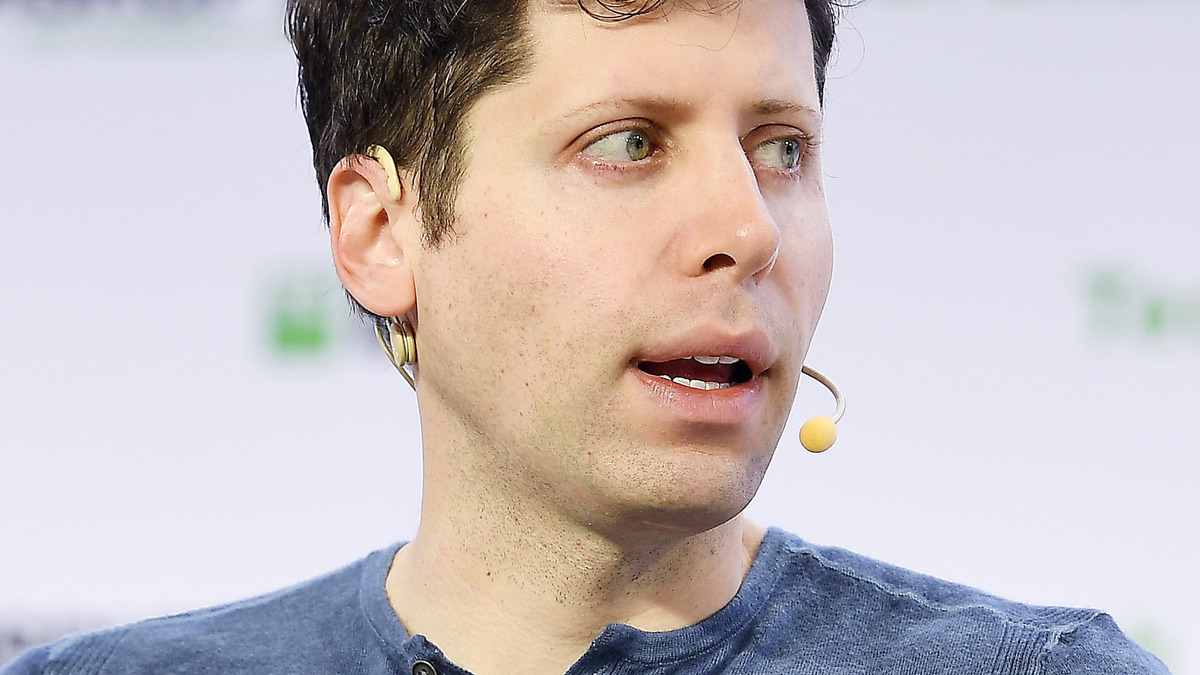 Sam Altman has been a Helion investor and board chair since 2015. He has now stepped off the board and recused himself from the OpenAI deal negotiations.
Source: commons.wikimedia.org
Sam Altman has been a Helion investor and board chair since 2015. He has now stepped off the board and recused himself from the OpenAI deal negotiations.
Source: commons.wikimedia.org
OpenAI benefits because it has a serious energy problem. Training and running frontier AI models requires enormous, predictable power, and grid electricity in many markets is constrained and politically contested. Having a direct energy supply chain - rather than depending on utilities or grid availability - is the kind of vertical integration that a company spending $400 billion on infrastructure finds attractive.
Who Pays
The governance structure here has a familiar shape. When Microsoft signed a 50 MW Helion power purchase agreement in May 2023, Altman sat on both sides of that deal - as OpenAI's CEO and as Helion's board chair. Critics noted the conflict at the time. Since then, Altman has adopted a standard playbook: step off the relevant board, recuse from the specific deal discussions, and proceed with the transaction. He followed the same pattern with Oklo, the small modular reactor startup where he was board chair until stepping back before OpenAI pursued energy negotiations.
Recusal is a governance mechanism, not a guarantee. Altman's financial interest in Helion doesn't disappear when he leaves the room. OpenAI's independent board will need to demonstrate it assessed alternatives - nuclear utilities, other fusion companies, solar and storage - on terms that don't happen to enrich its CEO. There's no indication that due diligence record has been shared publicly.
There's also the question of what OpenAI would actually be paying for. Helion's Polaris device reached a new temperature record of 150 million degrees Celsius in February 2026, up from 100 million degrees in 2021. That's roughly three-quarters of the threshold Helion believes it needs for commercial operation. But net electricity generation hasn't been demonstrated. Helion's original 2024 target for that milestone passed without being hit. The company has revised its timeline and is targeting a demonstration before its planned commercial launch in the late 2020s.
The risk is that OpenAI commits to Helion, Helion misses its timeline again, and OpenAI is left with a multibillion-dollar energy gap during the years when its Stargate infrastructure needs the most power.
The Altman Energy Pattern
Helion isn't the only energy bet Altman has made that OpenAI has since pursued commercially. The Oklo overlap was noted publicly. His broader argument - that AI labs will need to own their energy supply chains, and that nuclear power is the only realistic baseload option at scale - has shaped OpenAI's infrastructure strategy in a way that consistently points toward his personal portfolio.
That's not inherently corrupt. It's possible to have both a financial interest and a genuinely correct view. But the pattern creates a structural pressure: OpenAI's energy decisions move markets for companies where its CEO holds equity, and the recusal mechanism relies on a board whose independence has itself been questioned. Microsoft's own position here is awkward - the company is both a major OpenAI shareholder and a Helion customer that signed the world's first fusion PPA, a deal that's now being dramatically eclipsed by the lab it co-funds. The Microsoft-OpenAI relationship is already under strain from the AWS cloud deal; a fusion energy arrangement that sidelines Microsoft's own Helion stake adds another layer of complexity to an already fraught partnership.
The deal, if it closes, would be the largest energy commitment in OpenAI's history and the largest commercial fusion agreement ever signed. The central question isn't whether fusion is a good long-term bet for energy - it may well be. The central question is whether a company whose CEO stands to gain hundreds of millions of dollars from the counterparty's success is the right place to test that hypothesis at this particular scale, before net electricity generation has been demonstrated even once.
Sources: Axios | TechCrunch | The Next Web | TechCrunch - Helion Feb 2026 | Helion Energy Series F | Helion Milestones

