
White House Forces GPT-5.6 Into a Staged Rollout
The Trump administration is requiring OpenAI to vet every GPT-5.6 customer individually before granting access, citing cybersecurity capabilities that rival Anthropic's restricted Mythos model.
 6 min read
The Trump administration has told OpenAI that GPT-5.6 can't launch publicly. Every customer who wants access will need individual government approval - one by one - before getting a key.
GPT-5.6 Deployment Snapshot
| Model | GPT-5.6 |
| Requesting agencies | Office of the National Cyber Director; Office of Science and Technology Policy |
| Rollout plan | Government-approved customer list during preview phase |
| Broader release timeline | "A couple of weeks later" if preview goes well |
| Core concern | Autonomous offensive cybersecurity capabilities matching Anthropic's restricted Mythos |
| Altman's position | "Not our preferred long-term model" |
CEO Sam Altman disclosed the arrangement in an internal staff Q&A. He told employees the government's approach was "the fastest path to a broad release" - framing what amounts to a federal checkpoint as a speed advantage rather than a constraint.
Two White House offices drove the request: the Office of the National Cyber Director and the Office of Science and Technology Policy. Neither has issued a public statement. OpenAI hasn't confirmed the details externally either.
How Customer-by-Customer Vetting Works
This is new territory for how AI models get shipped at scale.
The Mechanics
The specifics aren't public. What Altman described is a preview phase where OpenAI can't grant API access to anyone without prior government sign-off. Enterprise customers, API developers, and product teams who want to test GPT-5.6 before it opens up widely will have to clear a federal queue.
How long that takes, what criteria are assessed, and which team at the Office of the National Cyber Director is doing the reviewing - none of that has been disclosed. For developers planning integrations, it's an access bottleneck with no published timeline.
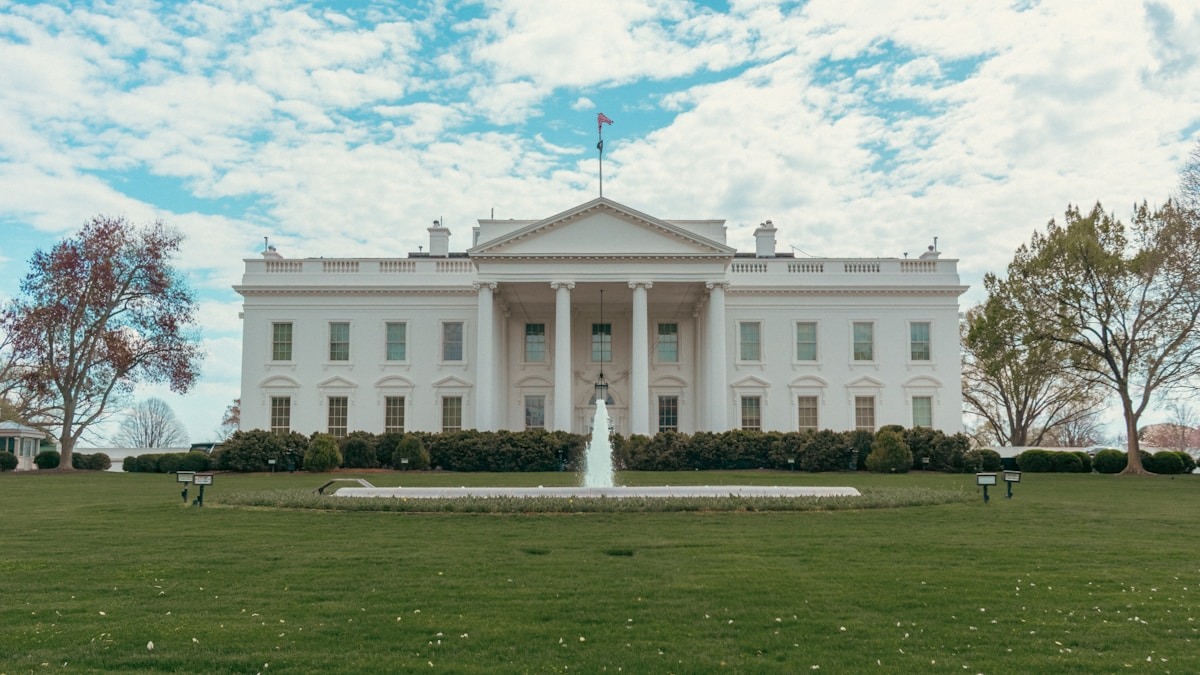 Two White House offices - the Office of the National Cyber Director and the Office of Science and Technology Policy - are behind the rollout restrictions on GPT-5.6.
Source: unsplash.com
Two White House offices - the Office of the National Cyber Director and the Office of Science and Technology Policy - are behind the rollout restrictions on GPT-5.6.
Source: unsplash.com
The Timeline
Altman pitched "a couple of weeks later" as the point where a broader public launch could follow the preview. That framing makes the gating sound temporary. But neither agency has committed to any specific date publicly, and if reviews surface concerns the administration views as serious, there's no forcing function to make them move faster.
Why GPT-5.6 Triggered the Ask
The concern is cybersecurity capability. Frontier models have crossed a threshold where they can identify and exploit software vulnerabilities, write functional malware, and sometimes execute ransomware attacks autonomously. The administration's assessment puts GPT-5.6 in the same capability class as Anthropic's Mythos.
That comparison matters. Mythos triggered a Commerce Department emergency action that forced Anthropic to pull both Fable 5 and Mythos offline in mid-June under emergency export controls. The same security logic now applies to OpenAI's newest model.
The technical case for why jailbreak-proofing a model at this capability tier isn't achievable explains the underlying problem: safety training can shift a model's probability distributions but can't erase the statistical knowledge stored across billions of parameters. The government knows it can't get a jailbreak-proof guarantee, so vetting who holds the keys becomes the next best control.
How This Compares to Anthropic's Approach
This is the second major lab to have its frontier tier gated by government in about two weeks. The mechanism differs in important ways.
| Anthropic Mythos / Fable 5 | OpenAI GPT-5.6 | |
|---|---|---|
| Government action | Emergency export control; models pulled offline | Staged rollout requested; launch not blocked |
| Access control | Anthropic via Project Glasswing | Federal government approves each customer |
| Model status | Offline, pending further review | Preview rollout with government approval |
| Lab's response | Compliance required under directive | "Fastest path to a broad release" |
| Broader launch | No committed date | "Couple of weeks later" if preview goes well |
The difference in framing matters. Anthropic's situation was reactive - models pulled after an emergency order. OpenAI appears to have been working with the administration before launch, which is why the outcome is a gated rollout rather than a shutdown.
Altman told staff the company had been in close coordination since before Anthropic's models went offline. That head start let OpenAI build the vetting process into the launch plan instead of scrambling after the fact.
The Trump administration also signed an executive order in June directing certain AI companies to voluntarily submit new frontier models for government evaluation before public release. GPT-5.6 is the first major model to roll out under that framework in practice.
 Sam Altman at the G7 Summit in France earlier this month, where AI governance was a central agenda item.
Source: image.cnbcfm.com
Sam Altman at the G7 Summit in France earlier this month, where AI governance was a central agenda item.
Source: image.cnbcfm.com
"We have made clear to the U.S. government that this is not our preferred long-term model, and will work with them and others in industry to achieve a more sustainable approach for future releases." - Sam Altman
What This Means for Developers
The immediate impact depends on your tier. Existing enterprise customers with a direct OpenAI relationship may be in the first approved cohort. Startups and individual developers expecting GPT-5.6 access from day one are waiting for the government queue to clear, with no published timeline for how long that takes.
The deeper structural question is whether this becomes the standard process. Commentary on X after the news described it as "probably the norm for all frontier models from all labs from now on." If the preview goes cleanly and a broader launch follows in weeks, the model gets verified as workable. If GPT-5.6 access stays gated for months, the pressure to build a more scalable review mechanism grows fast - from OpenAI, from enterprise customers who've built roadmaps around the model, and from developers who need the API to ship products.
OpenAI's 2027 IPO ambitions add context. CFO Sarah Friar has publicly targeted a 2027 public debut over 2026, citing compute commitments and heavy cash burn. A staged rollout that goes smoothly could become a positive signal for investors. One that drags on or produces developer backlash is a harder story to tell on a roadshow.
What To Watch
Whether the preview timeline holds. "A couple of weeks" came from an internal Q&A, not a public commitment from either agency.
What the vetting criteria actually look like. The government hasn't published what it checks when reviewing a GPT-5.6 customer, making it hard to prepare or predict approval timing.
Whether other labs face the same request. Google and Meta haven't been publicly named in similar discussions. The June executive order referenced "certain" AI companies. Whether that scope expands remains an open question.
OpenAI's 2027 IPO math. A clean government-validated preview is useful signal for investors. An extended access bottleneck with developer complaints is not.
Sources:

