
US AI Giants Sold Services to Pentagon-Blacklisted Firms
OpenAI and Google provided AI services to Singapore affiliates of Alibaba, Baidu, and Tencent - all three on the Pentagon's 1260H list of companies with alleged military ties.
 5 min read
The Financial Times reported on July 10 that OpenAI and Google have been providing AI services to Singapore-registered affiliates of Alibaba, Baidu, and Tencent. All three Chinese companies appear on the Pentagon's 1260H list, the Department of Defense's register of firms with alleged ties to China's People's Liberation Army.
The transactions are completely legal. That's the problem.
TL;DR
- Alibaba, Baidu, and Tencent - all on the Pentagon's 1260H military-linked blacklist - have been accessing OpenAI and Google AI services via Singapore subsidiaries
- US export controls restrict physical chips but don't bar Chinese-owned companies from using cloud AI outside mainland China
- OpenAI suspended Alibaba-linked accounts after detecting distillation and notified the US government
- Anthropic blocks all Chinese companies and overseas entities, rejecting hundreds of millions in revenue to hold that line
- The Commerce Department hasn't moved to close the gap
The Route Around the Rules
US export controls are built around hardware. The framework that restricts the most advanced Nvidia chips from reaching Chinese buyers - the same rules expanded all through 2026 - assumes the strategic risk lives in the silicon.
It doesn't account for what happens when the model runs in Singapore.
The Legal Gap
Existing US regulations don't bar Chinese-headquartered companies from accessing advanced AI models when they operate through subsidiaries outside mainland China. A company on the Pentagon's 1260H list can add an affiliate in Singapore, open an API account, and legally receive frontier model outputs - including from GPT-5.6 and Google's Gemini suite - every day.
That's not a loophole someone found. It's a structural absence. The export control framework was designed for goods that cross borders. Hosted AI services don't cross borders in any physical sense. They're consumed wherever the API request originates.
OpenAI and Google's Positions
Both companies confirmed their practices to the FT, without issuing formal denials.
"We block direct access from mainland China but allow some Chinese-owned companies to use our services in countries where we believe we can enforce safeguards."
That's OpenAI's position. The company also stated it "does not believe nationality alone should determine whether a company gets access to software."
Google's framing was blunter about the limits of geography as a control mechanism:
"Geographic borders do very little to stop a sophisticated and determined actor from routing around them."
Neither company offered numbers on revenue from Singapore-based Chinese affiliates.
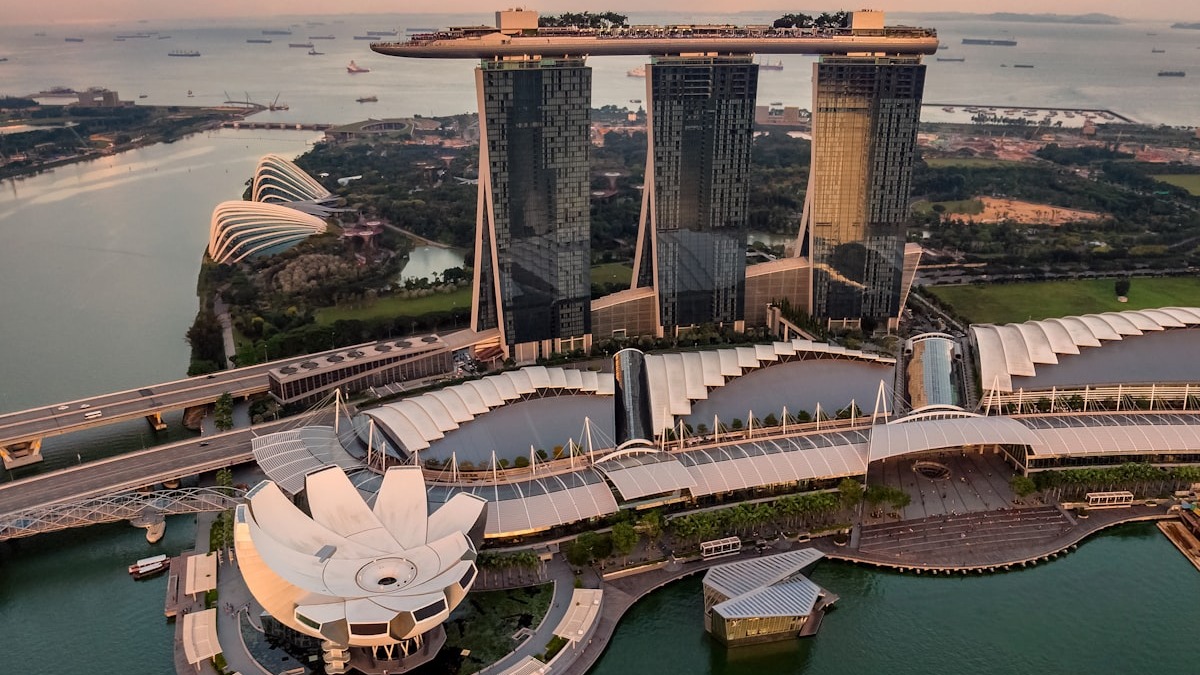 Singapore has become the jurisdiction of choice for Chinese tech firms seeking access to US AI services.
Source: unsplash.com
Singapore has become the jurisdiction of choice for Chinese tech firms seeking access to US AI services.
Source: unsplash.com
The Distillation Warning
The Singapore arrangement isn't just about customers paying for inference. It's about what those customers do with the outputs.
OpenAI suspended API access for users linked to Alibaba after detecting suspected distillation - the practice of using outputs from a frontier model to train a competing system. The company notified the US government of the activity before taking action.
| Stakeholder | Impact | Timeline |
|---|---|---|
| Alibaba, Baidu, Tencent | Singapore affiliates lost or risk losing API access | Ongoing |
| OpenAI | Suspended Alibaba accounts; government notification filed | July 2026 |
| Confirmed Singapore access under usage policies; no accounts suspended | Ongoing | |
| Anthropic | Blocked all Chinese companies including overseas entities; rejected hundreds of millions | Since launch |
| US Commerce Dept. | Hasn't signaled plans to extend entity list restrictions to AI services | No timeline |
Distillation is one of the central concerns driving calls for tighter AI software controls. If a Chinese lab can cheaply generate millions of high-quality reasoning samples from a US frontier model via a Singapore subsidiary, the compute advantage the US seeks to preserve through chip controls becomes much easier to erode at lower cost.
OpenAI's own models have been flagged for distillation risks before, though in a different context. This incident is the first public case of a US lab catching a Pentagon-listed firm doing it through an offshore entity.
Anthropic Draws the Line
Anthropic has taken a different position from both OpenAI and Google. The company bars all Chinese enterprises, not just mainland entities, from accessing its frontier models. That includes overseas affiliates of companies on the 1260H list.
 Alibaba's Hangzhou headquarters. Its Singapore affiliate accessed US AI services until OpenAI suspended those accounts.
Source: commons.wikimedia.org
Alibaba's Hangzhou headquarters. Its Singapore affiliate accessed US AI services until OpenAI suspended those accounts.
Source: commons.wikimedia.org
Maintaining that policy hasn't been free. Anthropic rejected "several hundred million dollars" in revenue to hold the line, according to reporting cited by The Register.
The company has also been lobbying federal officials for broader export controls that would extend to AI software, comparable in structure to existing semiconductor restrictions. That push hasn't yet produced a policy change, but the OpenAI-Alibaba distillation incident gives advocates a concrete case to point to.
Anthropic separately alleged that Alibaba deployed thousands of fraudulent accounts targeting its Claude AI systems. Neither Alibaba nor Chinese government officials have commented publicly on the claims.
What Happens Next
The Commerce Department hasn't signaled any plans to extend entity list restrictions to offshore subsidiaries purchasing AI services. Any such policy change would need to define what counts as a covered transfer when no physical goods move across a border - a genuinely hard legal and technical question.
The US-China AI safety channel agreed in Beijing last May has not produced any workable coordination on access rules. Both governments treat frontier model access as a strategic question, but they define the risk in opposite directions.
What makes the current situation unstable isn't the legal ambiguity. It's that the Singapore arrangement works right up until the moment Washington decides to close it. OpenAI said as much - any policy change "could collapse overnight" the current framework. For the Chinese companies currently buying access, that's a real exposure. For US labs earning revenue from those accounts, it's a political timer.
Sources:
- OpenAI and Google Provided AI Services to Pentagon-Listed Chinese Groups via Singapore Units - BigGo Finance
- OpenAI and Google Are Selling AI to Pentagon-Blacklisted Chinese Firms and It Is Entirely Legal - TechStory
- U.S. AI Giants Sold Services to Pentagon-Blacklisted Chinese Firms via Singapore - Blockonomi
- US Tech Giants Provided AI Tools to Pentagon-Blacklisted Chinese Firms via Singapore - MoneyCheck

