
OpenAI Foundation Names Leaders, Pledges $1B
OpenAI's nonprofit arm announced a $1 billion grant commitment for 2026, hired a full leadership team including co-founder Wojciech Zaremba, and outlined four focus areas from disease research to children's mental health.
 5 min read
On March 24, the OpenAI Foundation published an update that puts its grantmaking on a firm footing for the first time: a $1 billion minimum pledge over the next 12 months, a full-time leadership team, and four defined program areas. It's a significant operational step for a nonprofit that, as recently as 2019, spent just $3.3 million in a single year.
TL;DR
- OpenAI Foundation commits at least $1 billion in grants over the next year
- Wojciech Zaremba, one of OpenAI's remaining co-founders, will lead the AI Resilience program
- Four grant pillars: life sciences, jobs and economic impact, AI resilience, and community programs
- The foundation's board chair is Bret Taylor; an executive director position is still being recruited
- Foundation expenses collapsed from $51M (2018) to $3.3M (2019) after the for-profit subsidiary launched - raising questions that $1B now must answer
What the $1B Covers
The foundation's four program areas map onto what its advisory board identified as AI's most consequential social risks.
Life Sciences and Curing Diseases
Jacob Trefethen, newly hired as head of this pillar, previously oversaw more than $500 million in grantmaking at Coefficient Giving, a major effective altruism funder. His portfolio at the foundation will target Alzheimer's research, public health data infrastructure, and high-mortality disease acceleration using AI-assisted drug discovery. The effective altruism connection is remarkable - it's a community that has "sometimes clashed with OpenAI's vision for artificial intelligence," as the AP observed.
Jobs and Economic Impact
This arm engages civil society organizations, small businesses, unions, economists, and policymakers on the displacement effects of AI on the workforce. No specific grant recipients or dollar allocations have been named for this pillar yet.
AI Resilience
Co-founder Zaremba, one of a handful of OpenAI's original founders still employed at the company, takes charge of this area. It covers children's and youth safety online, biosecurity preparedness, and the development of AI model safety standards. Anna Makanju - formerly VP of Global Impact at OpenAI - joins as Head of AI for Civil Society and Philanthropy in mid-April and will work alongside this program.
Community Programs
The final round of the People-First AI Fund, which distributed $40.5 million in grants in December 2025 to nonprofits focused on AI literacy and civic participation, will receive an additional wave before the program concludes.
A Leadership Team, Finally
The foundation has been a board-level entity without a real operating staff for most of its existence. That changes with this cohort.
Who's Running What
Robert Kaiden joins as CFO, bringing finance experience from Deloitte, Twitter, and Inspirato. Jeff Arnold, an early OpenAI employee with prior stints at Oracle and Dropbox, takes operations. The executive director seat - the person who'll oversee all grantmaking - remains open and is actively being recruited.
Board chair Bret Taylor issued the governing statement: "We aim to enable the use of AI to find solutions to humanity's hardest problems, transform what people are capable of, and deliver real benefits in people's lives - while working hard with partners to be ready for new challenges, and to help make society resilient, as AI advances."
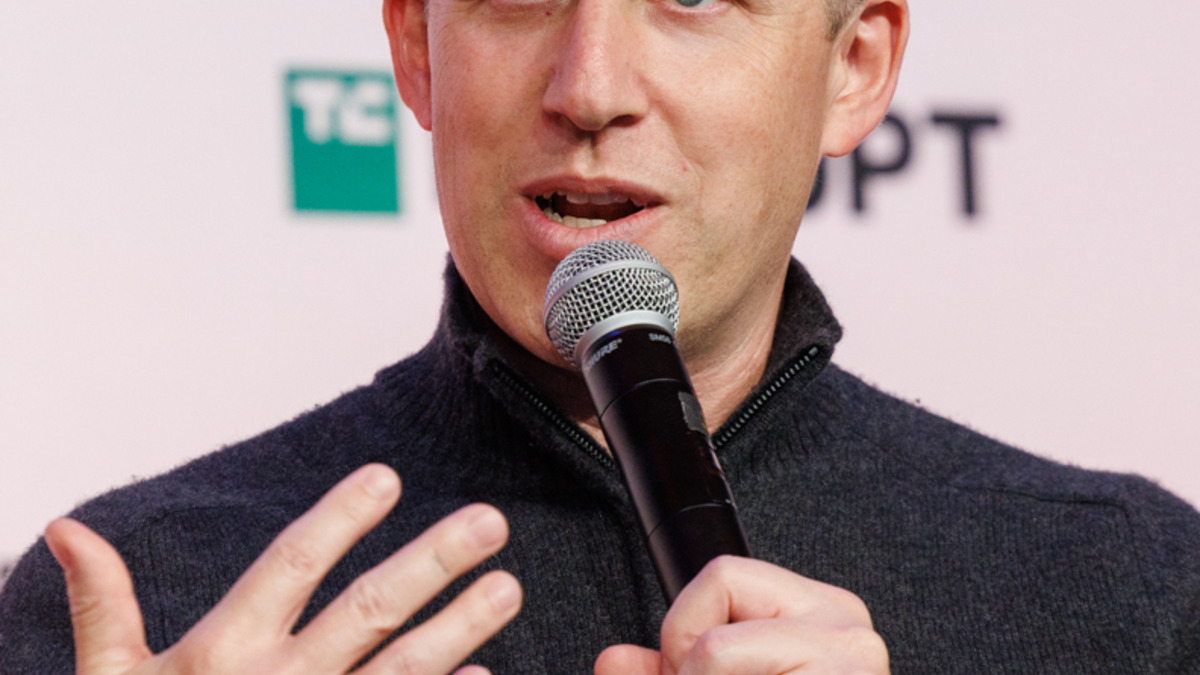 Bret Taylor at TechCrunch Disrupt 2024. He chairs the OpenAI Foundation board and was central to the October 2025 restructuring that kept the nonprofit in control of its for-profit subsidiary.
Source: wikimedia.org
Bret Taylor at TechCrunch Disrupt 2024. He chairs the OpenAI Foundation board and was central to the October 2025 restructuring that kept the nonprofit in control of its for-profit subsidiary.
Source: wikimedia.org
Taylor's presence on the board matters more than his quote. He was central to the October 2025 restructuring deal that kept the nonprofit's board in charge of its for-profit business while clearing the way for investors to profit more directly from OpenAI's growth.
 The OpenAI Foundation, the nonprofit that controls the company, is now operationally separate from the commercial lab for the first time.
Source: wikimedia.org
The OpenAI Foundation, the nonprofit that controls the company, is now operationally separate from the commercial lab for the first time.
Source: wikimedia.org
From $3.3M to $130B - The Gap That Explains Everything
The history of the OpenAI Foundation is a story of structural contradiction. Founded as a nonprofit in 2015, OpenAI launched its for-profit subsidiary in 2019. In the year that happened, the nonprofit's annual expenses fell from $51 million to $3.3 million. By 2024, according to its most recent IRS filing, the foundation received just $4,433 in contributions and distributed $7.6 million in grants total.
The October 2025 restructuring changed the financial picture entirely. The nonprofit retained its governance role over the for-profit, and its ownership stake in OpenAI was valued at roughly $130 billion at the time of the deal - making it one of the best-resourced nonprofits in the United States on paper.
That gap between paper wealth and actual grantmaking is exactly what critics have been watching. Brian Mittendorf, a professor of accounting and public affairs at Ohio State University who studies nonprofit structures, framed it directly for the AP:
"People tend to focus on the financial part of that. Is the immense value creation being used to further a charitable objective? But an equally important piece is whether the product they are developing is serving humanity as they envisioned."
The $1B pledge is an attempt to answer that question with a number.
What the Record Shows
The December 2025 $40.5 million distribution was the first concrete grantmaking under the new structure. A temporary advisory board that included labor leader Dolores Huerta recommended substantially increasing foundation resources and consulting with affected communities - both of which the foundation is now claiming to do. Whether the follow-through matches the mandate will depend on where the money actually goes.
The foundation faces an additional pressure: Elon Musk's lawsuit alleging that CEO Sam Altman and others betrayed the nonprofit mission in pursuit of profit is scheduled for trial in California. The legal timeline adds urgency to the foundation's visible demonstration of charitable purpose.
OpenAI's pattern of high-stakes deals and safety researcher departures over the past year has sharpened public scrutiny of whether its stated mission holds up under commercial pressure. The foundation's $1B commitment is the clearest signal yet that the nonprofit board recognizes that question won't go away on its own.
The $25 billion pledged in October 2025 for "curing diseases and AI resilience" had no timeline attached. The $1B announced today is different: a 12-month commitment with named staff, defined programs, and a board chair on record. That specificity is what separates a press release from an accountability document. Now comes the harder part - spending it well.
Sources: OpenAI Foundation announcement | BNN Bloomberg / AP wire

