
OpenAI Loses Three Execs as Sora Era Ends and IPO Nears
Kevin Weil, Bill Peebles, and Srinivas Narayanan all left OpenAI on the same day as the company dismantles its consumer moonshots and sharpens its focus on enterprise revenue ahead of a potential IPO.
 8 min read
On April 17, three of OpenAI's most senior product and technology leaders announced they were leaving the company on the same day. Kevin Weil, who built OpenAI's scientific discovery division. Bill Peebles, the researcher who led Sora from a blank whiteboard to one of the most-hyped AI products in history. Srinivas Narayanan, the enterprise CTO who turned the OpenAI API into a serious B2B business. Three architects of OpenAI's most ambitious non-core bets, gone simultaneously.
It was not a coincidence.
TL;DR
- Kevin Weil (VP, OpenAI for Science), Bill Peebles (Sora lead), and Srinivas Narayanan (CTO, Enterprise) all departed on April 17
- OpenAI for Science - which built the Prism scientific discovery platform - is being dissolved into other teams
- Sora was shut down in March after building up $15M per day in compute costs against just $2.1M in lifetime revenue
- The exits follow a pattern of consumer moonshot eliminations as OpenAI prepares for a late-2026 IPO
The Three Who Left
The simultaneous departure of three senior figures is unusual even by Silicon Valley standards. Understanding who they were, and what they built, makes the signal clear.
Kevin Weil - the Scientist
Weil joined OpenAI as Chief Product Officer in 2024, a role he had previously held at Instagram and Twitter. By 2025 he pivoted from consumer products to lead a new group called OpenAI for Science. The mission was expansive: build an AI-powered platform called Prism that could accelerate scientific discovery across biology, chemistry, and physics.
"Today is my last day at OpenAI, as OpenAI for Science is being decentralized into other research teams," Weil wrote in a post announcing his departure.
His team released GPT-Rosalind - a model designed to accelerate life sciences research - just one day before Weil announced he was leaving. A farewell gift, shipped on the way out the door.
Bill Peebles - the Architect of Sora
Peebles was the researcher behind Sora's technical architecture. He turned what began as a research experiment into one of the most technically impressive AI products of 2025 - a video generation system capable of producing cinematographic footage from a text prompt, with temporal coherence and physics modeling that genuinely surprised the field.
"Building Sora zero-to-one with you all has been the honor and adventure of a lifetime," Peebles wrote.
The product was shut down last month, less than a year after its public launch. Peebles is leaving because the thing he built no longer exists.
Srinivas Narayanan - the Enterprise Architect
Narayanan served as CTO for B2B applications, the executive most directly responsible for turning OpenAI's API and ChatGPT into a viable enterprise product. By most accounts, this was a success - ChatGPT now serves more than 900 million weekly active users, and the API powers thousands of enterprise deployments.
His departure lands differently from Weil's and Peebles'. He isn't leaving because his division was shut down.
"The last three years have been an incredible journey that felt more like ten," Narayanan said.
He cites personal reasons, and there's no obvious reason to doubt that. But his exit, combined with the other two, contributes to a clean sweep of the people who built OpenAI's most ambitious non-core products.
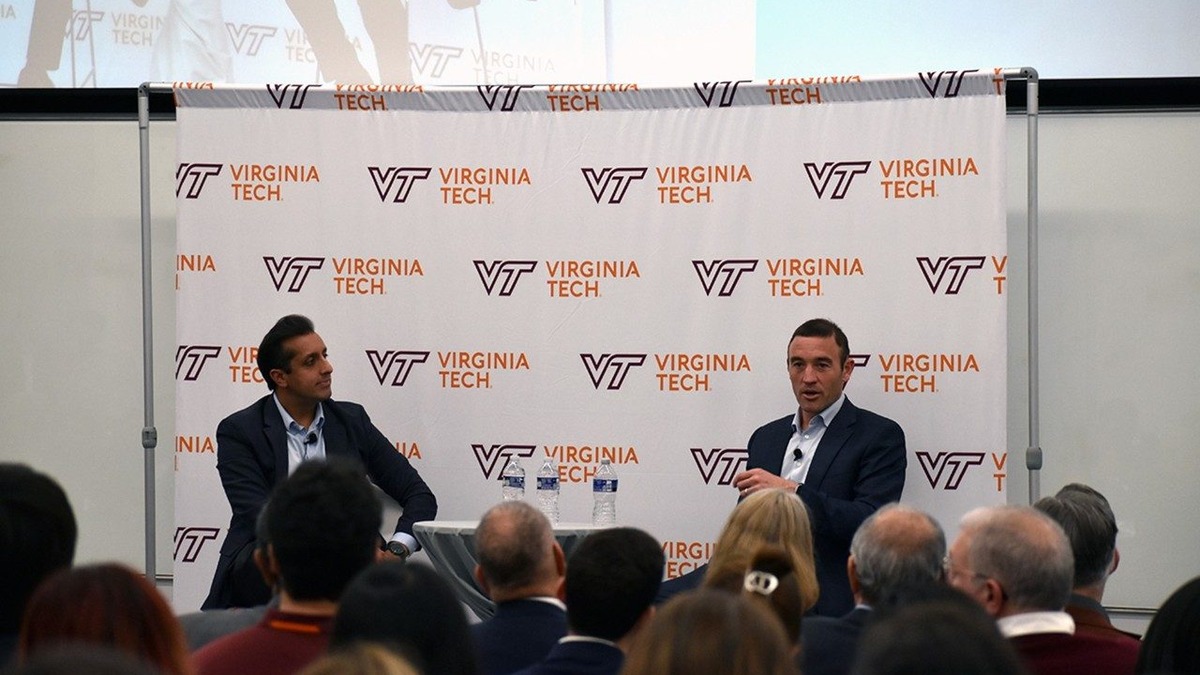 Kevin Weil speaking at Virginia Tech in March 2026, weeks before his departure from OpenAI.
Source: news.vt.edu
Kevin Weil speaking at Virginia Tech in March 2026, weeks before his departure from OpenAI.
Source: news.vt.edu
The Economics That Ended Sora
The Sora shutdown was announced on March 24 and described at the time as a strategic pivot. The economics were brutal.
At peak operation, Sora was burning about $15 million per day in compute costs. Lifetime revenue across the entire product, from launch to shutdown, totaled roughly $2.1 million. That's not a unit economics problem. It's a fundamental mismatch between what the product cost to run and what anyone was actually willing to pay for it.
The Sora app closes April 26. The API follows in September.
Disney, which signed a $1 billion partnership with OpenAI just three months before the shutdown to bring its characters to Sora, learned of the closure less than an hour before the public announcement. That partnership is now void.
What made Sora compelling was exactly what made it unsustainable. Generating cinematic video in real time required inference at a scale that no consumer subscription price could justify. OpenAI had bet that the quality of the product would create the demand that would eventually justify the cost. It did not.
Prism and the Science Gamble
OpenAI for Science ran on a similar logic. The pitch was that OpenAI's models were good enough to accelerate the pace of scientific discovery itself - to compress years of drug development or materials research into months. Prism was the platform meant to make that pitch real.
The platform didn't get far enough to generate meaningful revenue before OpenAI decided the bet was premature. The group is being absorbed into existing research teams. The science agenda survives on paper, but the dedicated unit built to pursue it doesn't.
A Pattern, Not an Incident
This is not the first wave of senior departures at OpenAI, and it doesn't come out of nowhere.
In early 2025, a cluster of safety researchers and executives left OpenAI, Anthropic, and xAI in a single week, many citing concerns about the pace of deployment relative to safety work. That exodus was about values and priorities. This wave is different. It is about strategy.
The April 4 leadership shuffle - in which Fidji Simo went on medical leave, Kate Rouch stepped down as CMO, and Brad Lightcap moved to "special projects" - was framed as routine change. The April 17 departures are harder to frame that way. Three senior product leaders, on the same day, each associated with a division that's either gone or being consolidated.
Over two years, multiple high-profile leaders have left OpenAI for competitors or to launch ventures, with few original founders remaining actively involved.
The pattern is one of OpenAI shedding complexity at speed, cutting everything that does not directly produce revenue or directly support the products that do.
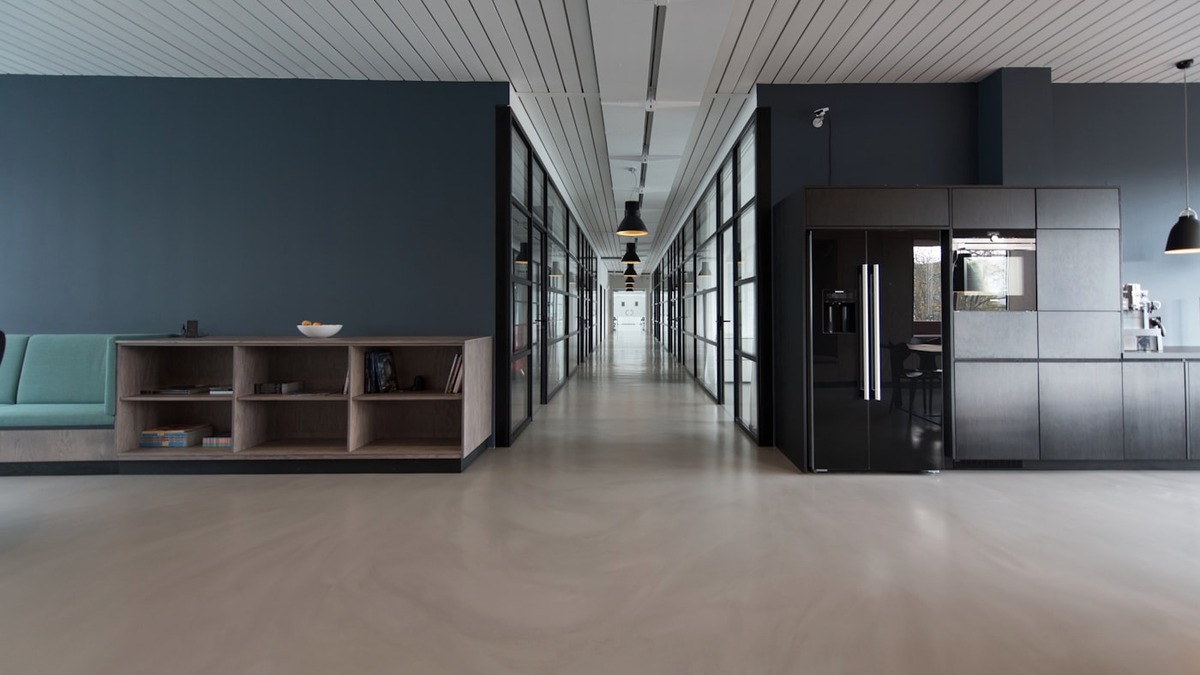 OpenAI has expanded its Mission Bay, San Francisco footprint past one million square feet - even as it trims its internal ambitions.
Source: unsplash.com
OpenAI has expanded its Mission Bay, San Francisco footprint past one million square feet - even as it trims its internal ambitions.
Source: unsplash.com
What OpenAI Is Building Instead
The company's stated focus is two things: the ChatGPT superapp and enterprise. The superapp is a consolidation of all consumer capabilities - search, voice, image generation, coding - into a single product under the ChatGPT brand. Codex is the latest major addition, with computer-use and parallel agent capabilities designed for professional workflows.
On the enterprise side, Narayanan's departure is supposed to leave a cleaner structure, with Denise Dresser - the former Slack CEO who joined as chief revenue officer - handling more of the operational layer.
As for the video generation ambitions Sora represented, those haven't disappeared. OpenAI is reportedly developing a Sora successor codenamed "Spud," focused on world models for enterprise applications rather than consumer video generation. It is expected to launch around July 2026 as an API product, not a standalone app. Less demo, more infrastructure.
The IPO timeline is the organizing constraint behind all of it. OpenAI produces roughly $25 billion in annual revenue but runs a projected $14 billion annual loss, driven primarily by infrastructure costs. An IPO at the valuation OpenAI is reportedly targeting requires a story about a path to profitability. Consumer moonshots with catastrophic unit economics aren't that story.
What the Timing Tells You
Three exits on the same day is a message, whether it was intended as one. Companies that lose senior leaders one at a time can frame each departure as individual. Three at once collapses that framing.
What April 17 confirms is something that Sam Altman has been careful not to say too directly: the version of OpenAI that tried to be a research lab, a consumer product company, and an enterprise software business simultaneously is over. The version that follows is narrower, more legible, and built for a S-1.
The people who built the parts that did not fit are now outside the building. What they built, and how much of it mattered, will take years to know.
There's something worth sitting with in the fact that Weil's team shipped GPT-Rosalind the day before he announced he was leaving. A model for drug discovery, released as its creators walked out, absorbed into an organization that has just decided it can't afford the laboratory it was building. The science vision survives as a capability embedded in a model. The institution built to pursue it does not. That gap - between what the models can do and what the business can support - is what the April 17 departures are really about.
Sources:
- Kevin Weil and Bill Peebles exit OpenAI as company continues to shed 'side quests' - TechCrunch
- OpenAI sees major leadership exits as three top executives leave together - The Tech Portal
- Kevin Weil, Srinivas Narayanan, Bill Peebles exit OpenAI - what's behind the shake-up? - IBTimes SG
- OpenAI Shutters Sora, Shifts Business Strategy Ahead of IPO - HPCwire/AIwire
- OpenAI kills Sora six months after launch, walks away from billion-dollar Disney deal ahead of IPO - Silicon Canals
- OpenAI Leadership Departures: Kevin Weil and Bill Peebles Exit as Sora Shuts Down - AIToolly

