
OpenAI's $230 Keyboard Lands Amid Apple Lawsuit
OpenAI launched a $230 mechanical keypad for managing Codex coding agents days after Apple sued the company over alleged hardware trade secret theft.
 5 min read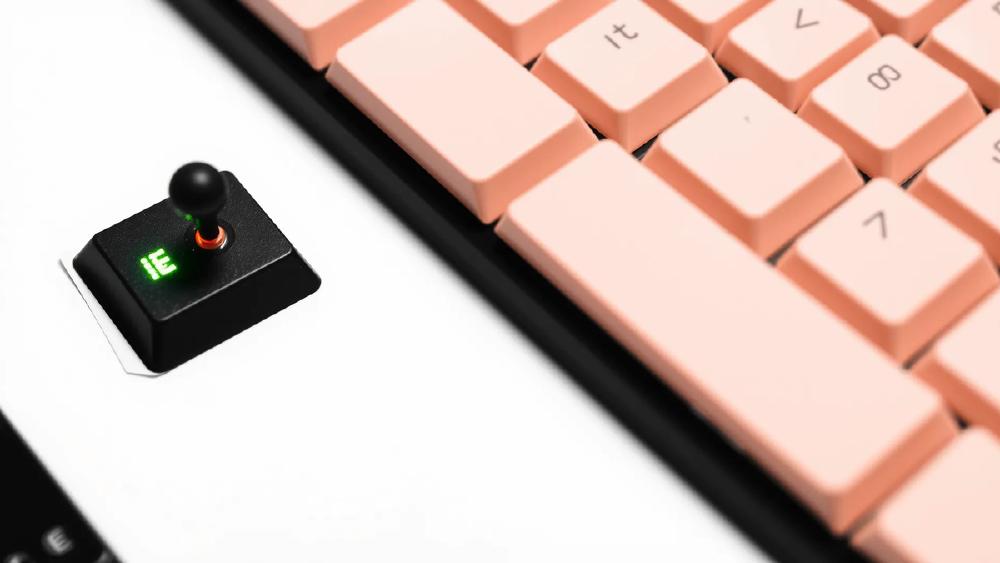
OpenAI's first piece of hardware is not a screenless speaker or a pocketable AI companion. It's a keypad. On July 15, the company opened orders for Codex Micro, a $230 desktop macro pad built with keyboard maker Work Louder, designed to sit next to a regular keyboard and give developers physical buttons for their Codex coding agents.
The timing is hard to miss. Apple filed a trade secret lawsuit against OpenAI five days earlier, accusing the company of stealing hardware designs through a hiring scheme run out of its own executive ranks. OpenAI shipped a physical product into that storm instead of waiting it out.
TL;DR
- OpenAI and Work Louder launched Codex Micro, a $230 macro pad with 13 mechanical switches, a rotary dial, and a joystick for controlling Codex agents
- Agent Keys glow different colors to show what an agent is doing: green for unread, blue for thinking, orange for approval needed, red for error
- The dial adjusts how much reasoning compute an agent spends on a task, and the joystick fires off workflows like PR review or debugging
- It ships five days after Apple sued OpenAI over alleged theft of hardware trade secrets tied to a separate, unreleased device
What's Actually In The Box
Codex Micro isn't a full keyboard. It's a square macro pad, the kind hobbyists build for Photoshop or video editing shortcuts, repurposed for agent management. Work Louder supplies the hardware; OpenAI supplies the software hooks into ChatGPT's desktop app.
Agent Keys
Six of the keys are illuminated and tied directly to Codex's task queue. OpenAI's product copy puts it plainly:
"Each Agent Key lights up with a live RGB status from Codex, so you can tell what's thinking, running, waiting, or done before you even switch chats."
The color scheme is fixed, not user-configurable:
green   = unread agent message
blue    = agent is thinking / running
orange  = agent needs your approval to continue
red     = agent hit an error
For anyone running more than two or three Codex sessions at once, that's a status board that doesn't require alt-tabbing through browser tabs to read.
The Reasoning Dial
A rotary knob sits above the keys and controls how much compute an agent spends "thinking" before it acts, the same reasoning-effort tradeoff Codex already exposes in its settings menu, just moved onto a physical control. Turn it up for a gnarly refactor, down for a one-line fix.
The Joystick
A small joystick launches saved workflows: kicking off a PR review, starting a debug session, or firing a custom macro. It's the part of the device most reviewers compared to a stripped-down Stream Deck, minus the screen.
Requirements And Fit
Compatibility
| Requirement | Detail |
|---|---|
| Price | $230 |
| Switch options | Clicky or silent mechanical |
| Software | ChatGPT Desktop App (macOS/Windows) |
| Configuration | Key remapping done in-app, not on-device |
| Availability | Limited run, sold until stock runs out |
| Target user | Codex power users running multiple parallel agents |
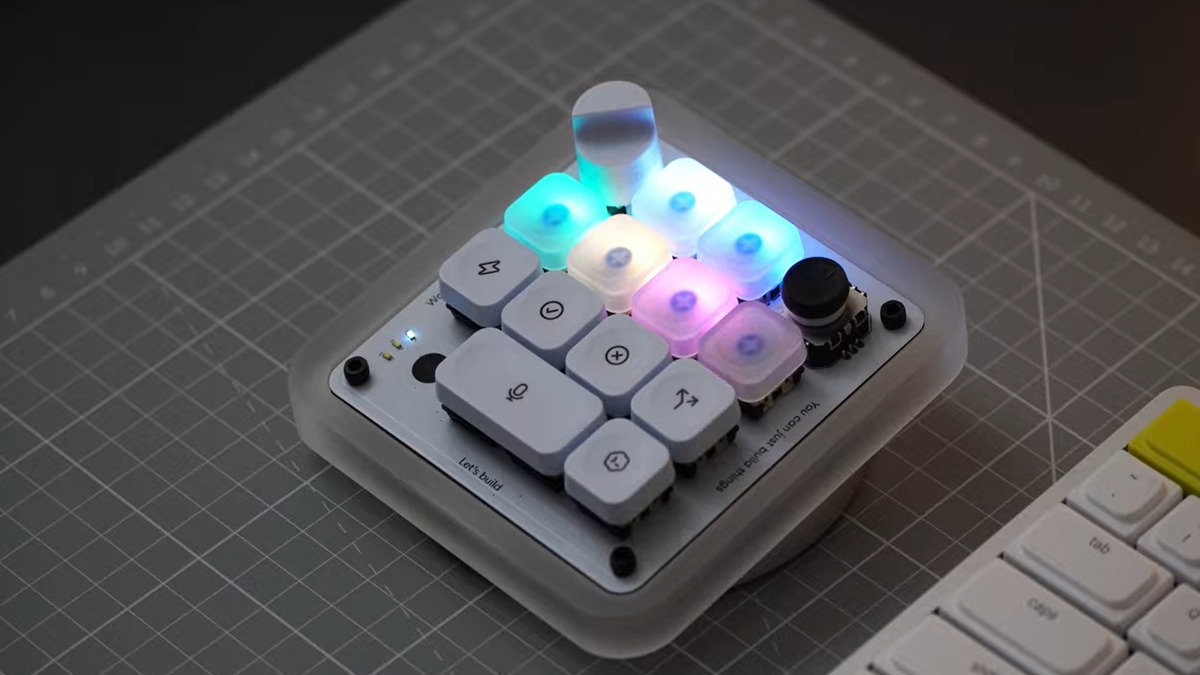 The device ships with 32 swappable Codex icon keycaps and a mix of illuminated and blank keys for custom shortcuts.
Source: interestingengineering.com
The device ships with 32 swappable Codex icon keycaps and a mix of illuminated and blank keys for custom shortcuts.
Source: interestingengineering.com
Developer Thomas Ricouard, who got early access, called the remapping flexible enough that "you can reassign any key, choose how the agents' keys work, and do much more to make this keyboard yours." OpenAI's own teaser clip pulled in close to a million views in its first 24 hours, though a chunk of the reaction on social media was about shipping costs rather than the device itself.
The Timing Nobody Can Ignore
Apple sued OpenAI, two former Apple employees, and io Products in federal court on July 10, alleging what its filing calls a scheme directed by OpenAI's hardware leadership to extract confidential manufacturing plans and unreleased product details. The complaint names OpenAI's chief hardware officer, Tang Tan, a former Apple executive, and accuses him of using Apple project code names during recruiting and coaching departing staff on how to avoid Apple's exit security checks.
None of that concerns Codex Micro directly. The lawsuit centers on a separate, still-unreleased screenless device with moving mechanical parts, reportedly the project Apple believes borrows from its own unreleased hardware. Codex Micro is a licensed collaboration with an outside keyboard maker, not an in-house design pulled from io, the studio OpenAI bought from Jony Ive's team for $6.5 billion.
Still, launching any hardware product five days after a federal trade-secret complaint lands is a statement. OpenAI could have delayed a $230 novelty item with no revenue urgency behind it. It shipped anyway.
 Apple's lawsuit, filed in federal court in California, alleges the theft scheme was directed by OpenAI's senior hardware leadership.
Source: commons.wikimedia.org
Apple's lawsuit, filed in federal court in California, alleges the theft scheme was directed by OpenAI's senior hardware leadership.
Source: commons.wikimedia.org
Where It Falls Short
Codex Micro is explicitly a niche accessory, not a platform. A few limits are worth naming before anyone orders one:
- It's Codex-only. The Agent Keys talk to OpenAI's coding agent exclusively. There's no API for wiring the device into Claude Code or any other agent runtime, so switching tools means the hardware goes idle.
- Configuration lives in the cloud app. Remapping happens through the ChatGPT desktop client, not on the device itself, so there's no offline or local-only workflow for teams with stricter data policies.
- It's a limited run. OpenAI has described this as a one-off collaboration that sells out and stops, not a product line with restocks or a roadmap.
- The value scales with how many agents you actually run in parallel. A developer with one Codex session open gets a fancy status light. The pitch only holds for people already juggling several agents at once, which is still a small slice of Codex's user base.
Should You Care?
Codex Micro won't move OpenAI's revenue needle at $230 a unit on a limited run. What it signals is more interesting: OpenAI is treating "agent management" as a hardware problem worth solving with physical controls, not just more dashboard UI, and it's willing to ship that idea even while its actual hardware ambitions sit tangled in a federal lawsuit. Whether Work Louder becomes a recurring OpenAI partner or this was a one-off experiment is the thing to watch next, not the keyboard itself.
Sources:

