
OpenAI Signs Seven Giants to Push Codex Enterprise
OpenAI launches Codex Transformation Partners with Accenture, Cognizant, Infosys, PwC, TCS, and others, and embeds its own engineers at client sites via Codex Labs as weekly users hit 4 million.
 6 min read
OpenAI's fastest-growing product just got a classic enterprise distribution strategy. The company launched Codex Transformation Partners on April 22 - a formal channel program with seven of the world's largest consulting firms: Accenture, Capgemini, CGI, Cognizant, Infosys, PwC, and Tata Consultancy Services.
TL;DR
- Seven consulting giants will deploy and scale Codex inside enterprise clients globally - Accenture, Capgemini, CGI, Cognizant, Infosys, PwC, and TCS
- Codex Labs embeds OpenAI engineers directly at client sites to design and execute rollouts via hands-on workshops
- Weekly active Codex users climbed from 1.6 million in late March to 4 million now; users inside ChatGPT Business and Enterprise grew 6x between January and April
- Primary enterprise use cases: legacy code modernization, vulnerability detection, code review automation
- No pricing or financial terms were disclosed for the partner program
OpenAI isn't the first software company to figure out it can't reach every enterprise account through direct sales alone. Microsoft built much of its commercial dominance through systems integrators. SAP and Oracle ran the same playbook. Now OpenAI is running it with Codex - a GPT-5.3-class agentic coding model that has grown from a developer curiosity to one of the fastest-adopted AI tools in enterprise history.
The Partner Network
The seven named firms represent combined annual revenues in the hundreds of billions and workforces that collectively exceed a million engineers globally. That distribution infrastructure takes years to build, and OpenAI didn't have to.
Why These Seven
Cognizant ($21.1 billion in annual revenue) is embedding Codex as a standardized capability inside its Software Engineering Group, applying it on live client engagements across financial services, healthcare, and manufacturing. CGI already deploys Codex across government, public safety, and commercial sectors - markets where OpenAI has had limited direct reach. PwC and Accenture bring the audit, finance, and enterprise transformation practices where legacy modernization normally runs across multi-year contracts.
Rajesh Varrier, President of Operations at Cognizant, put the firm's bet plainly: "The best engineering organizations of the next decade will not be defined by how many engineers they have, but by how effectively human judgment and AI capability work as one."
That framing is worth noting. It hedges - acknowledging that headcount isn't going away while simultaneously justifying why Cognizant's engineers should become Codex operators.
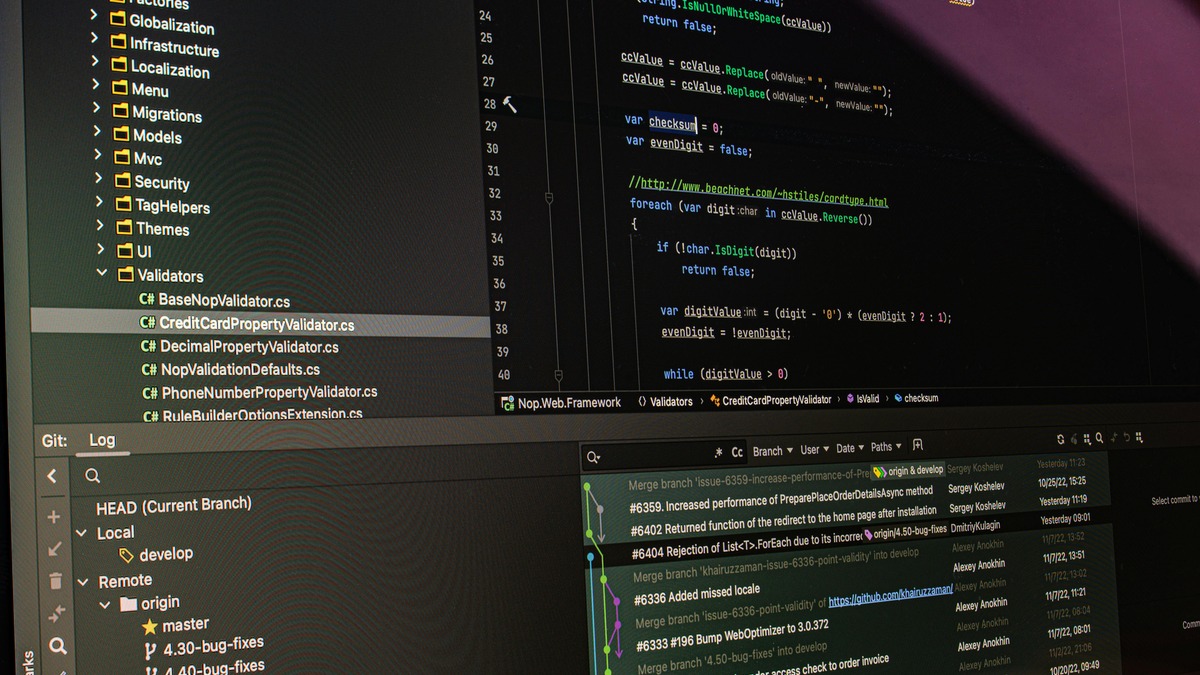 Enterprise software engineering teams are the new deployment frontier for Codex, which has expanded far beyond individual developer use.
Source: pexels.com
Enterprise software engineering teams are the new deployment frontier for Codex, which has expanded far beyond individual developer use.
Source: pexels.com
Codex Labs - The Embedded Engineers
The more interesting part of the announcement is Codex Labs. OpenAI is sending its own engineers into client organizations to run hands-on workshops, design integration patterns, and help teams move from proof-of-concept to repeatable production deployment. This is the classic land-and-expand move: the product team does the first deployment directly, then the SI channel takes over at scale.
"As enterprises move quickly to put Codex to work, we're working with leading partners like Cognizant to help more organizations," said Denise Dresser, OpenAI's Chief Revenue Officer.
Codex Labs is a temporary wedge. Embedded engineers gather patterns on what works, build internal deployment playbooks, and transfer them to the consulting partners to reproduce. It's also a negotiating chip for the SIs - early access to Codex capabilities and documented integration patterns are concrete value for their own client pitches.
Inside the Codex Enterprise Stack
What are these consulting firms actually launching? Codex in enterprise mode is more structured than the developer-facing product. IT administrators configure it through policy files that control which plugins are pushed to all users, which are optionally available, and which are blocked.
A representative enterprise configuration looks like this:
{
  "organization": "acme-corp",
  "allowed_models": ["gpt-5-3-codex"],
  "plugin_policy": {
    "default": "blocked",
    "pushed": ["codex-github", "codex-jira"],
    "available": ["codex-slack", "codex-notion"]
  },
  "data_residency": "us-east",
  "audit_logging": true,
  "user_memory": false
}
This is the version of Codex that matters for the SI channel - not the individual developer experience, but the managed, governed, auditable deployment that a CIO can sign off on.
Legacy Modernization - The Real Prize
Every SI is pitching legacy modernization hard. Cognizant, Infosys, and TCS have built their businesses on multi-year contracts to rewrite, migrate, or extend COBOL, Java EE, and mainframe codebases. Codex's ability to read large legacy codebases, create test coverage, and produce refactored equivalents in modern languages is genuinely useful here. The SI firms charge for the orchestration layer even when the underlying code is AI-produced.
The speed improvements are real. OpenAI has cited a case study where agents and engineers working together finished a complex code migration 6x faster than an engineer-only team - though "complex code migration" is doing a lot of work in that sentence and the original codebase size wasn't disclosed.
Beyond legacy work, Codex is being positioned for vulnerability detection and code review automation. Parallel-agent Codex workflows can review pull requests, flag potential issues, and suggest remediations at a rate no human reviewer can match for volume. The quality bar is a separate question.
 Code review automation is one of the primary use cases consulting firms are pitching to enterprise clients with legacy modernization.
Source: pexels.com
Code review automation is one of the primary use cases consulting firms are pitching to enterprise clients with legacy modernization.
Source: pexels.com
Compatibility and Requirements
| Requirement | Details |
|---|---|
| Codex subscription tier | ChatGPT Business or Enterprise |
| Deployment channels | ChatGPT web, Codex app (Mac, Windows), Codex CLI, API |
| Plugin governance | JSON policy file, admin-controlled per organization |
| Data handling | Org prompts don't train OpenAI's models |
| Codex Labs access | Via partnership with one of the seven named SIs |
| Partner program scope | Targets clients moving from pilots to production deployment |
Where It Falls Short
The growth numbers are real. But the Codex Transformation Partners program has structural problems worth watching.
Consulting firms make money on complexity. An Infosys or Cognizant engagement rarely ends when a deployment is running cleanly - it usually expands into training programs, governance reviews, and integration extensions. The SI channel creates an incentive to keep Codex integrations complicated enough to require ongoing services. That's the opposite of what an enterprise buyer actually wants from an AI coding tool.
The 4 million weekly user figure is also OpenAI's own number. There's no independent definition of what "weekly active" means: does a user who opened Codex once count? Does an API call from a Codex-powered workflow count even when a human never touched it? The SI channel adds another opacity layer - partner-managed deployments will be counted by firms that have their own reasons to report strong adoption.
Legacy modernization contracts run long. The Cognizant and TCS deals likely won't create visible revenue impact for OpenAI until late 2026 or into 2027. The 6x user growth in ChatGPT Business and Enterprise is a real data point, but the SI channel is a bet on 2027 and beyond.
And the plugin marketplace OpenAI launched in late March is still locked to OpenAI-selected integrations. Third-party plugin submissions aren't open yet. For enterprise teams being told they can connect Codex to their entire development stack, that's a gap the consulting partners will have to bridge with custom code - exactly the kind of professional services work they thrive on.
Sources:
- Cognizant - Cognizant and OpenAI Partner to Reshape Enterprise Software Engineering with Codex
- TechCrunch - OpenAI teams up with Infosys to bring AI tools to more businesses
- The Next Web - OpenAI recruits Cognizant and CGI to take Codex into enterprise software shops
- PRNewswire - Cognizant and OpenAI Partner press release
- StockTitan - Infosys strategic collaboration with OpenAI announcement
- Influencer Magazine - OpenAI expands Codex into the enterprise via global consulting partnerships and Codex Labs

