
OpenAI Gives Codex Desktop Control and 111 Plugins
OpenAI's April 16 Codex update adds background computer use on Mac, an Atlas-based in-app browser, gpt-image-1.5 image generation, and 111 new plugins - moving the app far beyond agentic coding.
 5 min read
OpenAI shipped a major update to its Codex desktop app on April 16, adding background computer use for Mac, an in-app browser built on its Atlas engine, image generation via gpt-image-1.5, and 111 new plugins. Together, these features push Codex from an agentic coding assistant into something closer to a general-purpose desktop automation layer. The timing isn't subtle: Anthropic announced remote Mac control for Claude Code last month, and OpenAI is now matching it feature for feature.
TL;DR
- Codex can now see and operate Mac apps in the background using its own cursor, with multiple agents running in parallel
- A built-in browser based on OpenAI's Atlas engine lets users comment directly on pages during development
- 111 new plugins add integrations with Atlassian Rovo, CircleCI, CodeRabbit, GitLab Issues, Microsoft Suite, and Render
- Computer use is blocked in the EU, UK, and Switzerland; memory is unavailable for Enterprise, Education, EU, and UK accounts
The table below shows where Codex now stands against Anthropic's Claude Code across the features that matter most for agentic development workflows.
| Feature | Codex (April 2026) | Claude Code |
|---|---|---|
| Computer use | Yes - Mac only, excl. EU/UK/CH | Yes - Mac and desktop |
| Parallel agents | Yes | Yes (since April 15 rebuild) |
| In-app browser | Atlas-based, localhost for now | No |
| Image generation | gpt-image-1.5 | No native image gen |
| Plugin integrations | 111 | MCP servers (no fixed count) |
| Memory | Preview - no Enterprise, EU, UK | No |
| Pay-as-you-go | Enterprise and Business | API only |
What's New in the April 16 Update
Background Computer Use
The core feature of the update is computer use: Codex can see, click, and type into Mac apps while running in the background, without interfering with other work. Developers can run multiple agents simultaneously - one testing a mobile UI in Simulator while another pushes a commit - with each task isolated from the others.
OpenAI's developer documentation is specific about scope. Codex can interact with windows, menus, keyboard input, and clipboard state in target apps. It cannot automate terminal apps or Codex itself (a deliberate security restriction), and it cannot authenticate as an administrator or approve system permission prompts.
The permission model requires users to grant both macOS Screen Recording and Accessibility access, then selectively approve individual apps on a per-session basis.
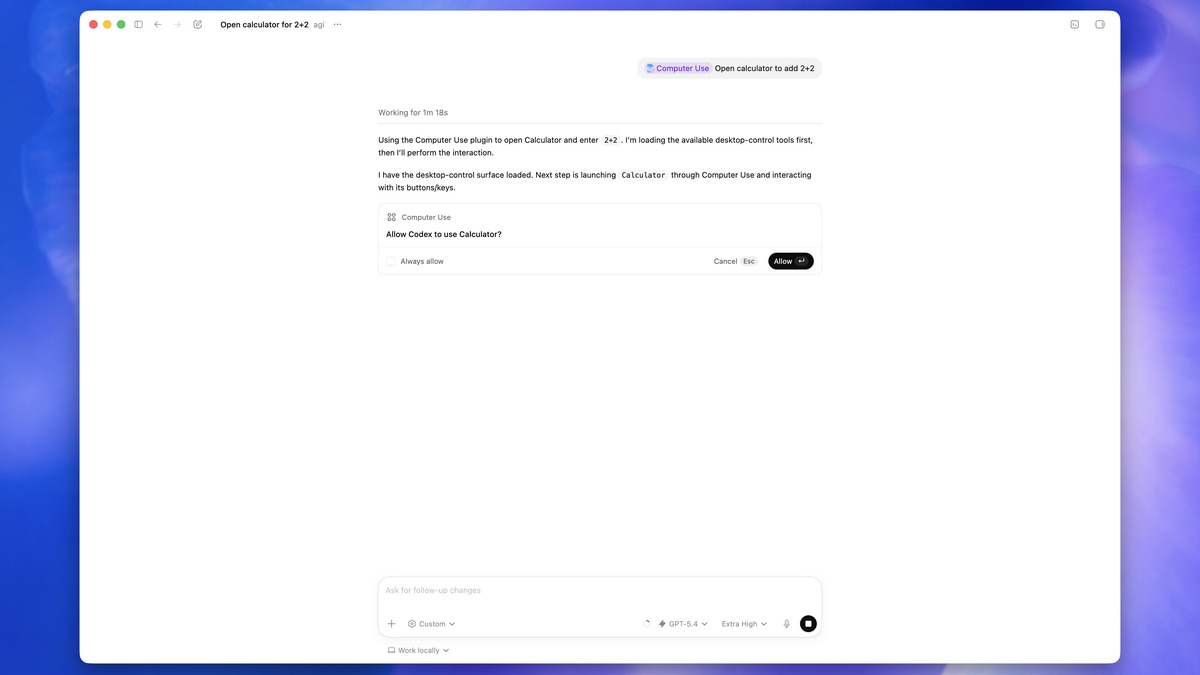 The computer use approval dialog asks users to authorize each app individually before Codex can interact with it.
Source: developers.openai.com
The computer use approval dialog asks users to authorize each app individually before Codex can interact with it.
Source: developers.openai.com
The Atlas Browser
Alongside computer use, Codex now ships with a built-in browser built on OpenAI's proprietary Atlas engine. In its current form, it lets developers comment directly on pages served from local dev servers, giving the agent precise context about which elements to modify without switching to an external browser.
OpenAI's stated intent is to expand Atlas to "fully command the browser beyond web applications on localhost" - meaning general web browsing - but that isn't live yet.
Image Generation and Visual Tooling
Image generation via gpt-image-1.5 is now available directly inside Codex threads. The use cases are narrow but practical: generating placeholder images, iterating on mockup concepts, and creating slide visuals without leaving the development environment. Rich file previews for PDFs and spreadsheets, multiple terminal tabs, GitHub review integration, and artifact previews round out the quality-of-life additions in this release.
111 Plugins: The App Store Moment
OpenAI has added 111 new plugins to the Codex plugin ecosystem, bringing together skills, app integrations, and MCP server configurations into a single installable unit. Named integrations include Atlassian Rovo, CircleCI, CodeRabbit, GitLab Issues, Microsoft Suite, and Render.
The framing from OpenAI is that plugins let teams package reusable workflows - for example, a plugin that reads a project's Slack channel and Google Calendar to create a daily task list, then routes issues to the appropriate agent.
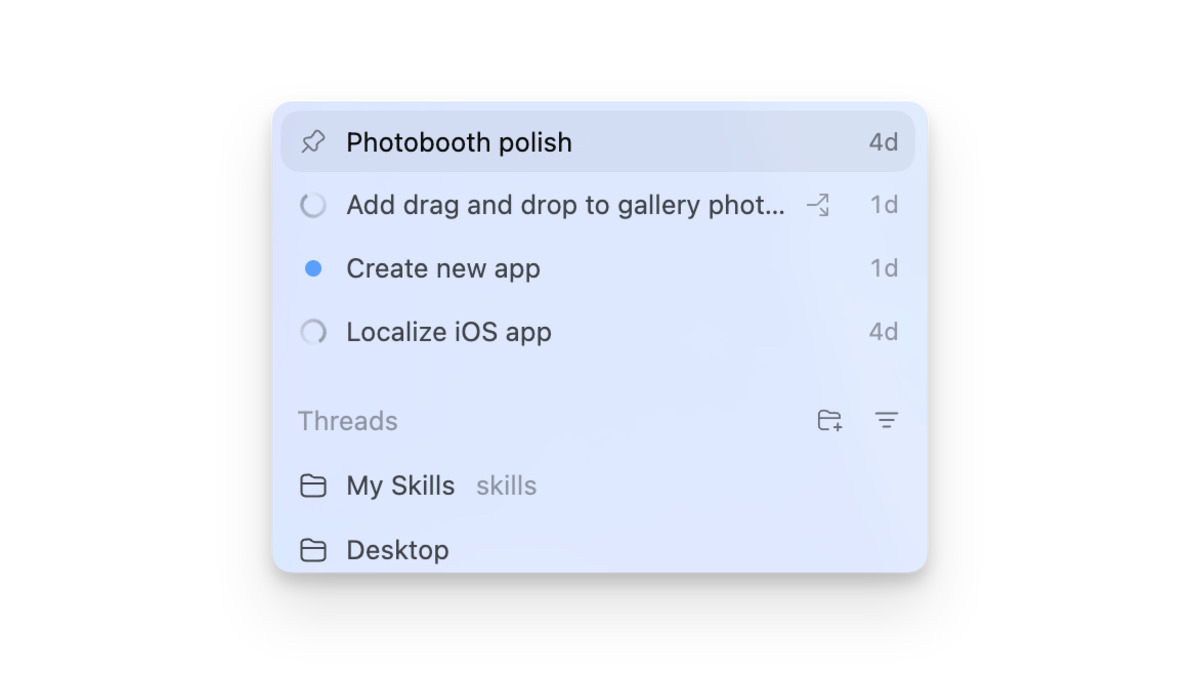 Codex running multiple tasks in parallel inside the desktop app.
Source: developers.openai.com
Codex running multiple tasks in parallel inside the desktop app.
Source: developers.openai.com
Also added: thread reuse so agents can resume interrupted work, and long-horizon scheduling that lets Codex work across tasks that span days or weeks. Memory - a preview feature that lets Codex recall preferences, tech stacks, and workflow patterns across sessions - completes the picture, though its availability is sharply restricted (more on that below).
What It Does Not Tell You
The Geography Problem
Computer use isn't available in the European Economic Area, the United Kingdom, or Switzerland. Memory is similarly unavailable for Enterprise, Education, EU, and UK users. These are two of the four headline features in this update. For organizations operating under GDPR or UK data protection law - which includes a major share of enterprise software teams - the April 16 update delivers less than the headlines suggest.
The restrictions aren't accidental; they reflect the regulatory pressure that makes screen-recording-based computer use truly difficult to ship in Europe. OpenAI hasn't said when, or whether, these restrictions will lift.
The Memory Fine Print
The memory feature is in preview and excluded from Enterprise accounts - the segment most likely to need persistent workflow context. Individual users on Pro, Max, and Team plans can access it, but Enterprise deployments remain stateless. Teams assessing Codex for professional workflows should treat memory as aspirational for now, not a production capability.
The Browser Ceiling
The Atlas browser is built for localhost development. Pointing it at production URLs or external services is outside its current scope. The roadmap phrase "fully command the browser" is OpenAI acknowledging that the current implementation is incomplete - not announcing a feature that exists today.
Taken overall, this update closes a visible gap between Codex and Claude Code's agentic capabilities. The computer use architecture, the plugin depth, and the Atlas browser represent genuine additions that enterprise developers will want to evaluate. The geographic restrictions and the memory exclusions are real constraints that'll matter to a large share of professional users. OpenAI is catching up - but in parts of the world where it counts most commercially, Anthropic still has the open field.
Sources:

