
OpenAI Starts Showing Ads to Free ChatGPT Users
OpenAI begins testing advertisements in ChatGPT for Free and Go tier users in the US, while Plus, Pro, Business, Enterprise, and Education plans remain ad-free.
 Updated
5 min read
Updated
5 min read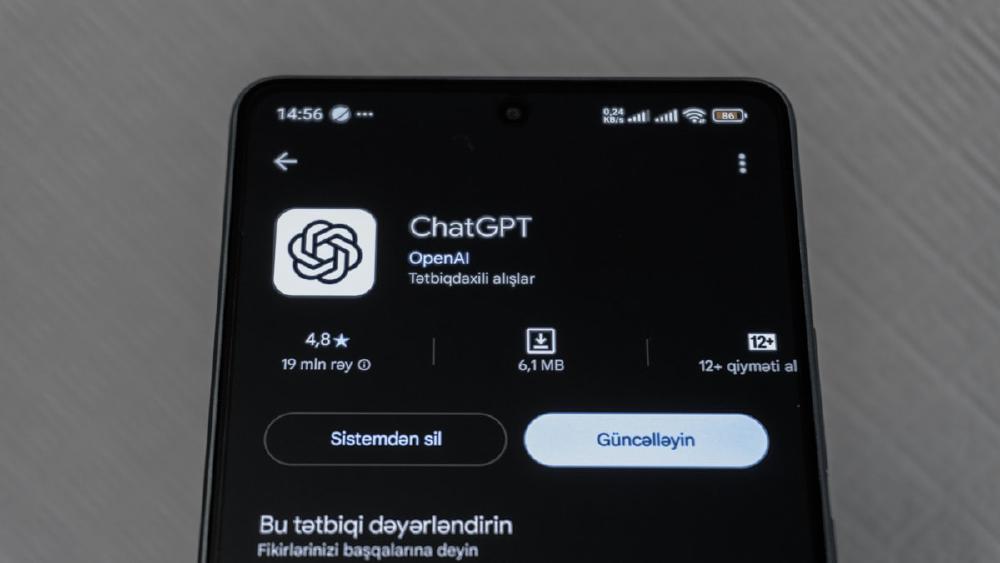
OpenAI has begun showing advertisements to free-tier ChatGPT users, marking a significant shift in the company's approach to monetization. The ads, which are currently being tested with users in the United States on the Free and Go tiers, appear as sponsored suggestions and contextually relevant promotions within the ChatGPT interface. Paid subscribers on Plus, Pro, Business, Enterprise, and Education plans won't see any ads.
The move comes at an interesting moment: OpenAI reports that only 0.1% of active ChatGPT users still select GPT-4o as their preferred model, with the vast majority having migrated to GPT-5.2 or newer. The sheer scale of ChatGPT's user base, now passing 400 million weekly active users, makes even a small advertising operation potentially very profitable.
How the Ads Work
The advertisements appear in several formats within the ChatGPT experience. The most common is a "sponsored suggestion" that appears at the beginning of a new conversation, offering contextually relevant prompts that are tied to an advertiser's product or service. For example, a user who frequently asks coding questions might see a sponsored suggestion from a developer tools company.
There are also banner-style ads that appear below the chat input field and between conversation turns. OpenAI has stated that ads will never be inserted into the middle of a model response, a line that would likely be too disruptive even for free users to tolerate.
The targeting is based on conversation context and general usage patterns rather than the content of specific conversations. OpenAI has stressed that individual conversation data is not shared with advertisers and that the targeting system operates on aggregate user profiles rather than real-time message content. Whether this distinction will satisfy privacy-conscious users remains to be seen.
The Business Logic
OpenAI's decision to introduce advertising reflects the economic reality of running AI infrastructure at massive scale. Each ChatGPT query costs the company money in compute, and free-tier users create significant costs without directly contributing revenue. As the models have become more capable and more expensive to run, the gap between what free users cost and what they contribute has widened.
Advertising is the classic solution to this problem. It's the model that built Google, Facebook, and much of the modern internet: give users a valuable free product, then monetize their attention through advertising. For OpenAI, the math is compelling. With hundreds of millions of free users, even modest ad revenue per user adds up to a significant income stream.
The timing also coincides with OpenAI's transition from a non-profit to a for-profit structure, a process that has been underway for the past year and is expected to be completed in the coming months. As a for-profit company with investors expecting returns, OpenAI faces increasing pressure to diversify its revenue beyond API fees and subscriptions.
The GPT-4o Migration
One of the more interesting data points in OpenAI's announcement is that only 0.1% of ChatGPT users still choose GPT-4o as their model. This is remarkable for a model that was considered state-of-the-art less than two years ago.
The migration to GPT-5.2 and beyond has been driven by clear capability differences. GPT-5.2 is substantially better at reasoning, coding, creative writing, and conversational tasks. For most users, there's simply no reason to stick with an older model when a better one is available at the same price point.
This rapid migration also depicts how quickly the AI field is moving. Models that were groundbreaking upon release become obsolete within months, replaced by newer versions that leapfrog them on every metric. The 0.1% figure for GPT-4o is a reminder that in AI, last year's innovation is this year's legacy technology.
User and Industry Reaction
The reaction from users has been mixed but largely predictable. Free-tier users have expressed frustration on social media, with some threatening to switch to competing products like Google's Gemini or Anthropic's free Claude tier. Others are more pragmatic, acknowledging that a free product needs to be funded somehow and that ads are a reasonable trade-off.
Paid subscribers have been more supportive, viewing the ad-free experience as additional validation of their subscription investment. Some have noted that the introduction of ads could actually drive more users to upgrade, which may be part of OpenAI's strategy.
Industry analysts see the move as inevitable. "OpenAI has 400 million weekly users and a massive compute bill," noted one analyst. "Advertising was always going to be part of the equation. The question was when, not if."
Competitors are watching closely. If OpenAI's ad implementation succeeds without significantly degrading the user experience or driving mass departures, other AI companies with free tiers may follow suit. Then again, companies that can maintain ad-free experiences may use that as a competitive differentiator.
Privacy Considerations
The introduction of advertising into ChatGPT raises important privacy questions. AI conversations often contain personal, sensitive, or confidential information. Even if individual conversations aren't directly shared with advertisers, the aggregate profiling required for targeted advertising creates a new data collection dynamic that users should be aware of.
OpenAI has published a detailed privacy policy update explaining how ad targeting works, what data is collected, and how users can opt out of personalized advertising (though they can't opt out of ads entirely on the free tier). The company has also committed to not using conversation content for ad targeting in certain sensitive categories, including health, finance, and legal topics.
Privacy advocates have raised concerns, noting that the line between "aggregate profiling" and "individual surveillance" can be blurry in practice. Several digital rights organizations have called for independent audits of OpenAI's ad targeting system.
What Comes Next
The ad rollout is currently limited to the US and to the Free and Go tiers. OpenAI has suggested that it'll assess the results before deciding whether to expand to other regions. The company has been clear that paid plans will remain ad-free, positioning advertising as a feature of the free experience rather than a universal change.
For the broader AI industry, OpenAI's move signals that the era of purely subscription- and API-funded AI may be evolving into something more familiar: the attention economy, now powered by artificial intelligence.
Last updated

