
OpenAI Buys TBPN in Its First Media Acquisition
OpenAI pays low hundreds of millions for TBPN, an 11-person tech talk show with 70,000 daily viewers - placing it under the company's chief political operative ahead of its IPO.
 6 min read
OpenAI has agreed to acquire TBPN, a daily Silicon Valley tech talk show, in a deal valued in the "low hundreds of millions of dollars," according to the Financial Times. It's the company's first media acquisition. The show, which launched in October 2024 with 11 employees and roughly 70,000 daily viewers, produced around $5 million in advertising revenue in its first full year and was on track for $30 million in 2026 before the deal closed.
The acquisition fits a familiar pattern among tech billionaires buying narrative control through media properties - but OpenAI's specific execution says more about where the company is headed than any statement from its CEO.
TL;DR
- OpenAI pays "low hundreds of millions" for TBPN, an 11-person tech talk show with $5M in 2025 revenue
- TBPN will report to Chris Lehane, OpenAI's chief political operative, inside the "strategy org"
- An "Editorial Independence Covenant" promises no programming interference - though Altman admits "the world's gotta trust that too"
- TBPN's advertising business will be wound down under OpenAI ownership
- The deal lands weeks before OpenAI's widely expected IPO
The Acquisition in Context
TBPN - the Technology Business Programming Network - built its reputation as the "SportsCenter for tech": a live daily show where founders, investors, and executives talk AI in real time. Its hosts, John Coogan and Jordi Hays, are former founders themselves. In just 18 months, the show attracted Satya Nadella, Marc Benioff, and Sam Altman as guests. It ran a regional Super Bowl ad in 2026 and had no outside investors.
That last detail matters. TBPN didn't need saving. It was profitable, growing fast, and had no cap table to satisfy. OpenAI paid a significant premium for something that wasn't for sale.
| Media Property | Acquirer | Year | Price | Revenue at Time |
|---|---|---|---|---|
| Washington Post | Jeff Bezos | 2013 | $250M | ~$150M (declining) |
| Time Magazine | Marc Benioff | 2018 | $190M | ~$300M (declining) |
| Los Angeles Times | Patrick Soon-Shiong | 2018 | $500M | ~$200M (declining) |
| TBPN | OpenAI | 2026 | Low hundreds of millions | $5M (growing) |
Every other major tech-founder media acquisition involved a legacy property with shrinking revenue and a fire-sale price. OpenAI is paying a significant multiple for a growing, profitable startup.
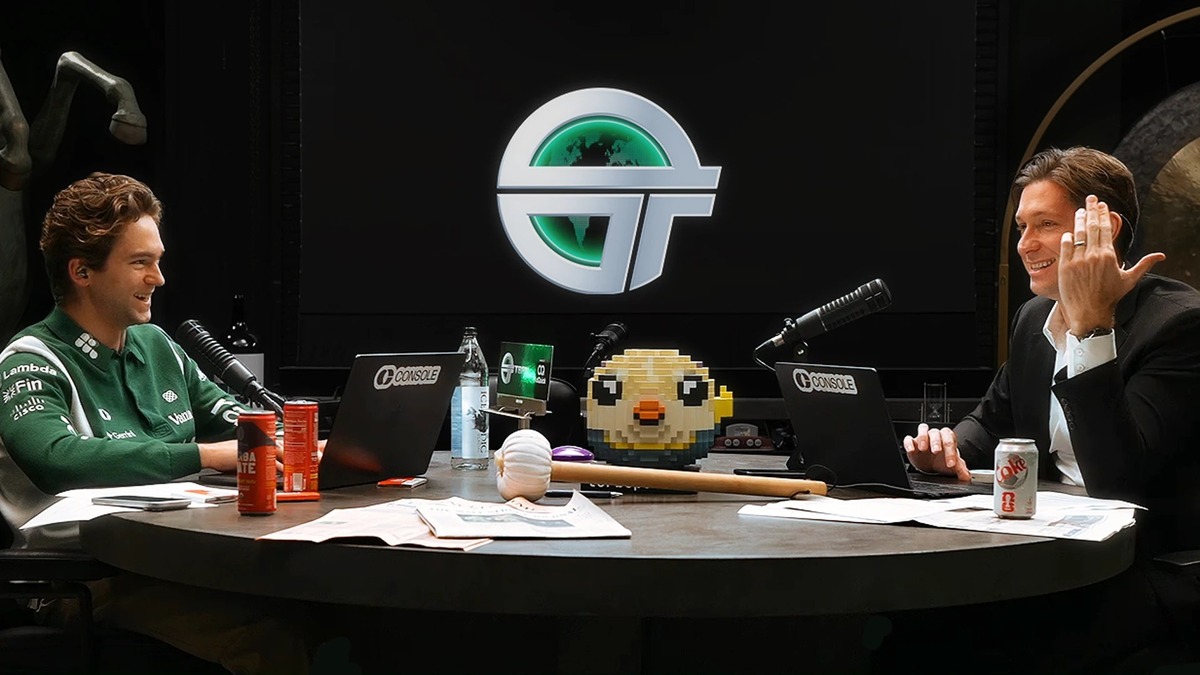 TBPN co-hosts John Coogan and Jordi Hays on set. The show launched in October 2024 and quickly became required viewing for Silicon Valley insiders.
Source: techcrunch.com
TBPN co-hosts John Coogan and Jordi Hays on set. The show launched in October 2024 and quickly became required viewing for Silicon Valley insiders.
Source: techcrunch.com
Who Runs It Now
The acquisition's most significant detail isn't the price. It's the reporting structure.
TBPN will sit inside OpenAI's strategy organization and report to Chris Lehane, the company's Chief Global Affairs Officer. Lehane isn't a media executive. He's a former Democratic political operative who coined the phrase "vast right-wing conspiracy" for the Clinton White House, later led the Fairshake crypto super PAC, and has spent his time at OpenAI lobbying against state-level AI regulations across the US. His current mandate at OpenAI is political and regulatory, not editorial.
Placing a media property inside the strategy org, under the company's top political operative, is a choice. OpenAI could have structured this acquisition dozens of different ways. It didn't run it through product, it didn't run it through comms - it runs through the government affairs apparatus.
"One of the places where the conversation about AI and builders is actually happening day to day. Rather than trying to re-create that ourselves, it made a lot of sense to bring them in, support what they're doing, and help them scale."
- Fidji Simo, OpenAI CEO of Applications
The company has also announced it'll wind down TBPN's advertising revenue - the business model that kept the show independent. Future funding will come entirely from OpenAI.
Counter-Argument
The skeptical read of this deal runs into a few real complications.
TBPN's hosts have been publicly critical of OpenAI before. The show is watched exactly because it doesn't pull punches. Killing that credibility would kill the asset OpenAI just paid for. Sam Altman acknowledged this directly: "I'm convinced we'll have them completely maintain their independence, but the world's gotta trust that too."
The "Editorial Independence Covenant" is real - a contractual limit on OpenAI's ability to influence programming. Altman himself said TBPN "won't go any easier on us." And there is a plausible non-cynical version of this deal: OpenAI, two years from rolling out AGI by its own internal timeline, truly wants a platform that talks to builders and founders every day. Buying one that already exists at scale is more efficient than building one.
Jordi Hays framed it that way: "Moving from commentary to real impact in how this technology is distributed and understood globally is incredibly important to us."
 TBPN launched in October 2024 and positioned itself as daily live coverage of the AI industry for founders and investors.
Source: winbuzzer.com
TBPN launched in October 2024 and positioned itself as daily live coverage of the AI industry for founders and investors.
Source: winbuzzer.com
The counter-argument also has to reckon with the Bezos-Washington Post precedent. Bezos bought WaPo in 2013 and didn't visibly compromise its editorial coverage of Amazon for many years. The structure alone doesn't prove the outcome.
What the Market Is Missing
The real story isn't whether TBPN will stay editorially independent. It's what this acquisition signals about OpenAI's strategy in the six to twelve months before its IPO.
OpenAI is preparing for a public offering after closing a $122 billion funding round last year. An IPO means scrutiny: from regulators, from institutional investors pricing in liability, from Congressional committees that have grown increasingly skeptical of AI lab governance. OpenAI also has ongoing political exposure from its Pentagon contracting controversy and from legal battles with publishers over training data use.
In that context, TBPN isn't mainly a content play. It's a daily distribution channel into the exact population - founders, investors, tech executives - that will shape how Wall Street and Washington perceive OpenAI in the lead-up to its offering. The show's 70,000 viewers don't scale to mass market, but they don't need to. TBPN's audience is the people who write the checks and pass the laws.
The advertising shutdown matters here too. OpenAI isn't monetizing TBPN - it's removing the incentive structure that kept the show independent. Without advertisers to protect, the editorial calculus shifts, even with a covenant in place. Money shapes incentives slowly and without anyone necessarily making a deliberate choice.
"It's the quality of their audience versus the quantity of their audience."
- Jayden Clark, MOTS podcast
OpenAI has previously invested $5 million in the American Journalism Project and funded Indigenous journalism initiatives. TBPN is a step-change different: owned outright, placed inside political operations, with its ad revenue replaced by a corporate subsidy. Every dollar of editorial "independence" now runs through a company that has a direct financial stake in how its IPO lands.
That's the deal. Whether it's a smart one depends completely on whether you believe the covenant survives contact with the IPO roadshow.
Sources: TechCrunch - CNN Business - PodNews - Bloomberg (paywalled) - Axios (paywalled)

