
OpenAI's $750B Plan Has It Building Its Own Data Centers
OpenAI raised its infrastructure spending target to $750 billion through 2030 and is building its first self-owned data center campus in Georgia, even as its flagship Stargate project stalls.
 5 min read
OpenAI has raised its planned infrastructure spending through 2030 to roughly $750 billion, up from the $600 billion figure it floated five months ago, the Wall Street Journal reported Wednesday. The centerpiece of the new number is Project Camellia, a $20 billion data center campus in rural Georgia that OpenAI will design and build itself rather than lease from a cloud partner - a first for the company, and a break from the model that built Stargate.
TL;DR
- OpenAI's compute spending target through 2030 rose to about $750 billion, a 25% jump from the roughly $600 billion it projected in February
- Project Camellia is a 1,400-acre, $20 billion campus in Effingham County, Georgia, drawing at least 3.2 gigawatts from Georgia Power, mostly produced by new natural gas plants
- Effingham County granted a 50% property tax abatement for 15 years; OpenAI agreed to shed up to 1 gigawatt of load during peak demand
- Unlike its leased capacity at Oracle and AWS sites, OpenAI is the principal designer and builder here, with Brett Mayo, hired from xAI's Colossus project, running construction
- The buildout comes as Stargate's Texas expansion has already been scrapped once this year
What OpenAI Actually Announced
The new $750 billion figure covers compute infrastructure through 2030 and sits apart from the $1.4 trillion in commitments Sam Altman has referenced in other contexts, and separate again from the roughly $1.15 trillion in hardware and cloud agreements OpenAI has signed for delivery through 2035. None of these numbers are audited or contractually locked; they're the company's own projections, restated upward for the second time in under six months.
Neither OpenAI nor the WSJ's sourcing named the new cloud deals driving the increase. TechCrunch, which independently confirmed the figure, said it reached out to OpenAI for specifics and got no reply before publishing.
"AI is going to happen everywhere. It's transforming the whole economy, and the world needs a lot of collective computing power to meet the demand," Sam Altman said, in comments accompanying the spending update.
It's the kind of line Altman has repeated in some form since 2024. What's new is the mechanism behind it: for the first time, OpenAI is putting its own name on the deed.
The Georgia Campus
Project Camellia sits on 1,400 acres northwest of Savannah, in Effingham County, on a site OpenAI calls the Savannah Gateway Industrial Hub. Georgia Power will supply at least 3.2 gigawatts, generated mostly by new natural gas capacity with grid batteries and solar, with generating capacity coming online in stages between 2028 and 2032. OpenAI has committed to covering "the full cost of the infrastructure and electric-service costs" itself, according to the company's own framing of the deal.
Effingham County approved a 50% property tax abatement running 15 years, a standard tool local governments use to compete for hyperscale projects. In exchange, OpenAI agreed to reduce its draw from the grid by up to 1 gigawatt during periods of high regional demand, a concession similar to what seven tech giants pledged to the Trump administration in February to keep AI buildouts from raising household electricity bills.
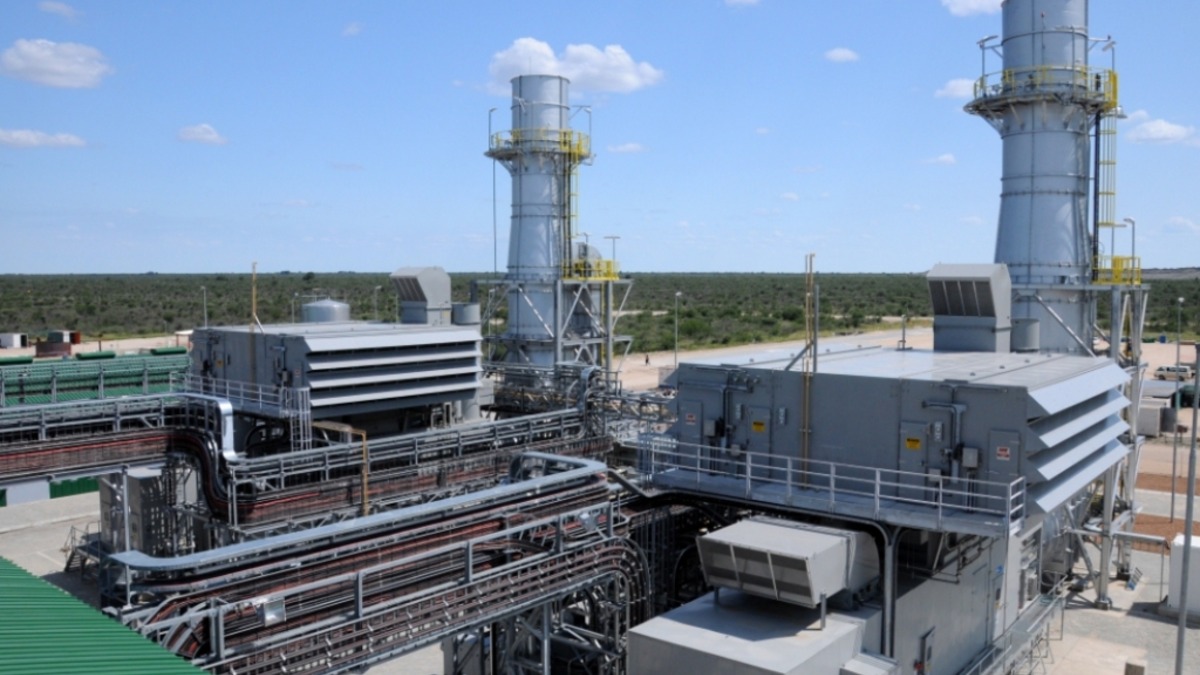 A natural gas combined-cycle plant. Most of Project Camellia's 3.2 gigawatts will come from new natural gas capacity rather than renewables.
Source: commons.wikimedia.org
A natural gas combined-cycle plant. Most of Project Camellia's 3.2 gigawatts will come from new natural gas capacity rather than renewables.
Source: commons.wikimedia.org
Who's Actually Building It
Every other flagship OpenAI site to date has run through a partner: Oracle at Abilene, Texas, and in a five-year, $300 billion contract beginning 2027; AWS through an initial $38 billion, seven-year deal expanded by another $100 billion over eight years. Camellia breaks that pattern. OpenAI is the principal designer and builder, not a tenant leasing racks inside someone else's shell.
Running that construction is Brett Mayo, hired away from xAI, where he oversaw the Colossus supercomputer buildout in Memphis. Bringing in an executive with hands-on experience building a gigawatt-scale site from the ground up, rather than negotiating a lease, signals OpenAI intends to keep doing this itself.
The Strategy Nobody Announced Out Loud
The shift matters because it changes who absorbs the risk. When Oracle or AWS builds a site and leases it to OpenAI, the landlord carries the financing exposure and the construction delays. When OpenAI is the builder, it carries both, on top of a compute bill that has already climbed 25% since February.
That risk is showing up elsewhere in the portfolio. Oracle and OpenAI scrapped a planned expansion of the Abilene, Texas Stargate site in March, after financing talks broke down and a winter cooling outage strained the relationship with facility operator Crusoe. TechCrunch's reporting on the new $750 billion figure describes Stargate, once the umbrella brand for OpenAI's entire infrastructure ambition, as having "stalled." Camellia is not a Stargate project. It's what OpenAI is doing instead.
| Metric | February 2026 | July 2026 |
|---|---|---|
| Compute spending target through 2030 | ~$600 billion | ~$750 billion |
| Flagship new commitment | Stargate expansion (Texas) | Project Camellia (Georgia) |
| Build model | Leased via Oracle/AWS | Self-designed, self-built |
| Funding backdrop | $122B round, $852B valuation | Unchanged since March close |
 The infrastructure behind every spending announcement: racks, cabling, and power, multiplied by however many gigawatts a company can commit to buying.
Source: unsplash.com
The infrastructure behind every spending announcement: racks, cabling, and power, multiplied by however many gigawatts a company can commit to buying.
Source: unsplash.com
This is still a company that hasn't confirmed a date for the IPO its spending is implicitly betting on, funding a $20 billion construction project with a balance sheet that has never turned an annual profit. Whether the projected demand shows up on the schedule OpenAI has now bet a natural gas plant and a 15-year tax break on is a separate question from whether the company can write the check.
The number that should worry OpenAI's cloud partners isn't $750 billion. It's the decision to stop leasing and start building. A company that owns its own gigawatt campus doesn't need Oracle's balance sheet or AWS's construction crews next time, and Camellia reads less like an expansion of the Stargate model than a hedge against it.
Sources:
- OpenAI's AI spending spree has ballooned to $750B - TechCrunch
- OpenAI Lifts Planned Compute Spending to $750 Billion Through 2030 - via Wall Street Journal

