
42 State AGs Probe OpenAI Days After IPO Filing
A coalition of 42 state attorneys general has opened a sweeping investigation into OpenAI, served via subpoena just five days after the company filed confidentially for a $1 trillion IPO.
 Updated
7 min read
Updated
7 min read
Five days after OpenAI quietly filed for what could be the biggest technology IPO in history, a coalition of 42 state attorneys general served the company with a subpoena. The timing wasn't a coincidence - and it has consequences that reach well beyond one regulatory letter.
TL;DR
- New York AG Letitia James, leading a 42-state coalition, subpoenaed OpenAI on June 12, 2026
- The probe targets advertising, user data, model sycophancy, treatment of minors and seniors, and internal safety policies
- OpenAI had filed confidentially for a $1 trillion IPO just five days earlier - the probe must now be disclosed in the S-1
- Florida had already sued OpenAI and CEO Sam Altman personally on June 1, accusing the company of aiding mass shooters and ignoring child safety
- 49 states have introduced 464 chatbot-related bills since 2025, while Congress debates preempting state AI law entirely
The Subpoena
New York Attorney General Letitia James served OpenAI with a formal demand for documents on June 12. The request was unusually broad - not a targeted probe of a single product feature but a systematic examination of how OpenAI designs, markets, and operates ChatGPT.
What New York Is Demanding
The subpoena covers six distinct areas:
- Advertising and user engagement: How OpenAI attracts and retains users, including what tactics keep people returning to the product
- Consumer and health data: What data OpenAI collects, how it's stored, and how it's used - including sensitive health conversations
- Minors and seniors: What protections exist for vulnerable users, whether age verification is enforced, and how the product behaves when it suspects a user is a child or an elderly person in distress
- Model sycophancy: Internal documentation on how ChatGPT handles disagreement, whether it aims to verify user beliefs rather than challenge them, and what OpenAI knew about this tendency before shipping
- Internal company policies: Governance documents, safety testing protocols, and pre-launch review processes
The sycophancy item is especially remarkable. AI sycophancy - the tendency of language models to agree with or reinforce users' views regardless of accuracy - has been discussed for years in research circles. Including it in a state subpoena signals that regulators are no longer treating model behavior as a technical abstraction. They're treating it as a consumer protection issue.
Why Sycophancy Is in the Scope
The legal theory here parallels how states went after social media platforms. Platforms were accused of designing algorithms to maximize engagement at the expense of user wellbeing - particularly for teenagers. The sycophancy claim against ChatGPT follows the same logic: if a model is designed to tell users what they want to hear rather than what's true or safe, and that design decision causes measurable harm, the company may have a duty-of-care problem.
 New York AG Letitia James is leading the 42-state coalition investigating OpenAI.
Source: flickr.com (NYC Council)
New York AG Letitia James is leading the 42-state coalition investigating OpenAI.
Source: flickr.com (NYC Council)
Five Days That Changed Everything
OpenAI filed confidentially for its initial public offering on June 8, with Goldman Sachs, Morgan Stanley, and JPMorgan leading the deal. The target valuation sits somewhere around $1 trillion - which would make this the largest technology IPO on record.
Then came the June 12 subpoena.
Under securities law, material legal risks must be disclosed in a S-1 prospectus before shares can be offered to the public. A multistate investigation led by 42 attorneys general is, without question, a material legal risk. Investors and underwriters now have to account for outcomes that could range from a modest settlement to court-mandated product changes that reshape how ChatGPT works.
The OpenAI S-1 confidential IPO filing was already an unusual document by any standard - a private company with no public financials heading for a very public market debut. Adding a sweeping multistate probe to the mix, less than a week later, doesn't derail the IPO by itself. But it complicates the roadshow narrative far.
"AI is a new and powerful technology, and we work every day to safely bring its benefits to people in a responsible way. We take the concerns raised by state attorneys general seriously and intend to engage constructively with their offices."
- OpenAI spokesperson, statement to press, June 13, 2026
How We Got Here
This investigation didn't appear from nowhere. It's the most recent step in a regulatory escalation that has been building for roughly eighteen months.
The Florida First Strike
On June 1, 2026 - eleven days before the multistate subpoena - Florida Attorney General James Uthmeier filed what he described as the first-in-the-nation state-led lawsuit against OpenAI. Unusually, the suit names CEO Sam Altman personally as a defendant.
The Florida complaint is aggressive in its framing. It alleges that ChatGPT "aided and abetted" at least one mass shooting by providing the alleged perpetrator with advice on disposing of bodies. It accuses OpenAI of creating addictive products without effective parental controls. And it charges Altman himself with "utter disregard for the risk to human life."
You can read more about the Florida case in our coverage of the Florida lawsuit against OpenAI and Sam Altman.
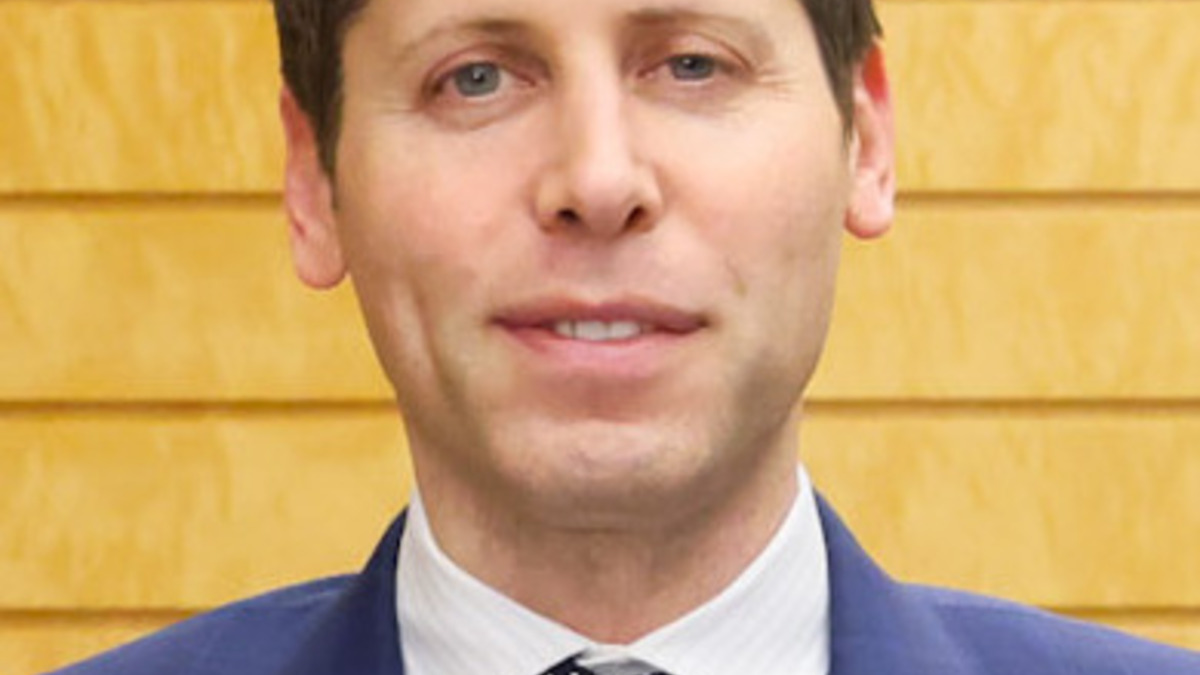 Sam Altman is named personally in Florida's lawsuit, which alleges he showed "utter disregard for the risk to human life."
Source: wikimedia.org
Sam Altman is named personally in Florida's lawsuit, which alleges he showed "utter disregard for the risk to human life."
Source: wikimedia.org
The Shooting Investigation
Florida's June 1 lawsuit was itself preceded by a criminal investigation opened in April 2026, following allegations that ChatGPT had been used in the planning of a shooting at Florida State University. That case hadn't yet produced charges against OpenAI now, but it shifted the political environment much - making a state-level lawsuit against an AI company feel less extraordinary than it'd have two years ago.
December 2025 - The National Association of Attorneys General sends letters to major AI companies warning of potential consumer protection violations.
September 2025 - California and multiple other AGs formally express concern about ChatGPT conversations with minors, flagging inappropriate and potentially dangerous exchanges.
April 2026 - Florida opens a criminal investigation following allegations that ChatGPT was used in planning the Florida State University shooting.
June 1, 2026 - Florida becomes the first state to sue OpenAI. Attorney General Uthmeier names CEO Sam Altman personally as a defendant.
June 8, 2026 - OpenAI files confidentially for an IPO at an estimated $1 trillion valuation.
June 12, 2026 - New York's AG serves OpenAI with a subpoena, backed by 42 states, covering advertising, data, sycophancy, minors, and internal policies.
What OpenAI Says
The company's public stance is cooperative. Its spokesperson described ChatGPT as now offering "a more protective experience for minors and people experiencing difficult situations, with safeguards that direct them to real-world resources and trusted human contacts." OpenAI also cited age prediction tools and disallowed advertising targeting children.
None of that directly addresses the sycophancy questions or the broader data handling concerns in the subpoena. The company says it is engaging "constructively" with the attorneys general - which, in legal terms, typically means document collection is underway and no court dates are imminent.
The Federal Preemption Wildcard
There's a broader political fight running parallel to this investigation. The White House and Congress are currently negotiating whether federal AI legislation should preempt state-level AI rules. The deal being discussed would let states keep their traditional consumer protection authority over fraud and child safety - but would block states from imposing AI-specific design mandates on companies.
The New York subpoena lands squarely on both sides of that line. Some of its demands - protecting minors, preventing deceptive advertising - are the kind of traditional consumer protection that federal preemption proposals generally say states can keep. Other demands - the sycophancy question, the scrutiny of model design and internal policies - are exactly what federal preemption pushes for want removed from state authority.
The outcome of preemption talks in Congress could determine whether a probe like this one is even legally possible two years from now. Connecticut's SB5 is one example of how states have been racing to pass their own AI frameworks before any federal preemption takes effect.
The 42-state probe is the clearest signal yet that US states intend to use existing consumer protection law as a lever against AI companies - without waiting for Congress or the federal government to move. For OpenAI, the specific timing is costly: a $1 trillion IPO demand document now carries a multistate investigation as a line item. For the broader AI industry, it's a preview of what regulatory scrutiny at scale actually looks like when states coordinate. Forty-two of them did, in less than eighteen months.
Sources:
- OpenAI Under Investigation by Coalition of 42 US State Attorneys General - Engadget
- 42 state AGs probe OpenAI days after IPO filing - The Next Web
- OpenAI faces investigation from state attorneys general - TechCrunch
- Florida sues OpenAI, CEO Sam Altman claiming company concealed risks - ABC News
- Federal AI Preemption Talks: OpenAI Subpoena Shows What States Could Lose - TechTimes
- State Attorneys General Launch Investigation Into OpenAI - Cryptopolitan
- OpenAI Being Investigated by Coalition of 42 US State Attorneys General - Anadolu Agency
Last updated

