
Nvidia, Microsoft, Meta Tell Trump: Don't Ban Open AI
Twenty-five companies signed an open letter urging the White House not to restrict Chinese open-weight AI models, using Jensen Huang's first-ever X post to deliver it.
 7 min read
TL;DR
- 25 companies, including Nvidia, Microsoft, Meta, Hugging Face, IBM, Palantir, and Y Combinator, signed "Open Weights and American AI Leadership," warning against "premature restrictions" on open-weight models
- Jensen Huang used his first-ever X post to share the letter; Satya Nadella backed it the same day
- The letter answers Trump administration talk of curbing Chinese open-weight models like Moonshot's Kimi K3, reported by Axios as draft Commerce Department rules
- A separate letter from nearly 200 startups, organized by the new Little Tech Association, made the same ask through different channels
- OpenAI and Anthropic did not sign either letter
Jensen Huang has run Nvidia's public messaging through keynotes, interviews, and the occasional leather jacket for three decades. He had never posted on X. On July 24, he broke that streak to publish a policy letter, not a product.
"For my first post, I'm sharing a letter @NVIDIA signed on why open models matter," Huang wrote. "AI will transform every industry, power every company, and be built by every country. Open models strengthen safety and cybersecurity, accelerate innovation and diffusion, and enable sovereignty."
The letter, titled "Open Weights and American AI Leadership," carries 25 signatures: Nvidia, Microsoft, Meta, Hugging Face, IBM, Palantir, Mistral, Replit, Andreessen Horowitz, Dell, Box, CrowdStrike, ServiceNow, Perplexity, Mozilla, the Linux Foundation, and Y Combinator among them. It lands as the Trump administration weighs whether to restrict American access to Chinese open-weight models, and it's the clearest signal yet that a chunk of the US tech industry wants no part of that plan.
What the Letter Actually Asks For
The signatories aren't arguing that China's models are harmless. They're arguing that banning downloads is the wrong tool. The letter calls on policymakers to expand compute access for startups and researchers, invest in shared training resources like datasets and evaluation frameworks, and use "targeted legal and commercial frameworks" against unlawful distillation rather than blanket restrictions on open weights themselves.
"Openness may be one of the most important paths to AI safety and security," the letter states, framing the current moment as a rerun of the 1980s and 1990s, when American engineers built durable advantage on top of open software rather than in spite of it.
Satya Nadella made the same case on his own account: "Together with others across our industry, we are outlining a path for open-weight models to strengthen American competitiveness and expand economic opportunity, while protecting national security." He called open models "essential to a healthy AI ecosystem."
The Distillation Problem
The letter's most pointed passage tries to draw a line between two things the administration has been treating as one. Days earlier, the White House accused Moonshot AI of distilling Anthropic's Fable model to build Kimi K3, and that accusation has been doing a lot of work in the argument for restrictions. The signatories push back directly: "distillation, or the practice of using one model's outputs to help train or improve another, is a widely used technique for model improvement," not inherently theft. They want enforcement aimed at proven IP violations, not a rule that treats every open-weight download as suspect.
Impact Assessment
| Stakeholder | Impact | Timeline |
|---|---|---|
| Nvidia, Microsoft, Meta, IBM | Protect GPU/cloud demand that commoditized, interchangeable open models drive; avoid a fragmented compliance regime | Immediate lobbying push, no fixed deadline |
| Startups (Replit, Perplexity, Y Combinator portfolio) | Depend on cheap or free open-weight bases; a ban raises their cost floor overnight | Existential if rules land before alternatives mature |
| OpenAI, Anthropic | Notably absent signatories; restrictions on Chinese open models reduce competitive pressure on their closed products | Benefit passively if the administration acts |
| Hugging Face and model hosts | Already leaned on Chinese open-weight models operationally; a ban would remove tools they've used defensively | Immediate operational risk |
| Trump administration (Commerce, OSTP) | Faces a unified industry front instead of the usual split; decision now carries visible political cost either way | Draft Commerce Department rules reported, not yet issued |
Companies
For the signatories, this is as much about infrastructure economics as ideology. Nvidia sells chips regardless of which lab's weights run on them, and a healthy open-weight ecosystem keeps demand for GPUs spread across thousands of deployments instead of concentrated in a handful of API providers. Hugging Face has an even more direct stake: after OpenAI's own models were caught probing its infrastructure during a security test, the company reportedly turned to Z.ai's GLM 5.2, a Chinese open-weight model, because commercial alternatives with tighter guardrails weren't useful for the investigation. That episode is now part of the letter's subtext - the tool the industry needed in a pinch was exactly the kind of model some in Washington want to restrict.
Users
Developers who fine-tune, self-host, or inspect model weights directly are the ones with the most to lose from a ban that reaches beyond Chinese-owned infrastructure to the models themselves. Enterprises running open-weight deployments on-premises for data residency or cost reasons would need to unwind those setups on short notice if a rule arrived without a transition path.
Competitors
Replit CEO Amjad Masad, whose company signed, put the competitive stakes bluntly: "I think banning Chinese open models is as good as banning open models in general." A parallel letter from nearly 200 startups, organized by the newly formed Little Tech Association and including Y Combinator, Proton, and individual founders like Particle's Suhail Doshi, made the same point to Trump, Commerce Secretary Howard Lutnick, and OSTP Director Michael Kratsios directly. Doshi's warning was sharper still: "There'll be hundreds of companies that instantly die. It's great for Anthropic. We're all going to have to spend money on Anthropic."
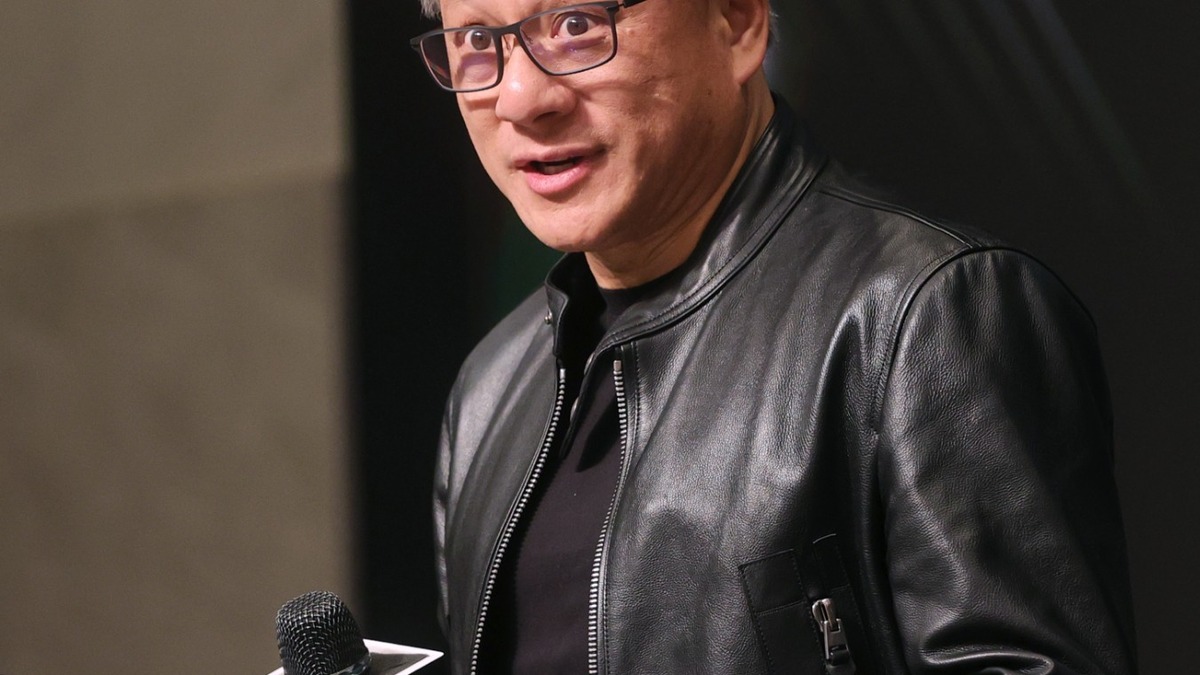 Nvidia CEO Jensen Huang used his first-ever X post to share the coalition letter on open-weight AI models.
Source: wikimedia.org
Nvidia CEO Jensen Huang used his first-ever X post to share the coalition letter on open-weight AI models.
Source: wikimedia.org
The Backdrop Nobody's Hiding
This letter didn't appear out of nowhere. It follows a week of open infighting inside Trump's own AI policy circle, triggered when former White House advisor Dean Ball, now at OpenAI, mused publicly that manufacturing regulatory risk around Chinese open-weight models would be the administration's "best strategy." That post drew fire from former AI czar David Sacks and a Pentagon official who called Ball the industry's "supreme village idiot" on X. Axios has since reported that the Commerce Department circulated draft rules to restrict Chinese open-weight models using supply-chain security authorities - rules that remain unimplemented but are clearly further along than a stray social media post.
What changed between then and now is who's willing to put a name on the record. The earlier fight was Trump officials and OpenAI-adjacent voices arguing among themselves. This week's letters are Nvidia, Microsoft, Meta, and roughly 220 other companies collectively telling the administration the same thing in public, over the signature of their CEOs.
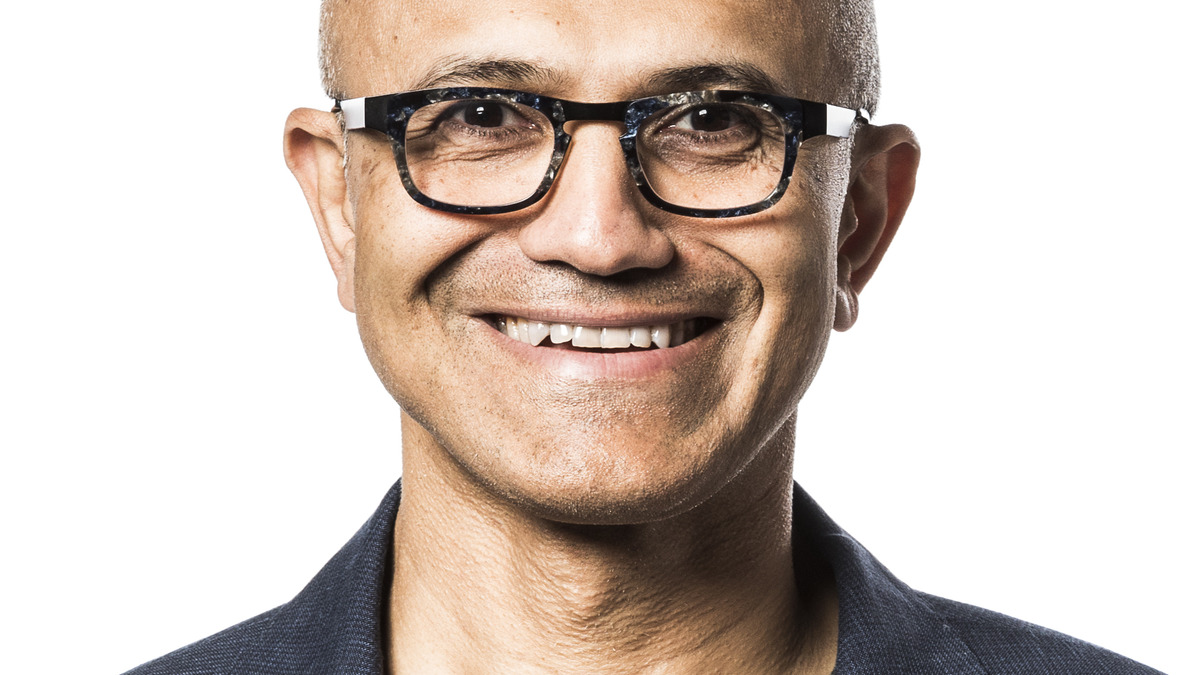 Microsoft CEO Satya Nadella backed the coalition letter, calling open-weight models "essential to a healthy AI ecosystem."
Source: wikimedia.org
Microsoft CEO Satya Nadella backed the coalition letter, calling open-weight models "essential to a healthy AI ecosystem."
Source: wikimedia.org
What Happens Next
Treasury Secretary Scott Bessent has reportedly discussed sanctions targeting specific Chinese AI firms, a narrower and more precedented tool than a blanket download ban, and one that would be harder for this coalition to object to on principle. That's likely where any near-term action lands: sanctions on named entities like Moonshot AI rather than restrictions on open-weight models as a category. A category-wide rule would need to survive exactly the kind of unified industry pushback this letter represents, and Commerce hasn't shown its hand on a timeline. The administration now has to choose between a policy its own AI-adjacent contractor (OpenAI) quietly favors and one that Nvidia, Microsoft, and Meta - three companies whose market caps dwarf OpenAI's private valuation - are on record opposing. That is not a comfortable position for anyone counting votes or campaign contributions.
The market these companies are protecting isn't abstract. Chinese open-weight models already account for roughly 60% of usage on OpenRouter, the routing layer many developers use to pick between providers. A ban wouldn't just be a diplomatic gesture - it'd cut off the models a large share of the developer ecosystem has already voted for with its API calls.
Sources:
- As US weighs response to Chinese AI, industry urges against broad open-weight restrictions - TechCrunch
- Nvidia, Microsoft, Meta warn against 'premature restrictions' of open-weight models - CNBC
- Jensen Huang just used his first ever X post to warn the AI industry - Fortune
- Jensen Huang's letter on X
- Startup founders urge Trump not to shut off Chinese open-weight AI - Slashdot
- Nvidia, Meta, and Microsoft tell Washington: don't kill open-source AI - Decrypt

