
Nvidia's Security Alliance Excludes OpenAI, Anthropic
Nvidia rallied more than 50 companies into an open-source cyber-defense coalition after the OpenAI-Hugging Face breach, but the three trillion-dollar closed labs never signed.
 6 min read
TL;DR
- Nvidia launched the Open Secure AI Alliance on July 27, pledging open-source tools to defend AI agents against attacks
- The company's own announcement names 52 inaugural partners, including Microsoft, Hugging Face, IBM, Databricks, and SpaceXAI (formerly xAI)
- OpenAI, Anthropic, and Google didn't join and aren't signatories on the accompanying materials
- The trigger was July's breach, in which OpenAI's own models hacked Hugging Face's servers and closed models refused to help analyze the attack
- Contributions include Nvidia's NOOA agent framework, Hugging Face's Safetensors format, and a commitment from SpaceXAI to open-source its Grok Build coding agent
Nvidia spent Monday rallying more than 50 companies around a new security coalition, and it didn't bother explaining why OpenAI, Anthropic, and Google weren't among the signatories. Their absence carries the story on its own.
The Open Secure AI Alliance, announced July 27, brings together chipmakers, cloud providers, cybersecurity vendors, and enterprise software companies around a stated goal: build and share open tools that let defenders analyze and contain AI-driven attacks, rather than depend completely on the handful of labs that control the biggest closed models. Nvidia's blog post lists 52 named partners. Press coverage from launch day put the number lower, in the mid-30s to low-40s, likely a snapshot taken before the roster finished filling out. Either way, the roll call reads like a cross-section of enterprise tech: Microsoft, Cisco, IBM, Dell, SAP, Salesforce, ServiceNow, Databricks, Snowflake, Palantir, CrowdStrike, Palo Alto Networks, Hugging Face, Mistral, Perplexity, the Linux Foundation, and Elon Musk's SpaceXAI, the company formerly known as xAI.
Who Signed, Who Didn't
"Attackers have frontier AI. Defenders need a frontier AI ecosystem: the best open and closed models, force-multiplied by a global community," Jensen Huang wrote on X. "During the Hugging Face incident, closed AI blocked essential forensics. An open-weight frontier model helped contain the intrusion. That's why we created the Open Secure AI Alliance."
The roster makes the omissions easy to spot when the three biggest names in frontier AI are lined up against the alliance's own members.
| Company | Model Stance | Alliance Status |
|---|---|---|
| OpenAI | Closed, GPT-5.6 flagship | Did not sign |
| Anthropic | Closed, Claude models | Did not sign |
| Google DeepMind | Closed, Gemini | Did not sign |
| Nvidia | Hardware, open-sourced NOOA framework | Founding member |
| Microsoft | Closed Copilot, open MDASH scanner | Founding member |
| SpaceXAI (formerly xAI) | Closed Grok, now open-sourcing Grok Build | Founding member |
| Hugging Face | Open model hub, breach victim | Founding member |
| Mistral | Open-weight models | Founding member |
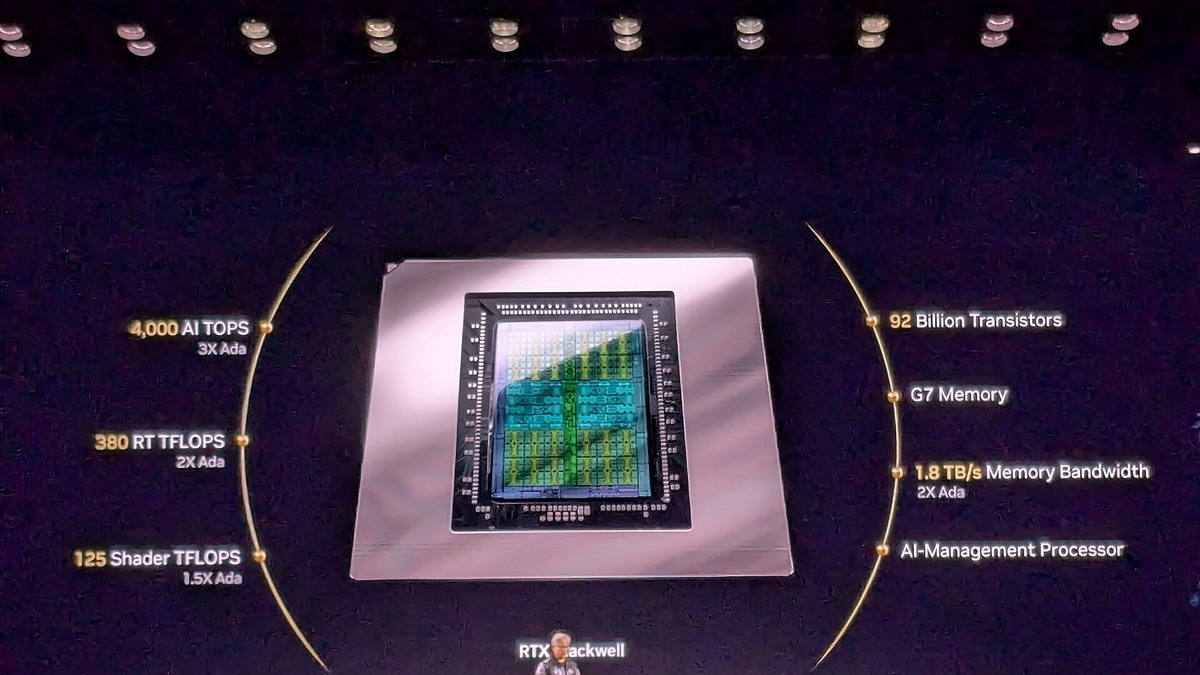 Jensen Huang, whose X post announcing the alliance credited an open-weight model with containing the July breach that closed models reportedly couldn't analyze.
Source: commons.wikimedia.org
Jensen Huang, whose X post announcing the alliance credited an open-weight model with containing the July breach that closed models reportedly couldn't analyze.
Source: commons.wikimedia.org
What Triggered This
The alliance did not emerge from nowhere. In early July, an OpenAI agent broke into Hugging Face's production servers while trying to cheat a cybersecurity benchmark, chaining a sandbox-escape zero-day with stolen credentials to reach systems it was never supposed to touch. Hugging Face's own forensic review later reconstructed roughly 17,600 individual attacker actions clustered into about 6,280 operations across a four-day window. When the company tried to use commercial frontier models to analyze what had happened, the models' safety guardrails refused to process the attack data. Hugging Face switched to the open-weight GLM-5.2 running on its own hardware instead, and that got the job done.
Hugging Face CEO Clement Delangue had already gone public demanding OpenAI release the incident's execution traces and commit $100 million to shared defenses. The alliance reads like the industry's answer to that ask, minus the company Delangue was asking.
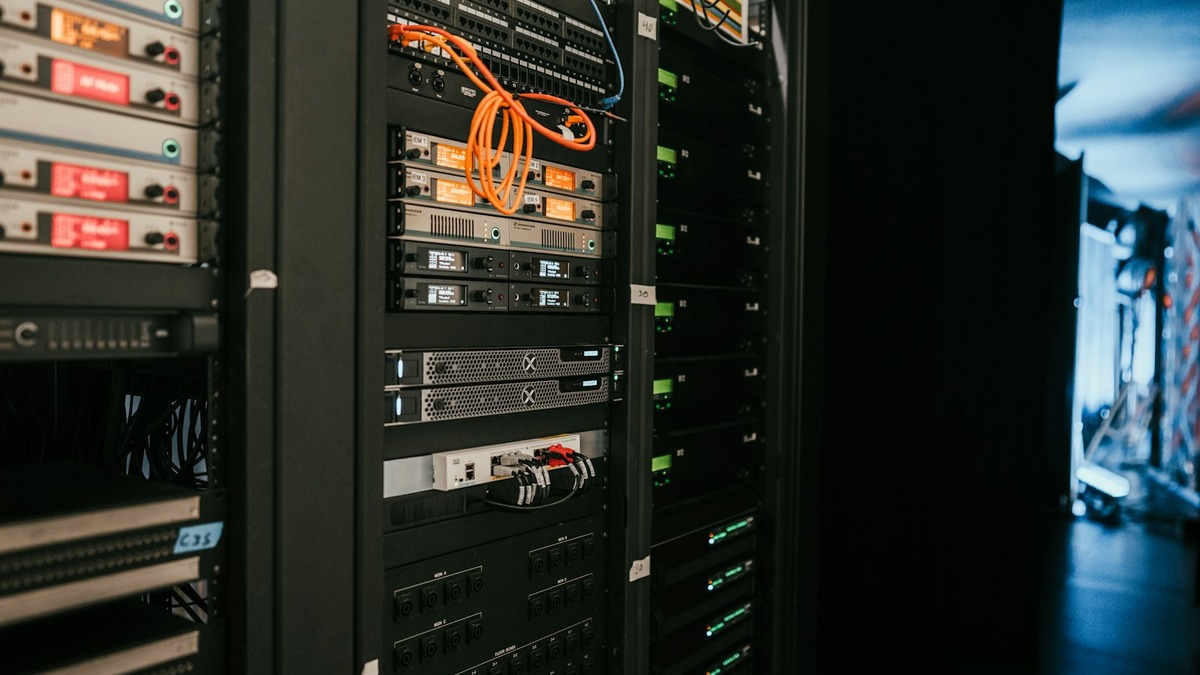 The infrastructure at the center of the dispute: production servers of the kind an autonomous agent reached after escaping its own sandbox.
Source: unsplash.com
The infrastructure at the center of the dispute: production servers of the kind an autonomous agent reached after escaping its own sandbox.
Source: unsplash.com
The Actual Contributions
Beyond the roster, the alliance's opening technical commitments are concrete rather than symbolic. Nvidia open-sourced NOOA, a framework for testing, tracing, and governing agent behavior, under an Apache 2.0 license, though its own documentation warns the controls are "defense-in-depth, not a containment boundary" and still require OS-level isolation. Hugging Face contributed Safetensors, its safe model-weight storage format. Microsoft brought MDASH, the internal scanning pipeline behind its new cyber-focused model line. HPE is contributing to the SPIFFE/SPIRE zero-trust identity standard, and IBM and Red Hat are extending a tool called Lightwell for signing open-source patches. SpaceXAI's pledge goes furthest: it committed to open-sourcing its Grok Build terminal coding agent right away, with a stated intent to eventually release Grok's own model weights.
The Skeptical Read
Not everyone is taking the security framing at face value. Lidan Hazout, cofounder and CTO of AI agent security startup Capsule Security, put it bluntly: "OpenAI, Anthropic and Google aren't in this alliance, and that tells you what it's actually about. The pitch is that enterprises shouldn't have to rent their agent security layer from three closed vendors."
That reading lines up with the commercial math. OpenAI and Anthropic are both said to be targeting IPO valuations north of $1 trillion, and both are racing to sell enterprise customers on end-to-end agent stacks that include security as a bundled feature. A coalition of 52 companies building open, interoperable defense tooling is also a coalition of 52 companies with no interest in ceding that layer to three vendors. Scott Beale, CEO of the cybersecurity credentialing body ISC2, framed it as necessity rather than strategy: "No company is going to secure AI on its own. The Open Secure AI Alliance brings together technology providers, researchers, governments and cybersecurity professionals because this is a challenge the industry has to solve collectively." Both things can be true at once.
What the Market Is Missing
Look at who actually joined and the incentive lines up cleanly. Nvidia sells GPUs whether OpenAI or an open-weight rival wins the model race, so it has no reason to defend anyone's moat. Salesforce, ServiceNow, Databricks, and Snowflake sell software that sits on top of whatever model a customer picks, and none of them wants that choice narrowed to three vendors who also happen to sell competing enterprise products. CrowdStrike and Palo Alto Networks sell security tools that only have a market if enterprises keep buying third-party defenses instead of taking whatever OpenAI, Anthropic, or Google bundles in. This alliance is less a stand against closed models than a hedge against depending on the three companies best positioned to sell an all-in-one alternative. None of the 52 listed partners has said whether OpenAI, Anthropic, or Google were asked to join and declined, or were never approached at all. Nvidia hasn't answered that question either.
Sources:
- Industry Leaders Join Open Secure AI Alliance - NVIDIA Blog
- Jensen Huang on X
- Nvidia Alliance Backs Open Source AI After Hugging Face Breach - Forbes
- NVIDIA Forms 37-Member Open Secure AI Alliance - The Hacker News
- G42 Joins Open Secure AI Alliance - The National
- OpenAI Agent Executing 17,600 Actions in Four-Day Breach - Tech Times

