
NVIDIA Ising: Open AI for Quantum Error Correction
NVIDIA releases two open-source AI models for quantum hardware - a 35B vision-language model that cuts calibration time from days to hours, and CNN decoders that outpace the standard by 2.5x.
 6 min read
NVIDIA shipped two open-source AI models on April 14 that target the most stubborn engineering problems in quantum computing: processor calibration and real-time error correction. The models, called Ising, are available now on HuggingFace and GitHub under a permissive open-source license.
The name is deliberate. The Ising model is a key part of statistical mechanics, used to describe how interacting particle systems organize into ordered states. NVIDIA is reaching for that analogy: these models exist to bring structure to the chaotic noise that makes quantum processors unreliable at scale.
Key Specs
| Model | Architecture | Key Metric |
|---|---|---|
| Ising Calibration | 35B parameter VLM | Days-to-hours calibration |
| Ising Decoding (speed) | 0.9M param 3D CNN | 2.5x faster than pyMatching |
| Ising Decoding (accuracy) | 1.8M param 3D CNN | 3x more accurate |
| Training data reduction | - | 10x less than alternatives |
| License | Permissive open-source | HuggingFace + GitHub |
Two Models, One Problem
The core challenge in quantum computing isn't building qubits - it's keeping them stable long enough to do useful work. Current quantum processors make errors roughly once per thousand operations. Practical, fault-tolerant systems need that rate down to approximately one per trillion. Closing a nine-order-of-magnitude gap requires automated, AI-driven infrastructure that runs faster than the qubits decohere. Ising splits that challenge into two distinct tools.
Ising Calibration
The 35-billion parameter vision-language model reads experimental output from a quantum processing unit - oscilloscope traces, spectral plots, state probability distributions - and decides what physical control parameters to adjust. Tuning the microwave or laser signals used to control superconducting or trapped-ion qubits traditionally required human physicists working for days. Ising Calibration handles it in hours and runs continuously.
NVIDIA says it's 15 times smaller than competing calibration systems while outperforming them across six standard calibration benchmarks. The model is on HuggingFace and can be fine-tuned on proprietary hardware data locally, without sending experimental measurements to any external server. For national labs and quantum hardware startups guarding fabrication data, that matters.
Ising Decoding
The decoder is two variants of a 3D convolutional neural network, each optimized for a different trade-off. The 0.9-million parameter speed variant handles real-time quantum error decoding 2.5 times faster than pyMatching, the current open-source standard used across the field. The 1.8-million parameter accuracy variant hits three times better error correction performance and requires 10 times less training data than alternative methods. Both handle surface codes of any distance and support custom noise models.
The design choice to release two variants rather than one reflects an honest acknowledgment that different quantum workloads have different priorities. A long-running chemistry simulation needs accuracy. A real-time control loop needs speed. Researchers don't have to compromise.
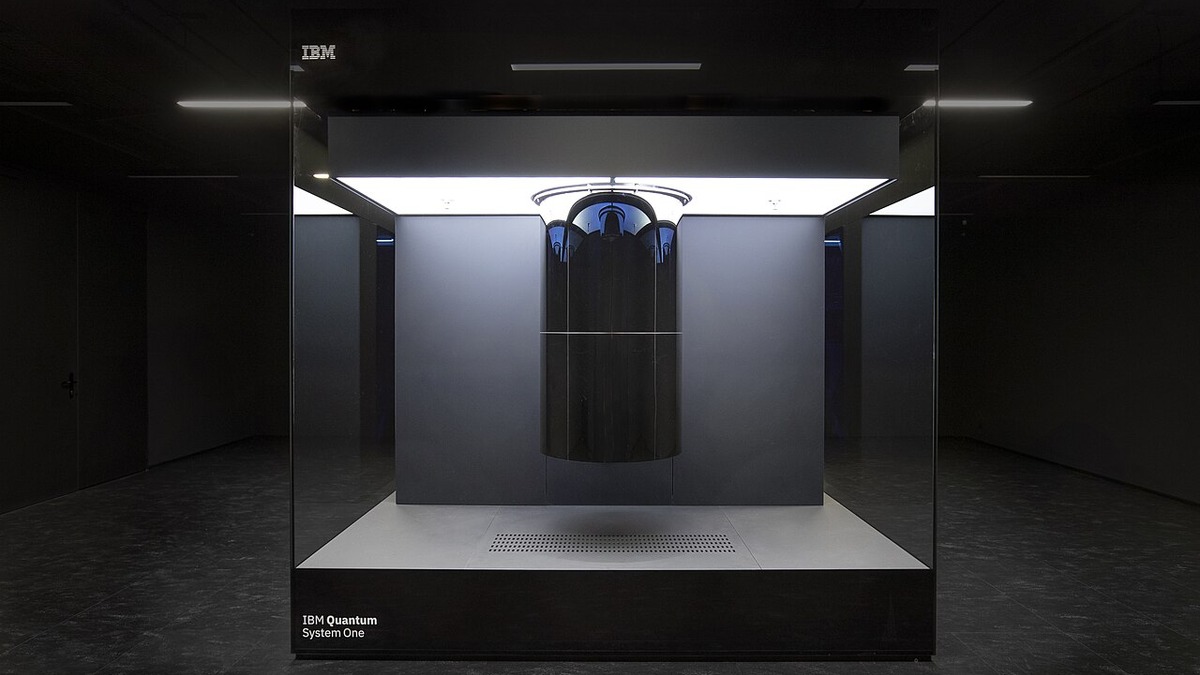 A quantum computing system showing the cryogenic dilution refrigerator that keeps superconducting qubits near absolute zero - exactly the kind of hardware Ising Calibration aims to tune automatically.
Source: commons.wikimedia.org
A quantum computing system showing the cryogenic dilution refrigerator that keeps superconducting qubits near absolute zero - exactly the kind of hardware Ising Calibration aims to tune automatically.
Source: commons.wikimedia.org
The Benchmark Numbers
| Metric | Ising | Baseline | Improvement |
|---|---|---|---|
| Error decoding speed | - | pyMatching | 2.5x faster |
| Error decoding accuracy | - | pyMatching | 3x better |
| Training data needed | - | Existing models | 10x less |
| Calibration time | Hours | Days (manual) | Approx 10x |
| Calibration model size | - | Competing systems | 15x smaller |
The pyMatching comparison is the one that matters most to practitioners. PyMatching is the dominant decoder for surface code error correction and is widely deployed in research systems. A 2.5x speed improvement at comparable accuracy - or a 3x accuracy improvement at the same speed - is large enough to change what's feasible in a real experimental setup.
"AI is essential to making quantum computing practical. With Ising, AI becomes the control plane - the operating system of quantum machines." - Jensen Huang, NVIDIA CEO
Sam Stanwyck, NVIDIA's quantum product director, offered a more engineering-focused take: "Qubits are noisy, and the way to manage that noise at the scale we need is with AI models." Both descriptions point to the same architectural shift - AI as the runtime layer sitting between classical HPC and quantum hardware.
Hardware and Software Stack
Ising integrates into NVIDIA's existing quantum ecosystem. Ising Calibration launches as a NVIDIA NIM microservice and connects to CUDA-Q, NVIDIA's hybrid quantum-classical software platform. Ising Decoding ships with a training framework covering PyTorch and CUDA-Q integration, transparent benchmarking with physics consistency checks, and uncertainty quantification.
Both models also support NVQLink, NVIDIA's hardware interconnect for coupling GPU and QPU systems. For real-time error correction, latency between classical GPU processing and quantum processor control needs to stay below the qubit coherence time. NVQLink is designed for exactly that path. This isn't the first time NVIDIA has pushed an open-source model for specialized hardware - its Alpamayo robotics model followed a similar playbook, shipping weights and tooling together to build adoption before anyone had a reason to look elsewhere.
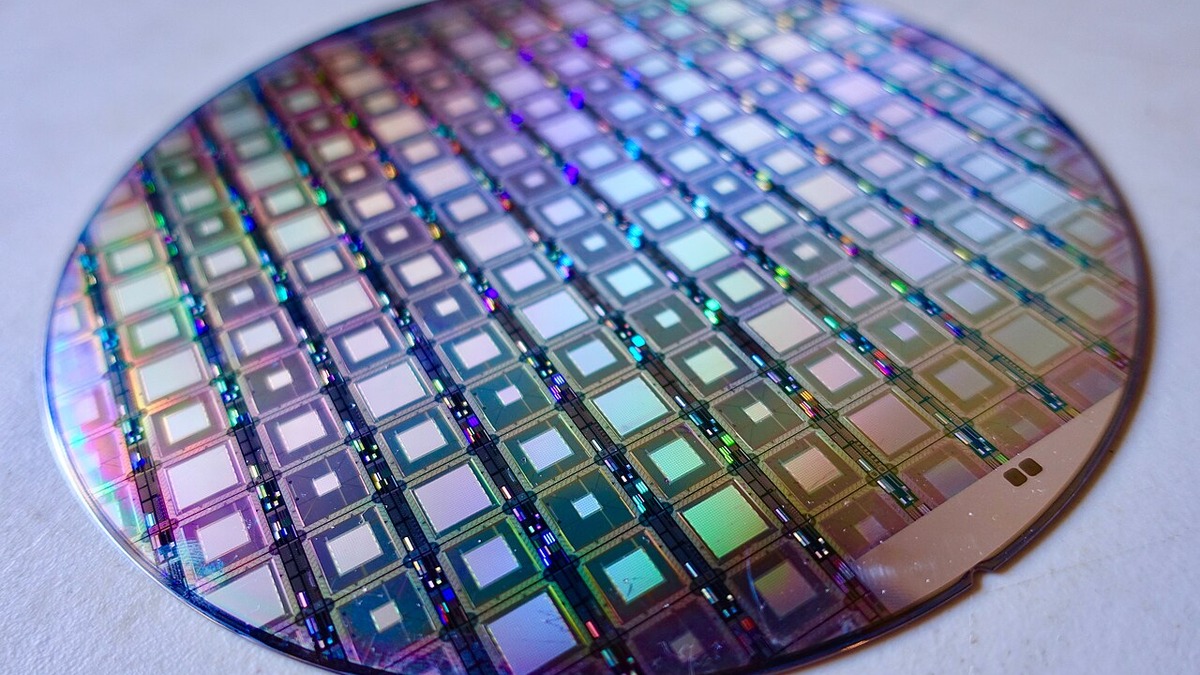 A D-Wave quantum processor wafer. Fabricating these arrays at scale requires constant calibration cycles - the kind of repetitive, data-heavy process that vision-language models can automate.
Source: commons.wikimedia.org
A D-Wave quantum processor wafer. Fabricating these arrays at scale requires constant calibration cycles - the kind of repetitive, data-heavy process that vision-language models can automate.
Source: commons.wikimedia.org
Who's Already Using It
NVIDIA's early-adopter list is long and spans both research and industry. Academic institutions include Harvard, Fermi National Accelerator Laboratory, Lawrence Berkeley National Laboratory, Cornell University, and UC San Diego. Commercial adopters include IonQ, Q-CTRL, Atom Computing, Infleqtion, and IQM Quantum Computers.
IonQ is worth noting separately. On the same day NVIDIA launched Ising, IonQ announced it had linked two independent trapped-ion quantum computers through a photonic network - the first demonstration of networked commercial quantum systems. Multi-node quantum systems compound error rates across interconnects; Ising's decoding capabilities are directly applicable there.
What To Watch
Three questions will shape how far Ising travels beyond NVIDIA's own ecosystem, and none of them are purely technical.
First, hardware diversity. Ising Decoding targets surface code error correction, which dominates superconducting qubit architectures. Trapped-ion systems, used by IonQ and others, operate under different noise models. NVIDIA says custom noise configurations are supported, but that's a research invitation, not a solved integration.
Second, CUDA-Q adoption relative to IBM's Qiskit. Ising is most useful inside NVIDIA's full quantum stack. Qiskit has years of community adoption and broad hardware support. If the broader quantum field doesn't standardize on CUDA-Q, Ising could end up serving NVIDIA's partners well while remaining invisible to the rest of the field.
Third, wall-clock latency under real conditions. Published benchmark improvements don't always survive contact with actual hardware noise profiles. Labs adopting Ising will need to run their own characterization before counting on published numbers in production.
Ising models are available now at NVIDIA's Ising page, on HuggingFace, and on GitHub. A quantum computing workflow cookbook ships with the weights.
Sources:

