
NVIDIA Fires Up H200 for China After 10-Month Wait
Jensen Huang confirmed at GTC 2026 that NVIDIA has export licenses for multiple Chinese customers and is restarting H200 production, with 82,000 GPUs ready to ship after nearly a year of zero deliveries.
 Updated
6 min read
Updated
6 min read
Jensen Huang walked off the GTC 2026 stage on Monday having answered the question that has hung over Nvidia's China business for nearly a year: when would any of those approved H200 chips actually ship?
The answer came in three sentences at SAP Center in San Jose.
"We've been licensed for many customers in China for H200. We have received purchase orders from many customers, and we are in the process of restarting our manufacturing. Our supply chain is getting fired up."
- Jensen Huang, GTC 2026 keynote, March 17, 2026
The timing matters. As of late February, Nvidia had shipped zero H200s to China despite holding export approvals since December 2025. The Commerce Department's own assistant secretary told Congress on February 24 that "none" had been sold. One month before GTC, Huang acknowledged, Nvidia held a license for a single U.S. government customer in China. By Monday it had licenses for many customers and was preparing an initial shipment of 82,000 GPUs.
TL;DR
- Nvidia confirmed March 17 it's restarting H200 production for China, with multiple customer export licenses secured
- First shipment of 82,000 H200 GPUs is being prepared; Chinese buyers include Alibaba, ByteDance, and Tencent
- Each shipment routes through the U.S. for BIS inspection and faces a 25% tariff before onward delivery to China
- Blackwell - Nvidia's current generation - remains blocked; H200 is a deliberate middle-tier concession
- Huawei's window to dominate China's AI chip market as sole supplier is narrowing
What changed? Commerce Secretary Howard Lutnick said Huang personally convinced Trump that H200 exports serve "a positive economic relationship with China." White House AI czar David Sacks called it "pragmatic," pointing to the risk of Huawei gaining "giant market share" if U.S. chipmakers stayed frozen out. A planned Trump-Xi meeting is also reportedly contingent on the H200 framework holding.
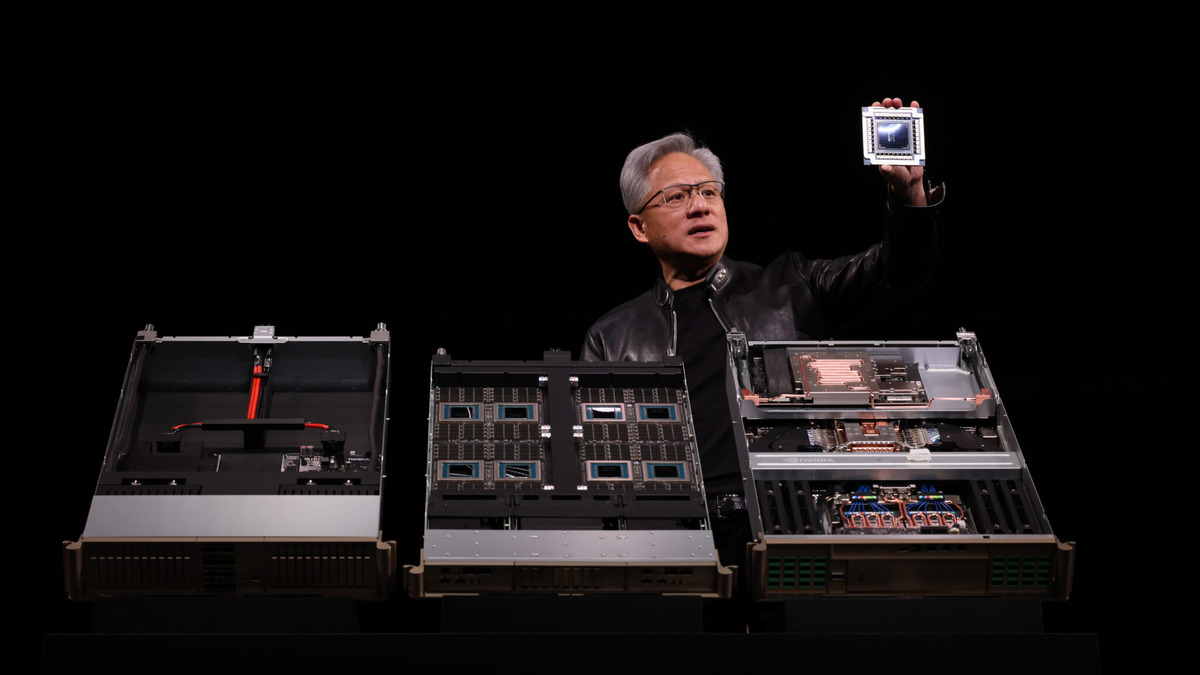 Jensen Huang at GTC 2026, where he confirmed NVIDIA has secured export licenses for many Chinese customers and is restarting production.
Source: blogs.nvidia.com
Jensen Huang at GTC 2026, where he confirmed NVIDIA has secured export licenses for many Chinese customers and is restarting production.
Source: blogs.nvidia.com
The Licensing Mechanism
| Stakeholder | Impact | Timeline |
|---|---|---|
| Nvidia | Revenue recovery from near-zero China data center share; ~$30K per H200 unit | H1 2026 |
| Alibaba, ByteDance, Tencent | Access to chips 6x more powerful than prior approved hardware | From Q2 2026 |
| Huawei | Loses captive window; Ascend 910C advantage narrows | Immediate |
| AMD, Intel | Both eligible for similar export licenses under same framework | TBD |
| U.S. national security | China AI compute capacity could grow 250% annually at 1M chip ceiling | 2026-2027 |
For Companies
Nvidia's China data center revenue had been excluded entirely from the company's Q1 2027 forecast. CFO Colette Kress declined to include any figure because zero chips had shipped. The revenue potential is now calculable: at roughly $30,000 per unit and an initial batch of 82,000 GPUs, the first delivery alone represents about $2.5 billion in hardware. The full Chinese order book sits at over two million units for 2026.
Every shipment must physically route through the United States for national-security screening by the Bureau of Industry and Security, plus third-party laboratory verification of each chip's technical specifications. A 25% tariff applies at that U.S. transit point - Trump characterized it publicly as "25% of revenue going to the U.S. government." Case-by-case approvals mean no blanket authorization covers future shipments; each deal requires a separate license.
The proposed per-customer cap of 75,000 units has not been formally adopted but remains under active consideration at Commerce. That ceiling counts AMD MI325X chips toward the same limit. At 75,000 per customer, Chinese firms would receive less than half of what Alibaba and ByteDance told Nvidia they need. Total shipments to China could still reach roughly one million units across all customers.
For Users
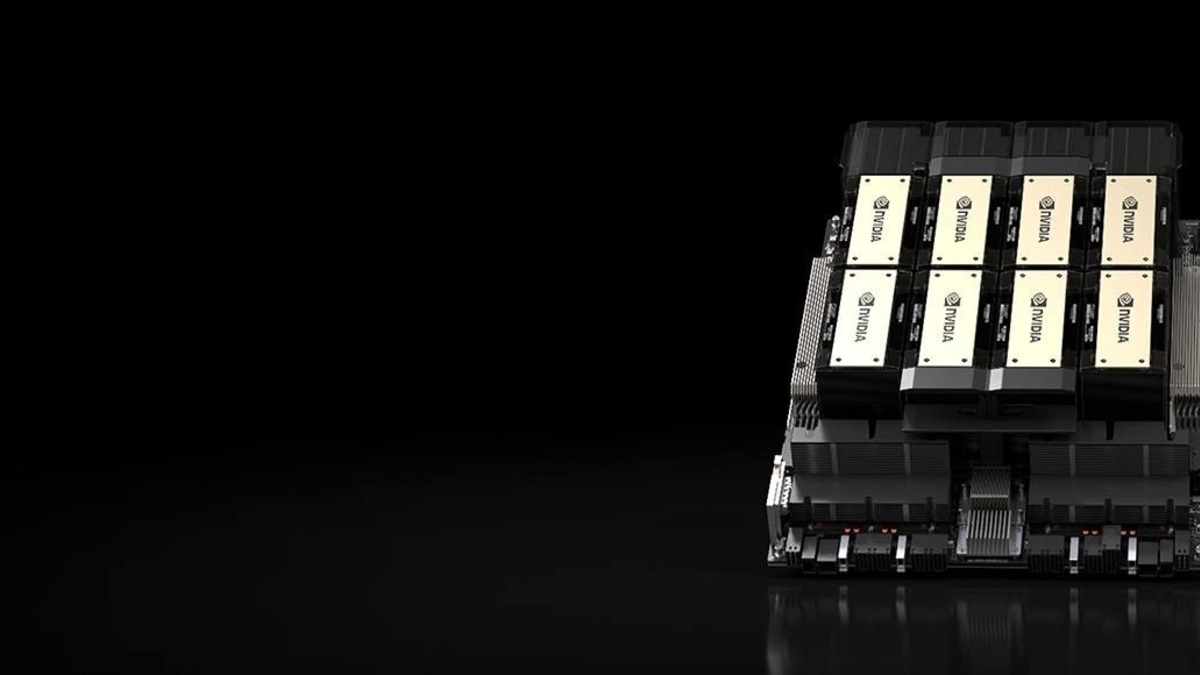 The NVIDIA H200 packs 141GB of HBM3e memory at 4.8 TB/s bandwidth - more than six times the compute capability of what was previously approved for Chinese export.
Source: nvidia.com
The NVIDIA H200 packs 141GB of HBM3e memory at 4.8 TB/s bandwidth - more than six times the compute capability of what was previously approved for Chinese export.
Source: nvidia.com
Chinese AI developers have spent most of the past year building around the assumption that Nvidia hardware won't be reliably available. DeepSeek deliberately excluded Nvidia from its V4 optimization pipeline, building its inference stack on Huawei Ascend and Cambricon chips. That investment doesn't disappear because H200s are now accessible - it reflects a durable strategic posture from at least one major lab.
For the broader Chinese AI market, H200 access matters most for training large models. The chip is more than six times more powerful than the best hardware previously approved for Chinese export, which makes it a genuine capability step. The per-customer ceiling means no single company can build the world's largest training cluster on Nvidia silicon alone, but the hardware available per firm is now competitive with what U.S. labs use.
For Competitors
Huawei's Atlas 950, unveiled at MWC Barcelona in late February, aims to close the gap with Nvidia's data center lineup - but won't ship at scale until later this year. Huang put the competitive window directly: the H200 is better than anything Huawei can manufacture for at least two more years.
AMD and Intel are in line for similar export licenses under the same framework. AMD's MI325X, which carries 288GB of HBM3e memory and comparable compute performance to the H200, counts toward the same per-customer cap if the 75,000-unit ceiling is finalized. Intel's eligibility was noted explicitly in Trump's December 2025 announcement, though neither company has confirmed orders at Nvidia's scale.
Cambricon Technologies, which posted a 453% revenue surge in 2025 and its first-ever annual net profit of 1.8 billion yuan, built those numbers entirely during a period when Nvidia wasn't an option for Chinese buyers. That environment is ending.
What Happens Next
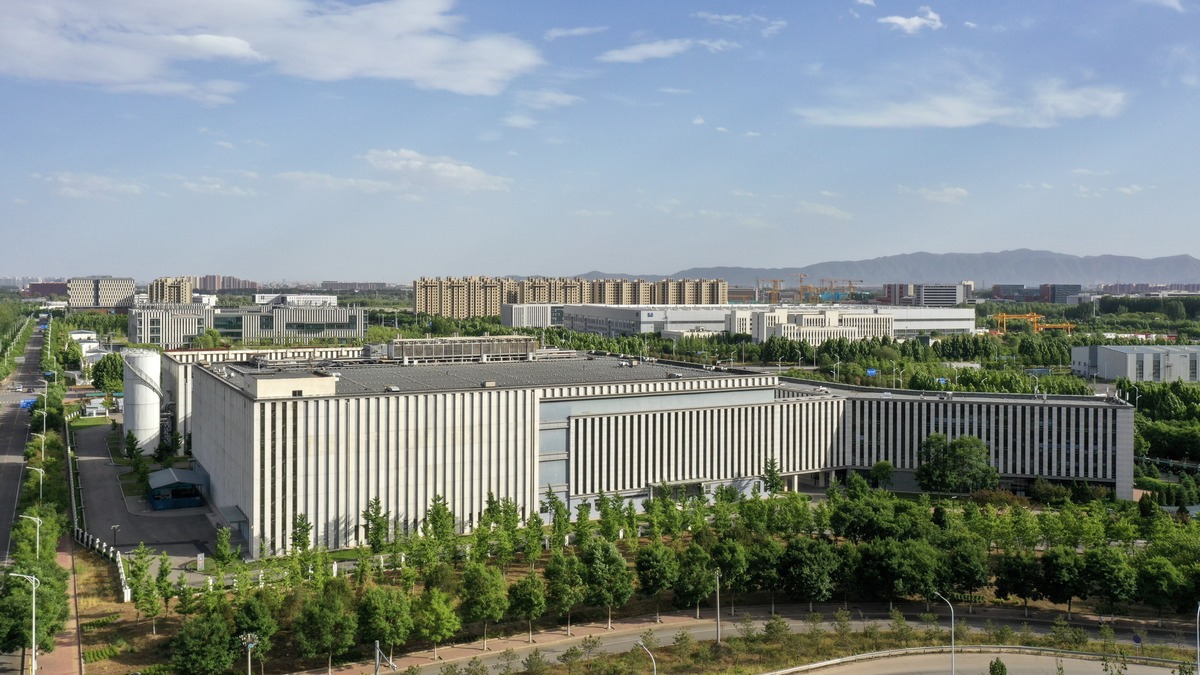 Data center infrastructure in China. Chinese tech giants have collectively ordered more than two million H200 GPUs for 2026 - far above the proposed per-customer cap of 75,000 units.
Source: commons.wikimedia.org
Data center infrastructure in China. Chinese tech giants have collectively ordered more than two million H200 GPUs for 2026 - far above the proposed per-customer cap of 75,000 units.
Source: commons.wikimedia.org
Three things will determine whether this stays on track.
The 75,000-unit per-customer cap is still under deliberation at Commerce. If adopted and enforced, it sharply limits how much any single Chinese firm can buy, and enforcement requires ongoing case-by-case license management in a regime that struggled to move even zero chips for three months while approvals sat on paper.
The planned Trump-Xi meeting is the next policy signal. White House sources say the meeting's scope is partly contingent on the H200 framework proceeding. Any deterioration in the broader trade relationship could put individual licenses back under review regardless of what was announced at GTC.
Beijing's posture remains a variable. In January, Chinese customs agents were initially instructed to block H200 imports before that position reversed. A U.S. export license is necessary but not sufficient - the chips must clear both ends of the supply chain.
The Council on Foreign Relations estimated that one million H200 chips flowing into China could increase the country's AI compute capacity by 250% annually. Trump administration officials counter that the Biden-era restrictions "more or less failed" because Huawei filled the gap and DeepSeek built competitive models anyway. The CFR is measuring the risk; the White House is measuring the counterfactual. Nvidia is shipping chips.
Sources:
- Nvidia CEO says company firing up H200 production for China - East Bay Times
- Nvidia H200 back on in China, production ramping: Huang - The Register
- Nvidia Gets License to Sell H200 to China - Caixin Global
- US weighs 75K-chip cap on Nvidia H200 sales to China - SCMP
- The US imposes 25% tariff on H200 chips headed to China - TechCrunch
- Trump administration clears way for Nvidia H200 chip sales to China - CNBC
- The Consequences of Exporting Nvidia's H200 Chips to China - CFR
- Nvidia prepares shipment of 82,000 AI GPUs to China - Tom's Hardware
Last updated

