
Nvidia Pours $4B Into Photonics for AI Data Centers
Nvidia invests $2 billion each in Lumentum and Coherent to develop silicon photonics for next-generation AI factories, signaling that copper interconnects have hit their ceiling.
 6 min read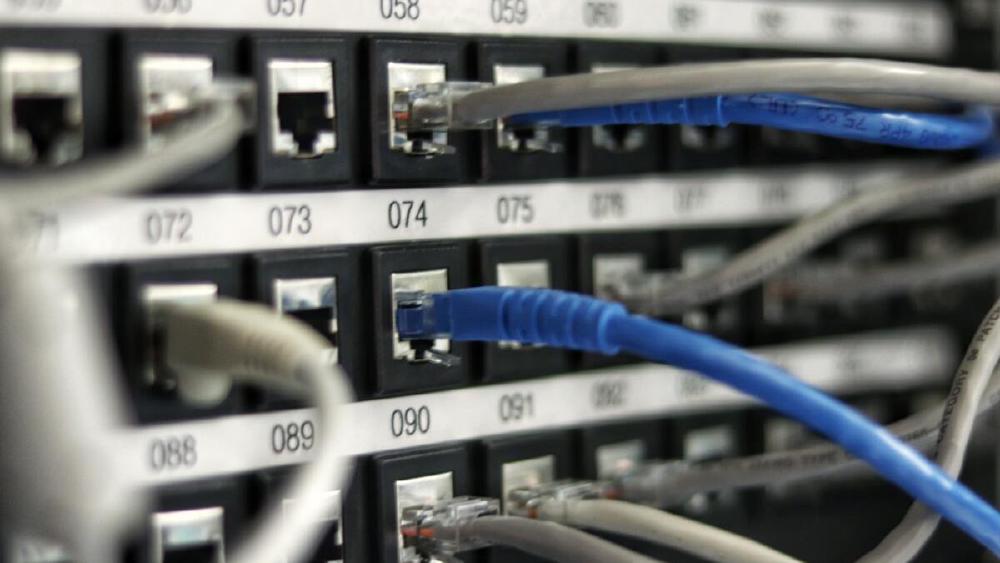
Nvidia just committed $4 billion to a problem most people outside the data center world have never heard of: the wires connecting its GPUs are running out of bandwidth.
On March 2, the company announced $2 billion investments in each of two optical component manufacturers - Lumentum Holdings and Coherent Corp - to develop silicon photonics technology that replaces copper interconnects with light-based communication inside AI data centers. The deals include multibillion-dollar purchase commitments and future capacity access rights, and both companies will use the funding to expand U.S.-based manufacturing.
TL;DR
- Nvidia is investing $4 billion total - $2B in Lumentum and $2B in Coherent - for silicon photonics R&D and manufacturing
- The deals fund new U.S. fabrication facilities and secure long-term supply of advanced laser and optical components
- Co-packaged optics can reduce data center networking power consumption by up to 3.5x compared to traditional copper-based pluggable transceivers
- Both partnerships are multiyear and nonexclusive, extending relationships that span over 20 years
Why Copper Hit a Wall
The Physics Problem
As AI training clusters scale to hundreds of thousands of GPUs, the data flowing between them has become the real bottleneck. Copper cables worked fine at lower speeds, but at 224 Gbps per lane - the rate needed for current-generation AI workloads - passive copper reaches shrink to less than one meter. That isn't a misprint. At the bandwidths AI factories demand, copper physically can't carry signals more than an arm's length.
A single AI factory can use up to 2.4 million optical transceivers and consume up to 24 megawatts of networking power alone - potentially over 10% of the total data center energy budget. As Nvidia reported record-breaking $68.1 billion in quarterly revenue fueled by AI demand, the need to solve the interconnect bottleneck has become urgent.
The Photonics Solution
Silicon photonics replaces electrical signals with laser-based data transmission integrated directly into processor packages. Rather than routing data through copper traces and bulky external transceivers, co-packaged optics (CPO) place the optical engines right on the switch ASIC. Nvidia's own benchmarks claim this approach delivers 3.5x better power efficiency, 10x higher network resiliency, and 63x greater signal integrity compared to traditional pluggable modules.
"In the age of AI, software runs on intelligence with tokens generated in real time by AI factories for every interaction and every context," said Jensen Huang, NVIDIA CEO. "Together with Lumentum, NVIDIA is advancing the world's most sophisticated silicon photonics to build the next generation of gigawatt-scale AI factories."
 Fiber optic technology replaces copper's electrical signals with light, enabling dramatically higher bandwidth over longer distances inside AI factories.
The Two Deals
Lumentum - The Laser Specialist
Nvidia's $2 billion investment in Lumentum targets advanced laser components and optical subsystems. The multiyear, nonexclusive agreement includes a multibillion-dollar purchase commitment and future capacity access rights. Lumentum will use the funding to build a new U.S.-based fabrication facility.
"This multiyear strategic agreement reflects our shared commitment to advancing the optics technologies that will power the next generation of AI infrastructure," said Michael Hurlston, Lumentum CEO.
Coherent - The Networking Backbone
The matching $2 billion in Coherent extends a partnership that has existed for over 20 years. Like the Lumentum deal, it includes a multibillion-dollar purchase commitment for advanced laser and optical networking products, with Coherent also expanding U.S. manufacturing.
"This strategic relationship underscores Coherent's role as a key enabler of next-generation AI data center infrastructure," said Jim Anderson, Coherent CEO.
| Lumentum | Coherent | |
|---|---|---|
| Investment | $2 billion | $2 billion |
| Focus | Laser components, optical subsystems | Optical networking, silicon photonics |
| Relationship | Multiyear | 20+ year extension |
| U.S. Manufacturing | New fabrication facility | Expanded existing capacity |
| Exclusivity | Nonexclusive | Nonexclusive |
What It Does Not Tell You
The nonexclusive nature of both deals is worth flagging. Nvidia is securing supply and accelerating R&D, but it isn't locking these companies into exclusive arrangements. Lumentum and Coherent remain free to sell to AMD, Intel, or anyone else building competing AI infrastructure. That means Nvidia is betting the technology itself will become critical - and positioning to be first in line when it does.
There's also the question of timeline. Nvidia's Spectrum-X Photonics switches with co-packaged optics are slated for the second half of 2026, and Quantum-X InfiniBand variants for early 2026. But launching CPO at scale in production data centers is a different challenge from shipping product. The infrastructure buildout these investments fund - new fabs, expanded capacity - will take years to reach full output.
The $4 billion total also pales against Nvidia's own fiscal 2026 full-year revenue of $215.9 billion. This is a strategic positioning play, not a bet-the-company move. Nvidia is spending roughly two weeks of revenue to secure a supply chain it believes will define the next decade of AI infrastructure. For comparison, Nvidia's new inference chip partnership with Groq for OpenAI addresses the compute side of the same scaling equation - this deal addresses the pipes.
 A single AI factory can consume 24 megawatts of networking power alone - photonics aims to cut that figure in half.
The Bigger Picture
Over 80% of hyperscale data center links already use some form of optical solution. What Nvidia is pushing for goes further: integrating optics directly into the processor package, removing the transceiver as a separate component entirely. If the industry adopts co-packaged optics at scale, the power savings alone would be enormous - Nvidia claims up to 50% reduction in total networking energy consumption.
For anyone following the AI infrastructure build cycle - from the CUDA programming stack through to the DGX Spark hardware - this investment signals where Nvidia sees the next constraint. The company has spent the past three years leading compute. Now it is buying its way into owning the interconnects too.
Nvidia is not spending $4 billion because photonics is trendy. It's spending $4 billion because at the scale AI factories are heading, copper simply can't keep up. Whether the company can translate supply chain investments into an actual competitive moat - or whether AMD and others will ride the same photonics wave - will play out over the next two to three years. For now, Nvidia is doing what it does best: moving first and spending aggressively to make sure the next infrastructure era runs on its terms.
Sources:
- NVIDIA Announces Strategic Partnership With Lumentum
- NVIDIA and Coherent Announce Strategic Partnership
- Nvidia to Invest $4 Billion in Photonics Companies - CNBC
- Nvidia to Invest $2 Billion Each in Lumentum, Coherent - Reuters via Yahoo Finance
- NVIDIA $2 Billion Investment in Coherent - Pulse2
- Scaling AI Factories with Co-Packaged Optics - NVIDIA Technical Blog
- Photonics Is the Next Big AI Bottleneck - Tom's Hardware
