
Novo Nordisk Bets Its Drug Pipeline on OpenAI
Novo Nordisk signs a sweeping AI partnership with OpenAI covering drug discovery, manufacturing, and supply chain - but the governance details are thin.
 6 min read
The maker of Ozempic and Wegovy has handed OpenAI the keys to its scientific pipeline. On April 14, Novo Nordisk announced a strategic partnership with OpenAI that spans every major part of its business - from identifying drug molecules to shipping finished medicines to patients. The announcement is light on specifics and heavy on ambition, which is exactly what should give the industry pause.
TL;DR
- Novo Nordisk partners with OpenAI across drug discovery, manufacturing, supply chain, and corporate operations
- Full integration targeted for end of 2026; pilot programs launching right away
- OpenAI's frontier models will analyze genomic, biological, and clinical trial datasets
- No financial terms disclosed; data governance framework described only in general terms
- The deal comes as Novo is cutting 9,000 jobs and targeting $1.3B in annual savings
A Deal That Spans the Whole Company
Most big pharma AI announcements are narrow: one lab, one dataset, one discovery platform. This one isn't. Novo Nordisk says OpenAI's technology will run across research and development, manufacturing, supply chain, distribution, and internal corporate operations. That's a full-stack bet on a single vendor.
"Integrating AI in our everyday work gives us the ability to analyse datasets at a scale that was previously impossible, identify patterns we could not see, and test hypotheses faster than ever."
- Maziar Mike Doustdar, CEO, Novo Nordisk
Doustdar took over as president and CEO in August 2025, replacing Lars Fruergaard Jørgensen. In February 2026, he announced plans to cut 9,000 jobs and trim $1.3 billion in annual costs by the end of the year. The OpenAI deal lands in the same window. When asked whether the partnership would shrink the workforce, Doustdar said the goal was to "lift productivity and curb the pace of future hiring" - not remove current staff. That's a meaningful distinction, though one worth watching.
R&D and Drug Discovery
The partnership's most consequential application is drug discovery. OpenAI's agents will analyze genomic, biological, and clinical trial datasets to identify promising drug candidates. Rather than conducting every experiment physically in a lab, the system will simulate tests to predict efficacy early in development - before costly synthesis and trials begin.
The scope of data involved is sizable. Novo Nordisk sits on one of the largest clinical datasets for metabolic disease, obesity, and cardiovascular conditions in the world. GLP-1 receptor agonists - the class behind Ozempic and Wegovy - required decades of biological research to understand. Whether a general-purpose frontier model adds meaningful signal on top of domain-specific tools remains an open empirical question.
Manufacturing and Supply Chain
Beyond the lab, OpenAI's technology will handle manufacturing and supply chain optimization - coordinating production schedules, predicting demand, and cutting distribution delays. This is more familiar territory for large language models: structured operational data, predictable patterns, clear success metrics. If there's a part of this deal likely to show results before year-end, it's here.
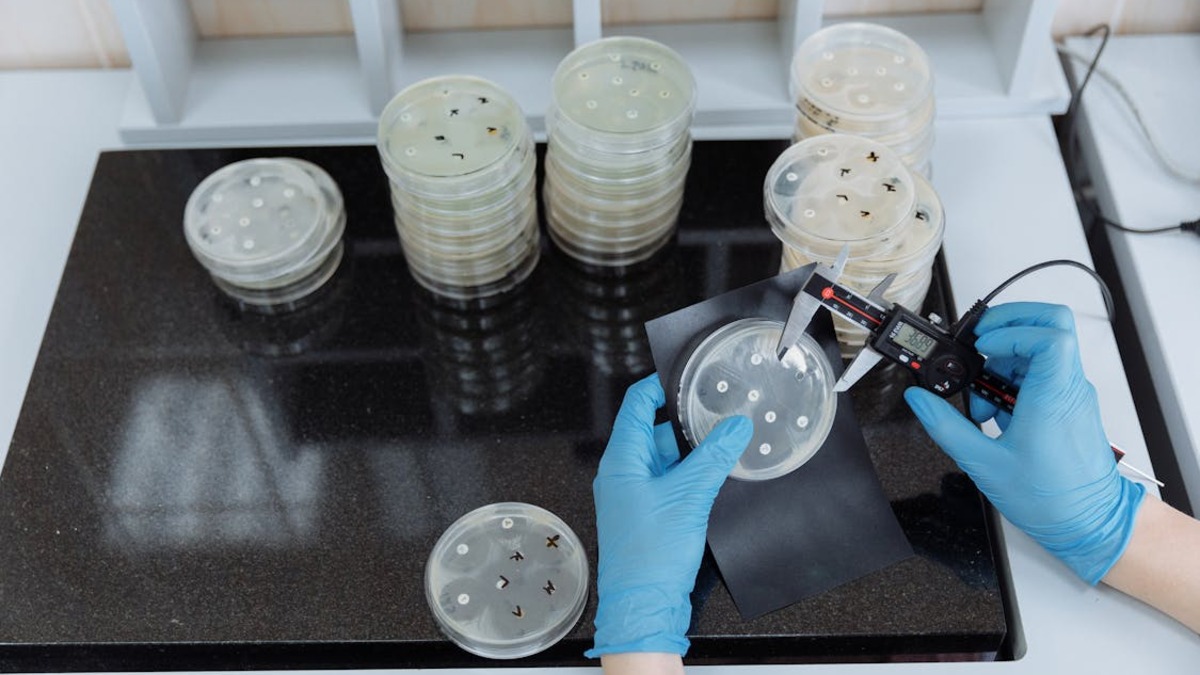 Pharmaceutical research produces petri dishes full of candidate samples - AI is being asked to predict which ones work before they're made.
Source: pexels.com
Pharmaceutical research produces petri dishes full of candidate samples - AI is being asked to predict which ones work before they're made.
Source: pexels.com
What OpenAI Gets Into
Sam Altman framed the partnership as a mission-aligned move:
"This collaboration with Novo Nordisk will help them accelerate scientific discovery, run smarter global operations, and redefine the future of patient care."
- Sam Altman, CEO, OpenAI
What Altman didn't address publicly is what OpenAI gains access to. Novo Nordisk's data includes patient genomic sequences, proprietary clinical trial results, biological assay data, and supply chain logistics across markets with strict data residency requirements - including the EU, where GDPR enforcement for health data is among the tightest in the world.
The Data Access Question
The official announcement says the partnership will operate under "strict data protection, governance and human oversight to ensure ethical and compliant use." That language appears in virtually every enterprise AI deal. It doesn't say which OpenAI models process which data, whether patient data stays on-premises or moves to OpenAI's infrastructure, or how regulatory audits of AI-assisted drug decisions will work.
Those aren't nitpicky concerns. The European Medicines Agency and the FDA are still developing frameworks for AI-assisted drug submissions. If a molecule identified by an AI system enters clinical trials, regulators will want to know how the model reached that recommendation - and a proprietary black-box frontier model may not provide a satisfying answer.
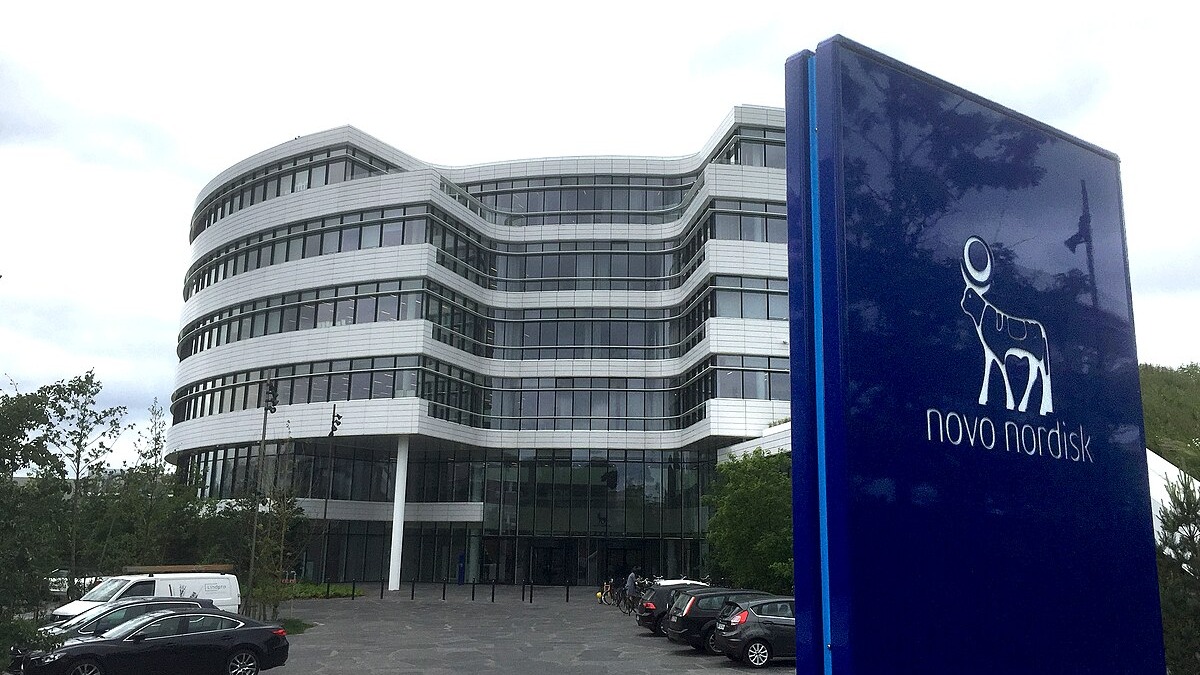 Novo Nordisk's headquarters campus in Bagsværd, Denmark. The company employs around 64,000 people globally.
Source: commons.wikimedia.org
Novo Nordisk's headquarters campus in Bagsværd, Denmark. The company employs around 64,000 people globally.
Source: commons.wikimedia.org
Pharma's AI Land Grab
Novo Nordisk isn't moving in isolation. The entire pharmaceutical industry is racing to sign deals with AI providers before competitors lock in favorable terms.
| Pharma Company | AI Partner | Scope | Notable Terms |
|---|---|---|---|
| Novo Nordisk | OpenAI | Drug discovery, manufacturing, supply chain, operations | Not disclosed |
| Eli Lilly | Chai Discovery (OpenAI-backed) | Drug discovery | TuneLab data-sharing program |
| Pfizer | Boltz AI | Target selection, structure prediction, small-molecule design | Multi-year exclusive |
| AstraZeneca | Internal + multiple vendors | Discovery acceleration | 2M genome analysis by 2026 |
| Anthropic + Coefficient Bio | Drug discovery agents | R&D pipeline | $400M acquisition |
AstraZeneca claims AI has accelerated target drug design and validation by more than 50%. Pfizer has signed an exclusive multi-year deal with Boltz AI. Anthropic paid $400M for Coefficient Bio to build drug discovery agents directly into its Claude platform. The Novo-OpenAI deal is the most complete single-vendor partnership yet announced - and it ties the world's most prominent GLP-1 manufacturer to the most well-known AI brand.
That brand association matters to investors. Novo Nordisk's stock has faced pressure after weaker-than-expected clinical results and guidance cuts earlier in 2026. Announcing a high-profile AI partnership signals modernization without requiring evidence of results.
Governance Language, Tested Nowhere Yet
The pharma industry has dealt with data governance failures before. Clinical trial data manipulation, undisclosed adverse events, and skewed regulatory submissions are in the sector's historical record. AI doesn't remove those incentives - it adds new ones and introduces failure modes that are harder to detect.
The Isomorphic Labs debate is instructive here. When DeepMind's drug discovery spin-off released IsoDDE - its proprietary successor to AlphaFold - the scientific community pushed back hard. The open-science tradition that made AlphaFold a Nobel Prize-contributing tool was abandoned for a closed platform that pharmaceutical clients pay to access. Researchers complained they couldn't audit the model's predictions. Regulators noted that black-box molecular predictions create accountability gaps.
Novo Nordisk is now betting on a model with even less domain specificity than IsoDDE. OpenAI's frontier models were trained mainly on text and code, not structural biology and proteomics. The company says it'll apply "advanced AI capabilities" to biological datasets, but it hasn't explained how it'll validate those predictions against established domain knowledge.
"It's about supercharging our scientists."
- Maziar Mike Doustdar, on the partnership's workforce intent
Novo Nordisk has 9,000 positions to cut, a new CEO under pressure to deliver results, and a drug pipeline that needs to move faster in a crowded GLP-1 market. OpenAI brings broad capability, strong branding, and an aggressive enterprise sales operation. The match makes strategic sense on paper. What it doesn't yet have is a tested governance framework, a defined regulatory compliance path, or any disclosed detail about which specific models touch which data. Those aren't things that can be sorted out at year-end integration. They need to be sorted out before the first drug candidate comes out of an AI-assisted screen.
Sources:
- Novo Nordisk and OpenAI partner to transform how medicines are discovered and delivered (GlobeNewswire)
- OpenAI partners with Novo Nordisk to accelerate drug discovery and delivery (SiliconANGLE)
- GLP-1 giant Novo Nordisk partners with OpenAI as pharma industry's AI race accelerates (Yahoo Finance / Proactive Investors)
- Novo Nordisk says it's cutting 9,000 workers amid restructuring (CBS News)
- Novo Nordisk CEO: Mike Doustdar profile (Novo Nordisk)

