
New York Becomes First State to Freeze Data Centers
Governor Hochul signed an executive order pausing permits for data centers over 50 megawatts for up to a year, making New York the first US state to enact a statewide moratorium.
 6 min read
New York Governor Kathy Hochul signed an executive order on July 14 pausing state environmental permits for any new data center that draws 50 megawatts or more, for up to a year. It's the first time any US state has actually enacted a statewide halt on data center construction, rather than just proposing one.
Maine tried this in April. Governor Janet Mills vetoed the bill to protect a $550 million paper mill conversion in Jay. New York didn't blink.
Order at a Glance
| Detail | Value |
|---|---|
| Threshold | Data centers of 50+ megawatts |
| Duration | Up to one year |
| Agency on hold | Department of Environmental Conservation (discretionary permits) |
| New requirement | Department of Public Service builds a Generic Environmental Impact Statement |
| Community rule | Empire State Development issues a Community Investment Framework within 60 days |
| Also pursuing | Repeal of sales-tax exemptions for large data centers |
| Signed | July 14, 2026 |
What the Order Actually Freezes
The mechanics matter here, because "moratorium" makes it sound like a ban. It isn't one.
The Permitting Pause
The DEC will stop issuing discretionary permits for hyperscale-class projects, defined as data centers pulling 50 megawatts or more, whether that's a new build or an expansion of an existing site. Projects that already hold every permit they need keep moving. Everything still waiting in the queue gets parked until the state finishes writing new rules.
The Regulatory Homework
That's the part that actually has teeth. Hochul's order directs the Department of Public Service to produce a Generic Environmental Impact Statement covering energy demand, water use, and grid effects, a process expected to take up to a year. Empire State Development has 60 days to publish a Community Investment Framework. And Hochul is separately pushing legislation to repeal the state's sales-tax exemption for large data centers, though she hasn't put a number on how much revenue that would recover.
"As data center development threatens to hike up utility bills, deplete our natural resources, and create uncertainty for New Yorkers, it's my responsibility to take action and lead," Hochul said in the announcement. "New York will lead the way in creating the strongest standards in the nation for data center development, ensuring that when companies succeed because of New York, New Yorkers succeed too."
"This one-year moratorium is fundamentally about trust... communities need ironclad guarantees" on energy bills, water protection, and air quality.
That's Senator Kirsten Gillibrand, and the framing tells you where this order actually came from. Not a lab leak or a benchmark scare. Utility bills.
 Governor Kathy Hochul, pictured at a separate infrastructure event in October 2025, signed the executive order July 14.
Source: commons.wikimedia.org
Governor Kathy Hochul, pictured at a separate infrastructure event in October 2025, signed the executive order July 14.
Source: commons.wikimedia.org
Why New York, of All Places
Here's the part that undercuts the "landmark" framing a little: New York was never a hyperscale hub to begin with. It's not Virginia's Data Center Alley, and it's not Texas. The state has spent the past two years watching Loudoun County and Abilene soak up the capital while its own pipeline stayed comparatively modest.
But "comparatively modest" doesn't mean small. As of January 2026, the Governor's office confirmed that grid operator NYISO had 48 large-load projects in its interconnection queue, totaling more than 11 gigawatts of proposed new demand, most of it data centers. New York's entire peak summer electricity demand runs around 30 gigawatts. An extra 11 GW of speculative load waiting to connect isn't a rounding error, and it's the tension this order is trying to resolve before it becomes irreversible.
The Maine Comparison
| Maine (LD 307) | New York (Executive Order) | |
|---|---|---|
| Mechanism | Legislative bill | Governor's executive order |
| Threshold | 20+ megawatts | 50+ megawatts |
| Outcome | Vetoed April 24, 2026 | Signed and in effect |
| Stated reason for reversal | Protect a $550M project in Jay | None; no comparable project cited |
| Duration proposed | Until Nov 1, 2027 | Up to 1 year |
Same instinct, opposite outcome. Maine's governor had one mill town's jobs to weigh against the bill; Hochul had no equivalent anchor project pulling the other way.
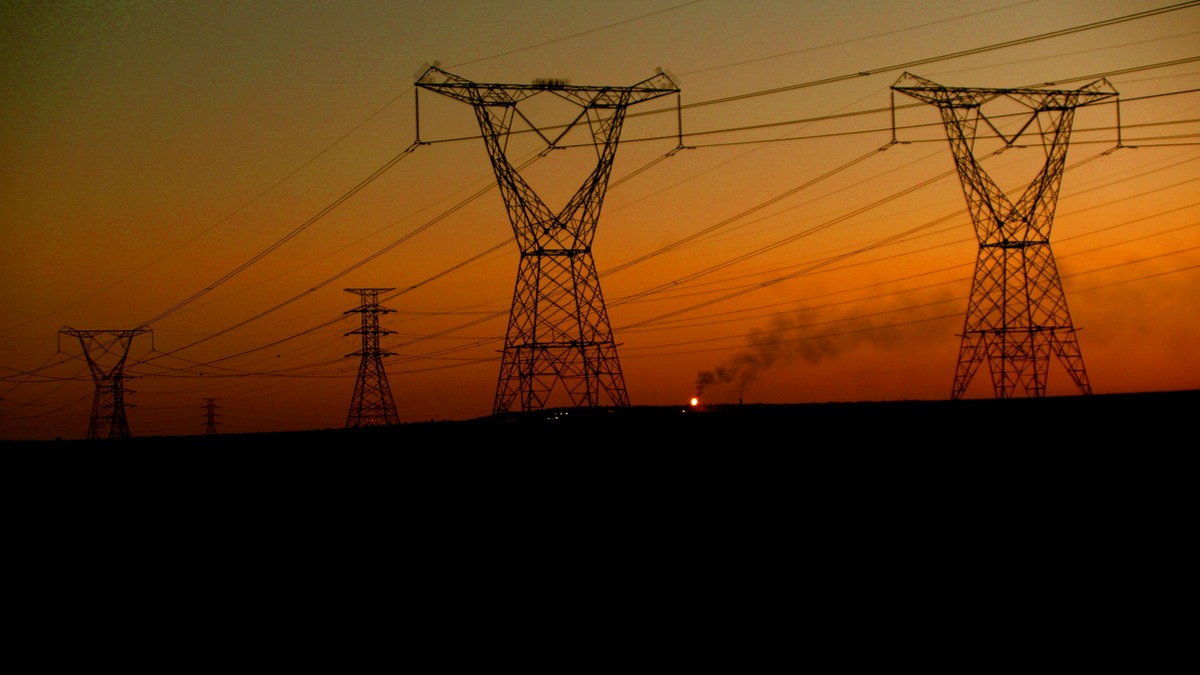 Grid capacity, not model safety, is driving the current wave of state-level data center restrictions.
Source: unsplash.com
Grid capacity, not model safety, is driving the current wave of state-level data center restrictions.
Source: unsplash.com
The Politics Nobody Is Hiding
Hochul's Republican opponent in this year's race, Nassau County Executive Bruce Blakeman, is already using this against her, arguing that local governments should be free to cut their own deals with tech companies instead of a blanket state freeze. It's a fair critique of the mechanism, if not the motive: a one-size-fits-all pause treats a proposal in rural upstate New York the same as one competing for grid capacity in Westchester.
Community opposition isn't unique to New York. Nearly 400 grassroots groups nationwide were tracking data center projects by April 2026, roughly double the count from 2024, according to reporting from Capacity. Local pushback blocked or delayed at least 75 projects worth close to $130 billion nationally in the first quarter of 2026 alone, the highest quarterly total Data Center Watch has recorded. New York didn't start this fight, it just became the first state to win one at the top of government rather than in a town planning board meeting.
Alphabet, Microsoft, Meta, Amazon, and Oracle, the hyperscalers most likely to feel this, hadn't issued statements as of publication. Neither had Digital Realty or Equinix, the two biggest colocation operators also caught by the 50-megawatt line.
New York already passed the RAISE Act in March, requiring frontier AI labs to publish safety protocols and report incidents within 72 hours. And the voluntary pledge seven tech giants signed with the Trump administration that same month asked companies to build or buy their own power, with no enforcement mechanism attached. Hochul's order is the first version of that idea with an actual penalty: no permit, no project.
What To Watch
Three things determine whether this sticks or gets quietly walked back before the year is up.
- The Community Investment Framework, due within 60 days, will show whether Empire State Development treats this as a real bargaining tool for host towns or a paperwork exercise.
- The sales-tax repeal needs to pass the Assembly and Senate separately from the executive order, and that's where hyperscaler lobbying will actually show up.
- Other states are watching the mechanism, not just the outcome. An executive order sidesteps the legislative fights that killed Maine's bill. If this holds for a year without a court challenge, expect governors in Georgia, Ohio, and Arizona, states with their own grid-queue headaches, to reach for the same tool instead of waiting on their legislatures.
Permits come back once the GEIS is finished, or in twelve months, whichever comes first. Twelve months is also roughly how long it takes to pour foundations for a 50-megawatt facility. That timing isn't an accident.
Sources:
- First Statewide Moratorium on New Hyperscale Data Centers Launched by Governor Kathy Hochul
- Governor Hochul Announces PSC Proceeding on Her Plan to Ensure Data Centers Pay Their Fair Share for Energy Grid Upgrades
- New York to impose the country's first statewide moratorium on data centers - Spectrum News
- New York, a state without nearly any data centers, becomes first to ban their construction - Fortune
- New York Issues the Nation's First Statewide Moratorium on New Large Data Centers - Gizmodo
- New York enacts one-year data center ban on projects larger than 50 megawatts - Tom's Hardware
- New York just changed the rules for every data centre on earth - Capacity

