
New Section - GPU and AI Accelerator Spec Pages
Awesome Agents launches a dedicated Hardware section with detailed spec pages for 21 GPUs, TPUs, and AI accelerators - from datacenter flagships to home lab favorites.
 3 min read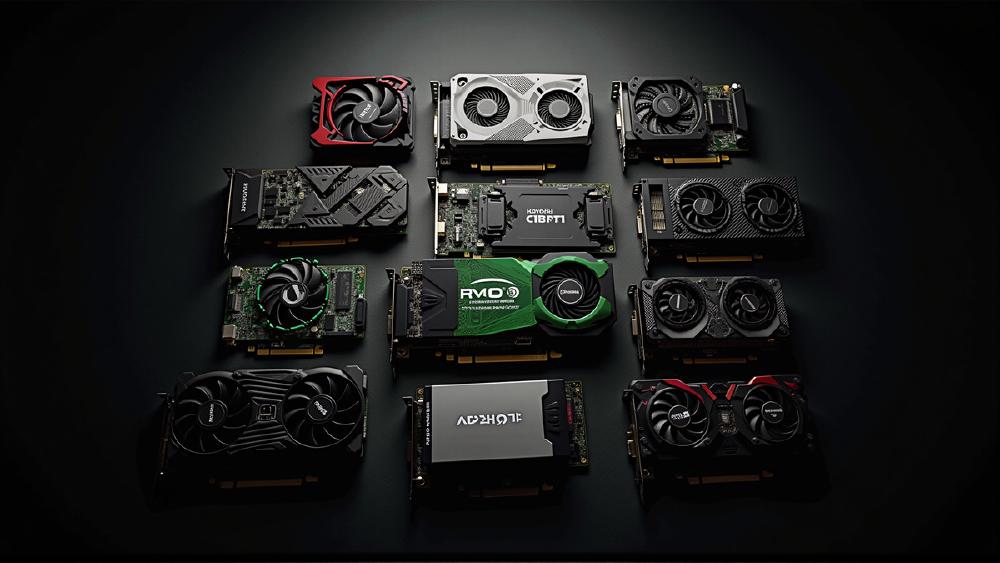
We just shipped something we have been wanting to build for months: a full Hardware section with detailed spec pages for every major AI accelerator on the market.
TL;DR
- 21 spec pages covering GPUs, TPUs, ASICs, and wafer-scale engines from NVIDIA, AMD, Google, Huawei, Intel, Groq, Cerebras, AWS, Apple, and Cambricon
- Each page includes full specifications, benchmark comparisons, pricing, strengths/weaknesses, and real-world performance analysis
- Covers the full range from $700 used RTX 3090s to $3-4M GB300 NVL72 racks
- Written and maintained by James Kowalski, our benchmarks and tools analyst
Why Hardware, Why Now
The AI hardware landscape has gotten complicated fast. Two years ago, the answer to "what GPU should I use?" was almost always "A100 or H100, depending on budget." Today the picture is different. NVIDIA's Blackwell generation is shipping in multiple configurations. AMD's MI300X broke the NVIDIA monopoly at several cloud providers. Google's TPU v7 Ironwood is pushing inference-specific silicon. Huawei's Ascend chips are powering DeepSeek V4 - a frontier model optimized for non-NVIDIA hardware. And at the consumer end, the RTX 5090 and Apple M4 Max are making serious local inference accessible to individual developers.
We kept finding ourselves looking up the same specs across dozens of datasheets and press releases while writing model reviews and news coverage. So we built the reference we wanted to have.
What Is Covered
The section is organized by market segment:
Datacenter Flagships - The GPUs that train and serve frontier models. The NVIDIA H100 remains the benchmark standard, but the B200 and rack-scale GB200 NVL72 / GB300 NVL72 are where new deployments are heading. We also cover the H200 (the inference-optimized Hopper refresh) and the A100 - still the most widely deployed AI GPU on the planet.
Competitors and Alternatives - AMD MI300X and the upcoming MI350X are real contenders with ROCm maturing rapidly. Google's TPU v6e Trillium and TPU v7 Ironwood offer a fundamentally different approach to AI compute. And Huawei's Ascend 910B and 910C are building a parallel hardware ecosystem for Chinese AI labs.
Unique Architectures - Groq's LPU delivers deterministic inference latency with no HBM at all. Cerebras WSE-3 uses an entire silicon wafer as a single chip. Intel Gaudi 3 undercuts NVIDIA on price with integrated networking. AWS Trainium2 is Amazon's bet on cloud-native training silicon.
Home Lab and Consumer - For developers running models locally. The RTX 4090 is the current sweet spot, the RTX 3090 is the budget king at $700-900 used, the RTX 5090 pushes VRAM to 32GB, and the Apple M4 Max offers up to 128GB of unified memory for large model inference without a discrete GPU. We also cover the Cambricon MLU590 for completeness on the Chinese inference chip market.
What Each Page Includes
Every hardware page follows the same structure:
- TL;DR with the 4-5 most important facts
- Full specifications table with memory, bandwidth, compute, TDP, and process node
- Benchmark comparisons against direct competitors with real numbers
- Key capabilities - the 2-3 features that define the product
- Pricing and availability - what it actually costs, not just MSRP
- Strengths and weaknesses - honest assessment, no vendor marketing
- Cross-links to related hardware for easy comparison
James will keep these pages updated as new benchmarks, pricing data, and availability information become available. If you spot an error or have performance data to share, reach out via our contact page.
What Is Next
We are planning comparison articles that cut across the hardware pages - "Best GPU for Local LLM Inference in 2026," "Datacenter GPU Buyer's Guide," and similar guides that help you make actual purchasing decisions. Those will land in the Guides section over the coming weeks.
For now, head to /hardware/ and explore. If you have been staring at GPU spec sheets trying to figure out what to buy, this should save you some time.
