
NeurIPS Bans Sanctioned Chinese Labs - CCF Calls Boycott
NeurIPS enforces US sanctions compliance for the first time in its history, barring researchers from Huawei, SenseTime, and other SDN-listed firms, prompting China's Computer Federation to urge a full boycott.
 7 min read
The world's most prominent machine learning conference has drawn a hard geopolitical line, and China's academic establishment is responding with a threat to walk out entirely.
On March 23, 2026, NeurIPS published its Main Track Handbook for its annual conference with a new clause: submissions are now subject to US sanctions compliance. Researchers affiliated with entities on the Treasury Department's OFAC Specially Designated Nationals (SDN) list can't submit papers, serve as reviewers, or hold area chair roles. The NeurIPS Foundation says it has no legal choice. The China Computer Federation says it's the politicisation of science.
Key Findings
- NeurIPS 2026 handbook ties paper submissions and peer review participation to OFAC sanctions compliance for the first time in the conference's nearly four-decade history
- Affected firms include Huawei, SenseTime, Megvii, Hikvision, and SMIC - all on the US Treasury SDN list
- China's Computer Federation (CCF) issued a formal statement opposing the policy and called on all Chinese researchers to stop submitting, reviewing, and serving in editorial roles
- Four named Chinese AI researchers have already publicly withdrawn from NeurIPS 2026 reviewer and area chair positions
- The CCF threatened to remove NeurIPS from its list of recommended international conferences - a signal that would carry real weight for Chinese researchers navigating publication incentives
The Rule Change
What the Handbook Says
The NeurIPS 2026 Main Track Handbook states that the NeurIPS Foundation can't provide "services" - a category that explicitly covers peer review, editing, and publication - to individuals who represent institutions on the OFAC SDN list. Authors are directed to check the official sanctions database at sanctionssearch.ofac.treas.gov.
The language is careful but clear. It doesn't name Huawei or SenseTime. It doesn't need to. The OFAC SDN list does that work. NeurIPS is framing this as compliance with US law, not a policy choice. Whether that framing holds up to scrutiny is another question - IEEE made similar arguments in 2019 when it barred Huawei researchers from peer review, only to reverse course weeks later after international pressure.
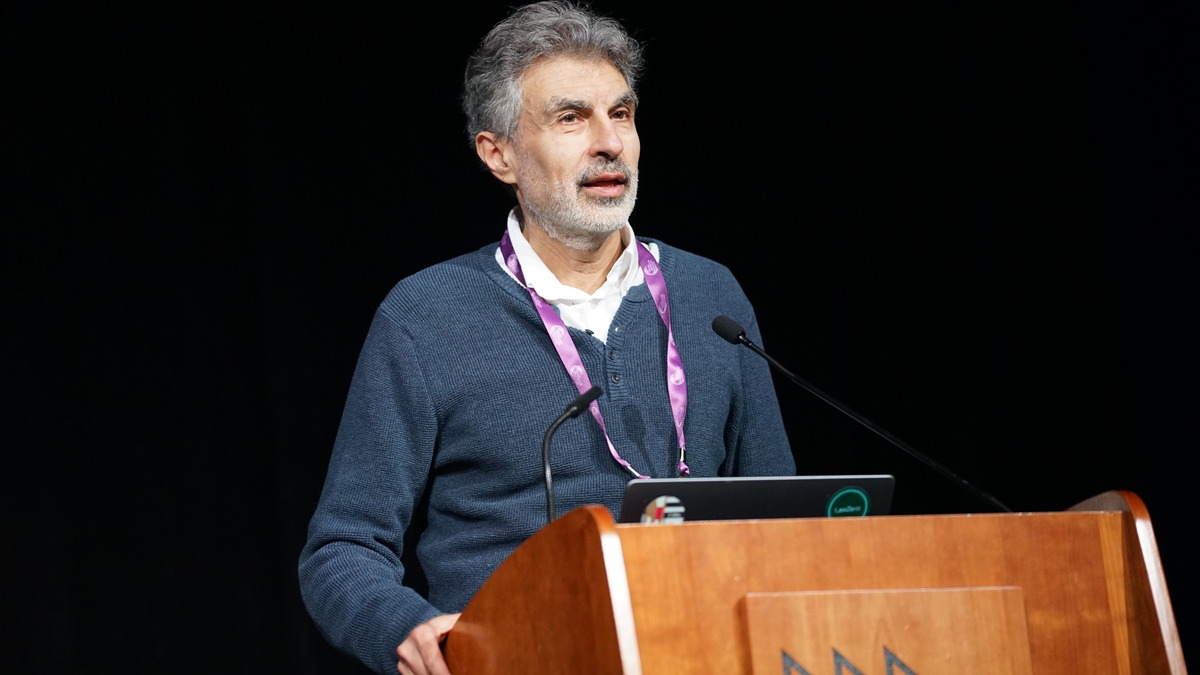 Yoshua Bengio, co-founder of NeurIPS and Turing Award winner, has long championed open international scientific exchange - the kind of collaboration the new sanctions policy now threatens.
Source: wikimedia.org
Yoshua Bengio, co-founder of NeurIPS and Turing Award winner, has long championed open international scientific exchange - the kind of collaboration the new sanctions policy now threatens.
Source: wikimedia.org
Which Institutions Are Affected
Based on reporting from South China Morning Post and Caixin Global, the companies confirmed as affected include:
| Company | Sector | SDN Status |
|---|---|---|
| Huawei Technologies | Semiconductors, Telecom, AI | Designated |
| SenseTime Group | Computer Vision, AI | Designated |
| Megvii Technology | Computer Vision, AI | Designated |
| Hikvision | Surveillance AI | Designated |
| SMIC | Semiconductor Manufacturing | Designated |
Chinese universities are not currently listed on the SDN database, so academic researchers at Tsinghua, Peking University, or Zhejiang appear to be unaffected - for now. The restrictions target private technology companies, which happen to employ some of China's most productive ML researchers.
China Strikes Back
The CCF Statement
On March 25, 2026, two days after the handbook was published, the China Computer Federation issued a formal statement. The CCF called the policy a violation of the basic principles of academic exchange - specifically "openness, inclusiveness, equality and cooperation."
"NeurIPS's ban on submissions from specific institutions and its politicisation of academic exchange violate these basic principles," the CCF statement read, according to reporting by Caixin Global.
The CCF called on Chinese researchers to withhold academic services, refrain from submitting papers, and fully disengage from NeurIPS 2026 - unless the policy changes. The federation also threatened to remove NeurIPS from its "Recommended International Academic Conferences and Journals" directory.
That last point matters more than it might appear. Chinese researchers and their institutions rely heavily on the CCF ranking list for promotion decisions and grant evaluations. A conference removed from the list loses prestige in one of the world's largest AI research communities almost overnight.
Researchers Walking Out
The response from individual researchers came fast. Alibaba researcher Wu Minghao and Zhipu AI researcher Wang Cunxiang publicly refused reviewer roles. Senior Tencent researchers Tu Zhaopeng and Chang Heng resigned from their NeurIPS 2026 positions. On X, researcher Tao Hu wrote: "CCF advises us not to engage with NeurIPS in any way - including submitting, reviewing, or ACing. They are even considering to remove NeurIPS from the CCF list. I'll also stop submitting this year."
These aren't anonymous academics. Tencent's ML teams have published extensively at NeurIPS. At the most recent conference, an Alibaba Cloud team took the best paper award. The researchers walking away represent real scientific output, not symbolic gestures.
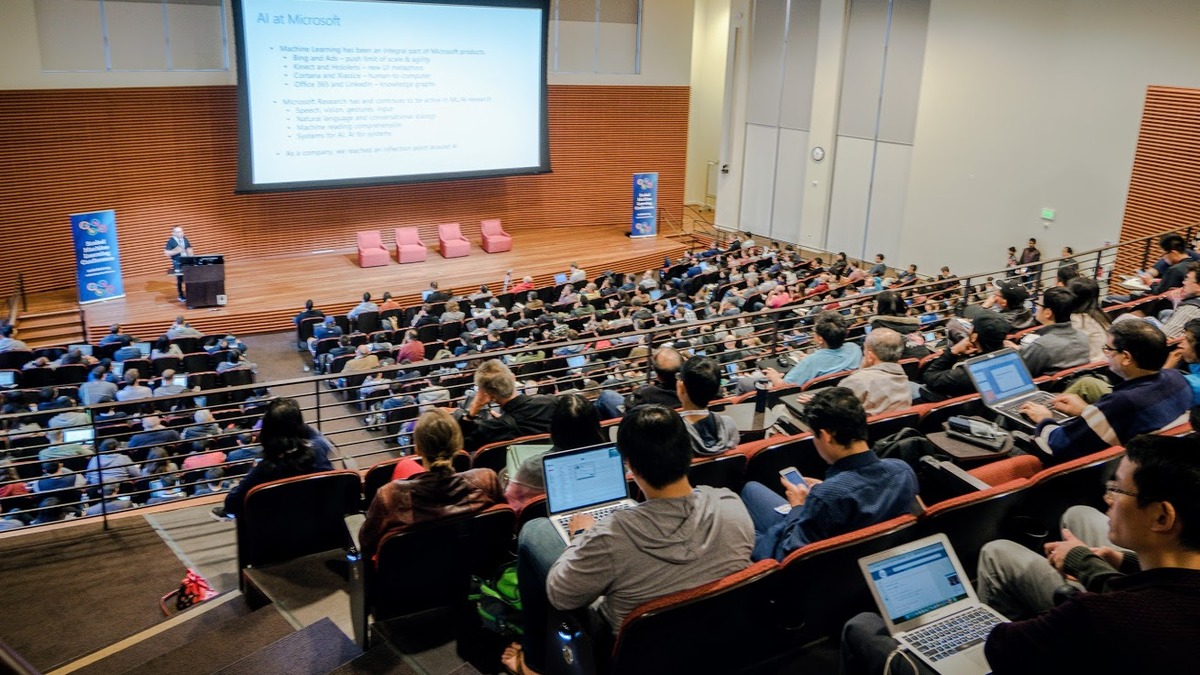 Machine learning conferences depend on volunteer peer review from the global research community. Removing hundreds of researchers from that pool affects the quality of the science, not just the optics.
Source: wikimedia.org
Machine learning conferences depend on volunteer peer review from the global research community. Removing hundreds of researchers from that pool affects the quality of the science, not just the optics.
Source: wikimedia.org
The 2019 Precedent
This isn't the first time a major technical organization has applied US sanctions to scientific participation. In 2019, IEEE barred Huawei researchers from serving as peer reviewers, citing similar OFAC compliance concerns. The CCF threatened a boycott then too. IEEE reversed its decision within weeks, clarifying that peer review was not a "service" under sanctions rules and that Huawei researchers could participate.
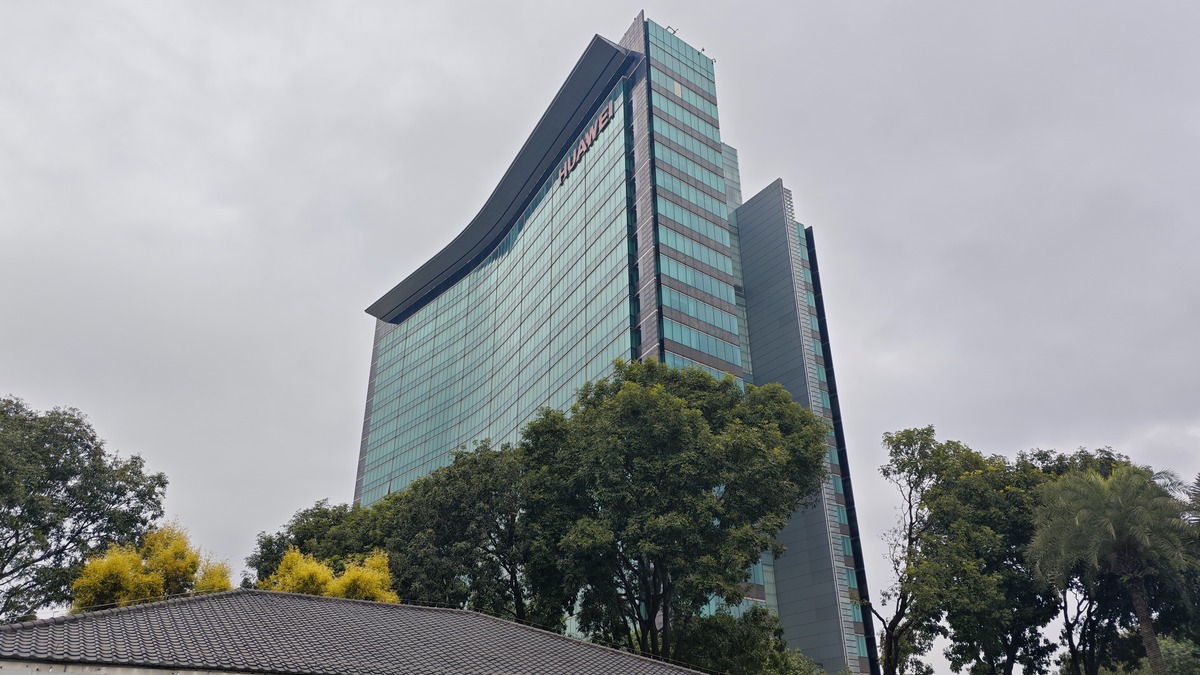 Huawei's sprawling Bantian campus in Shenzhen houses thousands of AI researchers. Employees there are now barred from submitting to NeurIPS or serving as reviewers.
Source: wikimedia.org
Huawei's sprawling Bantian campus in Shenzhen houses thousands of AI researchers. Employees there are now barred from submitting to NeurIPS or serving as reviewers.
Source: wikimedia.org
NeurIPS has now made a different call, apparently concluding that the legal environment has tightened enough that the 2019 interpretation no longer holds. Whether that assessment is correct - or whether NeurIPS is being more conservative than it needs to be - is exactly the kind of question the organization hasn't answered publicly.
The difference from 2019 is the scale of tensions. In 2026, US-China technology decoupling is no longer a background concern. It's active policy, with export controls on advanced chips, restrictions on AI software, and chip subsidies designed to reduce dependence on US suppliers running in parallel. The OFAC list that created edge cases in 2019 is a much bigger obstacle in 2026.
What This Means for AI Research
The Scale of What's Being Split
China has become the largest national contributor to NeurIPS submissions over the past several years. Chinese firms including Alibaba, ByteDance, and Ant Group were major conference sponsors. Removing researchers from Huawei, SenseTime, Megvii, and Hikvision doesn't just shrink the submission pool - it removes some of the field's most active contributors to computer vision, efficient model training, and edge AI.
The practical result is bifurcation. If the CCF follows through and NeurIPS falls off the recommended list, the natural path for affected Chinese researchers leads toward domestic venues - the China National Conference on Artificial Intelligence, or newer venues China's government has been actively building out. That's exactly the outcome that accelerates fragmentation.
The Peer Review Problem
What makes this dispute more structurally significant than, say, a grant restriction is the peer review dimension. Academic conferences don't just publish papers - they run on volunteer labour from the scientific community. Excluding researchers from sanctioned institutions from reviewer roles means losing expertise exactly in areas where those researchers lead. Vision models, surveillance systems, efficient inference on constrained hardware: these are all fields where Huawei and SenseTime researchers have produced serious work.
NeurIPS gets worse papers reviewed as a result. That's not a political statement. It's a mechanical consequence of the policy.
What Comes Next
Whether NeurIPS reverses course, as IEEE did in 2019, depends partly on legal clarity and partly on what other conferences do. If ICML, ICLR, or CVPR adopt similar compliance clauses, the cumulative effect becomes a structural partition of international AI research along national lines. If they don't, NeurIPS faces competitive disadvantage.
The CCF has asked for a response and set no deadline. NeurIPS hasn't issued a public statement since the handbook was published. The 2026 submission deadline is months away, which means there's time for negotiation - or for the standoff to harden into something more permanent.
Elena Marchetti is Senior AI Editor at Awesome Agents. She covers frontier models, AI safety, and the growing tension between open-source and proprietary approaches to AI development.
Sources:

