
Musk Loses OpenAI Lawsuit - Jury Rejects All Claims
A unanimous jury in Oakland dismissed Elon Musk's lawsuit against OpenAI and Sam Altman after less than two hours of deliberation, finding all three counts barred by the statute of limitations.
 6 min read
A nine-person jury in Oakland delivered its verdict in less than two hours on Monday, dismissing every claim Elon Musk brought against OpenAI CEO Sam Altman, co-founder Greg Brockman, and Microsoft. The three-week trial that captivated Silicon Valley ended not on the merits of Musk's "stolen charity" argument, but on a procedural clock he failed to beat.
TL;DR
- Unanimous jury rejected all three counts on statute of limitations grounds
- Musk had sought $134 billion in disgorgement plus Altman's removal
- He left OpenAI's board in 2018 but didn't sue until 2024 - a six-year gap
- Judge Gonzalez Rogers said she was "prepared to dismiss it on the spot"
- Musk's lead counsel Marc Toberoff said one word after the verdict: "Appeal"
- The ruling removes a major restructuring threat ahead of OpenAI's planned IPO
The Case Musk Built
What He Claimed
Musk's lawsuit alleged that Altman and Brockman "stole a charity" - that they had quietly converted OpenAI from a nonprofit research lab into a commercial vehicle designed to enrich insiders, in direct violation of the commitments made to founding donors. Musk testified he gave roughly $38 million to the organization on the understanding that its work would benefit humanity broadly, not create personal profit.
The complaint named OpenAI, Altman, Brockman, and Microsoft as defendants, alleging breach of charitable trust, unjust enrichment, and aiding and abetting those breaches. Our earlier coverage traced how testimony during the trial revealed Musk had demanded 90% of OpenAI's equity for himself before agreeing to help build the organization - a detail that undercut the altruistic framing of his lawsuit.
What He Wanted
The remedies Musk sought were sweeping. His legal team asked the court to force OpenAI and Microsoft to give up as much as $134 billion in what they called "ill-gotten gains," to remove Altman and Brockman from their leadership positions, and to unwind the company's 2025 recapitalization completely. That restructuring transformed OpenAI into a public benefit corporation, with Microsoft holding approximately 27% following its $10 billion investment in the for-profit arm.
California's attorney general, who had the clearest legal standing to police charitable trust violations, declined to join the suit.
 Sam Altman photographed arriving at the federal courthouse in Oakland, California, during the three-week trial.
Source: sfstandard.com
Sam Altman photographed arriving at the federal courthouse in Oakland, California, during the three-week trial.
Source: sfstandard.com
Three Weeks in Oakland
The Testimony That Mattered
The trial produced several moments that cut against Musk's position even before the jury deliberated. Altman acknowledged from the stand that he had told "the occasional lie" - a concession that Musk's attorneys tried to amplify. But Altman's broader argument proved more durable: he told the jury he didn't steal a charity, but that Musk abandoned one.
A 2017 journal entry by Brockman surfaced as one of the more damaging pieces of evidence. In it, Brockman wrote that "if three months later we're doing b-corp then it was a lie" - language that appeared to verify Musk's claim that the founders originally intended the nonprofit structure to be permanent. Yet that same entry also showed Brockman agonizing over his own ambitions, not executing a coordinated deception.
Ilya Sutskever, OpenAI's co-founder, gave conflicting accounts across his testimony. Shivon Zilis, a former board member who had personal ties to both Musk and Altman, "did not corroborate Musk's account of the founding commitments," according to the reporting of trial observers. Microsoft CEO Satya Nadella also testified, defending the company's investment structure.
The Statute of Limitations Trap
Musk left OpenAI's board of directors in 2018. He didn't file suit until 2024 - a gap of six years. OpenAI's legal team built its defense almost entirely on that timeline, arguing that any actionable harms had already passed the applicable filing deadlines by the time Musk went to court.
The jury found OpenAI and Microsoft not liable on all three specific counts:
| Count | Limitation Finding |
|---|---|
| Count 1 | Alleged harm occurred before August 5, 2021 |
| Count 2 | Alleged harm occurred before August 5, 2022 |
| Count 3 | Alleged harm occurred before November 14, 2021 |
Musk testified he had waited because Altman reassured him repeatedly over the years. He said he finally lost patience in 2023 after Microsoft's $10 billion investment locked in intellectual property rights and a share of future profits. The jury didn't accept that explanation as a basis for tolling the clock.
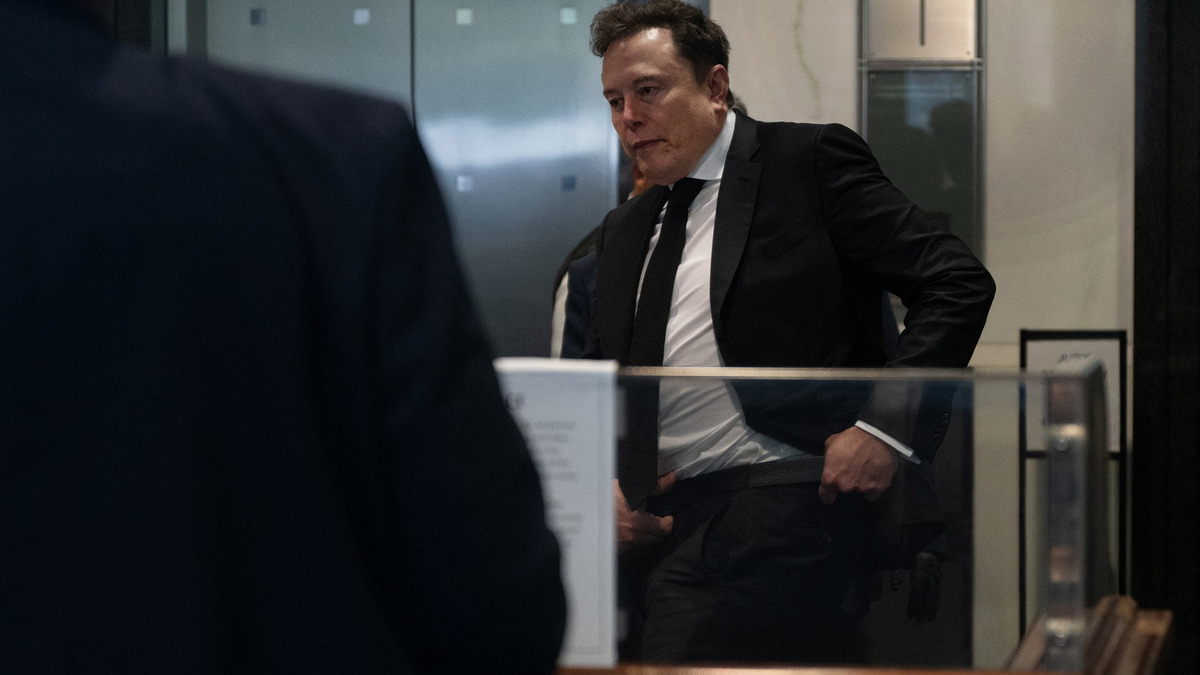 Elon Musk photographed outside the federal courthouse in Oakland during his testimony in April 2026.
Source: sfstandard.com
Elon Musk photographed outside the federal courthouse in Oakland during his testimony in April 2026.
Source: sfstandard.com
The Verdict and Its Aftermath
What the Judge Said
Judge Yvonne Gonzalez Rogers, who presided over the Northern District of California case, didn't hide her assessment of the outcome. After the verdict, she stated that "there was a substantial amount of evidence to support the jury's finding, which is why I was prepared to dismiss it on the spot."
That comment suggests the court viewed the statute of limitations defense as not just persuasive but overwhelming. A judge signaling she would have ruled the same way without a jury is a rare statement, and it narrows Musk's path on any appeal.
The Appeal Signal
Marc Toberoff, Musk's lead counsel, responded to the verdict with a single word: "Appeal." Toberoff added that he was formally preserving Musk's right to challenge the outcome, though no decision on proceeding had been made.
An appeal would likely center on whether the jury was correctly instructed on when the statute of limitations clock started running, and whether Altman's reassurances formed grounds for equitable tolling. Legal scholars tracking the case have generally assessed those arguments as weak, given how clearly the jury found against the timing claims.
"There was a substantial amount of evidence to support the jury's finding, which is why I was prepared to dismiss it on the spot."
- Judge Yvonne Gonzalez Rogers
What This Clears for OpenAI
The practical consequence of Monday's verdict is significant. Musk's lawsuit had threatened to force a restructuring of OpenAI's corporate structure at the worst possible time for the company's public market ambitions. OpenAI closed a $122 billion funding round in March 2026 at a valuation above $850 billion, with its IPO now widely discussed as a near-term event.
A win for Musk - even an advisory one - could have triggered court-ordered unwinding of the 2025 recapitalization, creating genuine uncertainty over governance, Microsoft's stake, and the enforceability of the safety conditions California's attorney general attached to the restructuring approval. With the verdict in, those risks are effectively gone, at least at the trial court level.
OpenAI's counsel and the Microsoft legal team were photographed celebrating with hugs outside the Oakland courtroom.
The jury's decision didn't settle whether OpenAI's founding mission was abandoned. It settled only that Musk waited too long to argue the point in court. Whether that distinction matters to anyone beyond the legal teams involved is a question the AI industry has been quietly debating for three weeks - and will keep debating long after the appeal filing deadline passes.
Sources:
- Elon Musk has lost his lawsuit against Sam Altman and OpenAI - TechCrunch
- Musk v. OpenAI: Jury Begins Deliberating - TechTimes
- Elon Musk Loses Lawsuit Against OpenAI - US News
- What Musk v. Altman revealed about tech's rich and famous - SF Standard
- Jury tosses Elon Musk's lawsuit against OpenAI and Sam Altman - NBC News

