
Moonshot AI Goes From $4.3B to $20B in Six Months
Moonshot AI closed a $2B round at a $20B valuation, four-times its end-2025 value, on the strength of its Kimi open-weight models and $200M ARR.
 5 min read
Beijing-based Moonshot AI has closed a $2 billion funding round led by Meituan's venture arm, Long-Z Investment, pushing its valuation from $4.3 billion at the end of 2025 to $20 billion now. Six months. Nearly fivefold. The company's total capital raised since November 2025 stands at $3.9 billion.
TL;DR
- $2B raised, led by Meituan's Long-Z Investment with Tsinghua Capital, China Mobile, and CPE Yuanfeng
- Valuation: $4.3B (Nov 2025) to $10B (early 2026) to $20B (May 2026)
- Kimi K2.6 is now the second most-used LLM on OpenRouter; ARR hit $200M in April 2026
- Hong Kong IPO options being explored under new offshore-structure disclosure rules
The round is notable not just for its size but for who is writing the checks. Meituan runs China's dominant food delivery and local services platform - it has a strategic reason to care about agentic AI. Tsinghua Capital is the investment arm of China's most prestigious technical university. China Mobile is a state-owned carrier with over a billion subscribers. CPE Yuanfeng is a major crossover fund. This isn't speculative capital chasing a hot sector; it's institutional money with skin in the outcome.
The Numbers Behind the Raise
Moonshot's annualized recurring revenue hit $200 million in April 2026. That number is doing most of the work in this deal. The valuation-to-ARR multiple - roughly 100x - is aggressive even by AI standards, but it's grounded in real commercial traction rather than pure research promise. Anthropic's ARR of $30 billion dwarfs it, but Anthropic has had two more years to build a paying customer base and operates in a US market where enterprise AI budgets are substantially larger.
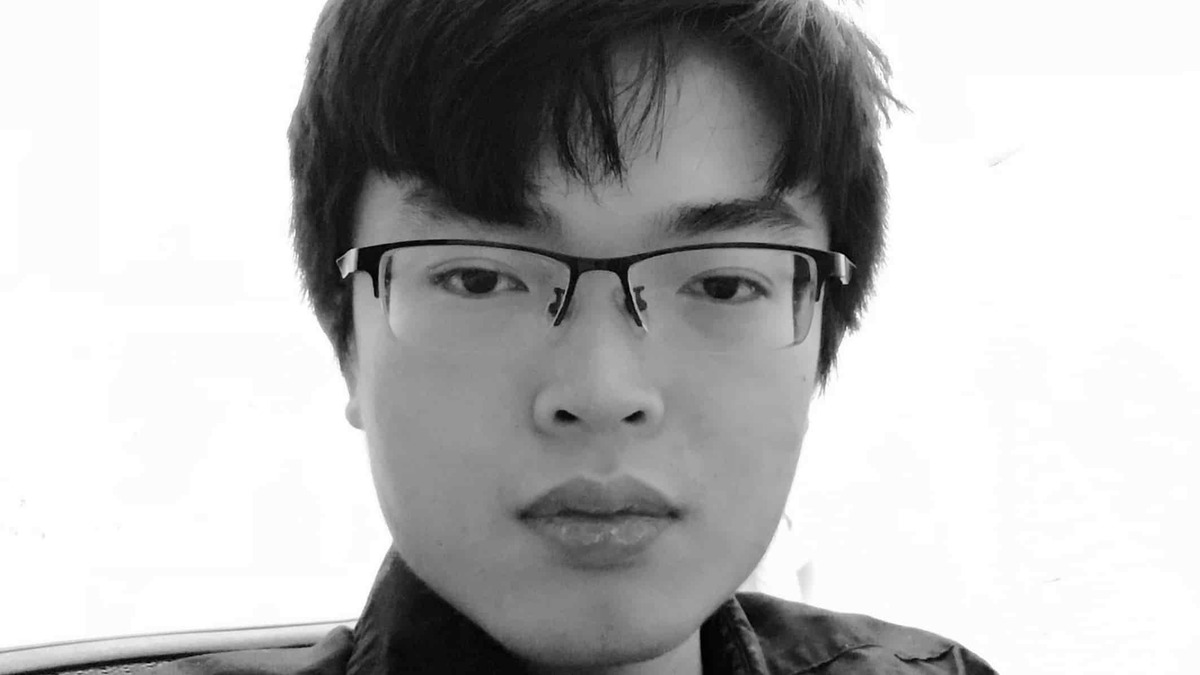 Yang Zhilin founded Moonshot AI in 2023 after research stints at Meta AI and Google Brain. The company has grown from launch to $20B in roughly three years.
Source: kimiyoung.github.io
Yang Zhilin founded Moonshot AI in 2023 after research stints at Meta AI and Google Brain. The company has grown from launch to $20B in roughly three years.
Source: kimiyoung.github.io
Yang Zhilin founded the company in 2023 after working at Meta AI and Google Brain. The founding thesis was that open-weight models could close the capability gap with proprietary systems while maintaining distribution advantages - developers who can self-host or access via API aggregators don't depend on a single vendor's pricing decisions.
That thesis is playing out. The Kimi K2.6 model is now the second most-used LLM on OpenRouter, trailing only the leading OpenAI models. ARR growth follows: subscription and API revenue drove the company to $200M by April. The Kimi K2.5 released earlier this year posted benchmark scores near OpenAI and Anthropic's competitors at lower inference cost.
 The Kimi K2 interface. Cost-competitive inference has driven strong developer adoption through platforms like OpenRouter.
Source: wikimedia.org
The Kimi K2 interface. Cost-competitive inference has driven strong developer adoption through platforms like OpenRouter.
Source: wikimedia.org
| Chinese AI Lab | Valuation | Founded | Notes |
|---|---|---|---|
| Zhipu AI (Knowledge Atlas) | ~$55.5B | 2019 | GLM series, Hong Kong listed |
| DeepSeek | ~$45B | 2023 | DeepSeek-V series, open weights |
| MiniMax | ~$33B | 2021 | Voice AI, multimodal |
| Moonshot AI | $20B | 2023 | Kimi, open-weight models |
Moonshot is still the cheapest among China's top-four AI labs by valuation. The gap between it and DeepSeek's $45 billion-plus has narrowed faster than anyone expected when this cohort of 2023-vintage Chinese labs launched.
Who Benefits
Moonshot and Yang Zhilin get runway. The $3.9 billion raised over six months reduces pressure to IPO before the business is ready - which matters now that Hong Kong regulators are requiring Chinese AI companies with offshore Cayman Islands structures to justify those structures explicitly before listing. More time means more models, more distribution, and more leverage at the table when IPO terms eventually get negotiated.
Meituan and Long-Z get early access to AI infrastructure at a valuation that still looks modest relative to listed peers. Zhipu AI and MiniMax are already priced above $30 billion on Hong Kong exchanges; Moonshot at $20 billion private looks like a discount trade on similar fundamentals. The strategic fit for Meituan's delivery and logistics business - agentic scheduling, demand forecasting, customer automation - makes the financial bet carry less standalone risk.
Developers globally benefit from another well-capitalized lab committed to open weights. Moonshot's approach of distributing through HuggingFace and OpenRouter means the capital goes directly into model capability and inference cost reduction, not into building a proprietary distribution moat. The previous report of distillation attacks using Claude outputs to train Kimi models damaged Moonshot's reputation in the US, but the commercial traction with developers suggests it hasn't meaningfully affected adoption.
Who Pays
Investors are taking a position at a 100x ARR multiple that requires Moonshot to execute on several things simultaneously: maintain its open-weight model quality lead, grow ARR fast enough to justify the valuation, and navigate a Hong Kong IPO process under new regulatory rules for offshore-structured companies. Any slowdown in Kimi's competitive position on OpenRouter or a broader softening of developer API demand would make the multiple very hard to defend.
US labs are paying competitive pressure. A Chinese open-weight model at second place on OpenRouter means developers are increasingly substituting away from proprietary US APIs for cost-sensitive workloads. The inference cost gap between open-weight models and closed systems keeps widening, and Moonshot is one of the labs driving that compression.
The US export control regime adds a layer worth noting. Chinese labs can't legally access the latest NVIDIA chips at scale, but they've repeatedly demonstrated the ability to close performance gaps despite that constraint. Each funding round at this scale finances the engineering effort to work around restrictions that US policy makers assumed would be structurally decisive.
At $200 million ARR and a $20 billion private valuation, Moonshot is now in the range where its next capital event is almost certainly an IPO rather than another private round. The question Hong Kong investors will ask - how does a $20 billion AI lab trading at 100x ARR justify the multiple against listed peers already priced above $30 billion - is one the company has roughly twelve to eighteen months to answer before it becomes unavoidable.
Sources: TechCrunch, South China Morning Post

