
Mistral's New Playbook - Send Engineers, Not Models
Europe's most-funded AI startup is embedding engineers inside banks and consulting giants, borrowing Palantir's forward-deploy playbook to survive the frontier race.
 7 min read
Bloomberg published a blunt headline on Monday: "Europe's AI Darling Mistral Looks More Like a Consultant Than a Model Maker." The framing stung because it's accurate. The $14 billion French startup that once promised to out-research OpenAI on a fraction of the compute is now stationing its own software engineers inside client offices, building bespoke systems one contract at a time.
TL;DR
- Mistral AI is "forward-deploying" its engineers to sit inside major clients like BNP Paribas and HSBC, adopting a consulting model similar to Palantir's early playbook
- In 8 weeks, Mistral signed deals with Accenture, BNP Paribas, and HSBC - all multi-year, all enterprise-focused
- The company targets 1 billion euros in revenue by end of 2026, up from roughly 300 million euros ARR last September
- CEO Arthur Mensch says more than half of enterprise SaaS will shift to AI - and Mistral wants to be the one doing the shifting
The Palantir Playbook
The shift is structural, not cosmetic. Mistral has begun what industry insiders describe as a "forward-deploy" model - stationing its own AI engineers directly inside customer organizations to build customized software on top of Mistral's models. The approach mirrors the strategy that Palantir Technologies used to grow from a niche defense contractor into a $250 billion public company.
How It Works
Instead of selling API access and walking away, Mistral sends teams of applied AI researchers to work alongside a client's internal engineering staff. They fine-tune models on proprietary data, integrate them into existing workflows, and stay embedded for months. The deals are multi-year. The switching costs are high.
"We are proud to partner with Accenture, whose international reach and industry depth make them an ideal partner to continue driving AI transformations for enterprises at scale." - Arthur Mensch, CEO, Mistral AI
The approach slows Mistral's sales cycle significantly compared to a pure API business. But it creates the kind of deep customer lock-in that API pricing alone never can.
 Arthur Mensch, Mistral AI's co-founder and CEO, has steered the company toward an enterprise consulting model that embeds engineers inside client organizations.
The Deal Blitz
The evidence is in the contracts. Over eight weeks in early 2026, Mistral signed three major enterprise partnerships that collectively signal a full strategic pivot.
| Deal | Partner | Date | Scope |
|---|---|---|---|
| Multi-year collaboration | Accenture | Feb 26, 2026 | Co-develop enterprise AI solutions; Accenture becomes customer and reseller |
| Three-year extension | BNP Paribas | Feb 11, 2026 | Full access to Mistral models across all business lines |
| Multi-year partnership | HSBC | Dec 2025 | Self-hosted Mistral models for financial analysis, risk, and translation |
Banking Is the Beachhead
The pattern is clear: Mistral is targeting heavily regulated European institutions that need on-premise deployment, data sovereignty guarantees, and the kind of white-glove support that an API endpoint can't provide. BNP Paribas started experimenting with Mistral models in September 2023 and extended the relationship group-wide by February 2024. The new three-year deal locks in access to all current and future Mistral commercial models.
HSBC's arrangement is similar - self-hosted deployment aligned with the bank's internal technology stack, covering financial analysis, multilingual translation, and client communication. Both institutions are exactly the kind of complex, compliance-heavy organizations where a forward-deploy model thrives.
Accenture Is the Multiplier
The Accenture deal is different in kind. Accenture isn't just a customer - it becomes a channel. The consulting giant will embed Mistral's models into its own operations, then resell Mistral-powered solutions to its global enterprise client base. Accenture has also signed similar partnerships with OpenAI and Anthropic, but for Mistral, the deal represents something American labs already have and Mistral desperately needs: distribution at scale.
Mauro Macchi, Accenture's EMEA CEO, framed the appeal directly: "Our clients are looking for AI solutions that combine world-class performance with the complete ownership that Mistral AI's technology offers enterprises."
The Numbers Behind the Pivot
Mistral's financial path explains the urgency.
| Metric | Value |
|---|---|
| Total funding raised | $3.05 billion over 7 rounds |
| Latest valuation | $14 billion (Series C, Sept 2025) |
| Series C lead investor | ASML (11% stake, 1.3 billion euros) |
| ARR (Sept 2025) | ~300 million euros |
| Revenue target (end 2026) | 1 billion euros |
| Approximate compute (early 2024) | 1,500 H100 GPUs |
| European revenue share | ~50% |
The gap between 300 million euros in ARR and a 1 billion euro target means Mistral needs to more than triple its run rate in roughly 15 months. For context, Anthropic is estimated at around $5 billion ARR. OpenAI has 900 million weekly active users. Mistral cannot win the consumer race. It isn't trying to.
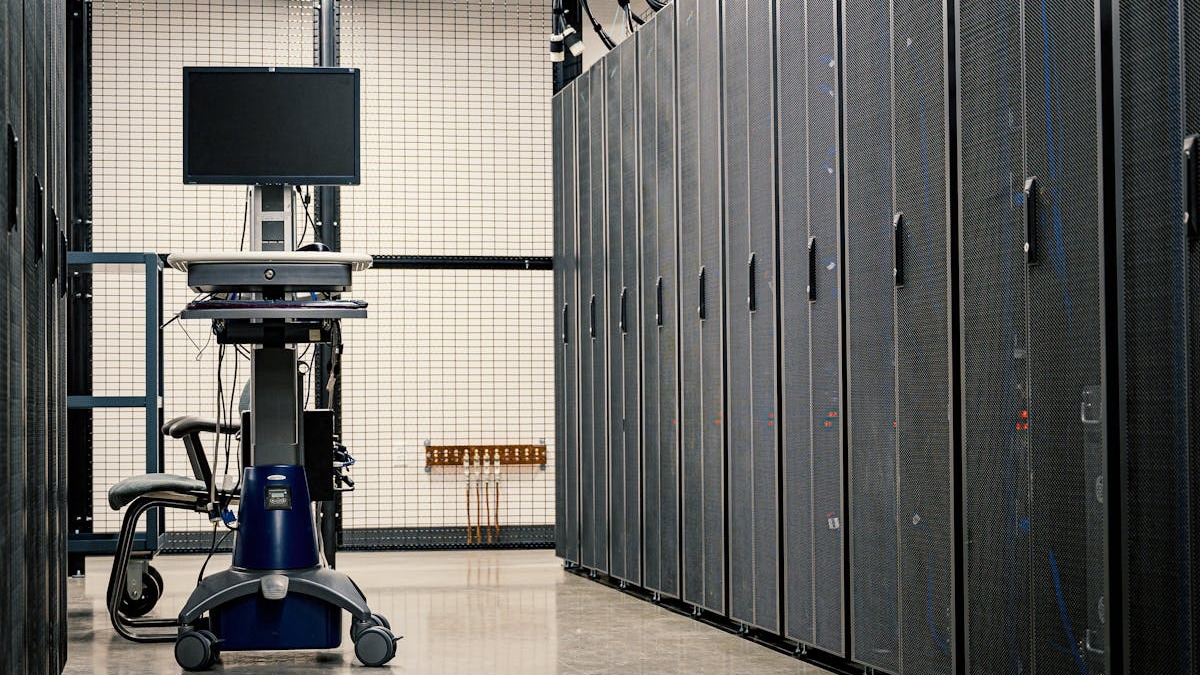 Mistral operated with roughly 1,500 H100 GPUs in early 2024 - a fraction of what American labs had access to.
Where the Compute Gap Hurts
The compute reality is brutal. In April 2024, Mistral had access to roughly 1,500 H100 GPUs - "just a few percent" of what leading U.S. labs operated. GPT-4 was trained on about 8,000 H100-equivalent GPUs. The ASML-led Series C and a 1.4-gigawatt GPU cluster partnership near Paris with Nvidia and Bpifrance are meant to close that gap, but the timeline is measured in years, not quarters.
This compute deficit is exactly why the consulting pivot makes strategic sense. If you can't outspend American labs on training runs, you compete on integration depth instead. As we explored in our open-source vs proprietary AI guide, the real value of open-weight models like Mistral Large 3 often lies not in raw benchmark scores but in the ability to customize, self-host, and fine-tune for specific enterprise needs.
What It Does Not Tell You
The Bloomberg framing is correct, but it skips the risks.
The Palantir Comparison Has Limits
Palantir's forward-deploy model succeeded because it sold to governments with functionally unlimited budgets and a tolerance for vendor lock-in. European banks are cost-conscious, procurement-heavy, and increasingly multi-vendor by policy. Accenture itself just signed partnerships with OpenAI and Anthropic alongside Mistral - hedging, not committing.
Revenue Quality Matters
Consulting revenue is fundamentally different from API revenue. It scales linearly with headcount, not exponentially with usage. Every new BNP Paribas-scale deployment requires sending more engineers. If Mistral needs to triple revenue while tripling its services team, margins will compress exactly when it needs them to expand.
 Mistral's largest clients are regulated European financial institutions that demand on-premise deployment and data sovereignty guarantees.
The Sovereignty Bet Could Expire
Mistral's strongest selling point - European data sovereignty and regulatory compliance - is a positioning advantage that depends on the regulatory environment staying strict. If the EU softens its stance on American cloud providers handling AI workloads, Mistral's moat narrows. The company's political connections help - former Digital Secretary Cedric O sits as a non-executive co-founder - but policy isn't permanent.
Mensch told CNBC at the India AI Impact Summit that "more than half of what's currently being bought by IT in terms of SaaS is going to shift to AI." That may be right. The question is whether enterprise clients will pay Mistral's engineers to do the shifting, or whether they'll use Mistral's open-weight models and do it themselves.
The open-source LLM leaderboard already shows multiple competitors that can match Mistral on benchmarks. What none of them offer yet is a team of researchers who will move into your office.
Mistral isn't abandoning model research. It launched Mistral Large 3 - a 675B-parameter MoE frontier model - in December, and Devstral 2 for coding in early 2026. But the company's center of gravity has clearly shifted from the lab to the client site. Whether that's a survival strategy or a winning one depends on a question Mistral has not yet answered: can a company that competes on customization also compete on scale?
Sources:
- Europe's AI Darling Mistral Looks More Like a Consultant Than a Model Maker - Bloomberg
- Accenture and Mistral AI Accelerate Enterprise Reinvention - Accenture Newsroom
- BNP Paribas Extends Mistral AI Partnership With Three-Year Agreement - Bloomberg
- HSBC Deepens AI Push with Mistral Partnership - Banking Exchange
- More Than 50% of Enterprise Software Could Switch to AI, Mistral CEO Says - CNBC
- Mistral AI Raises 1.7B Euros - Mistral AI
- AI 2026: Mistral Will Rise As Compute is Unleashed - Bismarck Analysis
