
Mistral Forge Puts Enterprise AI Inside Your Firewall
Mistral's new Forge platform lets enterprises train frontier-grade AI models entirely on proprietary data, without sending any of it to a third party.
 7 min read
Mistral has spent the past year proving it can build competitive models on a fraction of OpenAI's budget. Now it wants to sell something more valuable than models: the ability for companies to build their own.
Announced at NVIDIA GTC on March 17, Mistral Forge is a platform that lets enterprises train frontier-grade AI models completely on internal data - codebases, documents, structured records, operational archives - without sending any of it to Mistral or anyone else. The pitch is direct: your model, your data, your infrastructure, no data exposure to a third party.
TL;DR
- Mistral Forge, launched at NVIDIA GTC on March 17, enables full pre-training and post-training on proprietary enterprise data
- An autonomous agent called Mistral Vibe handles hyperparameter optimization, synthetic data generation, and job scheduling
- Launch partners include ASML, Ericsson, the European Space Agency, DSO National Laboratories Singapore, and two others
- CEO Arthur Mensch says Mistral is on track to surpass $1 billion in ARR in 2026
- The platform targets regulated industries and governments that can't afford to have model providers touch their data
What Mistral Is Selling
Forge isn't fine-tuning on top of an existing model. It's the full stack - pre-training from scratch, post-training, and reinforcement learning against internal policies, all running on company infrastructure. The system supports both dense and mixture-of-experts (MoE) architectures, and takes multimodal inputs including text, images, and other document formats.
The centerpiece is Mistral Vibe, an autonomous agent that manages the messy parts of large-scale training: hyperparameter search, synthetic data generation, job scheduling across clusters, and basic model evaluation. The idea is to lower the barrier for enterprises that want custom models but don't have a team of ML researchers to run the process.
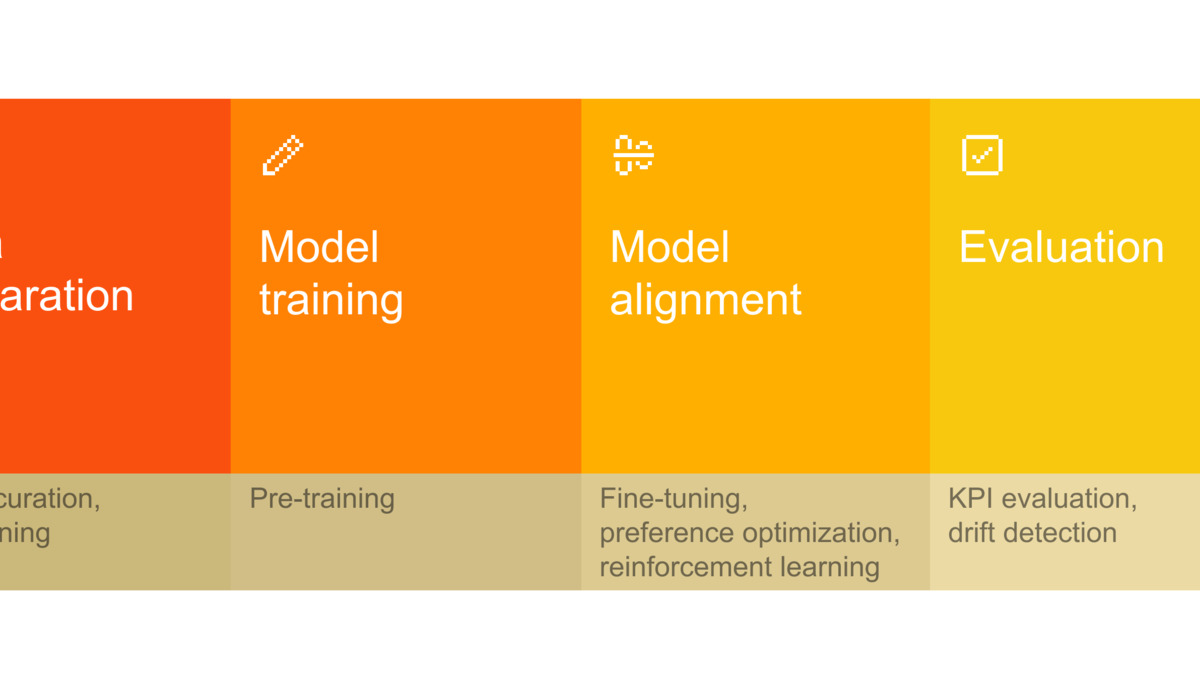 Mistral's official architecture diagram for Forge, showing the training and deployment pipeline from proprietary data to production model.
Source: cms.mistral.ai
Mistral's official architecture diagram for Forge, showing the training and deployment pipeline from proprietary data to production model.
Source: cms.mistral.ai
Mistral is positioning Forge as a sovereign AI product. The word "sovereign" appears prominently in the announcement materials, and it's not accidental. The platform is aimed at defense contractors, government agencies, financial institutions, and critical infrastructure operators - organizations that face real regulatory or security barriers to sending data to an U.S. cloud API. The launch partners reflect that: ASML (Dutch semiconductor equipment), Ericsson (Swedish telecom infrastructure), the European Space Agency, DSO National Laboratories Singapore (a defense research agency), the Home Team Science and Technology Agency in Singapore, and Reply, an Italian IT consultancy.
That mix of European industrial names and Singapore defense agencies is not typical of an American AI product launch. It signals exactly who Forge is aimed at.
The Commercial Picture
Mistral CEO Arthur Mensch used the GTC announcement to drop a revenue signal. Mistral is "on track to surpass $1 billion in annual recurring revenue" in 2026, he said - a meaningful milestone for a company that raised at a $6 billion valuation last year and has been under consistent pressure to show that an European AI lab can compete commercially without OpenAI's distribution advantages.
The financial logic of Forge is different from Mistral's API business. Selling API access is high volume, thin margin, and requires competing directly on benchmark scores every time a new model drops. Selling Forge means selling a service relationship, professional support, and ongoing model training cycles. The margins are higher, the contracts are longer, and the customer base - defense, critical infrastructure, regulated finance - is less price-sensitive and more concerned with data control than raw performance.
| Revenue model | Margin profile | Contract length | Customer churn risk |
|---|---|---|---|
| API access (pay per token) | Low - competitive market | None | High - easy to switch providers |
| Forge enterprise contracts | High - sticky, bespoke | 12-36 months | Low - training data and IP embedded |
| OpenAI fine-tuning API | Medium | Short | Medium |
| Anthropic enterprise tier | Medium | 12 months typical | Medium |
The table above isn't precise - Mistral hasn't disclosed Forge pricing. But the structural comparison is sound. Training a custom model on a company's internal data is not a commodity transaction. Once a company's institutional knowledge is embedded in a model architecture, switching vendors requires starting over.
 Arthur Mensch at the French Senate. He announced Forge at NVIDIA GTC on March 17 alongside a revenue signal: Mistral is on track to surpass $1 billion ARR in 2026.
Source: frenchtechjournal.com
Arthur Mensch at the French Senate. He announced Forge at NVIDIA GTC on March 17 alongside a revenue signal: Mistral is on track to surpass $1 billion ARR in 2026.
Source: frenchtechjournal.com
Who Benefits
Regulated industry customers get the clearest win. An European bank, a defense contractor, or a government agency can now build a model on their own data without the legal and compliance exposure of sending that data to an American API. For the Singapore defense agencies on the launch partner list, that's not a minor concern - it's a hard requirement. Mistral, as a French company subject to European regulation, is a more palatable supplier than OpenAI or Anthropic for a number of non-U.S. government buyers.
Mistral's competitive position improves if Forge lands. The company has been in an awkward spot: technically credible, but smaller than the top American labs and lacking their distribution. Enterprise contracts with defense and critical infrastructure are long, sticky, and high-value. Winning Ericsson or ESA is worth more in revenue terms than a comparable number of API customers, and the relationship is harder to displace. If Mistral Small 4 demonstrated that the lab can match frontier performance at low cost, Forge is the attempt to monetize that efficiency advantage at an enterprise level.
NVIDIA benefits from Forge in a predictable way. Pre-training frontier-grade models requires serious compute, and Mistral training on customer infrastructure means more GPU clusters deployed - specifically, more NVIDIA clusters. The GTC timing isn't a coincidence. NVIDIA has been building its own enterprise AI agent infrastructure at the application layer. Forge strengthens the underlying demand for the hardware tier.
Who Pays
Enterprises with underfunded ML teams face real execution risk. Forge promises to automate the hard parts of training through Mistral Vibe, but running a frontier-grade training run still requires infrastructure, data governance, and someone who understands what the output means. The companies best positioned to benefit are those with clean, well-organized internal data and the compute budget to run a proper pre-training job. Many large enterprises have neither.
Smaller open-source model providers are in the tightest position. Mistral is moving toward a model where the open-source releases (Mistral Small 4, Magistral, Devstral) serve as credibility and community-building, while the actual revenue comes from proprietary enterprise arrangements like Forge. That's a rational strategy, but it means the open-source releases are partly loss leaders for a commercial product that isn't open. Smaller labs that compete on open weights alone have one fewer differentiator.
Mistral's existing API customers don't lose anything directly, but Forge is clearly where the company's commercial ambition is pointing. Resources follow revenue.
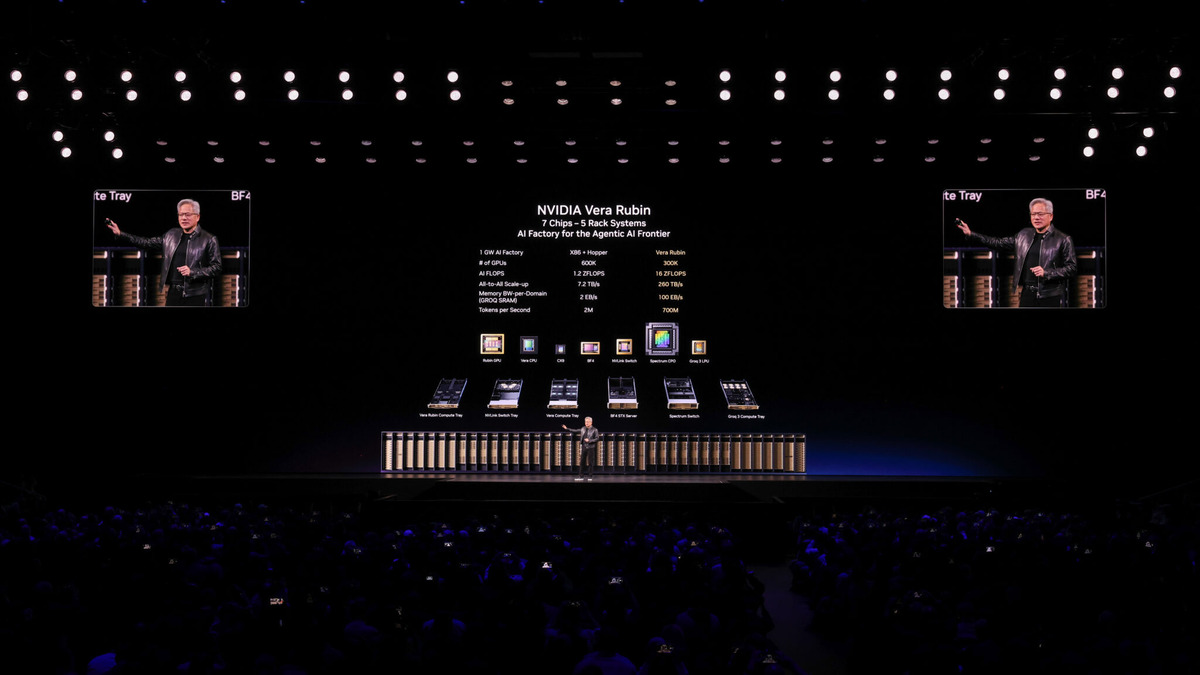 NVIDIA GTC 2026 in San Jose, where Mistral announced Forge alongside partnerships with major industrial and defense customers.
Source: blogs.nvidia.com
NVIDIA GTC 2026 in San Jose, where Mistral announced Forge alongside partnerships with major industrial and defense customers.
Source: blogs.nvidia.com
What Forge Doesn't Settle
The sovereign AI pitch has limits. Mistral is a French company, which means European data sovereignty claims are genuine - the company isn't subject to U.S. CLOUD Act provisions. But Mistral is also venture-backed and, eventually, will need a liquidity event. A future acquisition by an U.S. buyer would complicate the sovereignty positioning significantly. Customers signing multi-year Forge contracts are betting on Mistral's independence as much as its technology.
There's also an open question about fine-tuning and distillation at scale. Forge enables full pre-training, which is the gold standard for embedding proprietary knowledge into a model. But pre-training is expensive and time-consuming. For most enterprise use cases - even those that require data isolation - a combination of retrieval-augmented generation and fine-tuning on an existing base model is cheaper and faster. Mistral needs Forge customers to want more than that. The launch partners suggest some do, but the market for full sovereign pre-training is narrower than the market for enterprise AI broadly.
The NVIDIA GTC 2026 event was full of enterprise AI announcements this year. Forge was among the more substantive ones - a product with genuine commercial logic and a clear target customer, not a benchmark claim dressed up as a product. Whether the addressable market is large enough to justify the investment is a different question. Defense agencies and critical infrastructure operators are willing to pay, but there aren't that many of them.
Mistral has a credible product with a credible customer list. The sovereignty story sells in Europe, Singapore, and regulated industries globally - and those customers have budgets that match the ambition.
Sources: Mistral · TechCrunch · VentureBeat · French Tech Journal

