
Mistral Seeks €3B Round, Valuation Hits €20B
Mistral AI is in talks to raise €3 billion at a €20 billion valuation, nearly doubling its September 2025 price tag in under a year and cementing its status as Europe's most valuable AI company.
 5 min read
France's Mistral AI is in talks to raise €3 billion at a €20 billion post-money valuation, Bloomberg reported Thursday. If the round closes at those terms, the company will have nearly doubled its €11.7 billion valuation from September 2025 in under a year - one of the steepest climbs for any private AI lab outside Silicon Valley.
The new equity raise is separate from the $830 million debt package Mistral drew in March to finance a 13,800-GPU cluster near Paris. This is clean equity, a Series D, and a clear signal that institutional investors are pricing European AI at a premium that its current revenue alone doesn't justify.
TL;DR
- €3 billion sought at a €20 billion valuation - nearly double September 2025's €11.7 billion in under a year
- Annual recurring revenue crossed $400 million in early 2026, implying a ~58x multiple at the new price
- ASML, the only maker of EUV lithography machines for advanced chip production, is already Mistral's largest shareholder at ~11% after investing €1.3 billion in the Series C
- Clients include Airbus, BMW, TotalEnergies, and the French Ministry of Armed Forces
How the Round Fits
Mistral's funding history shows a company compounding its valuation faster than almost any European tech company in the past decade.
| Round | Date | Amount | Valuation |
|---|---|---|---|
| Seed | Jun 2023 | €105M | Pre-unicorn |
| Series B | Jun 2024 | €600M | €5.8B |
| Series C | Sep 2025 | €1.7B | €11.7B |
| Debt (Paris data center) | Mar 2026 | $830M | - |
| Series D (talks) | Jun 2026 | €3B | €20B |
That's a 3.4x increase in valuation in 24 months. For framing: Anthropic's May 2026 Series H priced it at $965 billion on $47 billion in run-rate revenue - roughly a 20x ARR multiple. Mistral at €20 billion (around $23.5 billion) on $400 million in ARR implies something closer to 58x. Investors are paying for future growth, not current output.
CEO Arthur Mensch told CNBC this week that enterprise adoption still has "a lot of viscosity" - meaning the market hasn't saturated and significant value creation remains ahead. The funding thesis rests on that viscosity breaking over the next two to three years.
 Arthur Mensch co-founded Mistral in 2023 with two former Meta and Google DeepMind researchers. The company reached a €20 billion valuation in under three years.
Source: mistral.ai
Arthur Mensch co-founded Mistral in 2023 with two former Meta and Google DeepMind researchers. The company reached a €20 billion valuation in under three years.
Source: mistral.ai
Who Benefits
ASML and strategic hardware investors sit central to this round's logic. The Dutch company holds a monopoly on the EUV lithography machines required to manufacture any chip below 7nm. It invested €1.3 billion in Mistral's Series C, making it the largest shareholder at roughly 11%. That isn't primarily a financial bet - it's a hedge against a world where chip supply and AI model supply converge into a single strategic asset.
NVIDIA also holds a position in Mistral. Every data center expansion Mistral runs - including the GB300 cluster near Paris and a planned Sweden facility - uses NVIDIA hardware. Mistral's growth is a direct GPU order pipeline.
European enterprise customers in regulated sectors gain a politically stable, jurisdictionally compliant alternative to American labs. Airbus, BMW, TotalEnergies, and the French Ministry of Armed Forces have all signed on. These customers aren't evaluating Mistral's models on benchmark scores. They need data that doesn't cross US jurisdictional lines, and Mistral's French structure makes that argument easy.
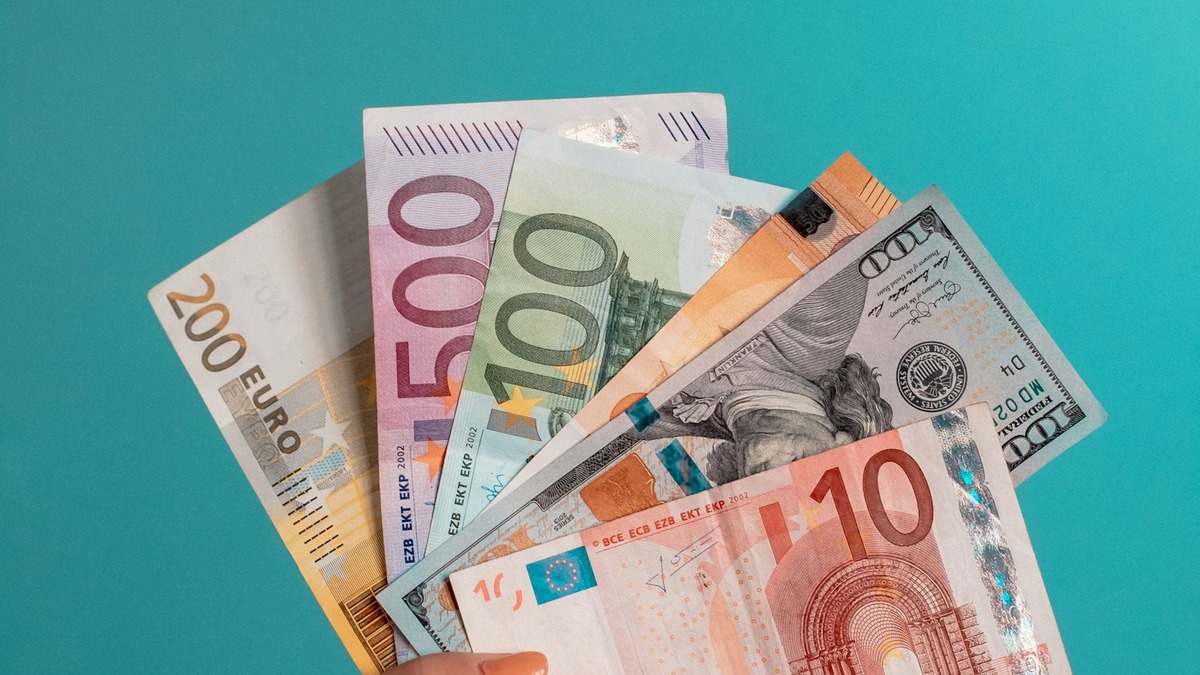 European institutional capital has flowed into AI at record levels in 2026, with Mistral's Series D set to be the continent's largest single AI equity raise.
Source: unsplash.com
European institutional capital has flowed into AI at record levels in 2026, with Mistral's Series D set to be the continent's largest single AI equity raise.
Source: unsplash.com
European policymakers claim a symbolic win. After years of criticism that the EU's AI Act would chase AI investment out of the continent, a €20 billion valuation for a Paris-based lab makes that argument harder to sustain.
Who Pays
Investors entering at €20 billion are paying a steep multiple for a company whose strategic direction has shifted meaningfully toward enterprise services and proprietary infrastructure. At 58x ARR, the deal price requires Mistral's revenue to grow 5-10x to normalize. That's achievable in a market this large - but it depends completely on European enterprise AI adoption accelerating on the timeline Mensch expects.
Smaller European AI startups absorb an indirect cost. When a single company pulls €3 billion from the available pool of institutional European capital, less reaches the rest of the ecosystem. The €15 billion European Investment Fund commitment to sovereign AI provides some offset, but Mistral's gravitational pull on investor attention is substantial.
US labs lose ground in a segment they may never reclaim. The French Ministry of Armed Forces isn't rolling out OpenAI. BMW and TotalEnergies aren't routing proprietary manufacturing data through San Francisco. These enterprise wins for Mistral aren't contingent on beating American models on capability benchmarks - they're structural, driven by sovereignty requirements that no US company can easily satisfy.
At €20 billion, investors are pricing the structural advantage Mistral holds in European regulated industries, not its current ARR. Whether that premium holds depends on one variable: how fast the enterprise viscosity Mensch describes gives way to actual deployment at scale.
Sources:
- France's Mistral in Funding Talks at About €20 Billion Valuation - Bloomberg, June 12, 2026
- The Tech Download: Mistral's Arthur Mensch on agentic AI, chips and enterprise adoption - CNBC, June 12, 2026
- Mistral AI seeks to raise €3B at €20B valuation as Europe's AI race heats up - Crypto Briefing, June 12, 2026
- Mistral Pursues €3B Raise at €20bn Valuation - Let's Data Science, June 12, 2026

