
Microsoft Drops Claude Code for GitHub Copilot Desktop
Microsoft is canceling thousands of Claude Code licenses for engineers in its Experiences + Devices division, replacing them with GitHub Copilot Desktop, which launched in technical preview on May 14.
 6 min read
Microsoft is pulling Claude Code access from engineers in its Experiences + Devices division and pushing them onto GitHub Copilot Desktop - a standalone agentic coding app that launched in technical preview on May 14, 2026. The cutoff is June 30, the last day of Microsoft's fiscal year.
TL;DR
- Who's affected: Thousands of Microsoft engineers in Experiences + Devices (Windows, Microsoft 365, Outlook, Teams, Surface) lose Claude Code by June 30
- GitHub Copilot Desktop launched in technical preview May 14 as the designated replacement
- EVP Rajesh Jha's reason: Microsoft can "directly shape" Copilot with GitHub for internal repos, security requirements, and engineering workflows
- Claude models remain available via Azure and Copilot's model selector - only the Claude Code interface is going away
- Engineers spent six months building habits around Claude Code; Copilot CLI was "largely neglected" during the same period
The Switch
Who's Affected
The cut covers Microsoft's Experiences + Devices group - the teams that ship Windows, Microsoft 365, Outlook, Teams, and Surface. Claude Code arrived there in December 2025 and expanded across the full division in January 2026, with approval to access all internal code repositories and work on Business and Industry Copilot development.
Over six months, usage spread beyond engineers. Designers and project managers adopted it for prototyping, which means the cancellation reaches further than a straightforward engineering headcount.
The precise seat count isn't public. Multiple reports describe it as "thousands."
The Timeline
Dec 2025 - Microsoft begins providing Claude Code access to engineers in Experiences + Devices.
Jan 2026 - Claude Code expands to the full E+D division; approved for all repositories and Business and Industry Copilot teams.
May 14, 2026 - GitHub Copilot Desktop launches in technical preview. The Verge breaks the Claude Code cancellation story the same day.
June 30, 2026 - All Claude Code licenses revoked. FY2026 ends. Rajesh Jha retires.
What GitHub Copilot Desktop Actually Is
GitHub Copilot Desktop is a standalone app for Windows, macOS, and Linux - not an IDE extension, not a web panel. Sessions start from an open issue, a pull request, a free-form prompt, or a prior session. Each session gets its own git worktree and branch, so three concurrent sessions against the same repository run without merge conflicts.
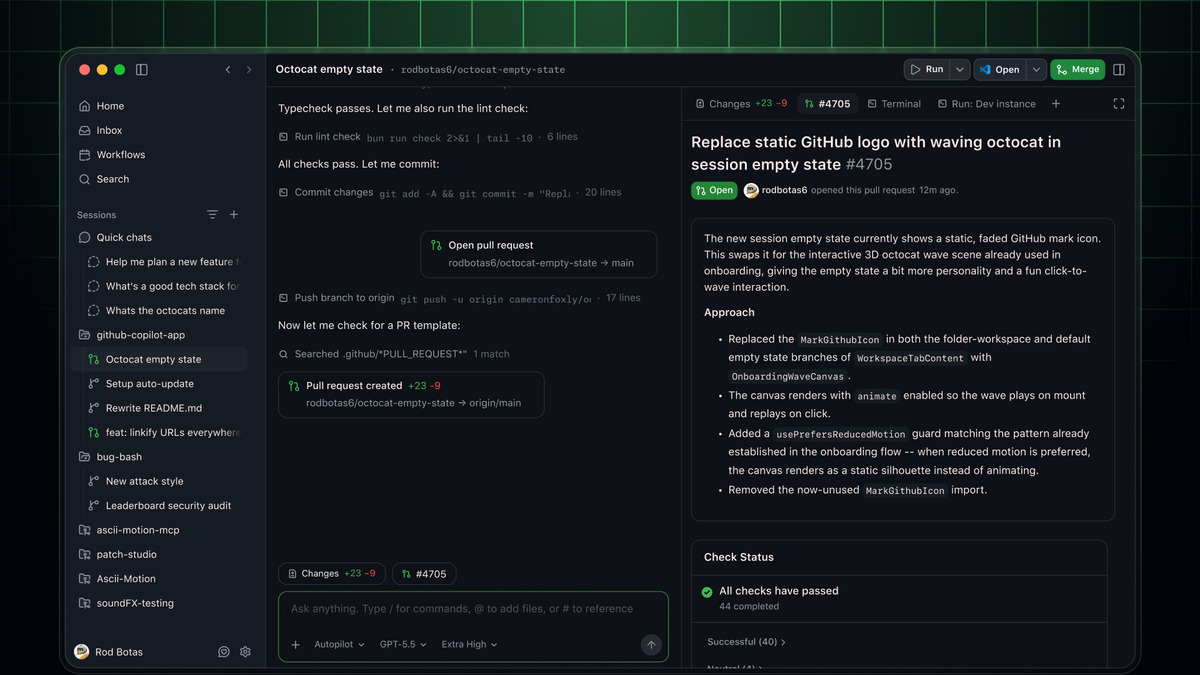 The official header image from GitHub's May 14 Copilot app technical preview announcement, showing the app's session-based layout.
Source: github.blog
The official header image from GitHub's May 14 Copilot app technical preview announcement, showing the app's session-based layout.
Source: github.blog
Three Operating Modes
Mode selection is per-session:
- Interactive - collaborative back-and-forth; the agent proposes, you steer in real time
- Plan - the agent drafts a plan for your approval before touching code
- Autopilot - fully autonomous; runs until done and surfaces results when finished
A Plan session on a risky refactor and an Autopilot session running dependency updates can run in the same app simultaneously. That's one of the more practical parts of the parallel worktree design.
Agent Merge and CI Integration
Agent Merge handles the tail end of agentic tasks. Once an agent finishes its work, the system watches CI checks, downloads failure logs, resolves merge conflicts, and pushes fixes automatically before merging. For routine maintenance - dependency bumps, test scaffolding, changelog generation - the agent completes the full cycle without a human waiting on it.
Getting Set Up
Access on Business and Enterprise plans requires two policy settings at the org or enterprise level:
GitHub.com > Organization Settings > Copilot > Policies
Enable: "Copilot in the CLI"
Enable: "Preview features"
Pro and Pro+ subscribers join a waitlist at github.com. Copilot CLI - the terminal companion to the desktop app - is available to all paid plans once enabled:
# Natural language commands from the terminal
gh copilot suggest "write a bash script that parses nginx access logs"

# Explain unfamiliar commands before running them
gh copilot explain "git rebase -i HEAD~3"
Copilot CLI reached general availability in February 2026, so the terminal workflow is already stable. The desktop app is the newer layer.
Requirements and Availability
| Plan | Monthly cost | Copilot Desktop | Copilot CLI | Multi-model |
|---|---|---|---|---|
| Free | $0 | No | No | No |
| Pro | $10 | Waitlist | Yes | Yes |
| Pro+ | $39 | Waitlist | Yes | Yes |
| Business | $19/seat | Rolling from May 14 | Yes | Yes |
| Enterprise | $39/seat | Rolling from May 14 | Yes | Yes |
Model selection is per-session. Anthropic's Claude models have been available inside Copilot since February - that access isn't changing, just the Claude Code interface layered on top.
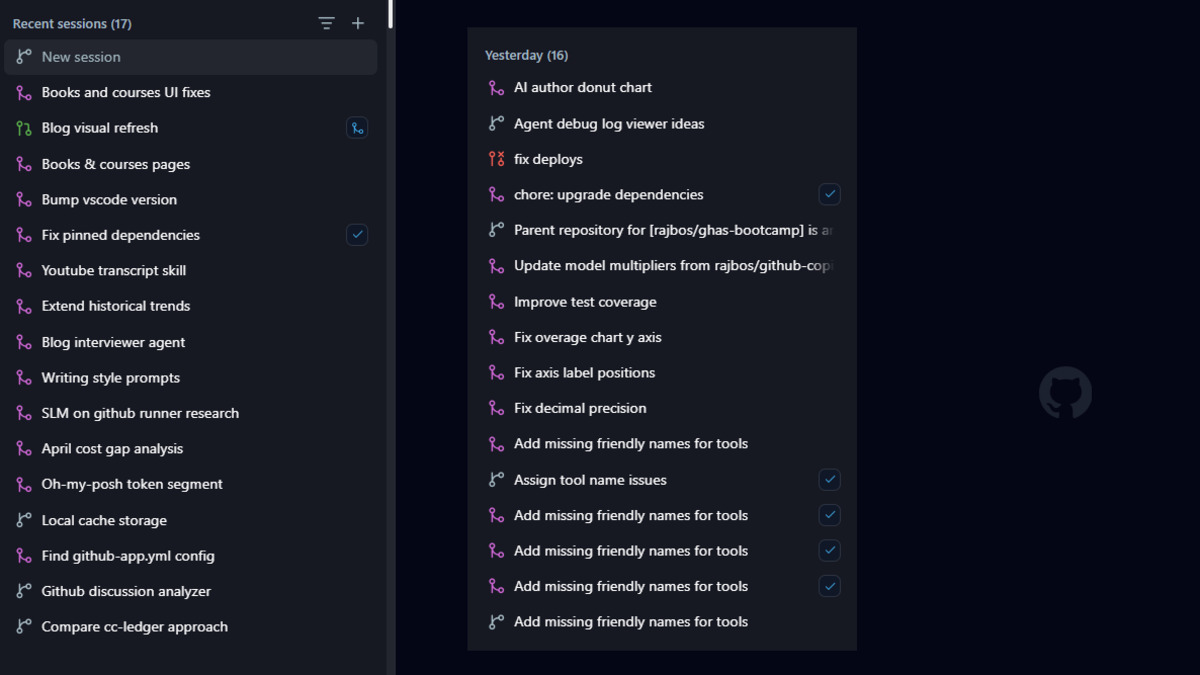 Sessions overview from a DevOps Journal hands-on review, showing multiple concurrent Copilot Desktop sessions each with their own branch and state.
Source: devopsjournal.io
Sessions overview from a DevOps Journal hands-on review, showing multiple concurrent Copilot Desktop sessions each with their own branch and state.
Source: devopsjournal.io
Why Microsoft Made This Call
Rajesh Jha, who leads Experiences + Devices, issued an internal statement that multiple outlets obtained and confirmed:
"When we began offering both Copilot CLI and Claude Code, our goal was to learn quickly, benchmark the tools in real engineering workflows, and understand what best supported our teams. Claude Code was an important part of that learning... Copilot CLI has given us something especially important: a product we can help shape directly with GitHub for Microsoft's repos, workflows, security expectations, and engineering needs."
The core argument is control. Claude Code is an Anthropic product - Microsoft can't adjust how it handles internal repositories, what data it touches, or how it integrates with internal security review processes. Copilot CLI and Copilot Desktop are GitHub products, and Microsoft owns GitHub.
The Fiscal Angle
The June 30 cutoff aligns with the end of Microsoft's fiscal year. Cutting external software licenses at the fiscal close is a standard cost-reduction move, and Windows Central noted plainly that the decision appears "likely driven by financial motives" alongside the stated strategic logic. Both explanations sit comfortably together: the strategy is real, and so is the bill.
Where It Falls Short
Jha's statement calls Claude Code "an important part of that learning" - not a tool that failed. No Microsoft or GitHub communication includes a feature comparison, and no published source provides a technical breakdown of where Copilot Desktop falls short against Claude Code.
What engineers and community discussion do say: Claude Code "became very popular inside Microsoft over the past six months" and was described in internal discussions as being "way out ahead" of alternatives on repository understanding, context handling, and speed. Copilot CLI was described as "largely neglected" all through the same window - even though it was available to the same engineers the entire time.
Non-engineers face the rougher transition. Copilot Desktop's Autopilot and Plan modes are built around code workflows. Designers and PMs who used Claude Code for quick prototypes aren't the primary design target.
Community response to the news has been "notably mixed, with considerable concern and frustration" - mostly engineers who built six months of daily habits around a specific tool and have five weeks to replace them.
The Anthropic-Microsoft Foundry agreement stays in force. Claude is still available via Azure, and it's still selectable in Copilot Desktop's model picker. What engineers are losing isn't access to Claude - it's the Claude Code interface, the context management it provided, and the workflow habits built around it. Those don't port over automatically, and Copilot Desktop's access rolling out the same week the cancellation was announced doesn't leave much runway to find out if they need to.
Sources:

