
Microsoft Picks Up 900 MW Texas Campus OpenAI Dropped
Microsoft signs a deal with Crusoe for a new 900 MW AI factory campus in Abilene, Texas, adjacent to the Stargate site Oracle and OpenAI walked away from three weeks ago.
 7 min read
When Oracle and OpenAI scrapped their plans to expand the Abilene data center from 1.2 GW to 2 GW three weeks ago, a 600 MW gap opened in the US AI compute supply chain. Microsoft just claimed the lot next door.
Key Specs
| Spec | Value |
|---|---|
| New campus capacity | 900 MW |
| Per-building IT load | 336 MW critical |
| Combined Abilene site | 2.1 GW (10 buildings) |
| Power source | 900 MW behind-the-meter generation |
| Cooling | Closed-loop, zero water evaporation |
| Battery backup | MV BESS |
| First building online | Mid-2027 |
Crusoe Energy published the announcement on March 27 via an official press release: a 900 MW AI factory campus purpose-built for Microsoft, on land adjacent to the existing 1.2 GW Stargate site in Abilene, Texas. Bloomberg had first reported Microsoft's interest in the broader Abilene capacity on March 24, citing a 700 MW figure for a separate lease on the existing campus buildings. Thursday's official announcement adds a greenfield development on top of that earlier arrangement.
The two transactions combined push total committed capacity at the Abilene site to 2.1 GW across 10 buildings, making it one of the largest single AI compute concentrations in the US.
The Campus, Component by Component
The press release reads like a standard real estate announcement, but the spec sheet is worth unpacking. Most hyperscale data centers are built to share infrastructure - grid connections, cooling water, power distribution. This campus isn't.
# Microsoft / Crusoe Abilene Campus - Spec Summary
campus:
  total_capacity: 900 MW
  buildings: 2
  per_building_it_load: 336 MW critical

power:
  source: behind-the-meter generation
  generation_capacity: 900 MW
  backup: MV BESS (medium-voltage battery storage)
  grid_dependency: minimal

cooling:
  type: closed-loop liquid
  water_evaporation: none
  climate: West Texas (low humidity)
Power Generation
The generating infrastructure is the headline spec. The new Microsoft campus gets a dedicated 900 MW behind-the-meter generation plant - sized to match the compute load without drawing from the public grid. That's a different approach from the adjacent Stargate campus, which runs off a 350 MW gas-fired plant shared with the existing 1.2 GW of Oracle/OpenAI buildings. Stargate's gas dependency is no secret - Sam Altman acknowledged publicly that "we're burning gas to run this data center."
A medium-voltage battery energy storage system backs the generation, providing a buffer against demand spikes and short interruptions. This is relevant context given recent history: a multi-day winter weather outage at the adjacent Crusoe campus damaged liquid cooling equipment and badly strained the Crusoe-OpenAI relationship, accelerating the Abilene expansion cancellation. The BESS setup won't prevent another winter event, but it does improve the facility's ability to ride through short-duration instability.
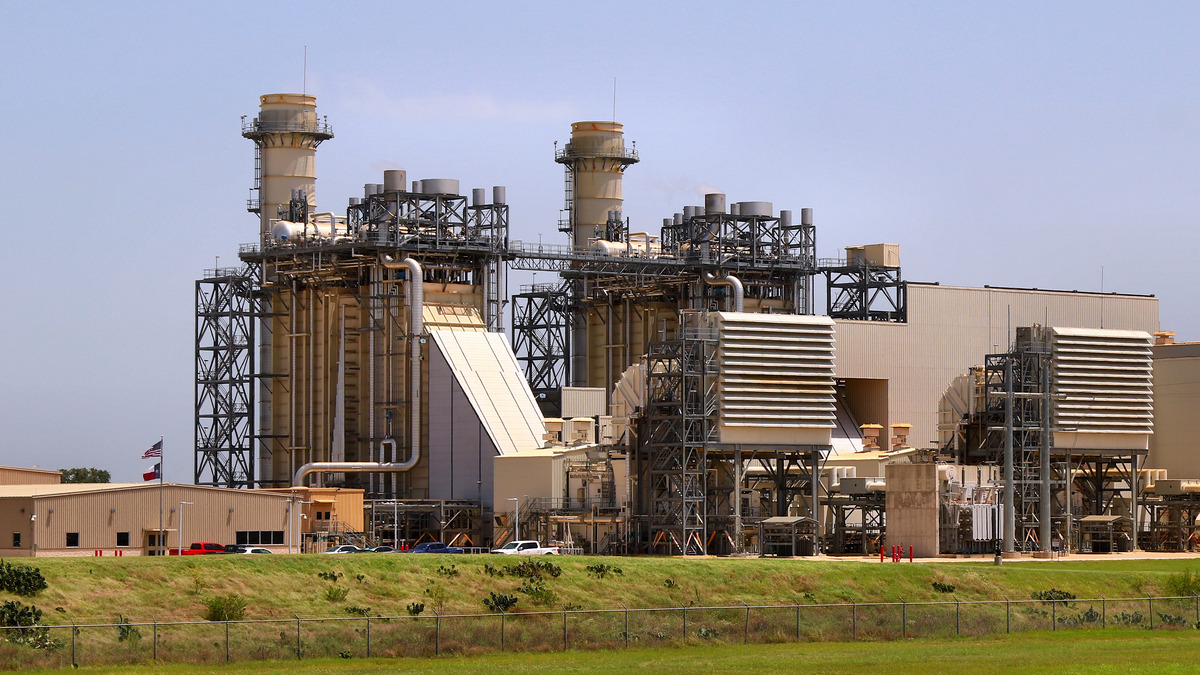 A natural gas power generation facility in Texas, similar in scale to the behind-the-meter plant planned for the Microsoft campus in Abilene.
Source: commons.wikimedia.org
A natural gas power generation facility in Texas, similar in scale to the behind-the-meter plant planned for the Microsoft campus in Abilene.
Source: commons.wikimedia.org
Cooling System
Crusoe is running closed-loop non-evaporative liquid cooling across both buildings. No evaporation means near-zero water consumption - a real constraint in West Texas, where the Abilene area doesn't have the water infrastructure that Pacific Northwest data centers rely on. Crusoe already uses this cooling architecture across the existing eight-building campus, so the local operational knowledge is established. The same team that built and maintains the Stargate cooling systems will be running the Microsoft facility.
Compute Buildings
Two buildings at 336 MW critical IT load each. The "critical IT load" figure is what matters for GPU count estimates - it's the power budget for compute, networking, and storage, excluding cooling and facility overhead. At 336 MW per building, and assuming roughly 700W per H100/H200 GPU, each building could accommodate somewhere around 480,000 GPUs at full density. Those are rough numbers - actual deployments mix GPU types, networking density, and server overhead differently - but they give a sense of scale.
Crusoe built two 100 MW Abilene buildings in under a year during the first Stargate phase. The construction pace on the Microsoft campus is faster and at higher density, but Crusoe has the local supply chain and labor relationships already running.
How Microsoft Got Here
The short version: OpenAI left a gap, and Microsoft walked in.
When the Abilene expansion was dropped in early March, Meta entered talks to take the unoccupied Crusoe capacity. Bloomberg and Data Center Dynamics both reported that Nvidia was brokering those discussions and had deposited $150 million to hold the slot. OpenAI infrastructure lead Sachin Katti confirmed the company had considered expanding the Abilene site further but "chose to put that additional capacity in other locations."
Microsoft, which holds roughly 27% ownership in OpenAI, is now building independent AI compute infrastructure on the adjacent parcel. Fortune characterized this as a sign of how far the two companies have drifted - which isn't wrong, though it's also not new. Microsoft has been building out Azure AI capacity independently of the Stargate arrangement for well over a year. During its most recent quarter, the company signed around $50 billion in data center commitments.
This deal fits that pattern. The Abilene campus expands an existing Microsoft-Crusoe relationship and fills a hole that appeared when Stargate's expansion stalled.
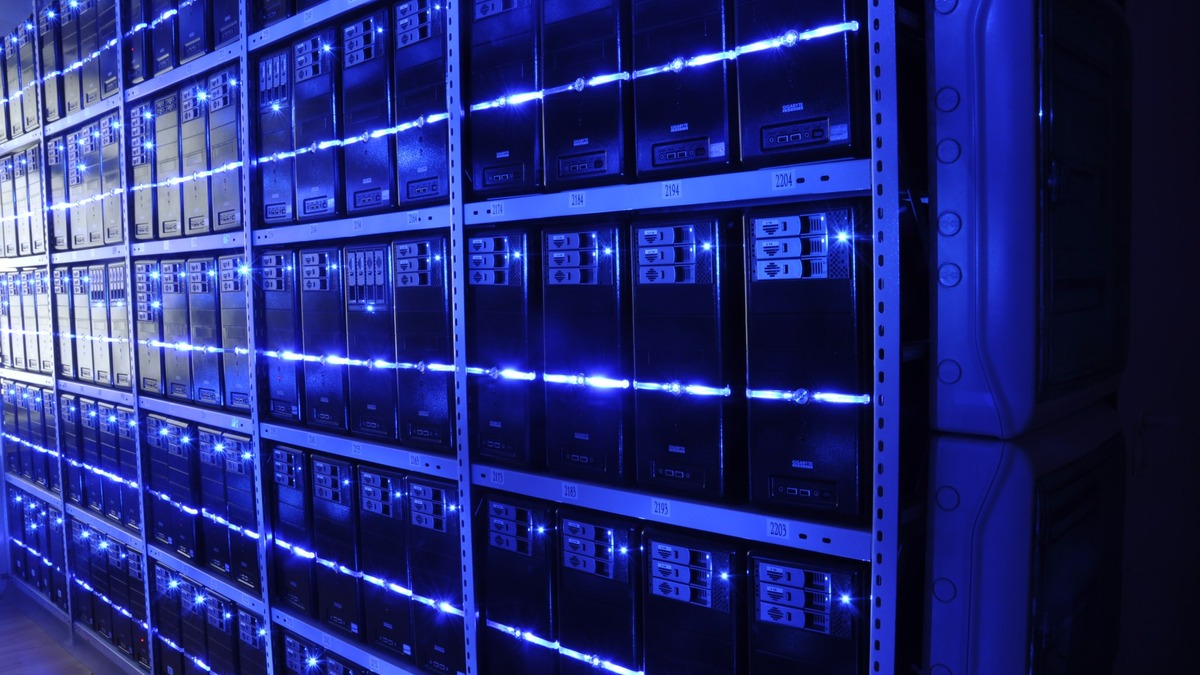 A hyperscale server room. The Microsoft campus in Abilene aims to run GPU-heavy AI training and inference workloads.
Source: commons.wikimedia.org
A hyperscale server room. The Microsoft campus in Abilene aims to run GPU-heavy AI training and inference workloads.
Source: commons.wikimedia.org
Abilene Site Comparison
| New Microsoft Campus | Existing Stargate Campus | |
|---|---|---|
| Total capacity | 900 MW | 1.2 GW |
| Buildings | 2 | 8 |
| Power source | 900 MW behind-the-meter | 350 MW gas-fired shared |
| Cooling | Closed-loop, zero evaporation | Closed-loop, zero evaporation |
| First building online | Mid-2027 | Operational (2025) |
| Operator | Crusoe Energy | Crusoe Energy |
| Primary tenant | Microsoft / Azure | Oracle / OpenAI (Stargate) |
| Financing | Blue Owl + PDI JV ($15B) | Blue Owl + PDI JV ($3.4B phase 1) |
Deployment Timeline
Jan 2025 - Stargate effort announced; OpenAI, Oracle, and SoftBank pledge $500B across multiple US sites
2025 - Crusoe completes two 100 MW buildings in Abilene in under one year for the Stargate phase
Winter 2026 - Multi-day cooling outage caused by severe weather damages liquid cooling equipment, strains the OpenAI-Crusoe relationship
March 7, 2026 - Bloomberg reports Oracle and OpenAI dropped the 600 MW Abilene expansion; Meta enters talks with Nvidia brokering
March 24, 2026 - Bloomberg reports Microsoft agreed to lease around 700 MW at the existing Abilene campus
March 27, 2026 - Crusoe officially announces new 900 MW greenfield campus for Microsoft; combined site total reaches 2.1 GW
Mid-2027 - First Microsoft building at new campus expected to go online
Where It Falls Short
The 900 MW announcement is real, but compute doesn't land until mid-2027 at the earliest. That's 12 to 15 months out in an industry where Nvidia ships a new major architecture roughly every year. Whatever Microsoft deploys in those buildings will be selected, ordered, and delivered across a window that spans at least one generation transition.
The "clean" power story also has an unanswered question. "900 MW behind-the-meter generation" sounds self-contained, but the press release says nothing about fuel source for the new plant. The existing Crusoe campus at Abilene burns natural gas - Altman said so directly. Crusoe has announced sustainable energy commitments in other deployments and highlights the zero-water cooling as an environmental feature, but the carbon profile of a 900 MW gas plant isn't a small line item. If Microsoft's Azure infrastructure team is tracking scope 2 emissions against the company's 2030 carbon-negative target, this campus will need a credible answer.
The financing structure adds a third variable. The existing 1.2 GW Stargate campus was funded through a $3.4 billion Blue Owl Capital and Primary Digital Infrastructure joint venture. The second phase - covering both the expanded Stargate work and now the Microsoft campus - scaled that to a $15 billion arrangement. A $750 million Brookfield credit facility backs Crusoe separately. Fast construction, three distinct financing parties, and a tenant change (from the OpenAI/Oracle anchor to Microsoft) in the middle of the build creates execution risk that a single-party development wouldn't carry.
"As customer demand for AI continues to grow, Microsoft is focused on ensuring access to reliable and responsible infrastructure at scale. Crusoe's Abilene facility reflects the type of large-scale infrastructure that supports next generation AI while contributing long term value to the local community." - Noelle Walsh, President of Cloud Operations & Innovation, Microsoft
"Crusoe is building a new AI factory campus in Abilene, purpose-built for the demands of next-generation AI. By integrating 900 megawatts of new on-site power generation, we will continue building the industrial foundation for American AI - at a velocity the industry has never seen." - Chase Lochmiller, Co-founder and CEO, Crusoe
Sources:

