
Microsoft's Own ToS Labels Copilot Entertainment-Only
Microsoft's Copilot terms call the product 'for entertainment only' - language that sat unnoticed since October 2025 while the company charges enterprise customers up to $30 per user per month.
 5 min read
Microsoft's own terms of service for Copilot contain a clause that has been sitting there since October 24, 2025: "Copilot is for entertainment purposes only. It can make mistakes, and it may not work as intended. Don't rely on Copilot for important advice. Use Copilot at your own risk."
The clause surfaced across tech media on April 2-5, 2026, roughly six months after it was written into the terms.
Claim / Our Take
- What the terms say: Consumer Copilot disclaims all warranties and labels the product "for entertainment only" - language Microsoft now calls "legacy"
- What the sales deck says: Enterprise licenses start at $30/user/month for a tool pitched as core to workplace productivity
- Our take: The disclaimer applies to consumer Copilot, not Microsoft 365 enterprise Copilot - but the contradiction reflects a real product quality problem the adoption numbers confirm
What They Showed
The full clause from Microsoft's Copilot Terms of Use, effective October 24, 2025:
"Copilot is for entertainment purposes only. It can make mistakes, and it may not work as intended. Don't rely on Copilot for important advice. Use Copilot at your own risk."
A second clause appears in all-caps for legal weight: "WE DO NOT MAKE ANY WARRANTY OR REPRESENTATION OF ANY KIND ABOUT COPILOT."
A legal observer quoted by The Next Web compared the disclaimer to "the same one that a psychic uses to avoid getting sued."
Microsoft's marketing moves in the opposite direction. The company has embedded Copilot across Windows 11, Edge, Microsoft 365, and Azure. Satya Nadella described adoption as "becoming a true daily habit." Enterprise licensing is priced at $30/user/month - standard commercial SaaS, not entertainment.
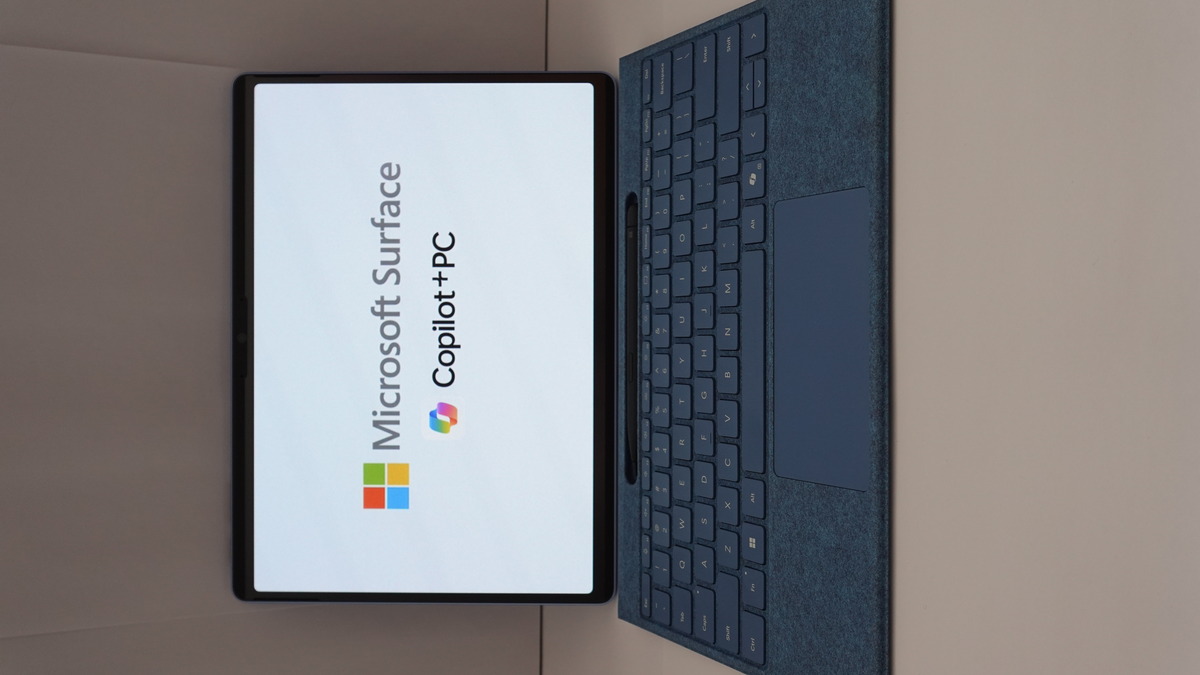 Microsoft Copilot on a Surface device. The consumer product's terms of service disclaim all warranties.
Source: wikimedia.org
Microsoft Copilot on a Surface device. The consumer product's terms of service disclaim all warranties.
Source: wikimedia.org
What We Tried
The terms are public and unambiguous at the link above. The disclaimer isn't buried - it appears in the second paragraph of the document. Microsoft confirmed the text to press, with a spokesperson describing it as "legacy language" that "is no longer reflective of how Copilot is used today and will be altered with our next update."
That response raises a direct question: if the product is enterprise-ready, why did the terms go six months without being updated while the company actively sold paid tiers?
There's a distinction worth getting right. The "entertainment only" clause lives in the consumer-facing individual Copilot terms. Microsoft 365 Copilot - the enterprise product - operates under separate commercial service agreements and is explicitly excluded from the entertainment disclaimer, per The Next Web's reporting. GitHub Copilot, the developer coding tool, runs under its own separate terms entirely.
| Product | Terms Tier | Monthly Price | Entertainment Disclaimer? |
|---|---|---|---|
| Copilot (consumer / free) | Individual ToS | Free | Yes |
| Copilot (consumer / paid) | Individual ToS | ~$20/month | Yes |
| Microsoft 365 Copilot | Commercial | $30/user | No |
| Microsoft 365 Copilot for Business | Commercial | $18/user | No |
| GitHub Copilot Individual | GitHub ToS | $10/month | No |
The Gap
The disclaimer may be scoped to free-tier consumer users, but it didn't appear in a vacuum. Microsoft's own internal sources described some Copilot features as products that "don't really work," according to The Next Web. The adoption numbers support that read.
Of 450 million eligible Microsoft 365 seats, about 15 million converted to paid Copilot subscribers - a 3.3% conversion rate. Among organizations that ran pilots, only 5% expanded to broader deployment. Net Promoter Score fell from -3.5 in July 2025 to -24.1 by September 2025, recovering only partially to -19.8 by January 2026. A score of -24 puts Copilot in territory more commonly occupied by ISP customer service lines than enterprise productivity tools.
The churn data carries the most signal for anyone assessing it as infrastructure: 44.2% of departing users cited distrust as their primary reason for leaving. That isn't a pricing problem or an onboarding problem.
 Microsoft CEO Satya Nadella took direct oversight of AI development as Copilot adoption stalled.
Source: wikimedia.org
Microsoft CEO Satya Nadella took direct oversight of AI development as Copilot adoption stalled.
Source: wikimedia.org
Microsoft has reorganized its Copilot division in response. Nadella took direct oversight of AI development, and the company launched its own MAI model family as part of a broader push to reduce dependence on OpenAI. Whether internal model development changes the end-user reliability picture is an open question.
What Developers Should Read Before Integrating
The "entertainment only" clause catches attention, but the more consequential signal for developers is that Microsoft can't bring its own product quality to the level its commercial positioning implies. Any team integrating Copilot APIs into CI/CD pipelines or production tooling needs to read both the consumer disclaimer and the enterprise SLA independently before treating either as infrastructure-grade.
For context, Cursor 3 ships with no such disclaimers and has been building enterprise contracts on demonstrated productivity results rather than bundled Microsoft 365 renewal cycles.
 Microsoft's consumer Copilot terms include an all-caps disclaimer of all warranties.
Source: pexels.com
Microsoft's consumer Copilot terms include an all-caps disclaimer of all warranties.
Source: pexels.com
The social media version of this story - "Microsoft calls Copilot entertainment" - collapses the consumer/enterprise distinction in ways the facts don't support. Enterprise customers on commercial agreements aren't subject to the same terms. That distinction matters legally, even if the underlying adoption trajectory tells the same story regardless of which document you read.
Verdict: The consumer disclaimer is embarrassing, the enterprise terms are different, and neither fact changes the underlying numbers. A -24 NPS and a 3.3% conversion rate from a half-billion eligible users aren't legal-language problems. If Copilot appears on your team's toolchain evaluation shortlist, the distrust-driven churn figure is the number worth knowing - not the boilerplate Microsoft will quietly update in the next revision cycle.
Sources:
- Microsoft Copilot Terms of Use - primary source, effective October 24, 2025
- TechCrunch - Copilot Is for Entertainment Purposes Only
- The Next Web - Microsoft Copilot Entertainment Only Disclaimer
- Tom's Hardware - Microsoft Says Copilot Is for Entertainment Purposes Only
- XDA-Developers - Microsoft Quietly Buried Entertainment-Only in Copilot Terms

