
Microsoft AI Revenue Hits $37B as Copilot Tops 20M Seats
Microsoft's Q3 FY2026 earnings show its AI business running at $37 billion annually - up 123 percent - while Copilot enterprise seats hit 20 million, demolishing the low-adoption narrative.
 Updated
6 min read
Updated
6 min read
Microsoft's AI business crossed $37 billion in annualized revenue last quarter - up 123 percent year-over-year - in Q3 results that put numbers on two years of adoption claims.
TL;DR
- $37B AI annual revenue run rate, up 123% year-over-year
- 20 million paid Microsoft 365 Copilot enterprise seats; seat adds up 250% year-over-year
- 40% Azure growth - beat management guidance of 37-38%
- $82.9B total Q3 revenue, beating Wall Street's $81.39B estimate
- $190B planned 2026 capex, up 61% - the figure that sent the stock lower despite the beat
CEO Satya Nadella called it "another record quarter" for Copilot seat adds. Analysts had spent most of 2025 questioning whether those seats represented real deployments or shelf licenses. The Q3 data answers that directly.
"Weekly engagement is now at the same level as Outlook, as more users make Copilot a habit," Nadella said on the call.
The Full Scorecard
| Metric | Q3 FY2026 | Change |
|---|---|---|
| Total revenue | $82.9B | +18% YoY |
| Microsoft Cloud revenue | $54.5B | +29% YoY |
| Azure growth | 40% | Beat 37-38% guidance |
| AI business run rate | $37B ARR | +123% YoY |
| Copilot paid seats | 20M | +250% seat adds YoY |
| Copilot queries per user | n/a | +~20% QoQ |
| New contract signings | surged | +228% |
| Q4 revenue guidance | $86.7-87.8B | Above $86.1B consensus |
| 2026 capex plan | $190B | +61% vs 2025 |
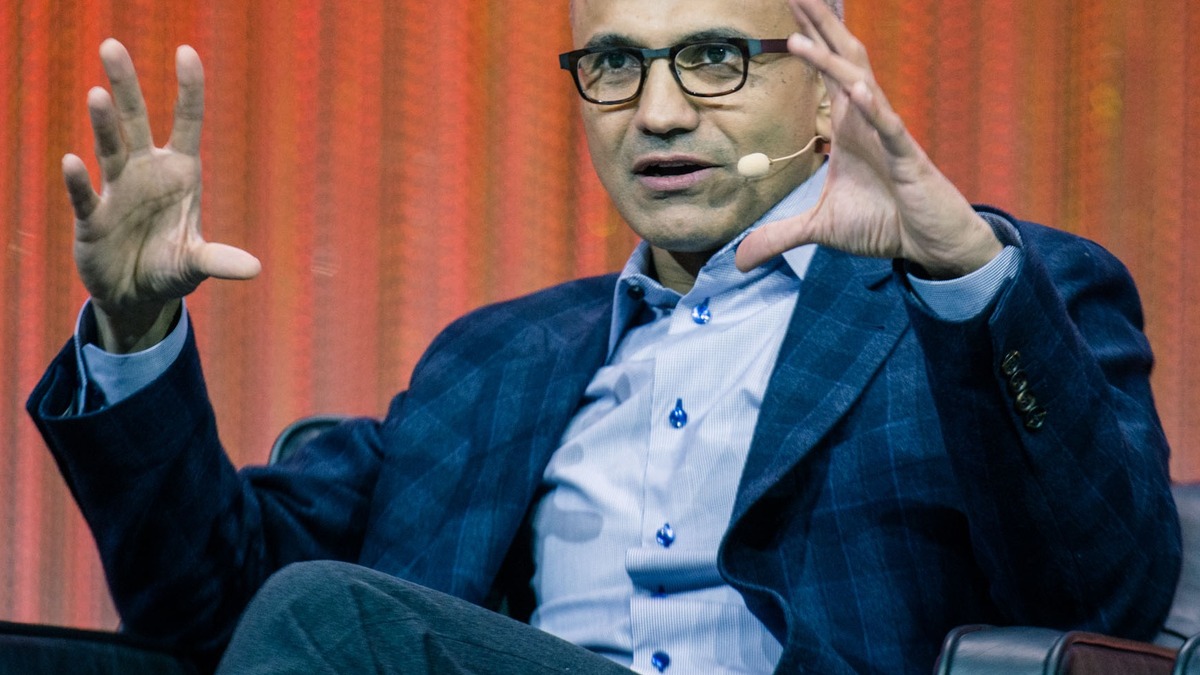 Microsoft CEO Satya Nadella on the Q3 FY2026 earnings call: 250 percent year-over-year Copilot seat add growth.
Source: wikimedia.org
Microsoft CEO Satya Nadella on the Q3 FY2026 earnings call: 250 percent year-over-year Copilot seat add growth.
Source: wikimedia.org
What the Numbers Say
Copilot adoption is no longer a story about laggards
The adoption-skeptic case had substance for a while. Early Copilot rollouts drew complaints about hallucinations in Office contexts and lukewarm engagement data from enterprise pilots. Twenty million paid seats, growing 33 percent in three months alone, is a different story.
Companies with more than 50,000 seats have quadrupled in number. Accenture holds 740,000 seats - what Nadella called the largest single Copilot deployment to date. Bayer, Johnson & Johnson, Mercedes, and Roche each committed to more than 90,000 seats this quarter. These aren't pilot programs; they're infrastructure-scale commitments.
Morgan Stanley analyst Keith Weiss called the Copilot figures "super impressive and way ahead of most people's expectations," directly contradicting the low-adoption narrative that circulated through most of last year.
Part of what drove the shift is the product itself. Agent mode became the default experience across Word, Excel, and PowerPoint last week. After Microsoft opened Copilot to models beyond its own stack - including Anthropic's Claude with intelligent auto-routing - enterprise IT buyers got a clearer case for standardizing on it rather than evaluating each AI vendor separately.
Azure is growing faster than its own guidance
Azure grew 40 percent in constant currency against management guidance of 37-38 percent. CFO Amy Hood guided Q4 at 39-40 percent, again above the Street consensus of 37 percent. Microsoft Cloud revenue hit $54.5 billion for the quarter.
The capacity investment behind those numbers is substantial. Microsoft added another gigawatt of data center capacity in Q3 and says it's on track to double its total infrastructure footprint within two years.
The contracted-revenue picture reinforces the story. Remaining performance obligations excluding the OpenAI relationship are growing at 28 percent, while new contract signings surged 228 percent. Enterprises aren't trying Azure AI on a month-to-month basis; they're signing long commitments.
 Microsoft added a gigawatt of data center capacity in Q3 FY2026 and is building toward doubling its total footprint within two years.
Source: unsplash.com
Microsoft added a gigawatt of data center capacity in Q3 FY2026 and is building toward doubling its total footprint within two years.
Source: unsplash.com
Consumption pricing is taking over from seat licensing
Hood described a business model shift underway: from pure seat licensing toward "per-user and usage" pricing. That distinction matters for reading the $37 billion figure from now on.
Seat counts will keep growing, but usage revenue - billed per token, per task, per model call - is the faster-moving portion of the AI run rate. The $37 billion already includes inference revenue from model builders running workloads on Azure, not just Copilot seat fees. Agent mode going default across the Office suite is the operational expression of this shift: when users are running agents rather than chatting with a sidebar, per-task billing creates substantially more revenue per active seat than a flat license.
The decision to launch three first-party AI models - MAI-Transcribe-1, MAI-Voice-1, and MAI-Image-2 - fits the same pattern. Cost control on inference inputs matters more when usage is the primary revenue driver.
What the Numbers Don't Say
The stock fell after the results, even though the revenue beat and Azure outperformance were both genuine.
"Our AI business surpassed $37 billion ARR, up 123%. We are at the beginning of one of the most consequential platform shifts as agents proliferate." - Satya Nadella, CEO, Microsoft
The problem is the denominator. Microsoft plans $190 billion in capital expenditures for calendar 2026, up 61 percent from 2025. About $25 billion of that increase comes from higher component prices - memory and specialized AI silicon - rather than additional physical capacity. Hood's Q4 operating margin guidance of 44 percent is below Q3's 46.3 percent and below the 44.6 percent analyst consensus.
The market's reaction says the AI run rate is real, but investors want to see margin hold before declaring the capex justified.
 Microsoft shares fell after the Q3 report despite the revenue beat, with investors focused on the $190B capex forecast for 2026.
Source: unsplash.com
Microsoft shares fell after the Q3 report despite the revenue beat, with investors focused on the $190B capex forecast for 2026.
Source: unsplash.com
A second caveat is the $37 billion figure itself. It covers all AI revenue across Azure: inference for model builders, Microsoft's own AI tools, third-party workloads. It isn't a Copilot-only number. How the individual components are trending isn't broken out in the earnings release.
Third: the Outlook comparison for Copilot engagement is a depth claim, not a breadth claim. Outlook usage is email - a daily-minimum activity with basically no variance in active users. Copilot usage is more heterogeneous. Microsoft doesn't yet publish per-seat utilization rates or task completion counts in a way that separates daily power users from people who opened Word, saw Copilot, and closed it.
So What?
One debate is closed: enterprise buyers are paying for Copilot at scale. Twenty million seats, 740,000 at a single firm, new contract signings up 228 percent - the adoption story isn't ambiguous anymore.
The deal Microsoft struck with OpenAI in April - dropping revenue-share payments and exclusive IP rights in exchange for continued early model access - now looks like a move made from a position of financial strength. Microsoft doesn't need OpenAI exclusive to Azure when Azure is growing 40 percent on its own.
What remains unresolved is the $190 billion capex bill. Hood's Q4 guidance implies $86.7-87.8 billion in revenue. If Azure sustains above-guidance growth into Q4, the spending looks justified in retrospect. If growth decelerates toward the 37 percent consensus, the margin compression becomes the dominant story.
That's the only number that still needs answering.
Sources:
- Microsoft Q3 FY2026 Earnings Call Transcript - The Motley Fool
- Microsoft says it has over 20M paid Copilot users, and they really are using it - TechCrunch
- Microsoft Azure Grows 40% as Copilot Reaches 20M Users - WinBuzzer
- Microsoft Earnings: AI Business Hits $37Bn Run Rate - UC Today
- Microsoft Copilot Reaches 20 Million Paid Enterprise Seats - Analytics Insight
Last updated

