
Meta Opens WhatsApp AI API Under EU Pressure - For a Price
Meta reversed its WhatsApp ban on rival AI chatbots in Europe and Brazil, but now charges rivals up to €0.13 per message - pricing critics call a disguised ban.
 7 min read
Meta has reopened the WhatsApp Business API to third-party AI chatbot providers in Europe - but it's charging per message, a fee structure rivals say makes the economics nearly as hostile as the outright ban it replaced.
Key Facts
| Detail | Value |
|---|---|
| Effective date | March 5, 2026 |
| Initial markets | Europe (March 5), Brazil (March 6) |
| Fee per non-template message | €0.049-€0.130 |
| Access duration | 12 months |
| Original API ban date | January 15, 2026 |
| Regulatory trigger | EU Digital Markets Act probe |
| WhatsApp monthly active users | 2+ billion |
The January Lockout
Meta Closed the Door in October 2025
In October 2025, Meta updated the WhatsApp Business Solution Terms to bar general-purpose AI providers from using the WhatsApp Business API to run their chatbots on the platform. The policy took effect on January 15, 2026. From that date, the only AI assistant available inside WhatsApp was Meta's own Meta AI.
ChatGPT, Perplexity, and dozens of smaller AI assistants that had built distribution on WhatsApp - one of the most-used communication apps on the planet - were cut off overnight. Business customers using AI bots for customer service or scheduling weren't affected, since the ban targeted general-purpose AI assistants rather than task-specific automation.
Meta's stated reason was infrastructure. The company said AI chatbot traffic placed an unusual support burden on the platform because of sheer message volume and the non-standard nature of the interactions. The unstated reason was more obvious: letting OpenAI and Google reach 2+ billion WhatsApp users for free handed competitors a massive distribution channel that bypassed Meta's own monetization plans.
 WhatsApp has more than 2 billion monthly active users, making it one of the most valuable distribution channels for consumer AI products.
The EC Pushes Back
The European Commission didn't wait long. By February 2026, it had notified Meta that it intended to impose interim measures to stop the ban from remaining in force - an unusual and aggressive move under Digital Markets Act enforcement, typically reserved for situations where irreversible competitive harm is occurring in real time.
The Commission's antitrust investigation framed the core concern as self-preferencing: Meta giving its own Meta AI product exclusive access to a designated gatekeeper platform while blocking all competitors. Under the DMA, gatekeepers like WhatsApp are prohibited from treating their own services more favorably than equivalent third-party services.
The Reversal - What Changed and What Did Not
New API Access Terms
On March 5, 2026, Meta announced it would restore access to the WhatsApp Business API for general-purpose AI chatbot providers in Europe. The move is framed as a 12-month pilot to support the Commission's "regulatory process" - language that makes clear this is a compliance concession, not a change of strategy.
There's a catch: every back-and-forth message in a chatbot conversation now carries a per-message fee.
What Counts as a Billable Message
The fee applies specifically to "non-template messages" - the conversational turn-by-turn exchanges that make up a typical AI assistant interaction. Template messages, which are pre-approved outbound notifications used for delivery updates or appointment reminders, are not included.
In practice, almost every meaningful AI chatbot interaction generates non-template messages. A user asking a question gets a non-template response. They follow up; another non-template message. The meter runs from the first word.
Meta charges at different rates across European countries, ranging from roughly €0.049 to €0.130 per message depending on the market.
Brazil Follows Europe in 24 Hours
One day later, on March 6, Meta announced the same fee-based access for Brazil - one of WhatsApp's largest markets globally. The speed of the expansion suggests the fee model, not geography, is the actual policy. Brazil didn't face the same DMA obligations as Europe, suggesting Meta is choosing to roll this out broadly rather than limiting it to jurisdictions where regulatory pressure exists.
What Developers Are Paying
At the top rate of €0.130 per non-template message, the math gets steep quickly.
| Scale | Daily messages | Daily cost | Monthly cost |
|---|---|---|---|
| Small deployment | 500 | €65 | ~€2,000 |
| Mid-tier product | 5,000 | €650 | ~€20,000 |
| Large AI assistant | 50,000 | €6,500 | ~€200,000 |
| Enterprise scale | 500,000 | €65,000 | ~€2,000,000 |
For comparison, WhatsApp Business API conversations - the per-24-hour session model used for customer service bots - cost roughly €0.028-€0.080 per session in European markets under the existing pricing scheme, where a "session" can include dozens of messages. The new per-message pricing for AI providers is a distinct and notably more expensive category.
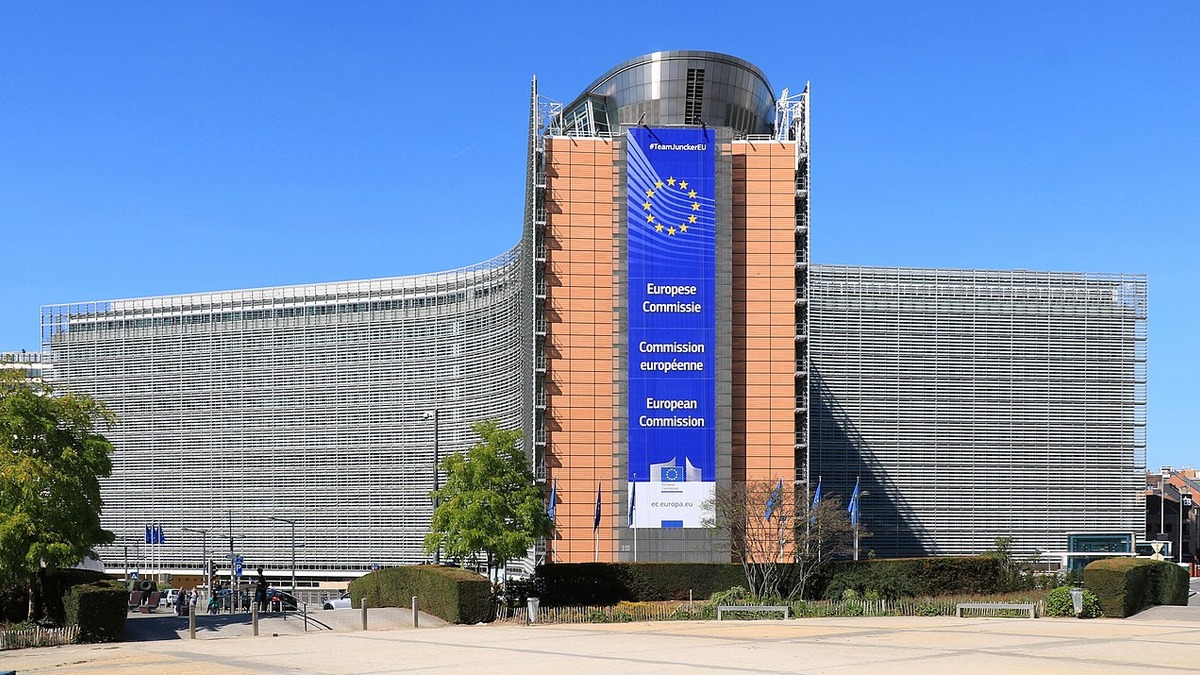 The European Commission's Berlaymont headquarters in Brussels, where DMA enforcement against Meta's WhatsApp policy was launched.
The Self-Preferencing Problem
The fee structure leaves a competitive asymmetry in place that critics argue the DMA was designed to prevent. Meta AI, integrated directly into WhatsApp, continues to operate without per-message charges. Third-party AI providers must now pay to compete on the same platform.
Marvin von Hagen, CEO of The Interaction Company - which had filed complaints with EU and Italian regulators over the original ban - was direct in his assessment: "The company is now introducing vexatious pricing for AI providers that makes it just as impossible to operate on WhatsApp as the outright ban did."
The European Commission hasn't closed its investigation. Opening interim measures proceedings is one step; the underlying antitrust case about whether the fee structure itself constitutes a DMA violation is a separate track that remains open. The Commission can still find that charging competitors a per-message toll while exempting its own service crosses the line on self-preferencing, even if the door is technically ajar.
This story connects to broader questions about how dominant platforms respond to interoperability mandates. As we noted in our piece on Apple partnering with Google to power Siri, the 2026 AI landscape is increasingly shaped by regulatory pressure forcing platform integrations that companies would not make voluntarily. The terms of those integrations - who pays, how much, and whether the pricing is set to foreclose rather than enable - are becoming the next battleground.
Developers building AI products on messaging infrastructure should also watch this space in light of the best AI agent frameworks in 2026, where WhatsApp distribution has been a key growth vector for conversational agents in Europe and Latin America.
What To Watch
The 12-Month Clock
The current access window expires in early 2027. Meta has not committed to renewing it, extending it to other markets, or locking in the pricing. Companies that build distribution on WhatsApp over the next year face an uncertain renewal environment. Any product that depends on WhatsApp reach should treat this period as a pilot with unclear terms of continuation.
The Commission's Next Move
The EC investigation is ongoing. The fee structure will likely become a central exhibit in how regulators assess whether Meta has truly complied with DMA obligations or structured access to be nominally open while economically hostile. If the Commission rules the pricing is exclusionary, Meta could face fines and an order to restructure the commercial terms.
Other Platforms Watching Closely
Meta's move establishes a precedent: if a platform is forced to open by regulation, it can charge for that access. Apple and Google operate comparable gatekeeper platforms under the DMA and will be watching closely to see whether this fee-for-compliance model survives scrutiny. If it does, it creates a template for how big tech responds to interoperability mandates across the EU and beyond.
Sources:
- Meta will allow rival AI chatbots on WhatsApp in Europe, but for a fee - TechCrunch
- After Europe, WhatsApp will let rival AI companies offer chatbots in Brazil - TechCrunch
- WhatsApp changes its terms to bar general-purpose chatbots from its platform - TechCrunch
- Commission opens antitrust investigation into Meta's new policy - European Commission
- EU vs. Meta: possible measures in response to WhatsApp's restrictions on AI providers - EUNews
- Meta Opens WhatsApp to Rival AI Chatbots - For a Price - TechBuzz
