
Meta Earns Record $56B, Cuts 8K Jobs to Fund $145B AI
Meta posted a record Q1 2026 revenue of $56.3 billion on April 29, then announced 8,000 layoffs and raised its AI infrastructure budget to $145 billion - sending the stock down 7% despite the record earnings.
 6 min read
Mark Zuckerberg's company delivered the biggest revenue quarter in its history on April 29, then within hours announced it was cutting 8,000 jobs and raising its AI infrastructure budget to $145 billion. The stock fell roughly 7% in after-hours trading. Record earnings, workforce reduction, and investor concern all arrived in the same session.
TL;DR
- $56.3 billion in Q1 2026 revenue, up 33% year-over-year, beating the $55.5 billion analyst consensus
- 3.56 billion daily active people in March 2026 - the first sequential decline since Meta began reporting unified family metrics, missing the 3.62 billion estimate
- $125 to $145 billion in full-year capital expenditure guidance, raised from a prior range of $115 to $135 billion
- 8,000 jobs cut effective May 20 - roughly 10% of Meta's 77,986-person workforce - with more reductions planned for the second half of 2026
- -7% after-hours stock movement despite record earnings, reflecting investor skepticism about AI capex returns
The Core Dataset
Meta's Q1 2026 results in a single table:
| Metric | Q1 2025 | Q1 2026 | Change |
|---|---|---|---|
| Revenue | $42.3B | $56.3B | +33% |
| Adj. Net Income | $16.6B | $18.7B | +12% |
| Operating Income | - | $22.9B | +30% |
| Ad impressions | - | - | +19% |
| Avg. Price per ad | - | - | +12% |
| Daily Active People | ~3.4B | 3.56B | +4% YoY |
| 2026 Capex guidance | $115-135B (prev.) | $125-145B | Raised |
| Headcount | - | 77,986 | -8,000 planned |
The topline is unambiguous: ad revenue growing at 33% annually is a strong result for a company of this size. The complications sit below.
 Zuckerberg at a September 2025 technology leadership event in Washington D.C., months before the Q1 2026 earnings announcement.
Source: commons.wikimedia.org
Zuckerberg at a September 2025 technology leadership event in Washington D.C., months before the Q1 2026 earnings announcement.
Source: commons.wikimedia.org
What the Numbers Say
The Ad Machine Is Working - for Now
Meta's core business performed well. Ad impressions climbed 19% year-over-year. Average price per ad rose 12%. Both moves at once - volume and price increasing together - is the signal advertisers and analysts watch for, and Meta delivered it cleanly.
The real question isn't whether advertising works. It clearly does. The question is whether ad revenue growing at 33% annually can indefinitely sustain capital expenditure that'll reach, at the top of guidance, $145 billion in a single calendar year.
How Meta's Bet Compares to Its Peers
Meta isn't alone in the infrastructure spending race, but its position is structurally different. Amazon, Microsoft, and Alphabet are all spending comparable amounts on AI infrastructure:
| Company | 2026 Capex Guidance | Revenue Source |
|---|---|---|
| Amazon | ~$200B | Cloud (AWS) + internal |
| Microsoft | $190B | Cloud (Azure) + internal |
| Alphabet | $180-190B | Cloud + internal |
| Meta | $125-145B | Internal only |
Amazon, Microsoft, and Alphabet sell cloud capacity to external customers. When they raise capex, analysts can model the revenue payback - Azure growing 30% quarterly is a concrete data point. Meta is building infrastructure completely for its own apps and advertising platform. The payback shows up in ad pricing and user retention, both of which take multiple quarters to surface and are harder to attribute directly to any specific infrastructure investment.
Alphabet shares rose on its Q1 2026 earnings despite a comparable capex guidance increase. Meta's fell 7%. The difference in investor response reflects that difference in payback visibility.
The Workforce Equation
Zuckerberg was unusually direct about the trade-off at a company town hall following the earnings call.
"We basically have two major cost centers in the company: compute infrastructure and people-oriented things. With more capital flowing toward AI hardware, there is less available for headcount."
The 8,000 layoffs due May 20 follow an earlier round announced in March 2026, when Meta signaled it'd cut up to 16,000 positions targeting middle management and teams without a clear AI mandate. This round is broader and explicitly framed as a budget reallocation rather than a performance action.
More reductions are planned for the second half of 2026. Zuckerberg has said the company can't rule out further headcount reductions as long as compute demand remains insatiable.
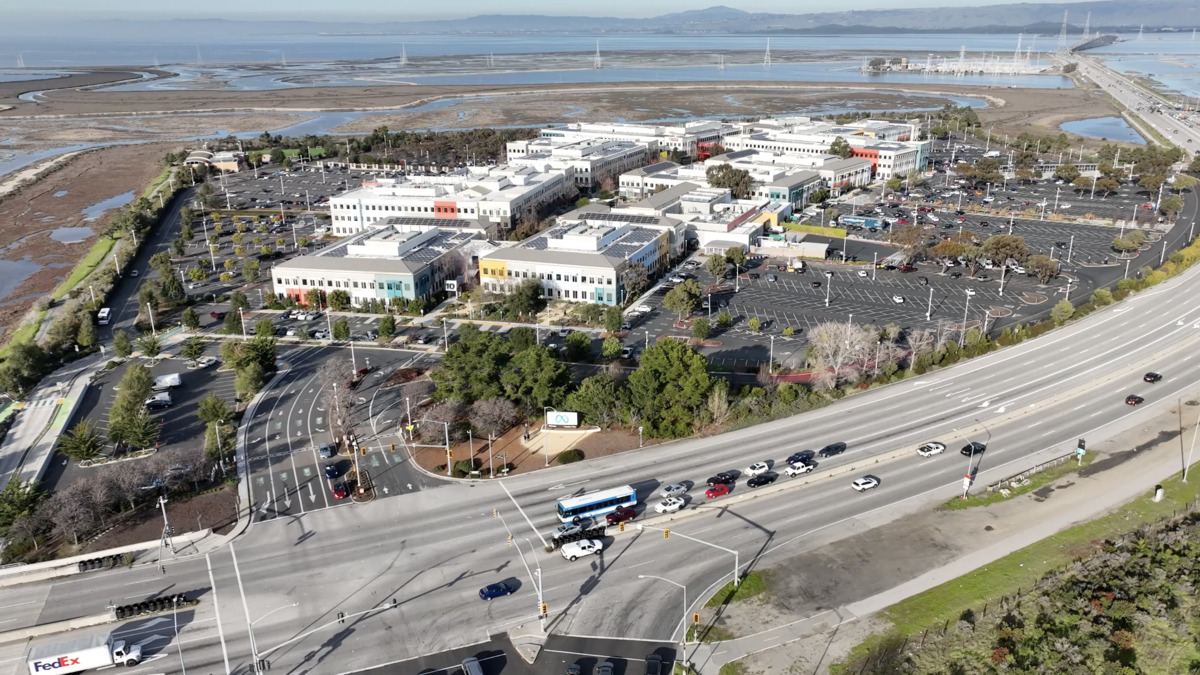 Meta's Q1 earnings reflected record growth across its ad business, but the user base posted its first sequential quarterly decline.
Source: commons.wikimedia.org
Meta's Q1 earnings reflected record growth across its ad business, but the user base posted its first sequential quarterly decline.
Source: commons.wikimedia.org
What the Numbers Don't Say
The User Decline Explanation Is Convenient
Meta's daily active people count fell to 3.56 billion in March 2026, a sequential decline from Q4 2025 - the first time since the company began reporting its family of apps (Facebook, Instagram, WhatsApp, Messenger) as a unified metric. The result missed analyst expectations of 3.62 billion by 60 million users.
The company attributed the drop to two external factors: internet disruptions stemming from the Iran conflict, and Russia's restrictions on WhatsApp. Zuckerberg stated that absent those factors, daily active users would have grown quarter-over-quarter.
That explanation may hold. It may also be the kind of external attribution that sounds reasonable once and becomes awkward if user growth stays soft in later quarters. Meta hasn't provided a mechanism - a specific AI feature, a product change, a market expansion - that would clearly reverse the trend if the geopolitical disruptions persist.
The Headline Net Income Is Inflated
Reported net income of $26.773 billion - up 61% year-over-year - led most coverage. That figure includes an $8.03 billion one-time tax benefit tied to Trump administration tax reform legislation. Strip it out and adjusted net income was $18.743 billion, a 12% increase from Q1 2025's $16.644 billion. Growth, but not 61% growth. The framing in Meta's earnings release did not emphasize this distinction.
The Capex Returns Are Unspecified
Zuckerberg said on the earnings call: "We're on track to deliver personal superintelligence to billions of people."
Meta has spoken publicly about deploying AI for internal software engineering, improving its recommendation systems, and building AI assistants across its apps. The company closed access to its frontier AI models in early 2026, a shift from its prior open-source posture, suggesting it views frontier AI as a competitive asset rather than a public good.
None of this comes with a timeline or a revenue model. At $145 billion in annual infrastructure spending, the missing numbers matter.
 Meta's data center build-out is accelerating, but the company hasn't disclosed specific AI revenue timelines to justify the scale.
Source: commons.wikimedia.org
Meta's data center build-out is accelerating, but the company hasn't disclosed specific AI revenue timelines to justify the scale.
Source: commons.wikimedia.org
So What?
The ad business is growing. The infrastructure commitment is real, and larger than Bridgewater warned the industry would sustain just months ago. Meta is now explicitly trading headcount for compute at a ratio Zuckerberg has put on the record. If AI-driven improvements to ad targeting and user retention show up in Q3 or Q4 2026 results, the layoffs and capex spike will be reframed as a smart pivot. If they don't, Meta faces its next earnings call with a smaller workforce, a higher cost base, and a user growth story that'll need better explanation than geopolitical disruptions.
The next quarterly report is due in late July. That's when the numbers will either start justifying this bet or start raising harder questions about it.
Sources:
- Meta Q1 2026: $145B AI Spending, Shares Fall - BM Magazine
- Meta Q1 2026: Record Revenue, First User Decline, 8K Layoffs - The Next Web
- Zuckerberg Links AI Spending Surge to Looming 8,000 Layoffs - MSN
- Big Tech Q1 2026 Earnings: $650B AI Capex and Compute Constraints - The Next Web
- Big Tech AI Capex Frenzy: Meta, Alphabet Lead 2026 Spend - HeyGoTrade
- Mark Zuckerberg Says Meta Is Cutting 8,000 Jobs to Pay for AI Infrastructure - Tom's Hardware

