
Meta Open-Sources Muse Glimmer for Local AI Agents
Meta released Muse Glimmer, a 30B open-weight model distilled from Muse Spark that runs on a single consumer GPU, reversing its April pivot toward closed frontier models.
 5 min read
Meta shipped a 30-billion-parameter model today under Apache 2.0 that runs on a single desktop GPU, and it did so four months after telling everyone it was done open-sourcing frontier-tier work. Muse Glimmer landed on Hugging Face this morning with full weights, GGUF quantizations, and an ExecuTorch build for on-device deployment. Mark Zuckerberg framed the release on X as a renewed commitment to open models, paired with a longer essay arguing that US policy needs to get out of the way before Chinese labs take over the open-weight race.
Key Specs
| Spec | Value |
|---|---|
| Parameters | ~29.6B (incl. 1.8B vision encoder) |
| Architecture | Dense transformer, 52 layers |
| Context Window | 131,072+ tokens |
| License | Apache 2.0 |
| Hardware | Single consumer GPU, 24-32GB envelope |
| Quantized Size | Under 20GB (4-bit) |
| Availability | Hugging Face (meta-models/Muse-Glimmer-30B) |
From Spark to Glimmer
Muse Glimmer isn't a from-scratch model. It's a distillation of Muse Spark, Meta's proprietary frontier model, compressed down through policy distillation and reinforcement learning until it fits on hardware a developer actually owns. Meta calls it "built for always-on local agents," and the architecture backs that framing up: a dedicated perception encoder handles interleaved text and images, so the model can read a screenshot or a chart without a separate vision pipeline bolted on.
The Architecture Underneath
The transformer uses 52 layers at a 6,656 hidden dimension, with a repeating local-local-local-global attention pattern and a 2,048-token sliding window. Attention runs 32 query heads against just 2 key-value heads, a 16:1 GQA ratio that keeps the KV cache small enough to leave memory for everything else competing for space on a consumer card. None of this is exotic. It's a tuned, conventional dense architecture, and that's part of the point: Meta wants this running today, on hardware that already exists.
Fitting on a Single Card
Full precision needs 55GB or more, well past what any single consumer GPU offers. The 4-bit quantized build shrinks the language model itself to under 20GB, leaving room for the KV cache, the vision encoder, and Meta's DFlash speculative decoder to run together inside a 24-32GB budget. Meta verified the setup on an RTX 5090 and on Apple's M5 Max and M4 Max chips, with DFlash delivering a 3.1x decode speedup on the RTX 5090 and 1.5-1.8x on Apple Silicon.
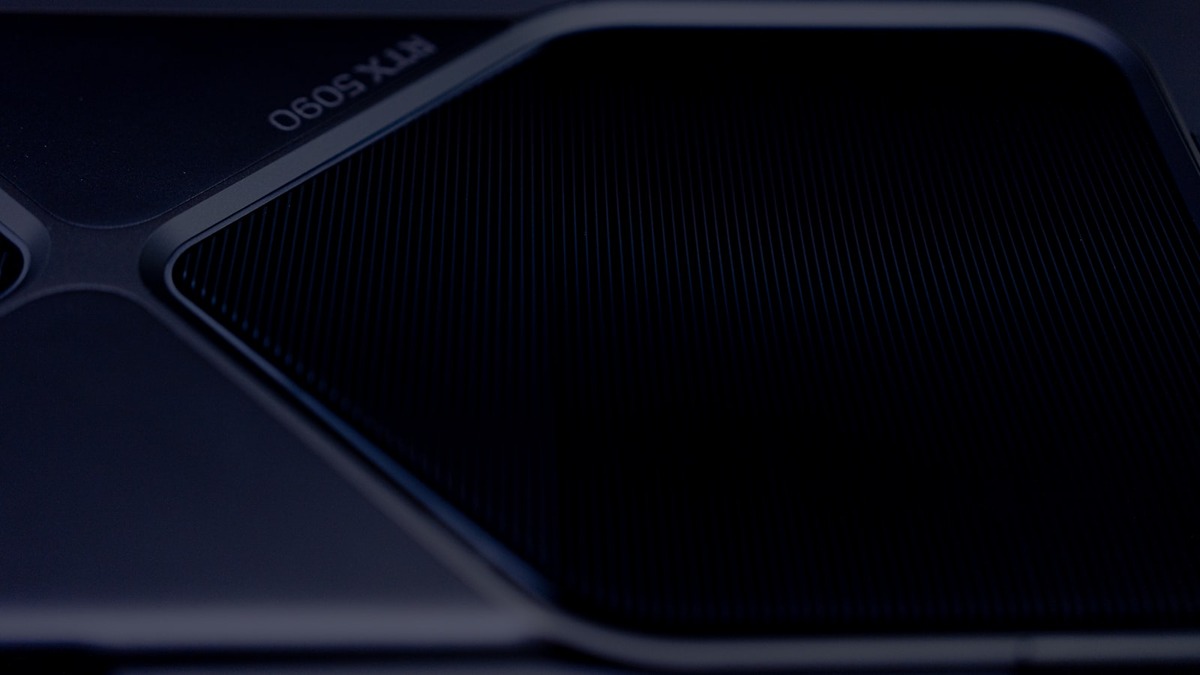 Meta verified Muse Glimmer's quantized build on NVIDIA's RTX 5090 and on Apple's M5 Max and M4 Max chips.
Source: unsplash.com
Meta verified Muse Glimmer's quantized build on NVIDIA's RTX 5090 and on Apple's M5 Max and M4 Max chips.
Source: unsplash.com
How It Stacks Up
Meta positions Muse Glimmer against Gemma 4 31B and Qwen3.6-27B, the two open-weight models closest to it in size. The numbers don't hand Glimmer a clean win, but they put it in the conversation.
| Benchmark | Muse Glimmer 30B | Gemma 4 31B | Qwen3.6-27B |
|---|---|---|---|
| GPQA Diamond | 83.5% | 84.3% | 87.8% |
| AIME 2026 | 94.7% | 89.2% | 94.1% |
| SWE-Bench Verified | 76.0% | Not reported | 77.2% |
| SWE-Bench Pro | 51.2% | Not reported | 53.5% |
| MCP Atlas (agentic) | 75.5% | Not reported | Not reported |
Qwen3.6-27B still edges it on raw knowledge and coding benchmarks despite having fewer parameters, and Gemma 4 31B holds a small lead on GPQA Diamond. Glimmer's actual edge shows up on AIME 2026 math and on MCP Atlas, the agentic tool-use benchmark where Meta doesn't have a direct competitor number to compare against. That's consistent with how Meta built it: distilled specifically for tool use, long-horizon tasks, and failure recovery rather than tuned to top a leaderboard across the board.
The Policy Subtext
The technical release didn't arrive alone. Zuckerberg's essay, titled "The Future Is for Everyone," argues against what he calls an "inherently problematic" push toward concentrating AI development in a handful of closed labs, and warns that "foreign labs currently hold several advantages" because American developers face more restrictions on training data. He wants that friction reduced before, in his framing, Chinese open-weight models pull ahead for good.
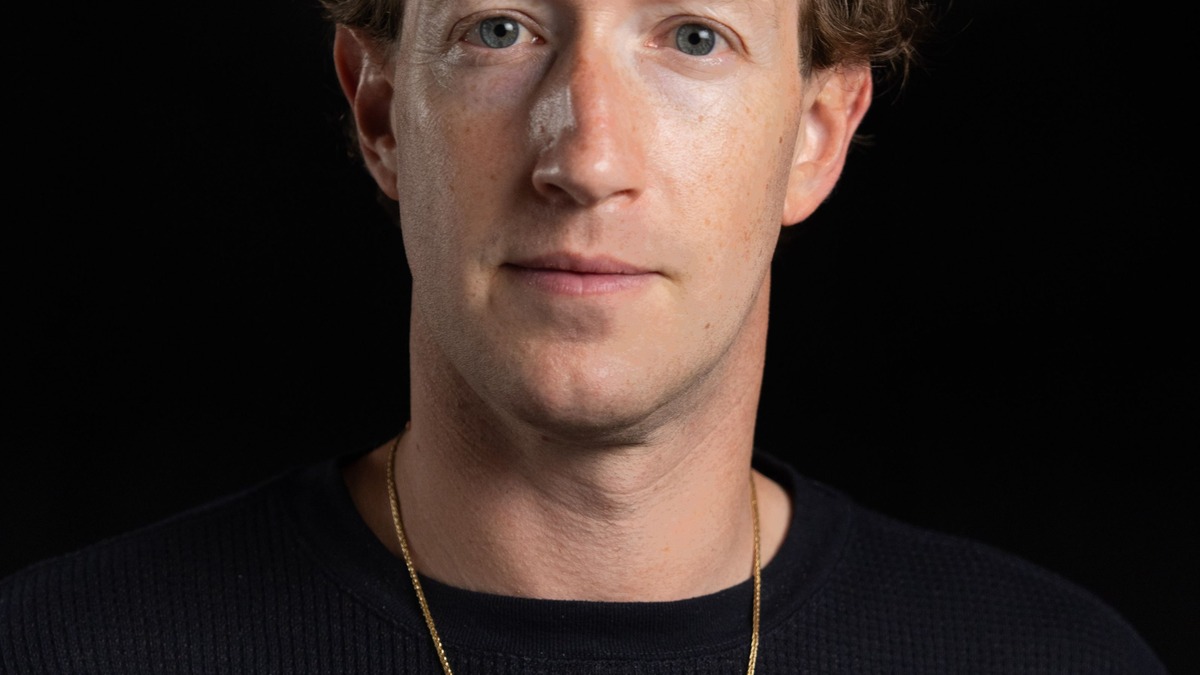 Zuckerberg paired the Muse Glimmer release with a policy essay warning that US restrictions could cede the open-weight race to Chinese labs.
Source: wikimedia.org
Zuckerberg paired the Muse Glimmer release with a policy essay warning that US restrictions could cede the open-weight race to Chinese labs.
Source: wikimedia.org
"U.S. policy must reduce this additional friction if we want American open source models to lead over time."
That argument lands differently coming from Meta specifically. In April, the company closed the open-source door on its frontier tier, shipping Muse Spark as a closed model with no public weights after years of Llama being the open-weight standard-bearer in the US. Muse Glimmer, a distillation rather than the frontier model itself, plus a promised but not-yet-shipped open-weight release of Muse Spark 1.2, looks like Meta trying to hold both positions at once: keep the frontier model closed and monetized through the Meta Model API, while still claiming the open-source banner for everything downstream of it.
What to Watch
Muse Spark 1.2's open weights are announced, not released. Zuckerberg's post says they're coming "soon," with no date, license terms, or parameter count confirmed. Until that lands, Glimmer is the only concrete deliverable from today, and it's explicitly the smaller, distilled sibling rather than the model Meta's own benchmarks were built around.
The benchmark table also cuts against a clean "Meta wins open source again" narrative. Glimmer trails Qwen3.6-27B on three of five comparable metrics despite arriving four months later, in a category where Alibaba has been shipping aggressively all year. What it adds isn't a benchmark crown. It's a model built to run well on hardware people already own, verified against real GPUs and Apple Silicon rather than left as a spec-sheet claim.
Sources:
- Meta Releases Muse Glimmer, an Open-Weight AI Model That Runs on a Laptop - Startup Fortune
- Meta launches new AI model Muse Glimmer as Zuckerberg urges U.S. to remove barriers to open-source AI - Tech Startups
- Meta releases open weight Muse Glimmer model with open Muse Spark 1.2 on tap - Constellation Research
- Meta releases Muse Glimmer for local AI agents - TestingCatalog
- meta-models/Muse-Glimmer-30B - Hugging Face
- Mark Zuckerberg on X

