
Meta Logs Employee Keystrokes to Train Computer-Use AI
Meta is installing monitoring software on U.S. employee computers to capture keystrokes, mouse movements, and screenshots for training computer-use AI agents.
 7 min read
Meta is deploying monitoring software on U.S. employee computers to harvest behavioral data for training autonomous computer-use AI agents. The initiative, reported today by Reuters from internal company memos, captures mouse movements, clicks, and keystrokes across a defined set of work apps - and takes periodic screenshots to provide context for the collected inputs.
The move is a direct admission that Meta's models still can't reliably navigate graphical interfaces on their own. A company spokesperson told Reuters the data is needed because the company is "building agents to help people complete everyday tasks using computers" and those models require "real examples of how people actually use them - things like mouse movements, clicking buttons, and navigating dropdown menus."
TL;DR
- Meta is launching internal monitoring software on U.S. employee machines, capturing keyboard inputs, mouse movements, and periodic screenshots
- Purpose: generating training data for computer-use AI agents that can autonomously navigate GUIs, dropdown menus, and keyboard shortcuts
- No opt-out mechanism has been disclosed; Meta says the data won't be used for performance reviews
- Computer-use training requires demonstration data that text corpora can't supply - this is the structural bottleneck Meta is trying to solve by using its own workforce
What the Tool Captures
Input telemetry
The monitoring system logs three categories of input signals from work-related applications: keystrokes (every key pressed, in sequence), mouse click events (which UI element was targeted, at what screen coordinate), and mouse movement traces (the path the cursor took between interactions).
Each of these maps to a specific failure mode in current computer-use models. Keystroke sequences expose keyboard shortcut behavior - things like Ctrl+Shift+N to open a new incognito window or Alt+Tab to switch applications. These shortcuts don't appear in any training corpus. Mouse traces between clicks show how users scan interfaces visually before committing to an action, which teaches models something closer to browsing strategy than raw clicking.
A representative data record from a system like this would look roughly like this:
event_type: mouse_click
app: vscode
target_element: dropdown_menu
element_label: "Run Configuration"
screen_x: 842
screen_y: 124
timestamp: 2026-04-21T09:14:22Z

event_type: keystroke_sequence
app: vscode
keys: ["ctrl", "shift", "p"]
resolved_command: "Open Command Palette"
timestamp: 2026-04-21T09:14:29Z
The granularity matters. Models need to learn that ctrl+shift+p in VS Code opens a command palette, not that it's a three-key combination - and deriving that understanding requires seeing the sequence happen in context, repeatedly.
The screenshot context layer
Keystrokes and cursor events alone are ambiguous. A click at coordinates (842, 124) means nothing without knowing what was rendered there. Meta's system takes periodic screenshots to provide that visual anchor, letting a downstream model correlate input events with the UI state they occurred in.
The combination creates a labeled training dataset: screenshot shows the current screen, input event shows what the user did next, next screenshot shows the resulting state. Chained together, these become demonstration trajectories - exactly what behavioral cloning algorithms need to train a policy model.
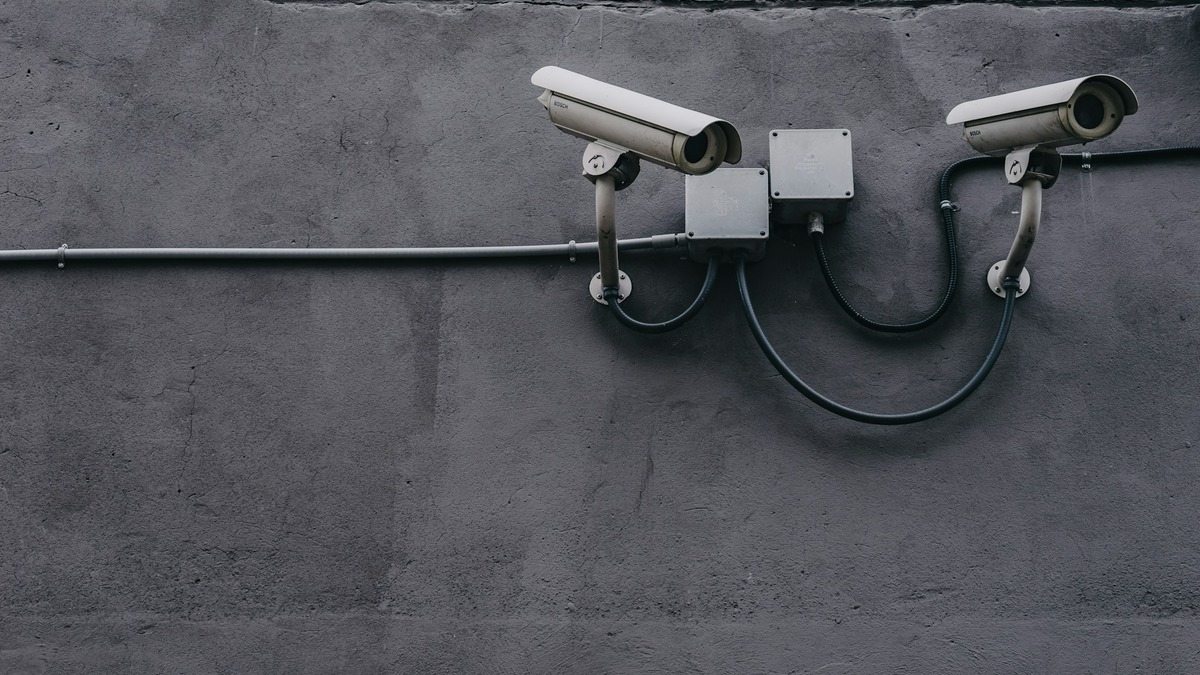 Employee monitoring at work is not new - but the scale and purpose of Meta's project represents a qualitative shift in how AI training data is sourced.
Source: unsplash.com
Employee monitoring at work is not new - but the scale and purpose of Meta's project represents a qualitative shift in how AI training data is sourced.
Source: unsplash.com
The Data Gap Behind Computer-Use AI
Why text corpora don't solve this
Every major LLM was trained predominantly on text: web pages, books, code repositories, documentation. That corpus captures human knowledge expressed in language. It doesn't capture procedural knowledge - the muscle memory of navigating a file picker, the workflow of dragging a column in a spreadsheet, the sequence of clicks required to configure a VPN.
This is the structural problem that computer-use AI has been working around since Anthropic first shipped Claude's computer-use capability in late 2024. Picking pixels from a screenshot and clicking the right one is learnable given enough examples. Getting enough examples is the hard part.
What competitors built instead
OpenAI used contractor-annotated screen recordings to build the demonstration dataset behind GPT-5.4's computer-use launch. Anthropic tackled the data problem differently - it acquired Vercept, a nine-person Seattle startup whose team had spent years building vision-based desktop automation tooling and accumulating the accompanying datasets.
Meta's approach is cheaper and potentially larger in scale. With roughly 85,000 employees using work computers every day, the company can capture behavioral data from a corpus of users that no contractor program could replicate - without paying for annotation, without recruiting externally, and without disclosing the data pipeline publicly.
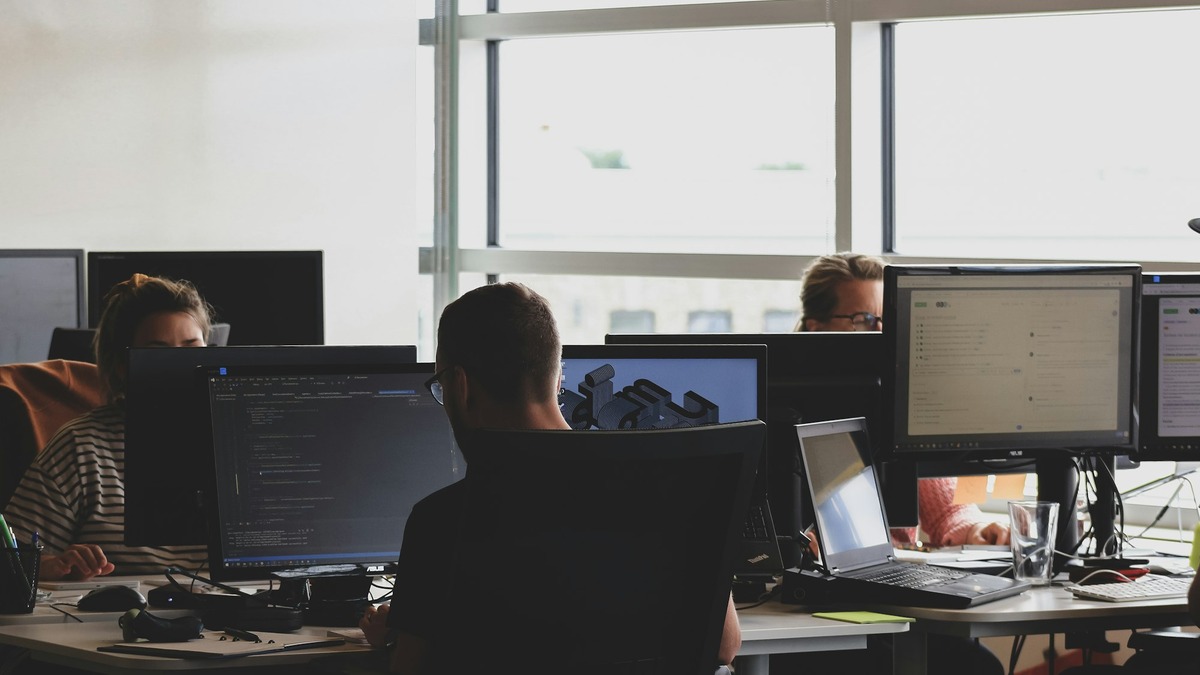 Meta employees now produce AI training data as a side effect of doing their jobs. The company says the data will be used solely for model training and not for performance assessments.
Source: unsplash.com
Meta employees now produce AI training data as a side effect of doing their jobs. The company says the data will be used solely for model training and not for performance assessments.
Source: unsplash.com
Training Data Approaches Compared
| Method | Source | Practical scale | Privacy exposure |
|---|---|---|---|
| Employee monitoring (Meta) | Internal workforce | 85K+ active users | High - no opt-out disclosed |
| Contractor annotation | Third-party workers | Limited by budget | Moderate - contractual controls |
| Public screen recordings | Web demos, tutorials | Low diversity | Low - voluntarily public |
| Acquisition (Anthropic) | Startup datasets | One-time, bounded | Depends on acquisition terms |
| Synthetic simulation | AI-created GUIs | Unlimited | None |
Where It Falls Short
The consent architecture problem
Meta's internal memo described the monitoring program to employees - it didn't ask for their agreement. The Reuters report makes no mention of an opt-out mechanism, and the data collection is scoped to U.S.-based staff specifically, which is almost certainly not coincidental.
EU workers are excluded outright, a direct reflection of GDPR Article 88 constraints on employee data processing. California employees have rights under the California Consumer Privacy Act and the California Workplace Privacy Protection Act, including notification requirements - which the memo may satisfy - but the absence of a meaningful opt-out puts Meta in a legally gray zone that will draw scrutiny.
Employee reaction on Teamblind was immediate and largely negative. One Apple employee called the initiative "Dystopian AF." A Shopify worker urged colleagues to "start putting our foot down." A Capital One employee questioned whether AI training was the actual purpose or just a convenient justification. None of those employees have standing to complain to a regulator on Meta's behalf, but the reputational cost to recruiting is real and immediate.
What the data captures - and what it misses
Behavioral telemetry is excellent at recording the mechanics of computer use. It's poor at capturing intent. A mouse trace from the address bar to the search icon doesn't encode whether the user was looking for a file, navigating to a webpage, or making a mistake. Keystroke sequences don't explain why Ctrl+Z was pressed three times. Screenshots show state, not reasoning.
This matters because Meta's Muse Spark and the agent capabilities being developed under its Superintelligence Labs division are targeting multi-step task completion - workflows where the model needs to understand goals, not just copy actions. Behavioral cloning from employee data gets you a model that clicks through familiar UI patterns. It doesn't get you a model that adapts when the UI changes or the task is novel.
The KernelEvolve team's work on autonomous kernel optimization showed that Meta's agents can handle narrow, well-defined technical tasks. General computer use - the messy, context-dependent work of navigating arbitrary software in real workflows - is a harder problem, and employee keystrokes alone won't close the gap.
Meta spokesman Andy Stone stated that collected data would be used "only for model training" and that "safeguards are in place to protect sensitive content." What those safeguards are, how sensitive content is detected before logging, and whether employees have any recourse weren't addressed in communications to staff.
The EU carve-out is the clearest signal of where the legal lines are. The question is whether U.S. regulators and state legislatures follow.
Sources:
- Ground News: Meta to start capturing employee mouse movements, keystrokes for AI training data (April 21, 2026, via Reuters)
- MyJoyOnline: Meta to start capturing employee mouse movements, keystrokes for AI training data
- Teamblind: Meta to install employee tracking software on computers for AI training

