
Meta Builds Cloud Business to Sell Excess AI Compute
Meta is building a cloud business to sell excess AI compute capacity, sending its stock up 8% while CoreWeave dropped 13% and Nebius fell 15%.
 6 min read
Eight percent. That's what Bloomberg's report on Meta entering the cloud business added to the company's stock price by Tuesday afternoon - roughly $120 billion in paper value for a service with no paying customers yet.
The reaction isn't irrational. Meta has spent around $19.8 billion on AI infrastructure in Q1 2026 alone, with a full-year capital expenditure target of $125 to $145 billion. Investors have grown increasingly anxious about where the return comes from. A cloud business - selling excess compute to others - offers a direct answer. It's the approach xAI already took with its Colossus cluster, leasing capacity to Anthropic, Google, and Reflection AI between training runs.
What Meta is actually building, and whether Tuesday's market reaction is correct to treat the announcement as solved, is a more complicated question.
TL;DR
- Meta is building "Meta Compute" to sell raw GPU capacity and hosted AI model access to outside customers
- Stock jumped 8% on the news; Meta's 2026 AI capital expenditure target is $125-145B
- CoreWeave fell 13% and Nebius dropped 15% as investors reassessed their value as neocloud providers
- The project is led by Santosh Janardhan (infrastructure), Daniel Gross (Meta Superintelligence Labs), and president Dina Powell McCormick
- Meta already has $35B committed to CoreWeave and $27B to Nebius - deals that don't unwind
Who Won and Who Lost Tuesday
The announcement created a clean dividing line in markets. Meta went up. Everyone who sells compute capacity to AI labs went down.
| Company | Move | Driver |
|---|---|---|
| Meta (META) | +8% | New revenue stream from $145B infra build |
| CoreWeave (CRWV) | -13% | Meta becomes a direct competitor |
| Nebius Group | -15% | Meta becomes a direct competitor |
| NVIDIA (NVDA) | Down | Investors expect lower future Meta capex |
| IREN | Down | Meta enters the neocloud market |
The irony in those red numbers is notable. Meta has committed $35 billion to CoreWeave through December 2032 and signed a $27 billion agreement with Nebius just months ago. Those contracts aren't going anywhere. But the direction of Meta's intentions is now clear enough for markets to act on.
The Infrastructure Behind the Announcement
Meta's ability to contemplate a cloud business at all stems from a construction program with few parallels in corporate history.
The Prometheus campus in New Albany, Ohio - a 1 gigawatt facility powered by nuclear energy - is scheduled to come online later this year. In Louisiana, the Hyperion campus, described by Zuckerberg as covering a significant footprint of Manhattan, is being built out to an eventual 5 gigawatt capacity, with the first 2 gigawatt phase arriving by 2030. The tent-based rapid-deployment structures Meta has been erecting across the US since April - each around 125,000 square feet and cooled by jet engines - add further capacity on a compressed timeline.
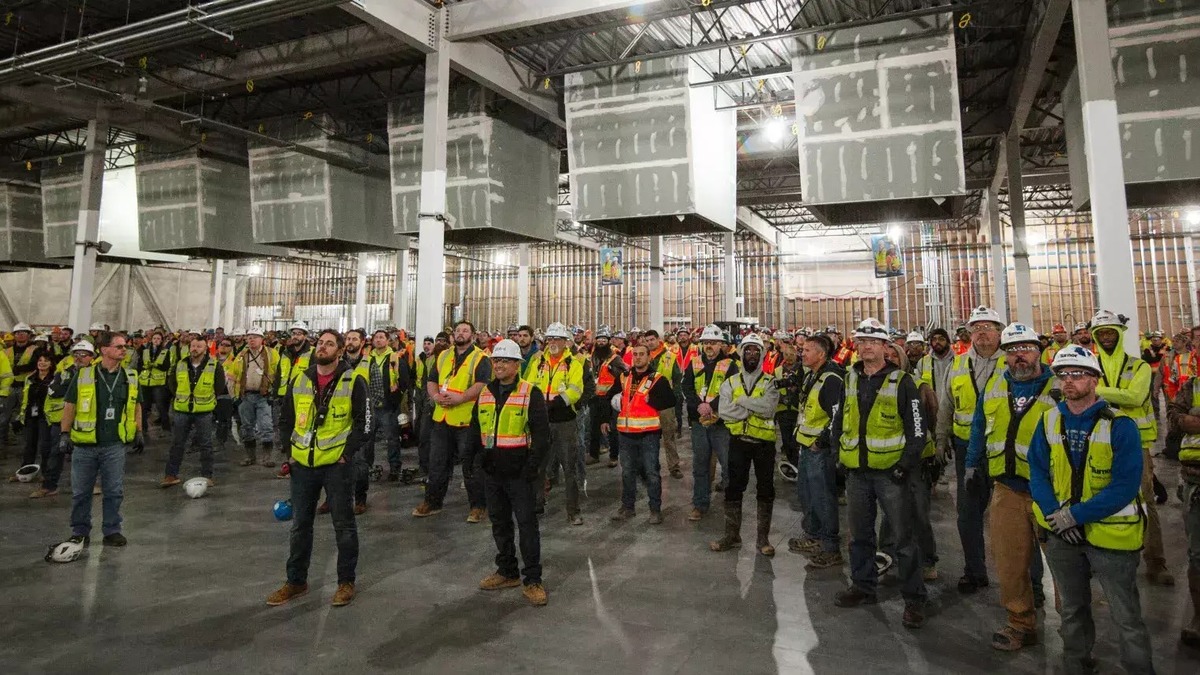 Construction interior at one of Meta's data center campuses. Meta now operates more than 30 owned facilities with more under construction.
Source: datacenters.atmeta.com
Construction interior at one of Meta's data center campuses. Meta now operates more than 30 owned facilities with more under construction.
Source: datacenters.atmeta.com
That scale creates the excess the cloud business would sell. When a large training run finishes, tens of thousands of GPUs go underutilized until the next one starts. A cloud business converts that idle time into revenue rather than a dead-weight capital expense.
Two Business Models Under Consideration
The internal project, called Meta Compute, is led by infrastructure chief Santosh Janardhan with Daniel Gross of Meta Superintelligence Labs and company president Dina Powell McCormick. According to Bloomberg, two distinct approaches are being weighed.
Raw Compute Sales
The first model mirrors what CoreWeave does: sell direct access to computing capacity, priced by GPU-hour, to companies that need it. Revenue scales with utilization. Product complexity is fairly low - it's infrastructure rented out, not a full service. The downside is that it positions Meta as a commodity provider competing on price against established players.
Hosted Model Access
The second approach resembles Amazon Bedrock: charge customers per API call for access to Meta's Muse Spark models, with Meta running the infrastructure underneath. Margins per GPU-hour are thinner because Meta absorbs the compute cost, but the addressable market is broader - developers who want AI capability without managing raw hardware. This approach also gives Meta a differentiated product rather than a pure commodity.
Meta appears to be weighing both. That's not unusual this early in the process, but the financial model isn't settled.
"It's definitely on the table," Zuckerberg told investors at Meta's May shareholder call when asked about selling excess computing infrastructure or offering AI API services to outside customers.
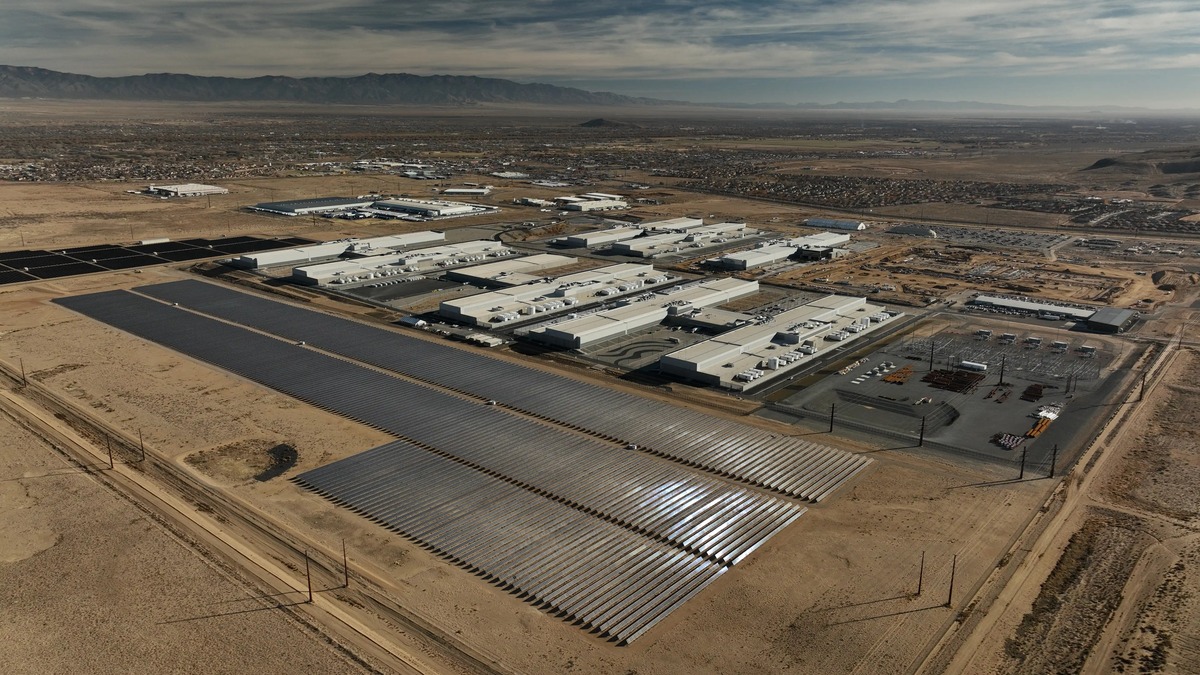 Meta's Los Lunas, New Mexico campus with its solar installation. The company's data center footprint spans more than 30 owned facilities worldwide.
Source: datacenters.atmeta.com
Meta's Los Lunas, New Mexico campus with its solar installation. The company's data center footprint spans more than 30 owned facilities worldwide.
Source: datacenters.atmeta.com
The Counter-Argument
The 8% move prices in a lot of optimism about a business Meta hasn't run before.
AWS has been building enterprise cloud infrastructure since 2006. Microsoft Azure and Google Cloud have each spent years assembling support teams, compliance frameworks, SLA guarantees, and enterprise sales organizations that large buyers require. Meta is starting from zero on all of that. Building data center capacity and operating a commercially competitive cloud product are not the same thing.
The oversupply concern is also real. NVIDIA's H100 GPUs, which powered the bulk of AI infrastructure build-out through 2024 and 2025, are being displaced by Blackwell architecture. The neocloud market Meta would enter already has CoreWeave, Lambda Labs, Nebius, and others competing for the same AI workloads. Adding another large seller of compute doesn't obviously improve pricing - it likely compresses margins further.
The chip stock declines Tuesday reflect a genuine concern: if Meta sells excess compute rather than buying more of it, the demand signal from one of the world's largest GPU buyers just weakened. Nvidia fell even as Meta rose. Those two moves can't both be right indefinitely.
What the Market Is Missing
The 8% jump also glosses over a structural tension in Meta's position. The company has locked in major commitments to the very businesses it now threatens to displace. The $35 billion CoreWeave agreement runs through December 2032. The $27 billion Nebius deal covers five years. Both were signed to cover capacity gaps while Meta's own data centers came online.
Those contracts don't become liabilities because Meta is now building competing infrastructure. The compute Meta leases from CoreWeave and Nebius likely runs different workloads than what Meta Compute would sell externally. But the optics of committing nearly $62 billion to companies you're now positioning as rivals - within a few months - requires some explanation.
For full context on Meta's Q1 2026 results and the spending trajectory that drove these decisions, the $145 billion capex figure was already controversial before Tuesday's announcement. Wall Street had been asking what Meta planned to do with all that infrastructure. The answer is apparently: sell it. The question investors haven't answered yet is whether enterprise buyers will line up to buy compute from a social media company when Amazon, Google, and Microsoft are also offering it.
Sources:
- Meta, like SpaceX, looks to turn excess AI compute into cash - TechCrunch
- Meta surges on report it's starting a cloud business - Sherwood News
- Meta Raises 2026 AI Capex to $145B - Krasa.ai
- Hyperion and Prometheus data center ownership and power challenges - Data Center Frontier
- Meta's $200 billion Hyperion data center in Louisiana - The Next Web

