
Meta Taps Amazon CPUs to Power Agentic AI at Scale
Meta signs a multi-year AWS deal to deploy tens of millions of Graviton5 CPU cores, betting that agentic AI workloads need CPUs more than GPUs.
 6 min read
Meta has signed a multi-year agreement with Amazon Web Services to deploy tens of millions of Graviton5 CPU cores into its AI infrastructure, making it one of the largest Graviton customers globally. The deal, announced April 24, reflects a shift in how hyperscalers think about the compute needed to run the next wave of AI products.
TL;DR
- Meta and AWS signed a multi-year deal to deploy tens of millions of Graviton5 CPU cores
- Financial terms weren't disclosed; multiple outlets report the total is worth billions of dollars
- Graviton5 is an ARM-based CPU with 192 cores per chip, 3nm manufacturing, and 25% better performance than its predecessor
- Unlike GPUs (used mainly for training large models), CPUs handle agentic workloads: real-time reasoning, code generation, search, and agent coordination
- Meta already had a $10B Google Cloud commitment; this deal steers additional spending toward AWS
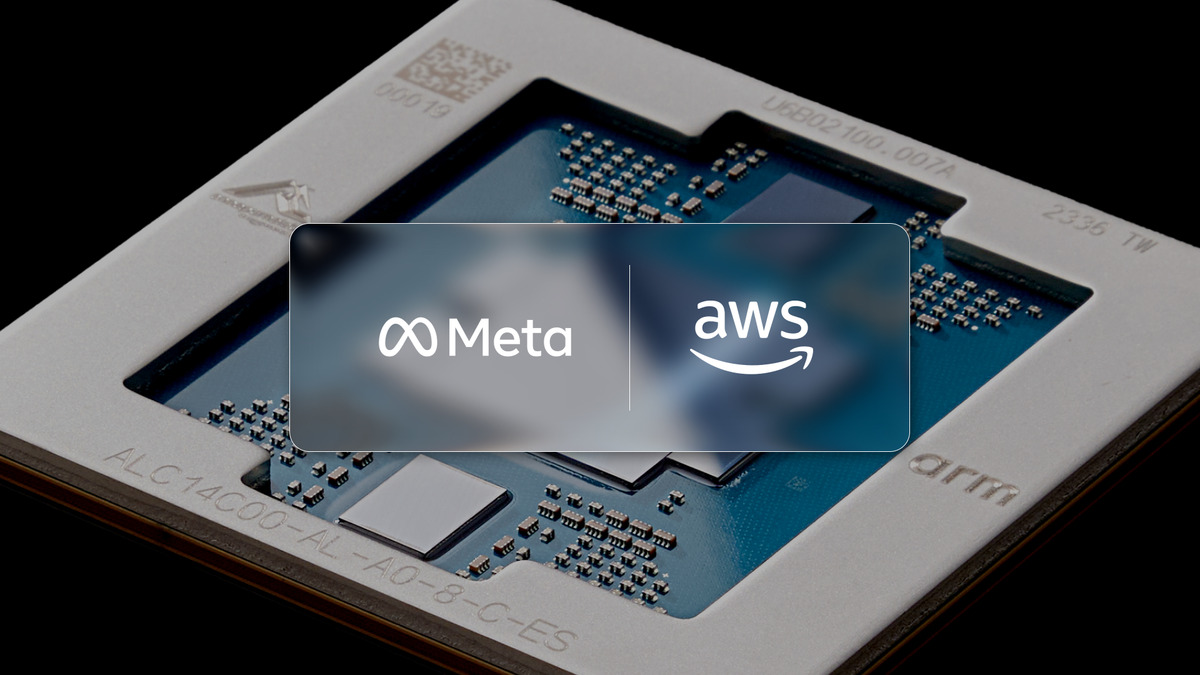 The official partnership announcement from Meta and AWS, April 24, 2026.
Source: about.fb.com
The official partnership announcement from Meta and AWS, April 24, 2026.
Source: about.fb.com
What's in the Deal
The agreement centers on AWS Graviton5, Amazon's fifth-generation ARM-based server chip. Each chip carries 192 cores, a cache five times larger than the previous generation, and a 33% reduction in inter-core communication delays. Amazon built Graviton5 on 3nm process technology and claims 25% better performance over Graviton4.
Meta says it'll start with "tens of millions of cores," with flexibility to expand. That's a substantial number: Graviton5 delivers hundreds of compute slots per physical chip, so even a moderate physical shipment translates into large core counts very quickly.
"Diversifying our compute sources is a strategic imperative. Graviton allows us to run the CPU-intensive workloads behind agentic AI with the performance and efficiency we need."
- Santosh Janardhan, Head of Infrastructure at Meta
Nafea Bshara, Amazon VP, framed it in broader terms: "This isn't just about chips; it's about giving customers the infrastructure foundation to build AI that understands, anticipates, and scales efficiently to billions of people."
Amazon didn't disclose the financial terms.
Where AWS's AI Deal Flow Is Running
This announcement lands inside a stretch where AWS is building up AI customer commitments at a scale that was hard to imagine eighteen months ago.
| Partner | Chip | Reported Value | Duration | Primary Workload |
|---|---|---|---|---|
| Anthropic | Trainium (GPU) | Multi-billion, long-term | 10 years | Training + inference |
| OpenAI | EC2 / Trainium (GPU) | $50B | 5+ years | Stateful agents |
| Meta | Graviton5 (CPU) | Undisclosed, multi-billion | Multi-year | Agentic inference |
Anthropic's AWS Trainium deal - locked in earlier this month - was large enough that it absorbed much of Amazon's Trainium GPU allocation. Meta isn't competing for those chips. It's buying a different category completely, which says something about how Meta reads the compute market.
The Agentic AI Compute Shift
GPU-heavy training gets the headlines, but inference is where most real-world AI spending builds up over time. And the type of inference matters.
Running a chatbot that answers one question at a time is computationally different from running an AI agent that reasons, issues tool calls, searches the web, writes code, and coordinates with other agents across a multi-step workflow. The latter creates CPU-intensive demand. The former leans on GPU throughput.
Meta has been shipping AI agent products across its consumer apps for the past year, with plans to scale them substantially. At Meta's size - billions of users, hundreds of millions of daily active sessions - even a modest per-request CPU overhead adds up to enormous compute bills. Graviton5 is built for exactly this: fast cache access, low inter-core latency, and high-bandwidth networking through Amazon's Elastic Fabric Adapter.
ARM's push into data center AI has been building for some time. When ARM made the case for a CPU-first architecture for AGI, the implication was clear: models at runtime will run on CPUs more than anyone was then expecting. Meta just put real money behind that thesis.
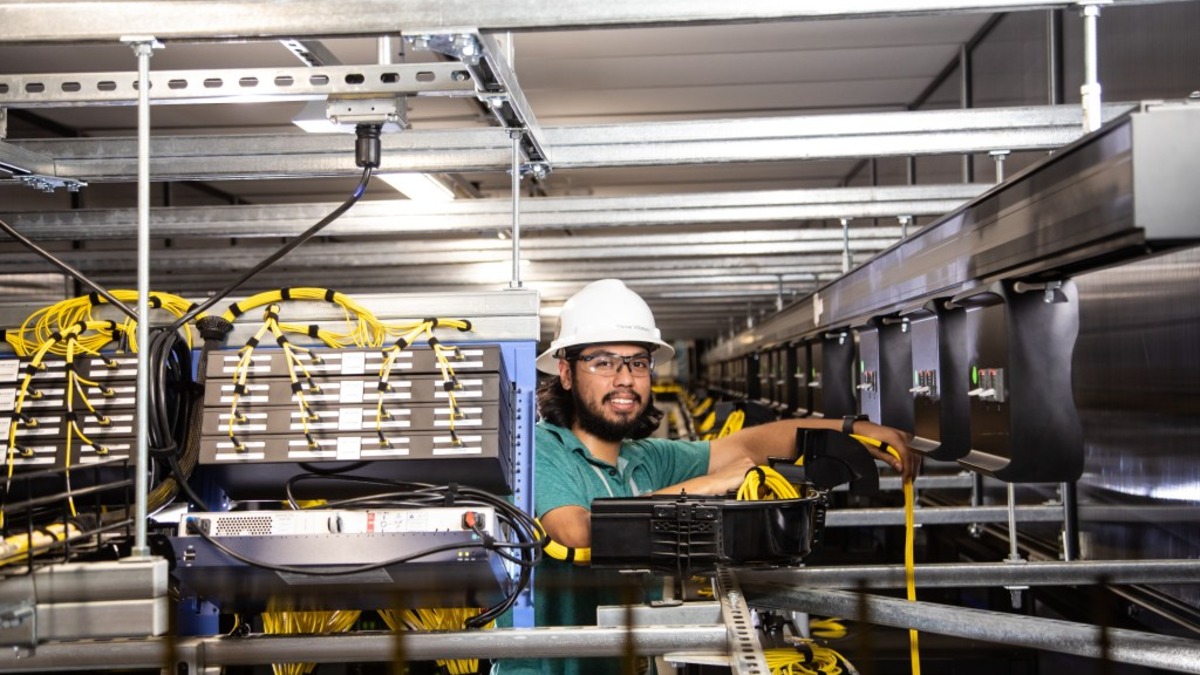 Meta's 32nd global data center in Huntsville, Alabama. The AWS Graviton deal adds cloud CPU capacity with Meta's owned infrastructure.
Source: datacenters.atmeta.com
Meta's 32nd global data center in Huntsville, Alabama. The AWS Graviton deal adds cloud CPU capacity with Meta's owned infrastructure.
Source: datacenters.atmeta.com
Who Benefits
Amazon Web Services wins on multiple levels. Meta had a $10B Google Cloud deal signed in August 2025; this new agreement redirects a chunk of Meta's cloud spending toward AWS. Amazon also positions Graviton5 as a practical alternative for agentic inference at a moment when Nvidia GPUs remain expensive and constrained. Getting Meta on a multi-year contract before Nvidia's CPU-class competitors ship at volume is a smart preemption.
Meta's infrastructure team gets dedicated CPU capacity without competing for scarce GPU allocations. The Anthropic-AWS lock-in on Trainium meant GPU availability from AWS was going to be tight. Graviton5 sidesteps that problem entirely and comes with the performance profile Meta actually needs for its agent workloads.
ARM Holdings gets validation from one of the five largest internet companies on earth. Every Graviton chip is ARM-based. The more enterprises run critical AI workloads on ARM server chips, the stronger ARM's long-term position in the data center market.
Who Pays
Nvidia faces the most pressure from what this deal represents. GPU inference is expensive and power-hungry; CPU inference for agent workloads is cheaper at scale if the chip is purpose-built for it. Graviton5 is exactly that. Nvidia's Vera CPU chip targets the same agentic inference market, but Meta isn't launching Vera - and a multi-year AWS commitment is hard to unwind.
Google Cloud loses spend. Meta's explicit diversification strategy is working against any single vendor. The OpenAI-AWS stateful AI partnership was already a signal that AWS was willing to make aggressive long-term bets. Meta's deal adds weight to that pattern, pulling cloud infrastructure spending toward Amazon at Google's expense.
Other cloud vendors are watching a market where hyperscalers are locking in the largest AI customers with multi-year, multi-billion commitments before those customers can shop around. Smaller providers won't have the chip supply or the pricing leverage to compete for deals at this scale.
Meta's $48B in recent infrastructure commitments - across CoreWeave, Nebius, and now AWS Graviton5 - points in one direction: the company believes agentic AI will be compute-hungry business, and it wants the cost per agent step as low as it can get. Whether Graviton5 actually delivers on that at production scale is the question AWS's engineering team will be answering for the next several years.
Sources:

